

Kids Snacking Habits: A Science-Backed Reset for Parents
Key Takeaways
- The “3 meals + 2 snacks” rule isn’t outdated for young kids. The unstructured grazing around it is the real problem.
- Snacks make up 25–30% of young children’s daily calories. So what you serve matters more than how many snacks you serve.
- Constant eating leaves no room for appetite to build. That fuels picky eating and meal battles.
- A snack worth serving pairs produce with protein or fiber, per the American Academy of Pediatrics.
- Reset with structure, not restriction: predictable times, one eating spot, and a simple hunger check.
If you saw this week’s headline about kid snacking being “outdated,” you’re probably confused. After all, your kids snacking habits are built on that five-times-a-day advice.
Here’s the thing: the advice isn’t wrong. It’s just being misapplied. The truth is more nuanced than any headline. Planned snacks are still healthy — even necessary — for small children. The real problem is grazing: the constant, on-the-go eating that never gives hunger a chance to build.
This article explains what the science says. It covers how many snacks kids need by age. And it gives you a simple way to reset your family’s routine this week.
Quick Answer: Is the “snack all day” advice really outdated?
Yes and no. Planned snacks at set times are healthy for kids. Unstructured all-day grazing is what backfires. The fix isn’t fewer snacks — it’s structure, timing, and snack quality.
Why the “Outdated” Snacking Advice Isn’t Really Outdated
NPR’s recent segment on kid snacking struck a nerve with parents. Most of us have heard for years that kids need three meals and two snacks a day. Now a headline says that’s outdated. No wonder you’re confused.
Here’s what’s actually happening. The CDC’s feeding-frequency guidance for young children still says toddlers need to eat every 2 to 3 hours. That’s about 5 to 6 times a day, because their stomachs are small. It’s 3 meals plus 2 to 3 snacks.
The same guidance adds a warning most headlines miss: don’t let kids continuously eat all day. So the five-times-a-day advice isn’t the problem. The snack-on-demand culture around it is.
The planned 10 a.m. snack is fine. But the crackers in the car? The pouch at the playground? The pretzels before dinner? That’s where kids snacking habits go off track.
Those little moments add up. Kids end up always eating — and never truly hungry.
What the Science Actually Says About Kids Snacking Habits
Let’s look at the data. A 2019 study in the journal Appetite tracked more than 1,100 toddlers and preschoolers. The researchers found that snacks made up about 25 to 30 percent of kids’ daily calories. In 2-to-6-year-olds, each extra daily snack added about 175 calories.
Does that mean snacking is bad? Not by itself. The more striking finding was about quality. Snack protein contributed only 2 to 4 percent of kids’ total energy.
In plain English: most children’s snacks are mostly carbs and fats. Almost no protein to keep little stomachs full. When researchers study kids snacking habits closely, they find the same thing. Snacks are a real source of calories. So make them count.
Why Constant Grazing Can Backfire
Picture this: your child has crackers at 9. A fruit pouch at 10. Cheese at 11. Then half your lunch at noon. By 12:30, they’re “not hungry” at the table. By 2 p.m., they’re begging again. Sound familiar?
If your kids snacking habits feel out of control — constant requests, no interest at meals — grazing is often the reason. When kids eat constantly, their stomachs never fully empty. Their appetite never builds.
They lose the chance to feel real hunger — and the chance to feel full. That’s why grazers often eat poorly at meals, then ask for food right after.
Research backs this up. In a birth-cohort study of more than 1,300 children, kids who had more eating occasions showed more food-avoidance behaviors. At age 7, more frequent eating was linked to less enjoyment of food. Another study on mealtime structure found something similar. Predictable family meals, with no screens, were linked to less fussy eating.
The science points one way: structure helps appetite. Grazing dulls it.
How Many Snacks Kids Really Need, By Age
Here’s where the generic advice falls apart. The right number changes as kids grow. That’s where kids snacking habits advice gets too generic. So let’s get specific.
Age-by-Age Snack Frequency
- Ages 1–2: 3 meals + 2–3 snacks (eat every 2 to 3 hours)
- Ages 2–3: 3 meals + 2 snacks
- Ages 4–6: 3 meals + 2 snacks (the afternoon snack is key)
- Ages 7–10: 3 meals + 1–2 snacks
- Teens: 3 meals + 1 snack (2 on sports days or during growth spurts)
These are starting points, not strict rules. Your child’s appetite will vary day to day. Growth spurts, illness, and activity levels change things. For more on what to serve your youngest eaters, check out our guide on how to choose healthy toddler foods.
During a growth spurt, add a snack or larger portions. Don’t add extra eating times. That keeps the rhythm intact.
Timing matters as much as frequency. Offer snacks one to two hours before the next meal. Skip snacks within an hour of mealtime. This protects appetite at the table.
What Actually Makes a Snack Worth Serving
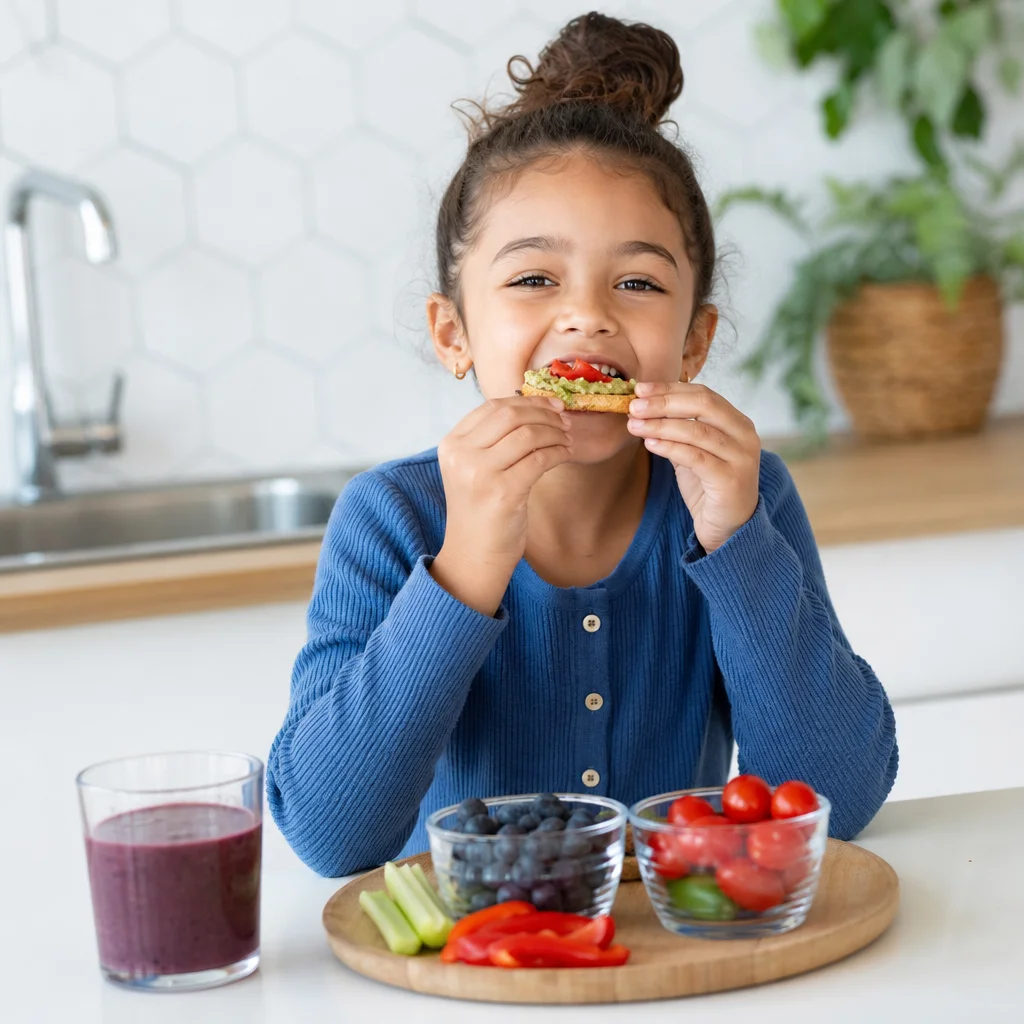
The American Academy of Pediatrics has a simple formula. Pair produce with protein, dairy, or whole grains. Apple slices with peanut butter. Yogurt with berries. Cheese with whole-grain crackers. Hummus with carrot sticks.
Remember the protein problem from the research? Most kids’ snacks lack it. Protein and fiber turn a snack into steady energy. They keep little stomachs full until dinner. For meals built on the same formula, try these high fiber lunch ideas.
Keep it simple. Pick one produce. Add one protein or fiber. That’s the whole formula.
Upgrading your kids snacking habits doesn’t mean banning treats. It means most snacks follow the formula. The AAP also suggests limiting processed snacks. They’re low in nutrients, high in added sugar and salt, and can leave kids hungry again fast. Our guide to ultra-processed baby food explains the label red flags to watch for.
What about snacks on the go? Pack them on purpose. A planned pouch in the diaper bag is fine. The key is that it’s planned — not a running snack buffet.
Six no-cook combos that follow the formula:
- Trail mix with nuts and dried fruit
- Hard-boiled egg with a clementine
- Whole-grain toast with avocado
- String cheese with grapes
- Plain yogurt with berries
- Roasted chickpeas with cucumber slices
Hunger vs. Habit: The 3-Question Check
Here’s a hard truth: kids often snack when they’re not hungry. Research on why parents offer snacks found something important. Snacks used as rewards or comfort tend to be higher in sugar and fat.
A randomized trial in preschoolers showed something similar. Kids ate energy-dense snacks even when their stomachs were full.
Not every snack request is real hunger. The biggest shift in kids snacking habits is learning to tell the difference. So before you hand over another snack pouch, run the three-question check:
The 3-Question Hunger Check
- When did they last eat? If it’s been less than an hour, hunger probably isn’t the issue.
- Could they be thirsty? Offer water first.
- What are they feeling? Bored, tired, or looking for attention?
If hunger isn’t the answer, redirect instead of feeding. A 2026 experimental study found that kids ate about half the snack calories when parents redirected their attention. The effect beat portioning snacks into small pots.
Distraction isn’t denial. It teaches kids that food isn’t the answer to every feeling. Also, offer water first. Thirst often looks like hunger.
And keep snacks at one spot, at planned times. That helps kids tune into their bodies.
Structure Without Restriction: How to Reset Your Kids Snacking Habits This Week
You don’t need to overhaul your kitchen overnight. You need a rhythm. Here’s how to reset kids snacking habits without turning the kitchen into a battleground.
Your Start-This-Week Snack Reset
- Pick a schedule and post it. Try 7 a.m. breakfast, 9:30 snack, noon lunch, 3 p.m. snack, 6 p.m. dinner. Predictable times calm the snack negotiations.
- Choose one eating spot. Snacks happen at the table or counter — not in the car, not in front of the TV. This one change cuts mindless munching.
- Run the 3-question check between times. If it’s not hunger, redirect with a hug, a walk, or a puzzle.
- Upgrade one snack a day. Pick one snack and make it produce plus protein. Small wins build momentum.
- Share the plan with caregivers. Grandparents and sitters need the schedule too. Consistency helps kids settle into the new rhythm.
One more thing: structure is not restriction. Research on feeding practices shows that pressure backfires. Kids eat less, not more, when they’re pressured or nagged.
Always respond to genuine hunger with healthy options. Never withhold food as a punishment.
Instead, hold the division of responsibility. You decide what, when, and where. Your child decides whether and how much. This simple split reduces power struggles at snack time.
What about the child who refuses lunch, then begs for snacks at 2? Hold the boundary gently. That snack is still coming — at the planned snack time.
Then offer the meal again at the next eating occasion. This isn’t punishment. It’s rhythm.
Research on how caregivers think about snacks shows that parents often use snacks to manage behavior. That’s how snack creep starts. The reset brings snacks back to their real job: bridging meals, not replacing them.
And if grandparents or sitters are part of the picture? Share your schedule. Tell them the snack times and the snack formula. Kids adapt fastest when the adults are consistent.
Your Snack Questions, Answered
These are the questions parents ask most when they’re resetting snack routines.
“My kid says ‘I’m hungry’ ten minutes after dinner. Should I feed them?”
If they ate a real meal, offer water and redirect to a quiet activity. If true hunger seems real — a growth spurt, maybe — a small healthy option like fruit is fine. The goal is to keep the kitchen from becoming an all-evening diner.
“Is it okay to let my child skip meals and snack instead?”
Try not to. Snacks are bridges between meals, not replacements. If your child refuses a meal, they may be holding out for a preferred snack. Hold the snack boundary gently, and bring the meal back at the next planned eating time.
“How many snacks does a 7-year-old really need?”
Most school-age kids need one to two snacks a day. The after-school snack is the most important. Add a second snack on active days or during growth spurts.
The Bottom Line
Let’s be honest: snack duty can feel endless. But you don’t have to ban snacks or police every bite. The science is clear.
Planned snacks are healthy. Grazing is the problem. Structure helps kids eat better, without power struggles.
Start this week with one change: a predictable snack schedule. Then add the snack formula, the 3-question check, and one eating spot. Small shifts, repeated daily, are how healthy kids snacking habits are built. You’ve got this.
And if you’re worried about your child’s growth, appetite, or weight? Talk to your pediatrician. You know your child best. Trust that.