

Healthy Peach Crisp: A Balanced Breakfast, Done Right
Key Takeaways
- A crisp built on peaches, oats, and almonds can be a balanced breakfast — not just dessert.
- Keep added sugar around 4–8 grams per serving. Ripe peaches do the sweetening.
- Pair it with Greek yogurt for protein. That’s the upgrade that makes it a meal.
- Maple syrup, honey, and coconut sugar all count as added sugar. “Natural” doesn’t change the math.
- Seasonal swaps and frozen peaches make this work all year long.
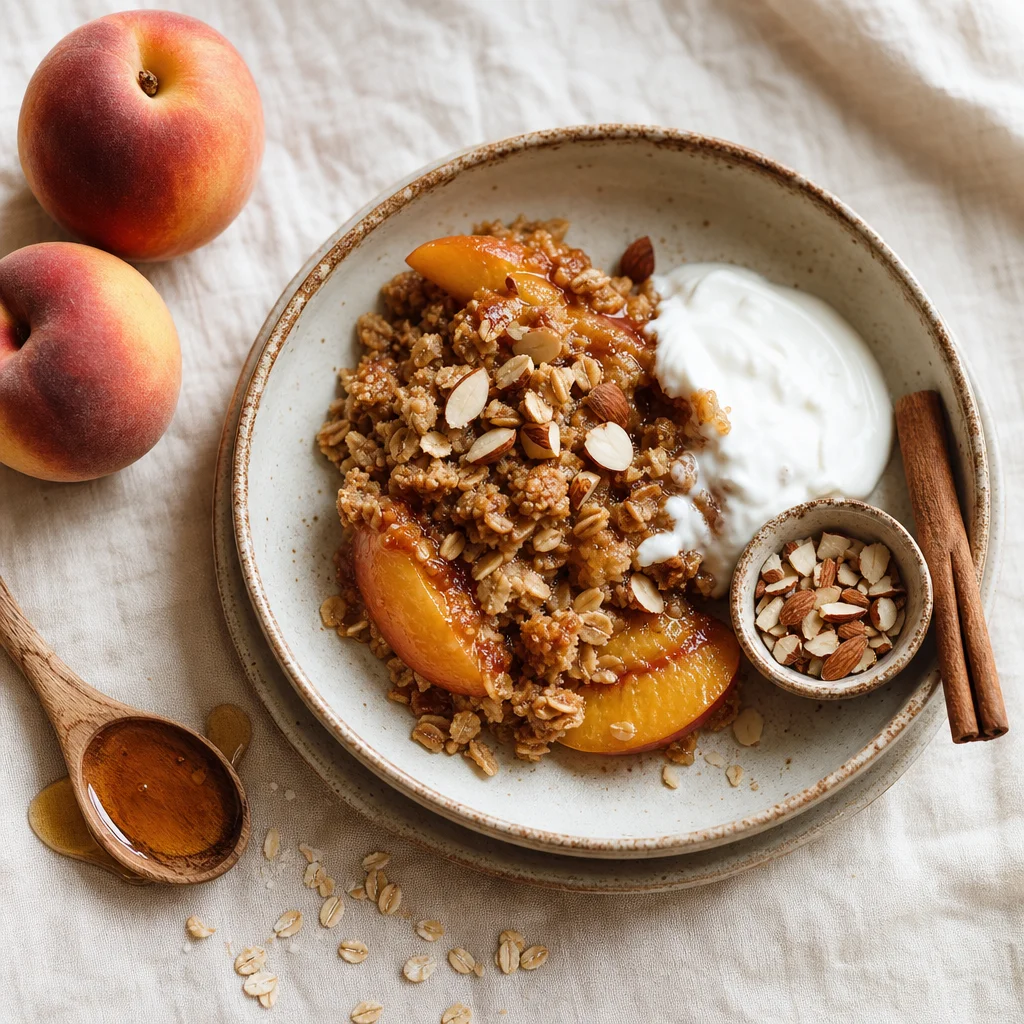
Picture this: it’s early morning, and you want something warm and a little special. A bowl of baked peaches with a golden oat topping, fresh from the oven. It smells like summer. It tastes like a treat. And yes — a healthy peach crisp can absolutely be breakfast.
This is dessert for breakfast, done right. Ripe peaches bring natural sweetness, so you need less added sugar. Oats and roasted almonds add fiber and healthy fats. A scoop of Greek yogurt adds protein. Together, they beat a typical pastry on nearly every measure.
Here’s what the science says about making this work. We’ll cover how much sugar is really OK, why the yogurt pairing matters, and how to lighten the topping without losing crunch.
Quick Answer: Can a Healthy Peach Crisp Be Breakfast?
Yes — when it’s built on whole foods and paired with protein. Keep added sugar to 4–8 grams per serving (about 1–2 teaspoons). Use oats and almonds for fiber and healthy fats. Serve it with Greek yogurt or cottage cheese for protein. That combo beats a typical pastry on fiber, protein, and steady energy — no diet tricks required.
Why a Healthy Peach Crisp Earns a Breakfast Spot
Here’s the thing. Most breakfast pastries are built on refined flour, sugar, and butter. A crisp starts with fruit — and that changes the whole picture.
A large 2023 meta-analysis in Advances in Nutrition looked at long-term eating patterns and heart health. It found that whole grains, fruit, and nuts are linked to better heart health. Those are exactly the three ingredients this dish is built on.
Then there’s fiber. Dietary fiber helps you feel full and supports digestion, notes MedlinePlus. Most of us don’t get enough. A serving of this crisp delivers about 4 to 5 grams. That’s a solid start toward the 25 to 30 grams most women need each day.
So what makes a healthy peach crisp breakfast-worthy? It’s simple. Fruit, whole grains, and nuts are three food groups your body genuinely wants — in one warm bowl.
One honest caveat: fiber supports fullness, but it doesn’t shrink portions for you. Studies find people feel fuller after oats or almonds. They don’t always eat less later. That’s OK. This crisp is nourishing food, not a weight-loss trick.
How Much Sugar Belongs in a Healthy Peach Crisp?
This is where “healthy” recipes often go off the rails. I compared eight popular peach crisp recipes recently. Added sugar per serving ranged from 4 grams to 20 grams. That’s a five-fold difference.
For context, the American Heart Association’s added sugar limits cap women at about 25 grams (6 teaspoons) per day. And CDC data on added sugar consumption shows desserts and sweet snacks — along with sugary drinks — are the leading sources of added sugar in American diets.
So a crisp with 20 grams of added sugar blows past the 10-gram-per-meal guidance. It also eats up nearly 80% of a woman’s daily budget. That’s before breakfast is even over. A version with 4 to 6 grams? It fits easily, with room left for the rest of the day.
Here’s the benchmark I’d use for a healthy peach crisp: 4 to 8 grams of added sugar per serving. That’s roughly one to two teaspoons.
One more thing worth knowing: “natural” sweeteners still count. The AHA includes honey, maple syrup, molasses, and coconut sugar in its added-sugar guidance. They carry the same calories and the same budget. That’s why the smartest move is letting ripe peaches do the sweetening.
Build Your Own Balanced Crisp
Filling: 4 cups sliced peaches, 1 tbsp lemon juice, 1 tbsp cornstarch or arrowroot.
Topping: 3/4 cup rolled oats, 1/3 cup almond flour, 1/3 cup chopped almonds, 2 tbsp brown or coconut sugar, 1 tsp cinnamon, 1/4 tsp salt, 3 tbsp melted butter or coconut oil.
Bake at 350°F for 35–45 minutes, until bubbly and golden. Rest 10 minutes before serving. Makes 8 servings, each with roughly 3–4 grams of added sugar. Serve with Greek yogurt for a balanced breakfast.
Oats: The Whole-Grain Foundation
The topping gives this dish its name — and its nutrition. Rolled oats are a whole grain, so they keep the fiber-rich bran and germ intact. U.S. dietary guidance recommends making at least half your grains whole. Oats make that easy.
A 2018 randomized trial looked at oat beta-glucan — the special soluble fiber in oats — at breakfast. People who ate it reported more fullness. Oat beta-glucan increases fullness and steadies blood sugar. That’s a helpful combination first thing in the morning.
The best healthy peach crisp toppings start with rolled oats. They hold their crunch better than quick oats, which turn soft. Press the topping gently into the fruit so it clings while it bakes.
And the fiber story is bigger than one bowl. A 2024 meta-analysis in Clinical Nutrition covered over 3 million people. It tied higher fiber intake to a 23% lower risk of early death. Fiber intake and long-term health is one of the most consistent findings in nutrition.
The Almond Crunch — and the Cinnamon Caveat
Almonds pull double duty. They add crunch and healthy fats. They also beat a topping made of only butter and sugar. A 2021 randomized crossover study found that almonds and steady blood sugar go together. People who snacked on almonds had a lower blood sugar response than those who ate sweet biscuits.
However, almonds didn’t change how full people felt in that study. Other trials have been mixed too. So treat almonds as a crunchy, blood-sugar-friendly swap — not an appetite stopper.
Now for cinnamon. Some blogs call it a superfood that fights disease. The evidence is far more modest. A 2025 umbrella review found small metabolic benefits — mainly at supplement doses above 1.5 grams daily. Cinnamon’s blood sugar effects are modest. The teaspoon in a crisp is a flavor boost, not medicine.
The Greek Yogurt Pairing: Dessert Becomes Breakfast
Here’s the pro move: serve the crisp warm over plain Greek yogurt. This one step turns dessert into a real morning meal.
A 2024 randomized crossover study in the Journal of Dairy Science compared a protein-rich breakfast with a high-carb one. The protein version boosted fullness and cut hunger for hours. Protein-rich breakfasts boost fullness.
The portion math is simple. Take 3/4 cup of crisp for about 4 to 5 grams of fiber. Add 1/2 cup of plain Greek yogurt for 12 to 15 grams of protein. Together, that’s a 15 to 20 gram protein breakfast.
Cottage cheese works too. Prefer plant-based? Choose a high-protein yogurt and stir in chia or hemp seeds. For more grab-and-go mornings, see our healthy breakfast on the go ideas.
One caveat: a protein-rich breakfast improves how full you feel. It doesn’t guarantee you’ll eat less all day. Still, feeling satisfied until lunch? That’s a real win.
What Baking Does to Peaches (and What It Doesn’t)
Peaches are a great fruit pick. They bring fiber, potassium, and plant compounds to the bowl. But let’s be honest about the oven. Vitamin C breaks down with heat. The NIH explains why cooking lowers the vitamin C in fruit.
The good news: baking preserves fiber, most minerals, and plenty of flavor. So a crisp is a fiber and whole-fruit win. Just don’t sell it as a vitamin C powerhouse.
Easy fix: add fresh peach slices or berries on top before serving. You get back some heat-sensitive nutrients. You also get a bright, fresh contrast to the warm filling.
Frozen peaches? Totally fine. Let them thaw, drain the extra liquid, and add a touch more thickener. The nutrition holds up well. You can make this crisp any month of the year.
Simple Swaps for Every Season and Diet
The beauty of a crisp is how flexible it is. Use nectarines or apricots in place of peaches. Add blueberries or blackberries to the mix. In fall, apples and pears work beautifully with the same oat topping. For another dessert-for-breakfast favorite, try our strawberry baked oats.
Need a gluten-free healthy peach crisp? Choose certified gluten-free rolled oats and oat flour. The texture stays identical.
Going dairy-free or vegan? Swap the butter for melted coconut oil. It still turns golden and crisp.
Nut allergy? Swap almonds for pumpkin seeds or sunflower seeds. You keep the crunch without the allergen.
One more safety note: some people react to raw peaches, especially those with birch pollen allergies. Peach allergy and oral allergy syndrome are uncommon but real. If peaches make your mouth or throat itch, use apples, pears, or berries instead.
Strategy tip: assemble the whole dish the night before. Refrigerate it, then bake in the morning. Cooked crisp keeps for 3 to 4 days in the fridge. It also freezes well for up to 3 months. For another make-ahead peach breakfast, try our peach baked oatmeal.
One small warning: if you’re not used to fiber, ramp up slowly. Adding a lot at once can cause gas and bloating. A half-cup serving is a fine place to start.
Your Peach Crisp Questions, Answered
Do I need to peel the peaches?
No. The skin softens as it bakes and adds a little fiber. Rinse the fruit well. If organic fits your budget, great — but conventional peaches are a good choice too. The priority is eating more fruit.
What’s the difference between a crisp and a cobbler?
A crisp gets an oat-and-nut streusel on top. A cobbler gets a biscuit or batter topping. For breakfast, the crisp wins. Oats add whole-grain fiber that biscuits don’t.
Is coconut sugar healthier than white sugar?
No. Both are added sugars with the same calories. The AHA counts them the same way. Total grams matter more than the source.
Can a healthy peach crisp really work for breakfast?
Yes — when you build it right. Keep added sugar to 4 to 8 grams per serving. Serve it with Greek yogurt for protein. Aim for about 3/4 cup. That’s dessert for breakfast, done right.
The Bottom Line
Here’s the takeaway. You don’t need diet-food tricks, zero-calorie sweeteners, or special ingredients. Ripe fruit, whole oats, a handful of almonds, and a spoonful of Greek yogurt are enough.
At its best, a healthy peach crisp is proof that dessert can earn a breakfast spot. The formula is simple: fruit, whole grains, nuts, protein, and a modest sugar budget.
This week, grab ripe peaches, rolled oats, and a tub of plain Greek yogurt. You’re one bake away from a breakfast that feels like a treat — and actually fuels your morning.