

Supplements and Alcohol: 4 That Don’t Mix Well
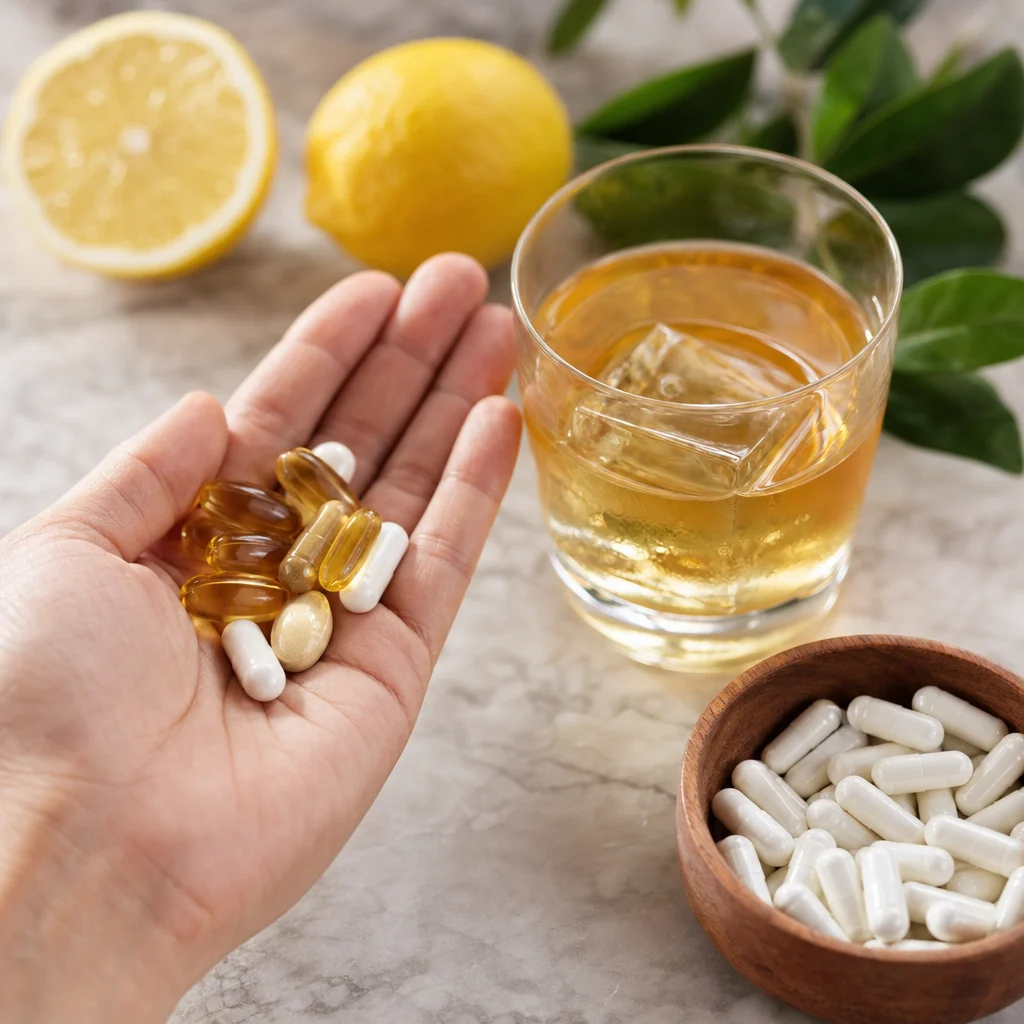
Key Takeaways
- St. John’s wort, passionflower, melatonin, and vitamin A are the supplements most likely to clash with alcohol.
- The combinations can deepen sedation, stress your liver, or cancel out the benefits you’re paying for.
- A quick chat with a pharmacist before you start any supplement can prevent most interactions.
- Look for USP, NSF, or Informed Choice seals — and introduce one supplement at a time.
Picture this: It’s 8 p.m. You’ve taken your evening supplement, and you’re pouring a glass of wine to unwind. Feels like a normal wind-down routine, right? But here’s the thing — that nightly glass may be quietly canceling out your supplements and straining your liver. The link between supplements and alcohol is more complicated than most of us realize. A few popular ones deserve special caution. Let’s look at what happens in your body, which supplements to watch, and how to protect your routine. No need to give up your favorite rituals.
Quick Answer: Can You Take Supplements and Alcohol Together?
In most cases, it’s not worth the risk. Alcohol changes how your body absorbs and processes supplements. It can blunt their benefits, amplify side effects, or strain your liver. Four supplements deserve special caution: St. John’s wort, passionflower, melatonin, and vitamin A. The safest move is to ask a pharmacist before combining them with a drink.
Why Supplements and Alcohol Clash in Your Body
To understand the risk, start with your liver. This organ breaks down both alcohol and most supplements. Many supplements rely on liver enzymes called cytochrome P450. Think of them as your body’s cleanup crew. Alcohol uses some of the same workers. When both show up at once, the crew gets overloaded.
That overload can go two ways. Sometimes alcohol makes a supplement more intense than intended. Other times, it speeds up breakdown, so you get less benefit than you paid for. With a few herbs, it even creates toxic byproducts your body then has to clear.
So when we talk about supplements and alcohol, we’re really talking about two active substances. Neither is “bad” on its own. Together, though, they can behave in ways you wouldn’t predict from either one alone.
When Relaxation Supplements Double Down on Sedation
Passionflower shows up in lots of relaxation and sleep blends, often paired with GABA, valerian, or kava. On its own, it may help calm your central nervous system — the network that controls your stress response. That’s why the National Center for Complementary and Integrative Health notes that passionflower is sometimes used for anxiety and sleep.
Here’s the catch: some supplements and alcohol work on the exact same brain pathways. Alcohol and calming herbs like passionflower both act on a brain chemical called GABA. It’s the system that tells your nervous system to slow down. Stack them together, and the effect multiplies.
The result: heavier sedation, slower reactions, and worse coordination than you’d expect from one glass of wine. This matters even if you’re just settling in for the night.
Slower reflexes can make you unsteady on your feet. And if you take a sleep blend with passionflower or kava, the drowsiness can spill into the next morning. Kava is also worth naming on its own: it has been linked to liver concerns, so alcohol adds extra risk.
Why Melatonin and a Nightcap Undo Each Other
Melatonin is one of the most popular sleep supplements on the market — you’ll find more trustworthy picks in our guide to the best supplements for women. It signals to your brain that it’s time to rest. The NIH Office of Dietary Supplements describes it as a hormone that helps regulate your sleep-wake cycle. People reach for it after travel or when their schedule shifts. But if you take it and then enjoy wine before bed, you may be working against yourself.
Alcohol can make you drowsy at first. But it fragments your sleep. You wake more often and get less restorative REM sleep — the phase where your brain and body recover. So a nightcap helps you fall asleep, then quietly steals the quality of that sleep.
Melatonin’s job is to gently reset your internal clock. It’s not strong enough to override the disruption alcohol causes once it’s in your system. The result? You may fall asleep faster but wake up groggy. That’s the opposite of why you took melatonin.
When Alcohol and Herbs Put Pressure on Your Liver
St. John’s Wort Speeds Up Toxin Production
St. John’s wort is a popular herbal option for low mood. The National Center for Complementary and Integrative Health warns that St. John’s wort interacts with many medicines. It speeds up certain liver enzymes, including one called CYP2E1.
That enzyme converts alcohol into acetaldehyde — a toxic byproduct. More enzyme activity means more acetaldehyde. Pharmacists note this can translate to a rougher hangover: dizziness, brain fog, and drowsiness that hit harder than alcohol alone.
Vitamin A Builds Up in the Wrong Places
Vitamin A follows a different path. It’s a fat-soluble vitamin, so your body stores it — mostly in the liver, the same organ that processes alcohol. Regular drinking depletes those vitamin A stores, raising your risk of deficiency.
You might think extra vitamin A would fix that. However, alcohol also redirects vitamin A to other tissues while it depletes the liver. There, it can build up to harmful levels. The NIH Office of Dietary Supplements warns that too much vitamin A can become toxic.
That buildup has a name: hypervitaminosis A, or simply too much vitamin A. Signs include thinning hair, rough or peeling skin, low energy, poor appetite, and — with prolonged excess — liver injury. This is why you should only take high-dose vitamin A under a doctor’s direction. Drinking regularly while taking it deserves a conversation with your clinician.
How to Take Supplements and Alcohol Safely
The good news? You don’t have to memorize every possible interaction between supplements and alcohol. A few simple habits will protect you. And if you’re curious about other everyday habits that can stress the liver, we’ve also looked at diet soda and liver disease.
Five Rules for Safer Supplement Use
- Ask a pharmacist first. Before starting any supplement, check in with a pharmacist or doctor. They can review your medications, health history, and drinking habits. It takes five minutes and prevents most problems.
- Look for third-party seals. Supplements are not regulated like medications. A seal from USP, NSF, or Informed Choice tells you the product contains what the label claims. It’s not an interaction shield, but it’s a solid baseline for quality.
- Know what’s in your blend. Not all supplements are the same. The dose form, the extract standardization, and the part of the plant used all matter. Two products with the same herb can behave very differently.
- Start low and go slow. Introduce one new supplement at a time, at a modest dose. If something feels off, you’ll know exactly which product caused it.
- Don’t out-supplement alcohol. Extra vitamin A or a bigger dose of a calming herb doesn’t cancel out a night of drinking. More is not safer — and sometimes it’s the thing that causes harm.
What If You Take These Every Day?
If you take one of these supplements daily and also drink regularly, don’t panic — but do have the conversation. For vitamin A, that means checking your total intake from all sources, including multivitamins and prenatal vitamins. For St. John’s wort, it means reviewing whether it’s still the right fit and whether alcohol needs to step aside.
You may not need to stop your supplement or give up wine forever. But the two shouldn’t overlap without professional guidance. A pharmacist can help you sort out timing, dose, and whether a different supplement makes more sense for your life.
And if you’re pregnant, trying to conceive, or breastfeeding, alcohol is already off the table. Some supplements need extra scrutiny too, so your obstetrician or midwife is the best guide for your specific situation.
Questions worth asking your clinician: Is this supplement safe for me long-term? Does my drinking pattern change the risk? Should I have my liver enzymes checked?
When to Call Your Doctor
Most supplement-and-alcohol interactions cause unpleasant but temporary symptoms. However, a few warning signs deserve medical attention.
Contact a Provider If You Notice
- Yellowing of your skin or eyes, or dark urine
- Severe stomach pain, unusual bruising, or bleeding
- Extreme drowsiness, confusion, or a racing heart after combining a supplement with alcohol
These can signal liver strain or a more serious reaction. When in doubt, call your doctor — that’s what they’re there for.
One more layer: St. John’s wort can also interact with many medications, including antidepressants and birth control pills. Alcohol adds yet another variable. Your pharmacist can review the full picture with you.
Frequently Asked Questions About Supplements and Alcohol
How long should I wait between supplements and alcohol?
There’s no universal safe window. It depends on the supplement, the dose, and how quickly your body processes both. Your pharmacist can give you the best answer for your exact routine. When in doubt, skip the drink on nights you take a higher-risk supplement.
Is one glass of wine okay with my daily multivitamin?
For most people, an occasional glass with a standard multivitamin isn’t a major concern. The bigger issues come with high-dose vitamin A, herbal calming blends, and sleep aids. If your multivitamin contains vitamin A, check the dose and mention it to your pharmacist — especially if you drink most days.
Do magnesium or vitamin D interact with alcohol?
These are not among the highest-risk supplements with alcohol. However, heavy or frequent drinking can lower magnesium levels over time, and heavy drinking is also linked to lower vitamin D levels. The takeaway isn’t to avoid them — it’s to keep your intakes adequate and let your clinician know how much you drink.
The Bottom Line
Here’s the simplest way to think about it: supplements and alcohol don’t have to be an all-or-nothing issue. For most people, the answer is awareness, not fear. Know which supplements carry the highest risk. Check with a pharmacist before you start anything new. Choose third-party-verified products, and listen to your body.
If you take St. John’s wort, passionflower, melatonin, or vitamin A, let your evening drink be the exception, not the rule. Your liver, your sleep, and your tomorrow-morning self will thank you.