

Alcohol Medication Interactions: What Every Woman Needs to Know
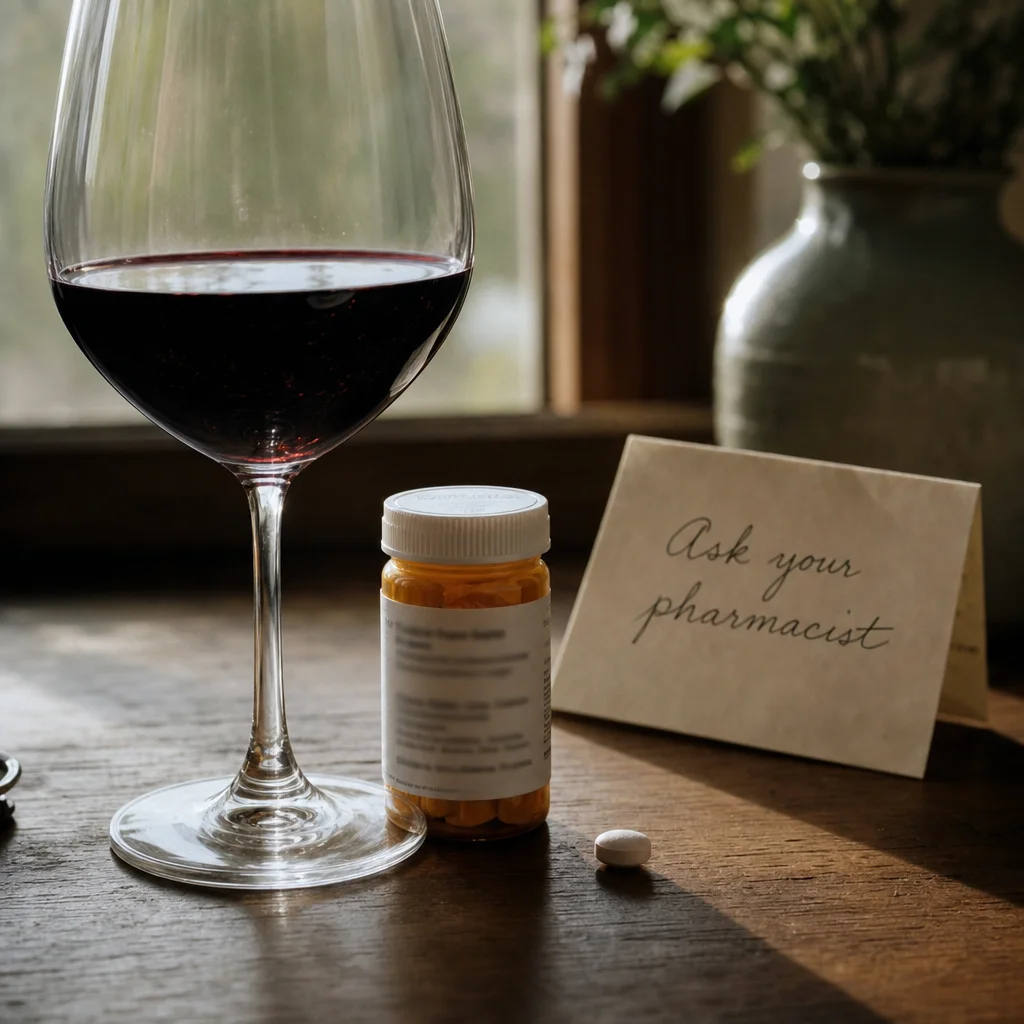
Here’s what most people don’t get about alcohol medication interactions: they aren’t just about what happens when you take a pill and sip a drink at the same time. The effects can last for hours — sometimes days — after your last dose. And the risks depend on your specific drug, your dose, your health, and even your gender.
The National Institute on Alcohol Abuse and Alcoholism reports that about 40% of U.S. adults take a drug that could interact with alcohol. Among adults ages 65 and older, that number jumps to 80%. Yet most of us glance at that tiny warning label and think, “One glass of wine probably won’t hurt.”
Sometimes that’s true. Sometimes it’s not. This is what makes alcohol medication interactions so complex — the answer depends on which medicine you take, how much you drink, and how your body handles both substances. Here’s what you need to know about alcohol medication interactions, plus the exact questions to ask your pharmacist before your next social drink.
Key Takeaways
- 40% of U.S. adults take medicine that can interact with alcohol — and most don’t know it.
- Women reach higher blood alcohol levels from the same amount of alcohol, raising the risk of interactions.
- Opioids, benzodiazepines, and certain antibiotics are among the most dangerous drugs to mix with alcohol — never combine these.
- Timing matters. Taking a morning dose doesn’t mean it’s safe to drink that evening with some medicines.
- Always ask your pharmacist: How long should I wait after my dose before drinking? It’s the single most important question you can ask.
Understanding Alcohol Medication Interactions
Alcohol medication interactions happen in three key ways. First, alcohol can change how your body breaks down a drug. This can make the medicine weaker or dangerously stronger. Second, some drugs change how fast your body processes alcohol, making you feel drunker than usual. Third, both substances can produce combined effects — like when they slow your breathing together or raise your risk of bleeding.
The CDC warns that mixing alcohol with other drugs can be deadly — even if it’s a prescription you’ve used safely for years. A 2022 review of over 3,000 people, published in Neuroscience & Biobehavioral Reviews, found that alcohol raises blood levels of several common drugs, including opioids and benzodiazepines. The study showed the highest risks were for drugs that affect your brain and nervous system. Even medications you might not think about — including stimulants for ADHD — can interact with alcohol in ways that surprise patients. We cover this in our guide to the new ADHD medication SIMTRIYO.
Pain Relievers, Antidepressants, and Other High-Risk Drugs
Not every drug reacts the same way with alcohol. This is what makes alcohol medication interactions so important to understand — the risk changes based on what you take. Some combos are life-threatening. Others may only cause mild drowsiness. Here’s what the research shows for the most common types.
Opioids and Pain Relievers
Opioids like oxycodone and morphine slow your breathing. Alcohol does the same. Together, they can cause fatal slowed breathing. The NIAAA reports that alcohol plays a role in about 1 in 5 opioid and benzodiazepine overdose deaths. Even over-the-counter pain relievers carry risks. Taking acetaminophen (Tylenol) with three or more alcoholic drinks daily can cause severe liver damage — that’s the actual FDA warning. NSAIDs like ibuprofen (Advil) raise your risk of stomach bleeding. One drink a day increases that risk by 37%.
Antidepressants and Anti-Anxiety Drugs
Alcohol is a depressant. It directly works against antidepressants in your brain. A Cleveland Clinic psychiatrist puts it bluntly: “Alcohol is like a tidal wave that wipes out that quiet stream of progress.” For the first 4-6 weeks of starting an antidepressant, you should avoid alcohol completely. Once treatment is stable, some experts say occasional moderate drinking may be OK with modern SSRIs — but the NIAAA notes that alcohol can reduce how well the drug works over time. Your doctor can help you weigh the risks. For MAOIs and bupropion (Wellbutrin), the risks are higher. These can cause dangerous blood pressure spikes and raise the risk of seizures. Benzodiazepines like Xanax and Valium paired with alcohol can lead to extreme drowsiness, memory loss, and potentially fatal slowed breathing.
Antibiotics, Blood Thinners, and Other Drugs
Not all antibiotics require full avoidance, but some do. Metronidazole (Flagyl) and tinidazole cause severe nausea, flushing, and a fast heartbeat when mixed with alcohol. Mayo Clinic advises avoiding alcohol completely during treatment with these drugs — follow your doctor’s guidance on when it’s safe to drink after your antibiotic course. Blood thinners like warfarin (Coumadin) can become risky with alcohol — heavy drinking raises the risk of both bleeding and clotting. The NIAAA notes that certain blood pressure medications can have increased side effects when mixed with alcohol, including excessive blood pressure changes. Diabetes drugs like insulin and sulfonylureas also carry risks — the NIAAA has identified medications like these as potentially high-risk for older adults. These medicines put extra strain on your liver, which is a key concern we also explore in our article on diet soda and liver disease risk.
How Gender Affects Medication Safety With Alcohol
Here’s something most drug guides skip: women and men process alcohol differently. Women have less of the enzyme that breaks down alcohol in the stomach, and more body fat means alcohol is less diluted. The result? Women reach a higher blood alcohol level from the same amount of alcohol as men. This is a critical point about alcohol medication interactions — the risk is higher for women at lower drinking levels compared to men.
The NIAAA Core Resource covers these gender differences in detail. This is why women need to be especially careful about drinking while on any medication.
Timing, Safety, and Real-Life Questions
How long should you wait? This is the top question people ask — and the answer depends on the drug. For most meds, here’s the rule: if you take it twice a day, alcohol can affect it for the whole time it’s active. Many drugs have half-lives of 12 to 24 hours. For benzodiazepines and opioids, the NIAAA says to avoid alcohol completely — no amount of time between dose and drink is truly safe. For most other drugs, it’s best to ask your pharmacist for medication-specific guidance on timing. These are the kinds of real-life considerations that make alcohol medication interactions more complex than most people realize.
What if you accidentally drank while on a drug? Don’t panic. If you feel fine, stop drinking and drink water. If you feel sick, dizzy, get a headache, a fast heartbeat, or have trouble breathing, get medical help right away. Call your pharmacist the next morning — they can tell you if you need to watch for delayed symptoms. Never skip a drug dose to “make room” for alcohol. That’s far riskier than drinking with a full dose.
Watch for hidden alcohol in OTC products. Many cold medicines and cough syrups already contain alcohol. You could be doubling up without knowing it. Always tell your pharmacist about everything you take, including supplements — some herbal remedies can interact with both drugs and alcohol.
Your 5-Question Pharmacist Guide
Before you have a drink while on any drug, ask your pharmacist these five questions:
- “Is this drug safe with any alcohol, or do I need to avoid it completely?”
- “How long after my last dose is it safe to drink?”
- “Does the type of alcohol matter — beer vs. wine vs. liquor?”
- “Are there any OTC products or supplements I should also stay away from?”
- “What symptoms should I watch for if I accidentally have a drink?”
Frequently Asked Questions
Can I have one glass of wine if I take my antidepressant in the morning?
Not during the first 4-6 weeks. After that, some experts say occasional moderate drinking may be OK with modern SSRIs — but the NIAAA warns that alcohol can reduce how well the drug works over time. Check with your doctor before you drink.
Does the type of alcohol matter?
Yes, for some drugs. Linezolid (Zyvox) reacts with tyramine, a compound in red wine and tap beer. This can cause dangerous blood pressure spikes. For most other meds, the total alcohol content matters more than the drink type.
Is it worse to drink on an empty stomach while taking medicine?
Yes. Food slows alcohol absorption, giving your body more time to process it. Drinking on an empty stomach leads to a faster, higher peak blood alcohol level — which raises the risk of interactions. If you do decide to drink while on medication, having food first can help slow alcohol absorption — but check with your pharmacist first about whether any amount is safe with your specific medicine.
Do OTC cold medicines and supplements matter too?
Yes. Many cough syrups and cold meds already have alcohol in them — so you could be doubling up without knowing it. Always tell your pharmacist about everything you take, including supplements.
The Bottom Line
Alcohol medication interactions aren’t something to ignore, but they don’t have to be scary either. The key is knowing which combos are truly dangerous versus which ones just need some caution. Opioids, benzodiazepines, metronidazole, and warfarin require full avoidance — no amount of alcohol is safe. For many other drugs, the risk depends on timing, dose, and personal factors like your liver health and gender.
Your best move? Talk to your pharmacist. Bring your full drug list — including supplements and OTC products — and ask the five questions above. It takes five minutes and could prevent a serious health problem.