Cottage Cheese Toast: The High-Protein Breakfast Upgrade
Key Takeaways
- Cottage cheese delivers 28g protein per cup with slow-digesting casein that keeps you full for hours
- It beats peanut butter for protein — and pairs perfectly with whole-grain toast for a balanced breakfast
- Sodium is the main thing to watch — but low-sodium options make it easy to enjoy daily
- You can go sweet or savory with endless topping combinations that take five minutes or less
- It’s a great source of B12 for women who eat limited meat or poultry
Picture this: you’re standing in front of the fridge at 7 AM, staring at the same options you always reach for. Peanut butter — fine, but mostly fat. Jam — basically sugar on bread. Another granola bar — more of a snack than a meal. There’s a simple swap that changes everything, and it’s probably in your fridge right now. Cottage cheese toast is the protein-packed breakfast upgrade that costs almost nothing and takes about 90 seconds to make. And unlike avocado toast or almond butter, it delivers protein numbers that actually keep you going until lunch.
Here’s the thing — we’re in the middle of what experts call a cottage cheese renaissance. Social media has helped people rediscover this creamy, tangy dairy staple, and for good reason. It’s rich in protein, surprisingly versatile, and works for both sweet and savory cravings. Let’s dig into why cottage cheese toast deserves a regular spot in your breakfast rotation — and how to make it so good you’ll actually look forward to it.
Quick Answer: Is Cottage Cheese Toast a Healthy Breakfast?
Yes. A serving of cottage cheese (about ½ cup) on whole-grain toast provides about 12 grams of protein, slow-digesting casein for sustained energy, and key nutrients like calcium and B12. It’s a significant upgrade over common breakfasts like jam toast, butter toast, or a granola bar. Just watch the sodium content — choose low-sodium or no-salt-added varieties if you’re watching your salt intake.
Why Cottage Cheese Beats Your Go-To Toast Toppings
Let’s be honest for a second. Peanut butter is delicious, but it’s more fat than protein. Two tablespoons have about 7 grams of protein and 16 grams of fat. UCLA Health notes that cottage cheese actually has more protein per serving than eggs or Greek yogurt. A half-cup of low-fat cottage cheese delivers about 12 grams of protein with only about 90 calories. That’s nearly double the protein of a standard egg for roughly the same calories.
But here’s what makes cottage cheese truly special. It’s loaded with casein protein — the slow-digesting kind that keeps your body fed for hours. Most breakfast proteins (whey from yogurt, egg whites) digest quickly. Cottage cheese is rich in casein protein, which digests more slowly than the whey protein found in yogurt. Research shows casein suppresses appetite for up to 4 hours after eating (Braden et al. 2023, The Journal of Nutrition), while whey protein is absorbed more quickly. A 2023 study in The Journal of Nutrition showed that casein protein suppresses appetite more effectively than soy protein, and it increased levels of the satiety hormone peptide YY. Translation: that mid-morning snack craving? Less likely to show up.
What I find interesting is that the science also backs up the swap from a carb-heavy breakfast to a dairy-protein one. A 2024 randomized trial in The Journal of Nutrition found that replacing carbohydrate-rich breakfast foods with dairy products improved blood sugar control, increased satiety, and even improved markers of bone metabolism. So that classic jam-on-toast breakfast? Swapping it for cottage cheese toast isn’t just a protein upgrade — it’s a metabolic one too.
The Casein Advantage: Why You Stay Full Until Lunch
You might be wondering — isn’t Greek yogurt also high in protein? Yes, but there’s a key difference. Yogurt is mostly whey protein, which is absorbed quickly. Cottage cheese is rich in casein, which digests more slowly and provides a steady release of amino acids. That matters when you’re trying to make it from breakfast to lunch without a desperate mid-morning snack.
A 2024 study in the Journal of Dairy Science followed 30 young women who ate a dairy-based high-protein breakfast. The results were clear: they reported significantly higher fullness and satisfaction compared to a low-protein, high-carb breakfast. They also scored 3.5 percentage points higher on cognitive concentration tests. So not only do you feel fuller — you might actually think more clearly before lunch.
Now, I want to be honest with you. The same study found that increased satiety didn’t automatically translate to eating less at lunch. Feeling full doesn’t always mean you’ll eat less — that part still requires conscious choices. But for most of us, starting the day with genuine fullness instead of a blood sugar roller coaster is a huge win on its own.
Build Your Perfect Cottage Cheese Toast
Here’s the formula I use, and it works every time. Think of it as a template you can customize based on what you’re craving or what’s in your fridge.
The Cottage Cheese Toast Formula
Step 1 — Choose your bread. Go for whole-grain, sourdough, or sprouted grain. Sturdy bread prevents sogginess and adds fiber. Toast until golden and crisp.
Step 2 — Spread the base. Use ½ cup of cottage cheese (that’s about 12g protein). For a creamier texture, stir it first. For an even smoother spread, give it a quick whirl in a blender or food processor.
Step 3 — Add your toppings. Go sweet, savory, or both. See the ideas below.
Step 4 — Season and finish. A pinch of salt and pepper for savory versions. A dusting of cinnamon or drizzle of honey for sweet ones. Serve immediately.
Cottage Cheese Toast Toppings to Try
The best thing about cottage cheese toast? You can change it every single day and never get bored. Here are six combinations I keep coming back to:
1. Mediterranean Morning. Spread cottage cheese on sourdough, then top with halved cherry tomatoes, fresh basil, and a drizzle of olive oil. It’s creamy, tangy, and tastes like summer.
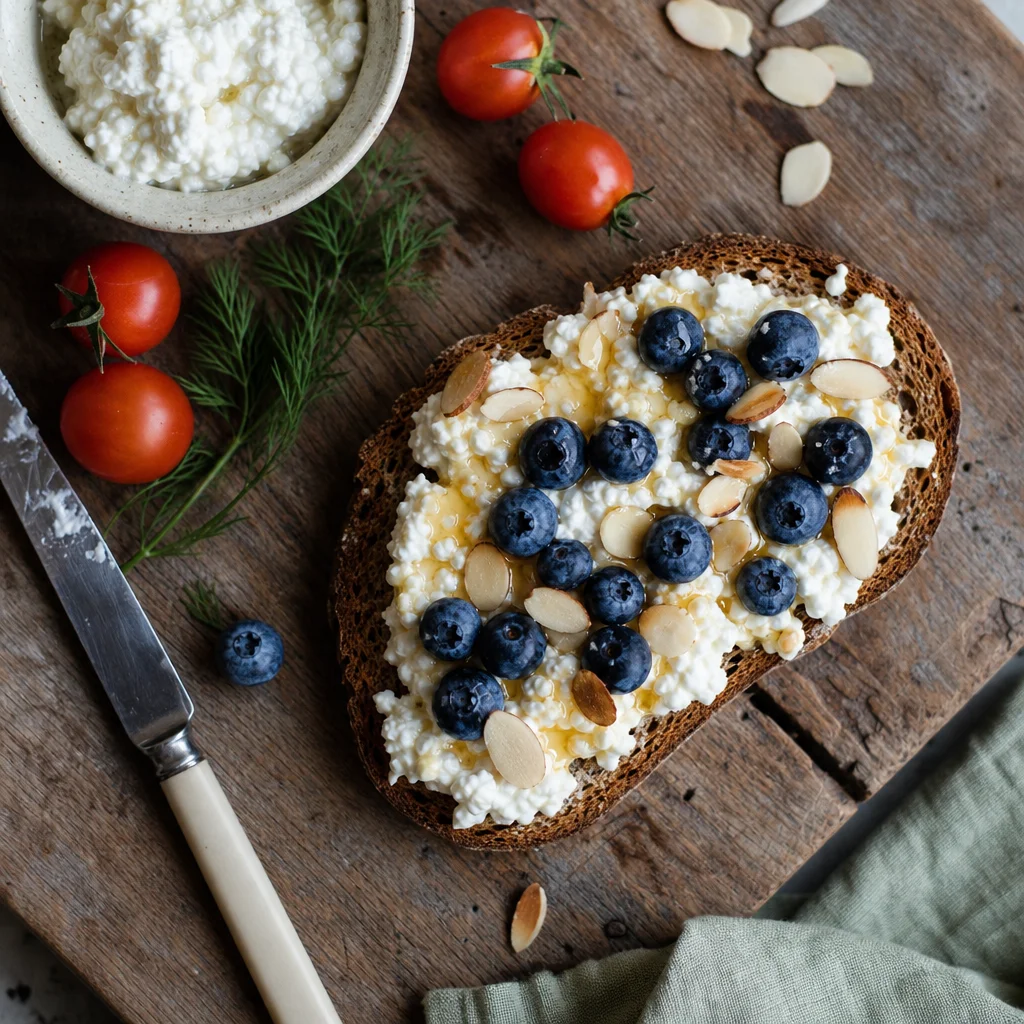
2. Sweet Berry Almond. Whole-grain toast + cottage cheese + blueberries + sliced almonds + a light drizzle of honey + cinnamon. Tastes like dessert, fuels you like a meal.
3. Protein Power-Up. Top your cottage cheese toast with smoked salmon, fresh dill, and cracked black pepper. The salmon adds omega-3s and makes this a 25g+ protein breakfast.
4. Garden Fresh. Spread cottage cheese, then add thin cucumber slices, fresh dill or mint, and a squeeze of lemon. Light, refreshing, perfect for warmer mornings.
5. Sweet and Spicy. Cottage cheese + a drizzle of hot honey + chili crunch + everything bagel seasoning. The combination of creamy, sweet, and spicy is genuinely addictive.
6. Egg and Avocado. Whisk an egg into your cottage cheese before scrambling, then pile it onto toast with half an avocado and a sprinkle of chives. This is the breakfast that gets you through a full day.
What to Look for at the Store
Not all cottage cheese is the same. Here’s what I check before buying:
Fat content. You’ll find full-fat (4%), low-fat (2%), and nonfat options. Registered dietitians at the Cleveland Clinic recommend low-fat or full-fat over nonfat, since the fat helps with satiety and flavor. Full-fat has about 1.5g more saturated fat than 2% but can be more satisfying. Neither is good or bad — it’s about what works for your overall diet.
Sodium. This is the main thing to watch. Regular cottage cheese has 660 to 900 milligrams of sodium per cup — that’s a third to nearly half of the daily 2,300mg limit. If you have high blood pressure, look for low-sodium varieties (200–300mg per cup) or no-salt-added options (around 30mg per cup).
Curd size. Small curd, large curd, whipped — it’s just texture. Large curd is more traditional. Whipped cottage cheese has a smoother, spreadable texture that many people find easier to enjoy. If you’re texture-averse, whipped or blended is your best bet.
Live cultures. If you want the gut health benefits, look for “live and active cultures” on the label. Not all cottage cheese contains probiotics, but many brands add them.
Cottage Cheese Toast Safety: What About Sodium?
I want to be upfront here. The biggest concern with eating cottage cheese regularly is its sodium content. A full cup of regular cottage cheese can contain up to 900mg of sodium. That’s significant — especially if you’re managing high blood pressure or heart disease.
But here’s the good news. You don’t need to eat a full cup. A standard serving of ½ cup on toast gives you about 330–450mg of sodium, which is well within the 500–700mg per meal that dietitians recommend. And if you choose a low-sodium variety, you can drop that to 100–150mg per serving. No-salt-added cottage cheese has just 30mg per cup.
According to the National Institutes of Health, adults need 1,000–1,200mg of calcium daily, and dairy products like cottage cheese are among the best sources. The calcium in dairy is absorbed at about 30%, which is higher than most plant sources. So while you’re keeping an eye on sodium, you’re also getting a meaningful calcium boost that supports your bones.
Can I Eat Cottage Cheese Toast If I’m Lactose Intolerant?
Many people with lactose intolerance can tolerate cottage cheese because the culturing process reduces lactose content. Start with a small serving to test your tolerance. If you’re highly sensitive, look for lactose-free brands or consider a lactase enzyme supplement.
The Bottom Line
Cottage cheese toast is one of the simplest, most affordable ways to upgrade your breakfast. It delivers slow-digesting casein protein that keeps you full, essential nutrients like calcium and B12, and a creamy base that works with almost any flavor profile you’re in the mood for.
The research backs it up. A 12-week randomized trial in the British Journal of Nutrition found that women who ate a high-protein breakfast reported higher satiety and better appetite control. However, the same study found no significant changes in body composition or total daily calorie intake, which means a high-protein breakfast works best as part of an overall healthy eating pattern — including as highlighted in our sustainable diet guide for eating well every day.
Here’s what I want you to try this week: pick one morning to swap your usual toast for cottage cheese toast. Use the formula above. Pick any topping combo. See how you feel at 10:30 AM. I think you’ll be surprised at the difference one simple change can make.
Frequently Asked Questions
Is cottage cheese healthier than peanut butter on toast?
It depends on your goals. Peanut butter has healthy fats and about 7g protein per 2-tablespoon serving. Cottage cheese has about 12g protein per half-cup serving with much less fat. For protein density and satiety, cottage cheese wins. For healthy fats and flavor variety, peanut butter is still great. They’re both healthy — it depends on what your breakfast needs to do for you.
Can I make cottage cheese toast ahead of time?
It’s best made fresh. The bread gets soggy as the cottage cheese sits. But you can prep the components: toast the bread and store it in an airtight container, keep the cottage cheese in the fridge, and have your toppings ready to go. Assembly takes 90 seconds.
Is it safe to eat cottage cheese every day?
For most people, yes. The main consideration is sodium. If you choose low-sodium or no-salt-added varieties, you can enjoy cottage cheese daily without concern. If you have high blood pressure, kidney issues, or heart disease, talk to your healthcare provider about your sodium limits.
Related Articles You Might Enjoy
- Why a Cottage Cheese Snack Keeps You Fuller Longer
- Sustainable Diet Guide: Eat for Your Health + the Planet