
Sustainable Diet Guide: Eat for Your Health + the Planet
What if the healthiest choice for you was also the healthiest choice for the planet? That’s the promise of a sustainable diet — and new evidence suggests it’s not just wishful thinking. A major 2026 study published in Nature found that a global shift toward healthier eating could cut agricultural emissions from land-use change by 85% by 2050. At the same time, food production could shift toward more fruits, vegetables, legumes, and nuts — making these foods more abundant and affordable over time. Here’s what that means for your plate and your health.
Quick Answer: What Is a Sustainable Diet?
A sustainable diet is one that supports your health while also protecting the planet. It’s rich in plant foods like vegetables, fruits, whole grains, legumes, and nuts, with fewer animal products — especially red meat. According to the 2025 EAT-Lancet Commission, a global shift toward this way of eating could prevent 15 million premature deaths each year while dramatically reducing greenhouse gas emissions. The best part? You don’t have to be perfect. Any step toward more plants and less meat makes a difference.
What the Science Says About a Sustainable Diet
Here’s the thing: the science on sustainable eating has never been clearer. The 2026 Nature study, led by researchers from the London School of Hygiene & Tropical Medicine and Cornell University, modeled what would happen if the world shifted to healthier diets by 2050. The findings are striking.
Global farmland use could shrink by 6%. Livestock production value could drop by 42% — that’s $630 billion. Meanwhile, the value of fruits, vegetables, nuts, and legumes could soar by 57%, or $890 billion. In the United States alone, crop production value could rise by 20% while livestock value falls by 73%.
Now, you might be thinking: that sounds huge. And it is. But here’s what matters most for you: the same diet that drives this transformation is the one that’s already recommended for your health.
Key Findings From the Latest Research
- 85% reduction in emissions from land-use change by 2050 with healthier global diets
- 400 million fewer ruminant animals (beef cattle, sheep, goats) needed globally
- $890 billion increase in the value of fruit, vegetable, nut, and legume production
- 15 million premature deaths could be prevented annually through dietary change
- $10–20 trillion in hidden food system costs — including health and environmental damage
How a Plant-Forward Diet Benefits Your Health
Let’s be honest: you’re probably here because you care about your health first. And that’s OK — the great news is that the evidence for personal benefit is just as strong.
A massive 2026 systematic review and meta-analysis published in Advances in Nutrition looked at 227 studies on the EAT-Lancet Planetary Health Diet. The results? Following this eating pattern was linked to a 20% lower risk of early death and a 17% lower risk of heart disease. It also reduced type 2 diabetes risk and cut daily greenhouse gas emissions by about 1.55 kg of CO2 per person.
But here’s an honest note: the evidence for cancer and dementia protection isn’t as strong. So while a plant-forward diet is excellent for your heart and longevity, it’s not a magic shield against everything. That’s the kind of balanced truth we need more of.
The 85% Emissions Reduction: What It Actually Means
You’ve probably seen the 85% figure by now. But what does it actually look like in practice?
That number refers specifically to emissions from land-use change — the CO2 released when forests are cleared for grazing or feed crops. Right now, huge swaths of the Amazon and other critical ecosystems are being cut down for cattle ranching. A shift toward healthier diets would dramatically reduce that pressure.
Research in The Lancet Planetary Health shows that combining dietary changes with circular food systems — where waste is recycled for feed and fertilizer — could reduce agricultural land use by 76% and total food production emissions by 75%. That’s not just an environmental win. It’s a human health win too.
What I find interesting is that these studies consistently show the same thing: the single most powerful lever for change is what we choose to eat.
Building a Sustainable Diet That Works for You
So what does a sustainable diet actually look like on a real plate? Let’s make this practical.
The 2025 EAT-Lancet Commission recommends a diet that’s rich in vegetables, fruits, whole grains, legumes, nuts, and unsaturated oils, with moderate amounts of fish and poultry, and limited red meat, added sugars, and refined grains. Think of it as a flexible framework, not a rigid prescription.
Here’s what a day of sustainable eating might look like:
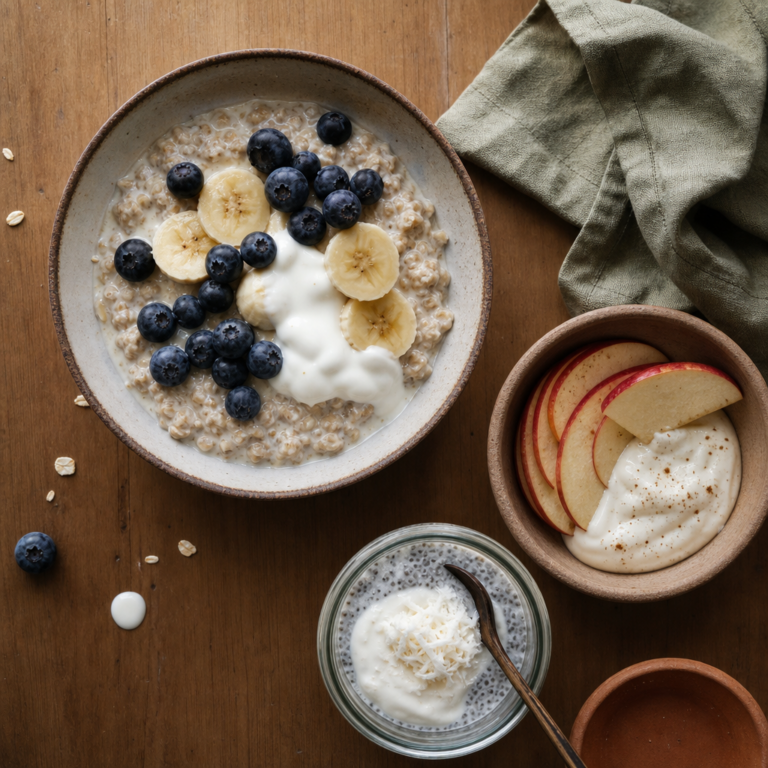
- Breakfast: Oatmeal with berries, walnuts, and a spoonful of flaxseed
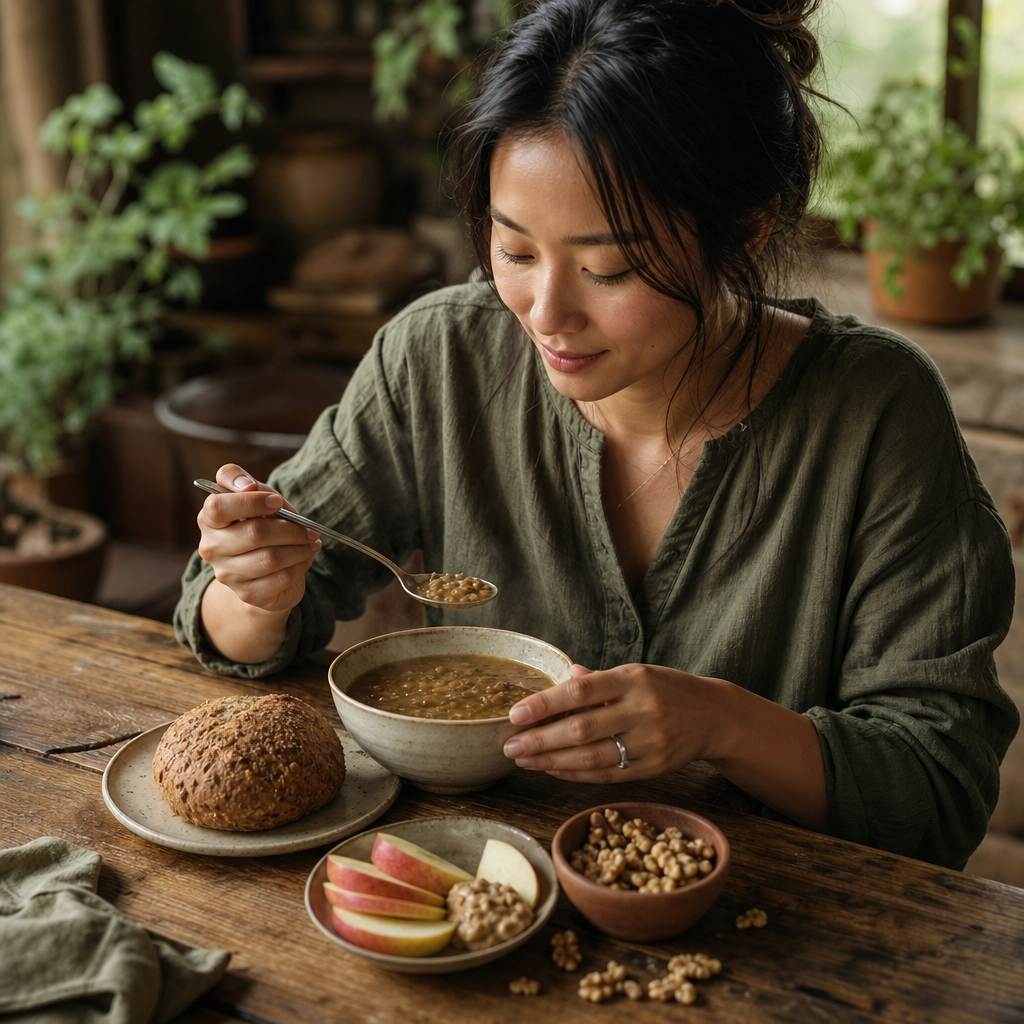
- Lunch: Lentil and vegetable soup with a whole-grain roll
- Snack: Apple with almond butter
- Dinner: Stir-fried tofu and colorful vegetables with brown rice
Notice what’s missing? You don’t need expensive specialty items. You don’t need to go fully vegan. And you don’t need to overhaul your entire kitchen overnight — simple Mediterranean-style swaps make it easy.
The Real Challenges: Affordability and Nutrients
Let’s address the elephant in the room. Sustainable eating can feel expensive. And the research backs that up. The same 2026 meta-analysis found that globally, 1.6 to 3 billion people cannot afford the EAT-Lancet diet as currently framed.
But here’s what’s also true: economic modeling shows that well-designed policies can make sustainable eating more affordable. Subsidies on fruits and vegetables, combined with fair pricing on animal products, could lower the cost of a healthy diet. And as demand for plant foods grows, the research predicts production will surge — making these foods more available and affordable over time.
In the meantime, there are budget-friendly strategies that work right now:
- Beans and lentils are among the cheapest protein sources on the planet
- Frozen vegetables are just as nutritious as fresh and often cost less
- Seasonal produce from farmers’ markets or store flyers saves money
- Bulk bins for grains, nuts, and seeds cut down on packaging costs
Nutrients to Watch When Eating More Plants
If you’re significantly reducing animal products, pay extra attention to these four nutrients. This is completely normal — you just need to be strategic about it.
- Vitamin B12: Found naturally only in animal foods. Consider a supplement or eat fortified foods like plant milks and nutritional yeast.
- Iron: Plant sources (beans, lentils, spinach, fortified cereals) are less easily absorbed. Pair them with vitamin C (citrus, bell peppers) to boost absorption.
- Calcium: Plenty in fortified plant milks, leafy greens, tofu made with calcium sulfate, and almonds.
- Zinc: Found in beans, nuts, seeds, and whole grains. Soaking beans and grains can improve absorption.
Simple Swaps to Start Eating More Sustainably
You don’t need to change everything at once. In fact, small shifts are more sustainable — pun intended. Here are a few to try:
- Swap beef for beans in tacos or chili one night a week. That single swap cuts the carbon footprint of your meal by roughly 90%.
- Replace dairy milk with oat or soy milk in your morning coffee or cereal.
- Try a meatless Monday — or any day that works for you.
- Cut food waste by planning meals, using leftovers, and freezing what you can’t eat.
- Shop seasonally — produce grown in season requires less energy to produce and transport.
On the flip side, a few common concerns are worth addressing. Plant-based meat alternatives (like Beyond Meat or Impossible) generate fewer emissions than beef, but they’re also higher in sodium and more processed. They can be part of a sustainable diet, but whole-food options like beans, lentils, and tofu are healthier choices for daily eating.
Frequently Asked Questions
Q: Does my individual food choice really matter?
Yes. Research shows that dietary shifts provide the majority of environmental gains. Your choices send market signals. But individual action is most powerful when combined with voting for policies that make healthy, sustainable food more accessible and affordable.
Q: Will I get enough protein on a more plant-based diet?
Absolutely. Most women need about 46–56 grams of protein per day. You can get that from lentils (18g per cup), tofu (20g per cup), chickpeas (15g per cup), and even whole grains. The key is eating a variety of plant proteins throughout the day.
Q: Is seafood considered sustainable?
It depends. Wild-caught fish from well-managed fisheries can be a good choice, but overfishing is a serious concern. Farmed fish varies widely. Look for Marine Stewardship Council (MSC) or Aquaculture Stewardship Council (ASC) certifications if you eat seafood.
Q: What if I can’t afford to eat sustainably?
Start with what you can do. Beans, lentils, seasonal vegetables, and frozen produce are among the most affordable foods in any grocery store. Focus on adding more plants to your existing meals rather than buying expensive specialty items. Every plant-based meal counts.
The Bottom Line
Here’s what it all comes down to. A sustainable diet isn’t about perfection. It’s not about going fully vegan overnight or buying only organic. It’s about moving in the right direction — more plants, fewer animal products, less waste — and knowing that every step counts.
The science is clear: the diet that’s healthiest for you is also the single most effective choice for the planet. And with the latest research showing that a global shift could cut emissions by 85% and prevent 15 million premature deaths each year, the case has never been stronger.
Start with one meal. Swap one ingredient. See how it feels. You might just find that what’s good for the planet is also delicious, affordable, and surprisingly easy.