

Herbal Tea vs Coffee: Which Is Better for Digestion?
Key Takeaways
- Many gastroenterologists choose warm herbal tea over coffee as their first morning beverage to gently support digestion and rehydration.
- The warmth of tea may help stimulate saliva, digestive enzymes, and bowel motility, though some experts note the evidence on temperature alone is not definitive.
- Coffee is excellent for relieving constipation but can trigger acid reflux and stomach irritation in sensitive people.
- Some commercial tea bags release billions of microplastics into your cup — loose-leaf tea is a cleaner choice.
- Your personal gut health, caffeine sensitivity, and brewing method matter more than choosing a “perfect” drink.
Picture this: it’s 6:45 AM, and you’re standing in front of the kettle. Do you reach for the coffee beans to get things moving, or the herbal tea for a gentler start? It can feel like a small, automatic decision. But gastroenterologists say your choice between herbal tea vs coffee first thing in the morning can actually affect your digestion, hydration levels, and overall gut comfort. Here’s what the latest research and top GI doctors want you to know before you pour your next cup. Understanding the herbal tea vs coffee trade-off is key to building a morning routine that works for your body.
Quick Answer: Why Do Many Gastroenterologists Prefer Herbal Tea?
Based on clinical experience, many experts say warm herbal tea first thing helps relax your digestive tract and may stimulate saliva and enzyme production. This happens without the high acidity of coffee. It also rehydrates your body after a night of sleep — something coffee also does, but without any potential caffeine-related irritation on an empty stomach.
The Case for Herbal Tea vs Coffee First Thing in the Morning
When it comes to waking up your digestive system gently, temperature may play a role — though the science is less settled than you might think. Many gastroenterologists report that warm fluids help relax the smooth muscles of your stomach and small bowel, which may stimulate peristalsis — the wave-like contractions that move food and waste through your body. However, experts from Yale, Duke, and the Mayo Clinic note there is no definitive evidence that hot water is better than cold for digestion, since water temperature normalizes quickly after you swallow it. The truth likely falls somewhere in between, and individual experience matters a lot.
Some gastroenterologists advise that very cold drinks on an empty stomach might cause temporary muscle contraction, potentially slowing digestion for some people. So when you weigh herbal tea vs coffee, the warmth factor is one consideration — but not the whole story.
Herbal tea also wins on hydration. While the old myth that “coffee dehydrates you” has been largely cleared up by research, caffeine-free herbal tea provides pure hydration without any diuretic concern whatsoever. After eight hours of sleep, your body is naturally a bit dehydrated. Starting your day with a warm cup of peppermint or ginger tea gently replenishes fluids while soothing your intestinal tract.
As a Harvard Health report summarized, both beverages offer significant health benefits. But for that very first drink of the day, GI doctors tend to lean toward the tea kettle. Here’s what’s actually happening in your body.
What About Coffee? The Good and the Gut-Check
Let’s be honest: coffee isn’t the enemy. In fact, if you struggle with constipation, that morning cup might be your best friend. A 2022 review in Nutrients found that coffee stimulates colonic motility, though some GI effects remain debated. It triggers the release of gastrin, a hormone that gets your colon moving. This explains why roughly 29% of coffee drinkers feel an urgent need to use the bathroom within a few minutes of drinking it.
However — and this is a big however — coffee also stimulates gastric acid secretion. This is why it can trigger heartburn or worsen GERD symptoms in people who are sensitive. Coffee on an empty stomach can be particularly irritating for those with a sensitive gut lining.
So when you’re weighing herbal tea vs coffee for your morning routine, it really comes down to your body’s signals. If coffee helps you stay regular and doesn’t upset your stomach, there’s no reason to toss your beans. But if you struggle with acid reflux, bloating, or stomach irritation first thing, herbal tea is the smarter play. The herbal tea vs coffee decision hinges on your own digestive tolerance.
The Hidden Ingredient in Your Tea Bag: Microplastics
Here’s a twist in the herbal tea vs coffee debate that most articles completely miss. That convenient tea bag you’re steeping could be releasing billions of microscopic plastic particles into your cup. A 2026 systematic review in Reviews on Environmental Health analyzed 22 studies and confirmed that a single plastic tea bag can release hundreds of thousands to billions of micro and nanoplastic particles during a typical brew.
The worst offenders? Those “silky” pyramid-shaped bags made from nylon or PET. Even paper tea bags often contain polypropylene heat-seals that shed microplastics into your water. This doesn’t mean you need to swear off tea, but it does mean you should be intentional about how you brew it. If you’re choosing herbal tea for its health benefits, you want to make sure you’re getting a clean cup.
A Simple Guide to Choosing Your Morning Brew
Here’s a quick decision guide based on your specific digestive needs:
Coffee Wins If…
You deal with constipation. Coffee’s ability to stimulate colon contractions is backed by solid evidence. Just try to eat a small breakfast first to buffer the acid and protect your stomach lining.
Herbal Tea Wins If…
You have acid reflux or a sensitive stomach. Ginger, chamomile, or peppermint tea can be particularly soothing. Choose loose-leaf or verified plastic-free tea bags for the cleanest experience.
Green or Black Tea Wins If…
You need gentle, steady energy without the coffee jitters. These teas contain L-theanine, an amino acid that promotes calm alertness, plus a moderate dose of caffeine to help you focus.
At the end of the day, the herbal tea vs coffee decision isn’t about which one is universally “better.” It’s about which one works best for your body at this stage of your health journey. You can even enjoy both — a small cup of coffee for motility followed by a large mug of herbal tea for hydration.
The Healthiest Way to Brew (No Matter Which You Choose)
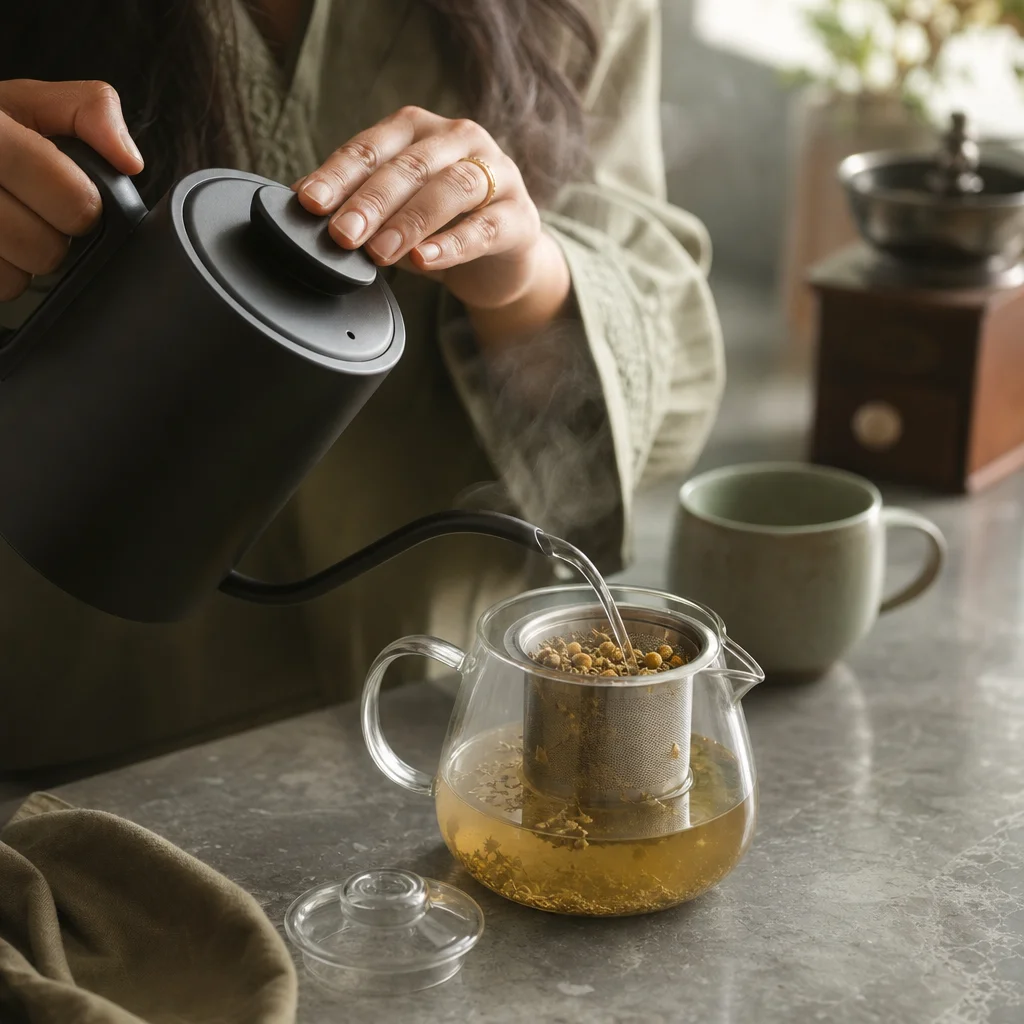
For herbal tea: Go loose-leaf. It eliminates the microplastic problem entirely and usually tastes better. A simple stainless steel infuser or a teapot with a built-in strainer is all you need to get started. If you do use bags, look for brands that seal their paper bags with cotton string and a crimp seal rather than plastic glue.
For coffee: Use a paper filter. Unfiltered coffee (French press, espresso) lets compounds called cafestol and kahweol through, which can raise LDL cholesterol slightly in some people. A paper filter traps most of these compounds. And if coffee upsets your stomach, try a dark roast — it tends to be less acidic than lighter roasts. Our guide to healthy coffee additives explores smart ways to brew a gentler morning cup.
Frequently Asked Questions
Does coffee actually dehydrate you?
Not at normal intake levels. A 2014 study in PLOS ONE found that moderate coffee consumption (3 to 4 cups per day) provides hydration similar to water in people who drink coffee regularly. Very high caffeine doses can have a mild diuretic effect, but your standard morning cup is hydrating.
Can I drink both coffee and herbal tea in the morning?
Absolutely. Some people find a “hybrid” morning works well: a small cup of coffee to stimulate digestion, followed by a larger mug of herbal tea for sustained hydration.
Which herbal tea is best for digestion?
Peppermint is excellent for gas and bloating. Ginger is great for nausea and motility. Chamomile is ideal for relaxation and soothing the gut. Rotate between them based on how you feel that morning.
The Bottom Line
Your morning drink is a small ritual that can have a real impact on your digestive health. Whether you land on the coffee side or the tea side of the herbal tea vs coffee debate, the most important thing is to choose mindfully. Listen to your body. Pay attention to how your stomach feels. Invest in clean brewing methods. And give yourself permission to switch it up depending on what you need that day.
Your digestive system responds beautifully to simple, consistent habits. Making a conscious choice about your morning mug is a small but powerful step toward a healthier everyday life.