Coffee and Blood Pressure: What Science Says
Key Takeaways
- Caffeine temporarily raises blood pressure by blocking adenosine and releasing adrenaline, but regular coffee drinkers develop tolerance.
- Long-term, habitual coffee consumption is neutral or beneficial for blood pressure — the 10-year PAMELA study found no increased hypertension risk.
- The relationship follows a J-shaped curve: 1–3 cups/day may slightly increase risk for some, while 3+ cups/day is linked to lower risk.
- People with severe uncontrolled hypertension (160+/100+) should limit to 1 cup/day, but moderate coffee is safe for most.
- Try a simple home test: measure your blood pressure before and 30–120 minutes after coffee to see how your body responds.
Picture this: You pour your morning coffee, inhale that familiar aroma, and then a quiet thought creeps in — “Is this cup doing something to my blood pressure?” If you’ve ever wondered about the connection between coffee and blood pressure, you’re not alone. Nearly half of U.S. adults have high blood pressure, and two-thirds drink coffee daily. So where does that leave us? The relationship between coffee and blood pressure is famously complicated — but understanding it doesn’t have to be. Here’s what the science actually says, and how you can enjoy your ritual without worry.
Quick Answer: Is coffee bad for your blood pressure?
For most people, no. While caffeine can cause a temporary spike in blood pressure (usually 3–14 mmHg systolic), regular coffee drinkers develop tolerance, and long-term studies show no increased risk of hypertension. In fact, moderate consumption of 3–5 cups of filtered coffee per day is linked to lower cardiovascular risk — a topic we explore in our guide to coffee and heart health. The key is knowing your own blood pressure numbers and how your body responds.
Why Coffee Blood Pressure Effects Are So Confusing
Here’s the thing: coffee doesn’t just contain caffeine — it’s a complex beverage with hundreds of compounds. The caffeine in coffee blocks adenosine, a chemical that helps your blood vessels relax, which can cause a short-term rise in blood pressure. It also triggers the release of adrenaline, which makes your heart beat faster and stronger.
But coffee also contains powerful antioxidants called polyphenols, especially chlorogenic acid. These help improve the function of the cells lining your blood vessels (the endothelium), allowing blood vessels to dilate more easily — a long-term effect that can lower blood pressure.
So you’ve got two opposing forces at work: the acute pressor effect from caffeine and the chronic vasodilatory effect from antioxidants. Which one wins? It depends on how often you drink coffee, your genetics, and your overall health. As the 2026 American Heart Association scientific statement explains, habitual coffee drinkers develop tolerance to caffeine’s acute BP effects, so the net long-term effect is neutral or slightly protective.
The J-Shaped Curve: When Coffee Blood Pressure Risk Goes Down
Now, you might be thinking, “But I’ve read that coffee raises blood pressure — and also that it helps. Which is it?” This is where the J-shaped curve comes in. Research cited in the AHA statement shows that people who drink 1–3 cups of coffee per day have a slightly higher risk of developing hypertension compared to non-drinkers. But people who drink 3 or more cups per day actually have a lower risk.
Wait — doesn’t that seem backwards? Here’s what’s actually happening. The 1–3 cup group likely includes both occasional drinkers and people sensitive to caffeine, who experience the acute pressor effect without having built up tolerance. The 3+ cup group, on the other hand, are habitual drinkers whose bodies have adapted. The antioxidants from all those cups may also accumulate and provide lasting vascular benefits.
A 2026 comprehensive review in the European Journal of Medical Research confirms that moderate coffee intake shows the lowest cardiovascular risk, while very high intakes (6+ cups) may increase risk again — hence the J shape.
How to Test Your Coffee Blood Pressure Response
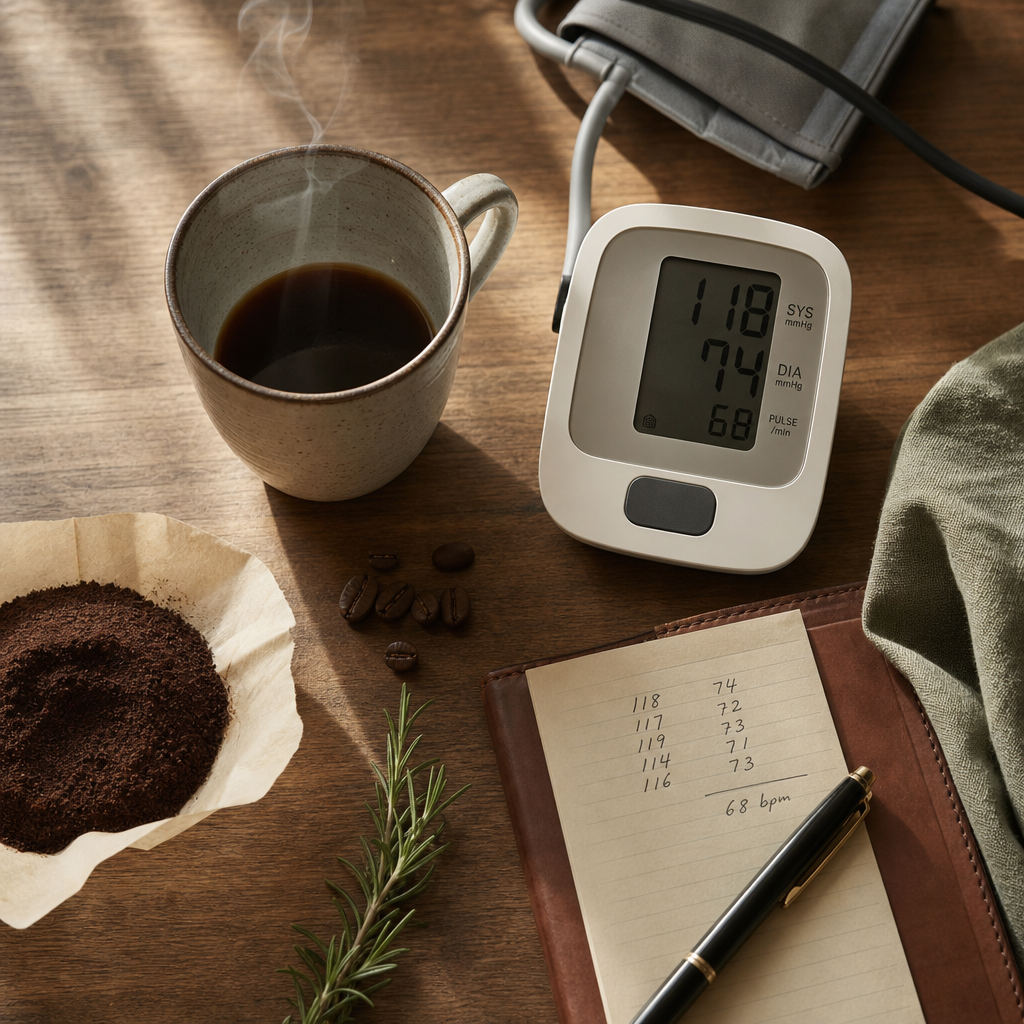
The best way to know how coffee affects your body is simple: check your blood pressure before and after your usual cup. The Mayo Clinic recommends this exact approach.
At-Home Coffee BP Challenge
Step 1: Sit quietly for 5 minutes and take your blood pressure before drinking coffee.
Step 2: Drink your usual cup of coffee (black or with a splash of milk — avoid sugar for now).
Step 3: Wait 30–120 minutes, then take another reading.
Step 4: Compare. A rise of 5–10 mmHg systolic suggests you’re sensitive. A rise of 10+ mmHg consistently over several days might mean you should cut back.
Step 5: Do this for 3–5 days to rule out day-to-day variation.
Most people see little to no rise because they’re habitual drinkers. If you do notice a consistent spike, try half-caf or switch to decaf. Remember, decaf still contains the beneficial polyphenols — a 2025 comprehensive review in Nutrients found that both caffeinated and decaf coffee were linked to lower cardiovascular risk.
What About People Who Already Have High Blood Pressure?
This is the question with the most nuance. A landmark study from Italy — the PAMELA study — followed 1,408 adults for 10 years and found that habitual coffee consumption had neutral effects on blood pressure, regardless of whether people were heavy or moderate drinkers. New-onset hypertension rates were the same between coffee drinkers and non-drinkers.
But here’s the important caveat: a Japanese study of 18,609 adults found that people with severe hypertension (systolic 160+ / diastolic 100+ mmHg) who drank 2 or more cups of coffee per day had double the cardiovascular mortality risk. One cup per day did not increase risk for any blood pressure category.
So what’s a person with high blood pressure to do? A 2025 study in US adults with cardiovascular disease found that coffee consumption overall was linked to 25% lower all-cause mortality. Specifically, drinking 1–3 cups per day was associated with 35% lower risk of cardiovascular-related death — and the protective effect held even among those with hypertension. The difference? Most participants likely had mild-to-moderate, controlled hypertension, not severe uncontrolled numbers.
The bottom line for high BP: If your blood pressure is well-controlled (below 140/90), moderate coffee is safe and likely beneficial. If your numbers run above 160/100, stick to one cup per day and talk to your doctor.
Does How You Brew Your Coffee Matter?
You might think brewing method only affects taste — but it turns out it matters for heart health too. Unfiltered coffee (French press, Turkish coffee, espresso) contains compounds called diterpenes (cafestol and kahweol) that can raise LDL cholesterol. Paper filters trap these compounds, making filtered coffee (drip coffee, pour-over) the healthier choice.
The AHA statement notes that unfiltered coffee raises LDL, but its effect on blood pressure specifically is less clear. For overall heart health, filtered coffee is the winner. If you love an occasional French press, it’s probably fine — but if you drink multiple cups daily, consider switching to filtered coffee for your main brews.
Quick Brewing Guide
Filtered (drip, pour-over, cold brew with paper filter): Low diterpenes — best for cholesterol and heart health.
Unfiltered (French press, Turkish, espresso): High diterpenes — can raise LDL. Fine in moderation.
Cold brew (without filter): Can be significantly higher in caffeine than hot coffee — check your body’s response.
Decaf: Almost zero caffeine, still rich in polyphenols and antioxidants.
The Bottom Line: Can You Still Enjoy Coffee?
Let’s be honest — if you love coffee, you were probably going to drink it regardless. But the good news is that for the vast majority of women, coffee and blood pressure can peacefully coexist. The science shows that moderate, habitual coffee consumption does not cause hypertension and may even support heart health through its antioxidant content.
Here’s your action plan:
- Know your blood pressure numbers. If they’re above 160/100, limit coffee to one cup daily and talk to your doctor.
- Try the Coffee BP Challenge at home to see how your body responds.
- Opt for filtered coffee most days — it’s better for your cholesterol.
- Avoid energy drinks; they’re not comparable to coffee and are linked to cardiovascular harm.
- Add healthy touches like cinnamon or unsweetened cocoa instead of sugary syrups.
Coffee is one of life’s simple pleasures, and you don’t have to give it up to protect your blood pressure. As a comprehensive review in Nutrients puts it: “Coffee consumption is not linked to increased risks of hypertension.” So go ahead — savor that cup.
Frequently Asked Questions
How long does coffee raise blood pressure?
The acute rise from caffeine usually peaks within 30–120 minutes and typically subsides over the next few hours. In regular drinkers, the effect is much smaller or absent.
Can I drink coffee if I take blood pressure medication?
In most cases, yes — but check with your healthcare provider. Some blood pressure medications can interact with caffeine. Your doctor can give you personalized guidance.
Does decaf coffee affect blood pressure?
Decaf has minimal caffeine (about 3 mg per cup versus 95 mg in regular). The polyphenols in decaf may still support blood vessel health. For people sensitive to caffeine, decaf is an excellent option.
What about cold brew and blood pressure?
Cold brew can be significantly higher in caffeine than hot coffee, depending on brew time. If you’re sensitive to caffeine, stick to smaller servings or dilute it.