

Mint for Gut Health: Science-Backed Benefits & How to Use
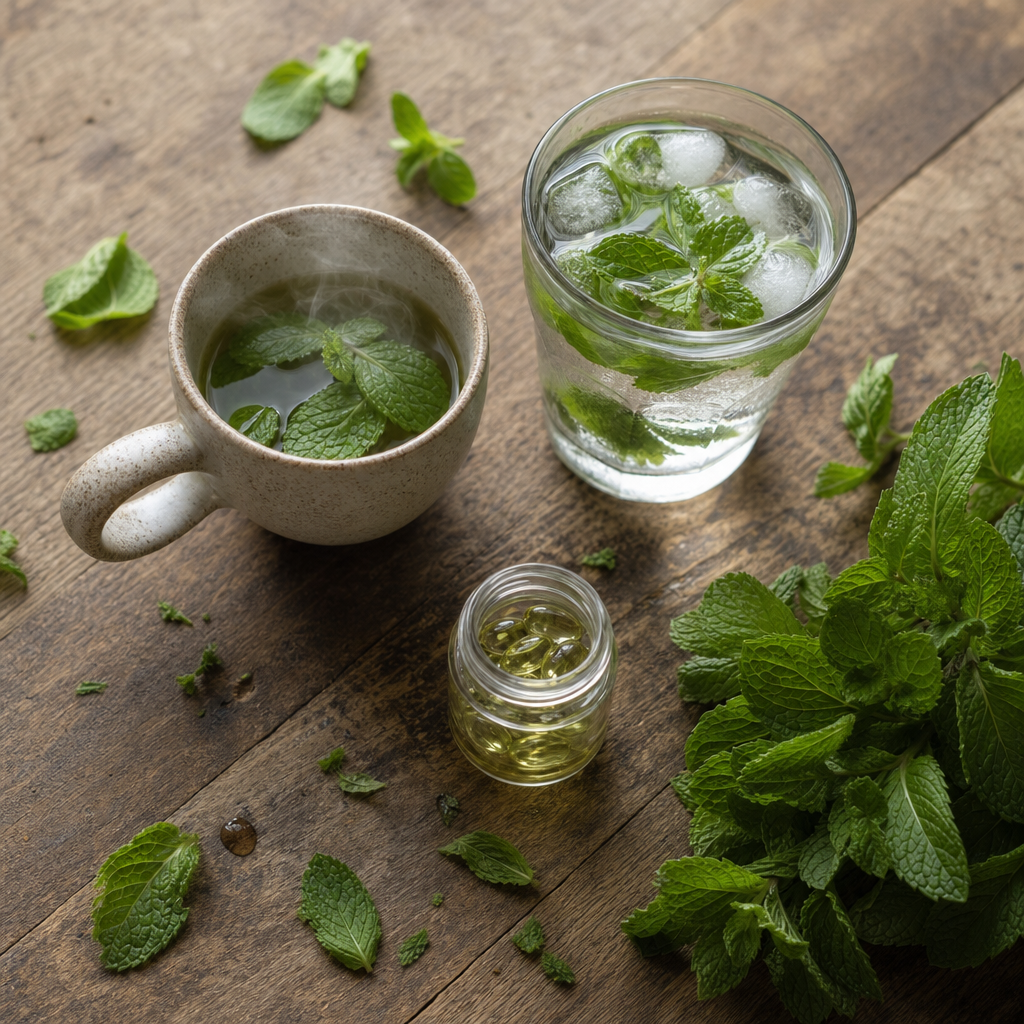
Key Takeaways
- Mint is a science-backed digestive aid. Peppermint oil capsules are ranked #1 among traditional therapies for improving IBS symptoms in a major network meta-analysis.
- Form matters. Fresh mint leaves offer gentle support, while enteric-coated peppermint oil capsules deliver therapeutic doses for diagnosed conditions.
- Mint can help or hurt. It relaxes gut muscles to ease cramping, but can also relax the esophageal sphincter — potentially worsening GERD symptoms.
- Spearmint and peppermint are different. Peppermint has stronger evidence for digestive health due to its higher menthol content.
- Safety first. Always choose enteric-coated capsules and talk to your clinician before using peppermint oil supplements, especially if you have GERD, are pregnant, or take medications.
Ever had that feeling after a big meal? You know the one — bloated, uncomfortable, wishing your stomach would just settle down. You reach for a cup of mint tea, and somehow it helps. But here’s the thing: mint for gut health is more than just an old wives’ tale. Dietitians and researchers alike are calling it the #1 herb for digestive wellness. And the science behind it is surprisingly strong.
Whether you deal with occasional bloating, full-blown IBS, or just want to support your digestive system naturally, mint offers a spectrum of options — from a few fresh leaves in your water to targeted supplements. But not all mint is created equal, and knowing which form to use (and when to be cautious) makes all the difference. Let’s break it down.
Quick Answer: Is mint good for gut health?
Yes, but it depends on the form. Peppermint oil capsules (especially enteric-coated) have strong evidence for easing IBS symptoms like bloating, cramping, and abdominal pain. Fresh mint leaves and mint tea offer gentler, milder digestive support. However, mint can worsen GERD symptoms in some people because it relaxes the muscle that keeps stomach acid down. The key is matching the right form to your specific needs.
What Does the Science Say About Mint for Gut Health?
Let’s get one thing straight: the research on mint for gut health is not just a few small studies. It’s actually quite robust. A major network meta-analysis published in The Lancet Gastroenterology & Hepatology looked at 51 randomized trials with over 4,600 patients. The finding? Peppermint oil capsules ranked first among all traditional therapies — including antispasmodic drugs, fiber, and gut-brain neuromodulators — for improving global IBS symptoms. That’s a big deal.
But here’s the nuance. A 2022 meta-analysis of 10 trials involving 1,030 patients confirmed that peppermint oil is superior to placebo for both global IBS symptoms and abdominal pain. The number needed to treat (NNT) was just 4 — meaning only 4 people need to take it for one to get meaningful relief. That’s comparable to many prescription IBS drugs. However, the same review rated the quality of evidence as “very low” due to small sample sizes and risk of bias in the included trials.
What does this mean for you? The science consistently shows that peppermint oil works for IBS. But we also need to be honest: more high-quality research would help us be more confident. An umbrella review from 2025 confirmed that peppermint oil improves IBS symptoms, though it noted the evidence certainty is low to very low. The good news? The safety profile is excellent, making it a low-risk option to try.
How Mint Works: The Science of Smooth Muscle Relaxation
So how does this humble herb actually work? The active compound in mint — especially peppermint — is called menthol. And menthol does something pretty clever in your digestive tract.
Think of your intestines as a long tube surrounded by smooth muscle. When that muscle goes into spasm — which happens with IBS, indigestion, or even just stress — you feel cramping and pain. Menthol has antispasmodic properties that help relax the muscles of the digestive tract. This is why mint can ease that gripping, crampy feeling so effectively. The 2022 meta-analysis confirmed this benefit for abdominal pain specifically.
Peppermint oil also helps reduce gut pain sensitivity, which is why many people with IBS find it particularly helpful. For people with IBS, whose nerves are often on high alert, this is a real game-changer.
The Three Ways Mint Helps Your Gut
- Antispasmodic: Menthol relaxes cramping smooth muscle in the intestines, easing pain and discomfort.
- Reduces pain sensitivity: Peppermint oil lowers how sensitive your gut feels to pain, which helps with IBS symptoms.
- Anti-inflammatory effects: Some research suggests mint may help calm inflammation in the gut, though the strongest evidence is for its muscle-relaxing properties.
Peppermint vs. Spearmint: Which Is Better for Digestion?
Here’s something most articles skip: not all mint is the same when it comes to gut health. Peppermint and spearmint are both members of the Mentha family, but they have different chemical profiles.
Peppermint contains more menthol than spearmint, which is why it has stronger evidence for digestive health. Spearmint is milder and may be better tolerated by some people. For digestive purposes, peppermint is the clear winner because menthol is the compound responsible for that muscle-relaxing, antispasmodic effect.
That doesn’t mean spearmint is useless for digestion. It still offers mild soothing properties and is often better tolerated by people who find peppermint too strong. But if you’re looking for therapeutic effects — especially for IBS or significant bloating — peppermint is the one with the research behind it.
The Mint Spectrum: Which Form Should You Use?
This is where most articles fall short. They either talk about fresh mint (too weak for therapeutic effects) or peppermint oil (too strong for everyday use) without helping you figure out which is right for your situation. Let’s fix that.
Fresh Mint Leaves
Best for: Mild digestive support, flavor, daily hydration.
How to use: Add 3-5 fresh leaves to water, salads, smoothies, or as a garnish.
What to expect: Gentle soothing effect. Won’t replicate clinical trial results but adds refreshing flavor and mild digestive benefit. This is a great starting point for most people.
Mint Tea
Best for: Post-meal bloating, mild indigestion, nausea.
How to use: Steep 1-2 teaspoons of dried peppermint leaves (or one tea bag) in hot water for 5-10 minutes. Drink after meals or when feeling nauseous.
What to expect: Moderate relief for mild symptoms. The hot water itself can aid digestion. Safe for most people, but those with GERD should monitor their reaction.
Enteric-Coated Peppermint Oil Capsules
Best for: Diagnosed IBS, significant bloating and cramping, functional dyspepsia.
How to use: Follow the label directions or your clinician’s recommendation. Look for enteric-coated capsules specifically — this coating allows the oil to pass through the stomach and release in the intestines where it’s needed.
What to expect: This is the form used in clinical trials. Mayo Clinic recommends enteric-coated peppermint oil for easing bloating, urgency, and abdominal pain in IBS with diarrhea. Talk to your clinician before starting.
Peppermint + Caraway Oil Combination
Best for: Functional dyspepsia (chronic indigestion without an identifiable cause).
How to use: Available as a combination supplement. Follow label dosing or your clinician’s advice.
What to expect: A Cochrane review found this combination probably results in a large improvement in indigestion symptoms compared to placebo, with moderate certainty evidence. Improvement rate was 53% higher than placebo.
The GERD Caveat: When Mint Can Make Things Worse
Here’s the paradox of mint for gut health. The same mechanism that makes it so helpful for intestinal cramping — relaxing smooth muscle — can also relax the lower esophageal sphincter. That’s the muscular valve that keeps stomach acid where it belongs. When it relaxes, acid can flow back up into your esophagus, causing heartburn and reflux.
This is why you’ll hear conflicting advice about mint and GERD. For some people, mint tea soothes an upset stomach. For others, it triggers painful reflux. The key factors are:
- Form matters: Enteric-coated peppermint oil capsules bypass the esophagus entirely, releasing in the small intestine. This minimizes GERD risk. Non-enteric forms and mint tea can affect the esophageal sphincter.
- Individual sensitivity: Some people are more sensitive to mint’s muscle-relaxing effects on the esophagus. If you have GERD, start with a small amount and see how you react.
- Dose matters: A cup of mint tea is less likely to trigger reflux than concentrated peppermint oil (especially non-enteric forms).
If you have GERD, hiatal hernia, or severe acid reflux, talk to your doctor before using any form of mint therapeutically. You may still tolerate enteric-coated capsules, but it’s worth a conversation.
Safety, Side Effects, and Who Should Be Careful
Peppermint oil has an excellent safety profile for short-term use (up to 8-12 weeks). German medical guidelines rate its safety as “very good” to “acceptable.” But there are important caveats.
Common Side Effects
Side effects like heartburn and indigestion are possible with peppermint oil, especially with non-enteric formulations. Enteric-coated capsules significantly reduce this risk. The 2022 meta-analysis found that adverse events were more common with peppermint oil than placebo, but they were generally mild.
Who Should Avoid Peppermint Oil
- Pregnant or breastfeeding women: Peppermint oil supplements have not been well studied in pregnant or breastfeeding populations. Talk to your healthcare provider before using any concentrated supplement.
- People with severe GERD or hiatal hernia: Mint can worsen symptoms by relaxing the esophageal sphincter.
- Those with liver or gallbladder disease: If you have liver or gallbladder disease, consult your doctor before using peppermint oil supplements.
- People with stomach ulcers: If you have a history of stomach ulcers, talk to your doctor before using concentrated peppermint oil supplements.
Talk to Your Clinician
Before using peppermint oil supplements, talk to your healthcare provider — especially if you take any prescription medications. Your clinician can help you determine if peppermint oil is safe and appropriate for your specific health situation.
Practical Ways to Add Mint to Your Day
Whether you’re using fresh mint for gentle support or considering peppermint oil capsules for more significant symptoms — and pairing it with other healthy natural drinks for gut health — here are simple ways to incorporate mint into your routine.
Simple Daily Ideas
- Mint water: Add a handful of fresh mint leaves to your water bottle for refreshing, gut-friendly hydration.
- Post-meal tea: Brew a cup of peppermint tea after heavy meals to support digestion and reduce bloating.
- Minty salads: Toss fresh mint leaves into green salads, grain bowls, or fruit salads for a flavor boost.
- Smoothie addition: Add a few mint leaves to your morning smoothie for a fresh twist.
- Herbal ice cubes: Freeze mint leaves in ice cube trays with water for a quick way to add mint to any drink.
Start with 3-5 fresh mint leaves in recipes. This amount provides a mild digestive benefit without overwhelming your system. And remember: fresh mint is a food, not a medicine. It’s safe for daily use and a wonderful way to support your gut gently. For a more structured approach to digestive wellness, try building your mornings around our gut health breakfast guide.
Frequently Asked Questions About Mint for Gut Health
Can I use spearmint instead of peppermint for digestion?
Spearmint has less menthol than peppermint, so its digestive effects are milder. It can still offer gentle soothing properties, but for therapeutic effects — especially for IBS — peppermint is the better choice based on the research.
How does mint tea compare to peppermint oil capsules?
A cup of mint tea contains far less menthol than a peppermint oil capsule — you cannot simply drink enough tea to match a therapeutic dose. Think of tea as gentle daily support and capsules as targeted therapy for specific symptoms.
Can I take peppermint oil long-term?
Most studies have looked at short-term use (4-12 weeks). Long-term safety data is limited. If you find peppermint oil helpful, it’s reasonable to use it in cycles — for example, during flare-ups — rather than continuously. Talk to your clinician about what’s right for your situation.
Is peppermint oil safe during pregnancy for nausea?
Peppermint tea is widely consumed and generally considered safe in food amounts, but if you are pregnant or breastfeeding, talk to your healthcare provider about what’s right for you. Peppermint oil supplements have not been well studied in these populations.
Does peppermint oil interact with medications?
Talk to your clinician before using peppermint oil supplements, especially if you take any prescription medications. Your healthcare provider can check for potential interactions based on your specific medication list.
The Bottom Line
Mint is genuinely one of the most well-researched herbs for digestive health. The science is clear: peppermint oil, especially in enteric-coated capsules, can significantly improve IBS symptoms, reduce bloating, and ease abdominal pain. For milder issues, fresh mint and mint tea offer gentle, everyday support that’s safe for most people.
But here’s what I want you to remember: mint for gut health is not one-size-fits-all. The right form depends on your symptoms, your sensitivity, and your health history. If you have GERD, start with caution. If you have diagnosed IBS, talk to your clinician about enteric-coated peppermint oil capsules. And if you just want a simple, natural way to support your digestion? A few fresh mint leaves in your water or a cup of tea after meals is a beautiful place to start.
Your gut will thank you — just make sure you’re using the right mint, in the right way, for your unique body.