

15 High-Protein No-Sugar Snacks for Summer
Key Takeaways
- Protein keeps you full: A systematic review of randomized controlled trials found that protein increases fullness and reduces hunger by triggering satiety hormones.
- Aim for 10–25 grams per snack: Dietitians agree this range helps steady energy and supports daily protein goals.
- Skip added sugar: The American Heart Association recommends limiting added sugars to 6% of daily calories — choose naturally sweet options instead.
- Categorize by convenience: No-cook, make-ahead, and portable snacks make it easy to stick with healthy habits all summer.
Summer afternoons can be tough. You want something satisfying, but the heat makes heavy meals unappealing. You reach for a quick snack — maybe chips, a granola bar, or iced coffee. But an hour later, you’re tired, hungry, and reaching for more. That’s where high protein snacks come in. They keep your energy steady, help you feel full, and don’t require turning on the oven. Plus, they can help you cut back on added sugar without feeling deprived. In this article, we’ll explore why high protein snacks are your best summer ally, how much protein you really need, and 15 delicious no-sugar ideas you can make in minutes.
Quick Answer: What Makes a High Protein Snack Healthy?
A healthy high protein snack delivers 10–25 grams of protein, comes from whole foods (like Greek yogurt, nuts, eggs, or legumes), and has little to no added sugar. Natural sugars from fruit are fine — they come with fiber and nutrients. Avoid snacks where added sugar appears in the first three ingredients.
Why High Protein Snacks Matter for Summer
Protein does more than build muscle. It helps regulate your appetite. A 2020 systematic review in Physiology & Behavior found that eating protein increases fullness by 10 points on a visual scale and reduces hunger by 7 points. It does this by lowering ghrelin (the hunger hormone) and raising GLP-1 and CCK (satiety hormones).
In summer, we often gravitate toward cold treats and convenience foods that are low in protein and high in added sugar. The problem? Added sugars provide empty calories and can contribute to inflammation. The American Heart Association recommends limiting added sugars to no more than 6% of daily calories (about 6 teaspoons for women).
Choosing high protein snacks with no added sugar helps you avoid that cycle. You get steady energy, fewer cravings, and a nutritional boost — exactly what your body needs on long, active summer days.
How Much Protein Do You Need in a High Protein Snack?
The 2025–2030 Dietary Guidelines for Americans recommend 1.2 to 1.6 grams of protein per kilogram of body weight each day. For a 150-pound person, that’s about 82–109 grams daily. Spread across three meals and one or two snacks, each snack should provide roughly 10–20 grams.
Registered dietitians like Jessica Cording, RD, and Natalie Rizzo, RD, define a high-protein snack as one with 10–25 grams of protein. Joy Bauer, MS, RDN, calls 12 grams the “smart sweet spot.” The exact amount depends on your activity level and goals, but 12–20 grams per snack is a solid target for most women.
Here’s the thing: Even a snack with 7 grams (like the ones in EatingWell’s list) is better than nothing. But if you want to feel satisfied until your next meal, aim higher. A high protein snack with 15–20 grams can carry you through that afternoon slump.
No-Cook High Protein Snacks for Hot Days
When it’s 90°F, the last thing you want is to turn on the stove. These no-cook ideas come together in minutes and keep your kitchen cool.
- Greek yogurt parfait with berries and chopped nuts. Plain Greek yogurt has around 15–20 grams of protein per cup. Use frozen berries for a cold treat. Skip the sweetened yogurt — the fruit adds natural sugar.
- Cottage cheese bowls with cucumber, cherry tomatoes, and a drizzle of olive oil. Cottage cheese packs about 14 grams of protein per half-cup.
- Apple slices with peanut butter — a classic for a reason. One tablespoon of peanut butter adds 4 grams of protein; pair with an apple for fiber.
- Chia pudding made with unsweetened almond milk and chia seeds. Let it sit overnight for a grab-and-go breakfast snack.
These snacks use whole foods and avoid added sugar. The sweetness comes from fruit, which comes with fiber and vitamins. That’s a win for your health and your taste buds.
Make-Ahead High Protein Snacks for Busy Weeks
Meal prepping snack portions once a week saves time and keeps you on track. These make-ahead options stay fresh in the fridge or pantry.
- Crispy roasted chickpeas — toss canned chickpeas with olive oil and spices (like garlic powder, paprika, or everything bagel seasoning). Roast at 400°F for 25–30 minutes. Each half-cup has about 7 grams of protein.
- Hard-boiled eggs — cook a batch on Sunday and keep them in the fridge. One egg has 6 grams of protein.
- No-bake energy balls made from oats, peanut butter, and dates. Add protein powder for an extra boost. Each ball can pack 5–8 grams of protein.
- Roasted edamame — frozen edamame tossed with salt and roasted at 375°F until crispy. One cup delivers 18 grams of protein.
These high protein snacks keep for days. Portion them into small containers so you can grab one when hunger hits. No thought required.
Portable High Protein Snacks for On-the-Go
Heading to the beach, a hike, or the office? Portable snacks that don’t need refrigeration (or can tolerate a few hours in a cooler) are essential.
- Beef or turkey jerky — look for brands with no added sugar. One ounce has about 9–10 grams of protein. (Note: some jerky is high in sodium, so check labels.)
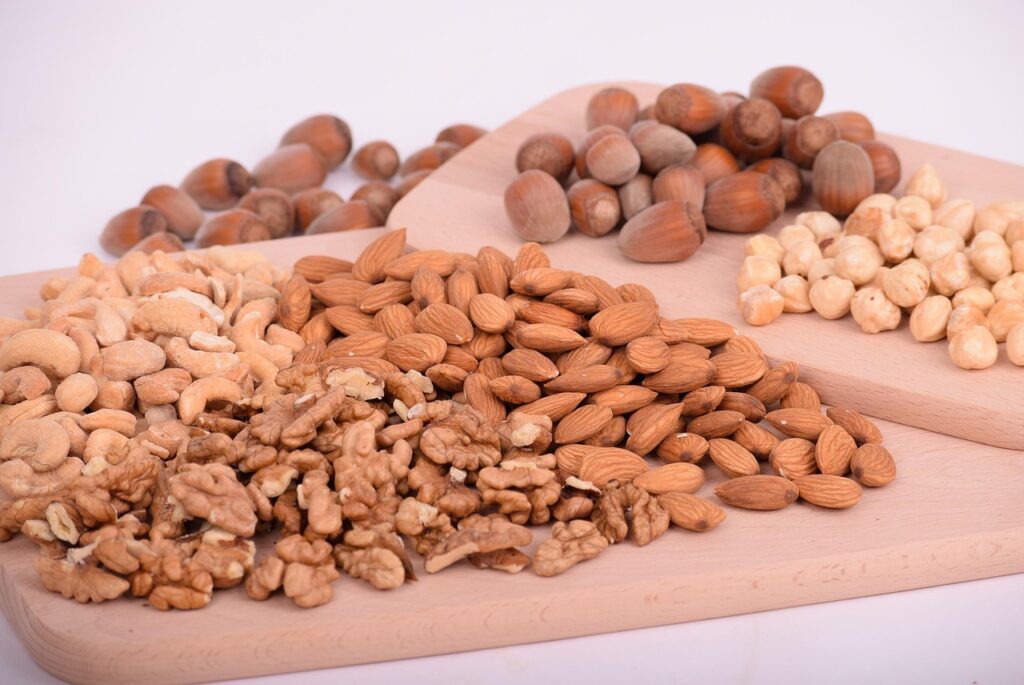
- Mixed nuts and seeds — almonds, pistachios, and pumpkin seeds are protein-rich. A quarter-cup of almonds has 7 grams.
- Single-serve tuna or salmon packets — these are shelf-stable and pack 15–20 grams of protein per packet. Pair with whole grain crackers.
- Protein smoothies in a thermos — blend Greek yogurt, frozen fruit, and a splash of milk. Pour into an insulated bottle for a cold snack hours later.
Aim for high protein snacks that can survive without a fridge for a few hours. Nuts, jerky, and canned fish are your best friends.
How to Spot Added Sugar in Packaged Snacks
The 2025–2030 Dietary Guidelines state that no amount of added sugar is recommended or considered healthy. Even “healthy” looking snacks like granola bars, flavored yogurt, and protein bars can be loaded with it.
Read the Nutrition Facts label: look for the “Added Sugars” line — a habit we discuss in our healthy grocery shopping guide. Aim for 0 grams per serving. If you see words like cane sugar, honey, maple syrup, agave, or fruit juice concentrate in the first three ingredients, put it back. Those are all added sugars.
Natural sugars in whole fruit and milk are not a concern. They come with fiber, protein, and nutrients. So a high protein snack like a banana with almond butter is perfectly fine — the banana’s sugar is natural.
FAQ: Your High Protein Snack Questions Answered
Q: Can I eat high protein snacks if I’m vegetarian or vegan?
Absolutely. Plant-based options like edamame, chickpeas, lentils, nuts, seeds, tofu, and plant-based protein powders are excellent sources. Combine different plant proteins (like beans and rice) to get all essential amino acids.
Q: How many high protein snacks should I eat per day?
One to two snacks per day is typical. If you’re active or trying to meet higher protein goals (1.2–1.6 g/kg), you may benefit from two snacks totaling 20–40 grams of protein.
Q: Is it okay to eat protein bars as a snack?
Some protein bars are fine, but many are ultra-processed and high in added sugar. Check the label: if it has more than 5 grams of added sugar, choose something else. Whole foods are always better.
Q: Can I have too much protein?
For healthy adults, high protein intake is generally safe. But if you have kidney disease or other health conditions, talk to your doctor before increasing protein significantly.
Practical Application: Your High Protein Snack Rotation
Here’s a simple weekly rotation: choose three no-cook snacks, two make-ahead snacks, and two portable snacks. Prep the make-ahead ones on Sunday. Keep no-cook ingredients on hand. Stash portable options in your bag, car, or desk.
Example week:
- Monday: Greek yogurt parfait
- Tuesday: Hard-boiled eggs and almonds
- Wednesday: Roasted chickpeas
- Thursday: Apple slices with peanut butter
- Friday: Tuna packet with cucumber slices
- Weekend: Chia pudding and crispy edamame
This rotation ensures variety, covers all convenience categories, and keeps your protein intake steady without boredom.
The Bottom Line
High protein snacks are a smart tool for summer wellness. They keep you full, stabilize your energy, and help you avoid the added sugar trap. Use the categories above to find what works for your life. Start with one or two ideas this week, then build from there. Your body will thank you — and so will your afternoon energy levels.
For more snack inspiration, check out our guides on healthy summer eating and meal prep for busy women.