

Is Your Cookware Toxic? What the Science Says About Nonstick Pans — And the 5 Safe Alternatives
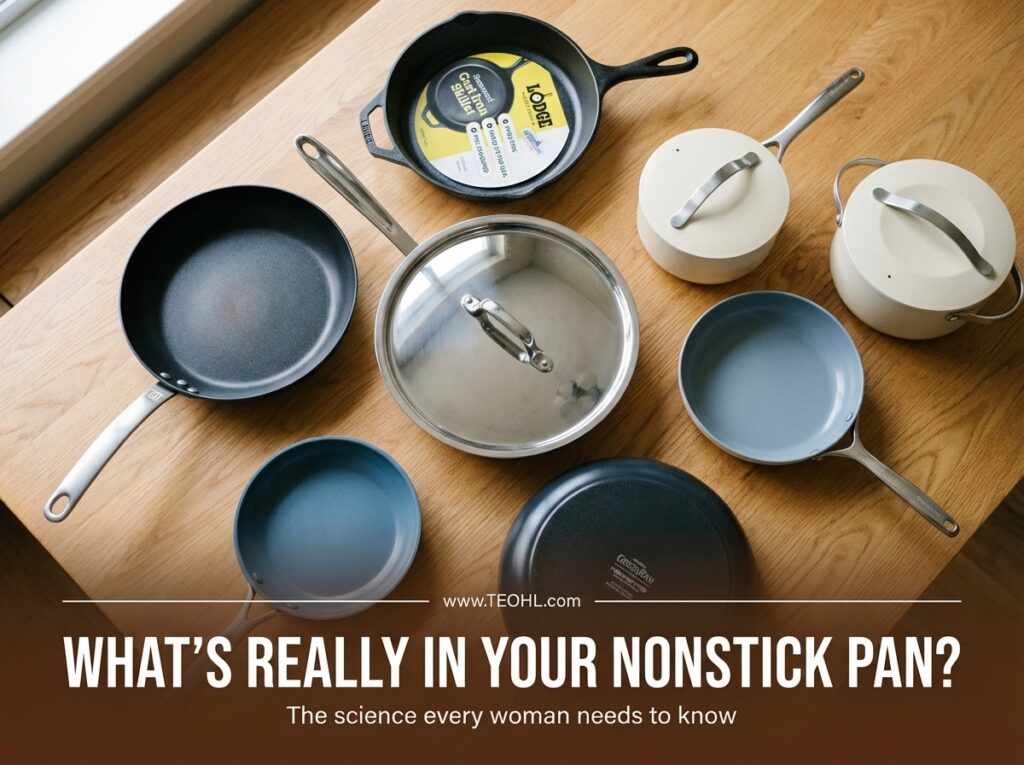
You carefully choose organic vegetables, read ingredient labels, and cook at home to control what goes into your body. But here’s something most women never think about: the pan you’re cooking in may be releasing chemicals into your food every single day — chemicals that don’t break down in your body, ever.
They’re called PFAS — “forever chemicals” — and they’re found in the nonstick coating of an estimated 79% of toxic cookware currently in use. They’ve been linked to hormone disruption, reduced fertility, thyroid dysfunction, and cancer. And a landmark February 2026 study found they’re now associated with accelerated biological aging at the cellular level.
The good news: this is one of the easiest toxic exposures to eliminate. You don’t need to replace your entire kitchen overnight. You just need to know what you’re dealing with — and what to do about it.
The Bottom Line
79% of nonstick pans still contain PFAS — synthetic “forever chemicals” linked to hormone disruption, cancer, and early aging. Labels like “PFOA-free” are misleading — the pan may still contain PTFE and hundreds of other PFAS compounds. The safest cookware materials are stainless steel, cast iron, carbon steel, and PFAS-free certified ceramic. Use our interactive tools below to check your current cookware and find the right replacement.
What Are PFAS — and How Did They End Up in Your Toxic Cookware?
PFAS stands for per- and polyfluoroalkyl substances — a family of more than 14,000 synthetic chemicals invented in the 1940s. They were celebrated for one extraordinary property: almost nothing sticks to them. By the 1960s, Teflon-coated pans had become a fixture in American kitchens.
The problem is that the same chemical bond that makes PFAS so effective as a nonstick coating also makes them essentially indestructible. They don’t break down in the environment. They don’t break down in your body. They accumulate — in your blood, your organs, your tissue — over years of exposure. This is why scientists call them forever chemicals.
According to the U.S. Environmental Protection Agency, PFAS exposure has been linked to reproductive harm, developmental delays in children, increased cancer risk, weakened immune function, thyroid disruption, and higher cholesterol. The CDC has confirmed that most people in the United States have measurable levels of PFAS in their blood.
For women specifically, the risks are compounded. A December 2025 study found that women with higher PFAS levels showed significantly greater signs of endocrine disruption — meaning their hormonal systems were being directly interfered with. Separate research from UCSF found that women with higher PFAS exposure had double the odds of a prior melanoma diagnosis, and strong associations with uterine cancer. These aren’t abstract risks. They’re measurable, documented, and growing.
How We Got Here — The History of Forever Chemicals in Your Kitchen
This didn’t happen overnight. The story of PFAS in cookware spans 80 years — and the industry has been slow to act at every step. Tap each event to understand the full picture.
What PFAS Actually Does to Your Body
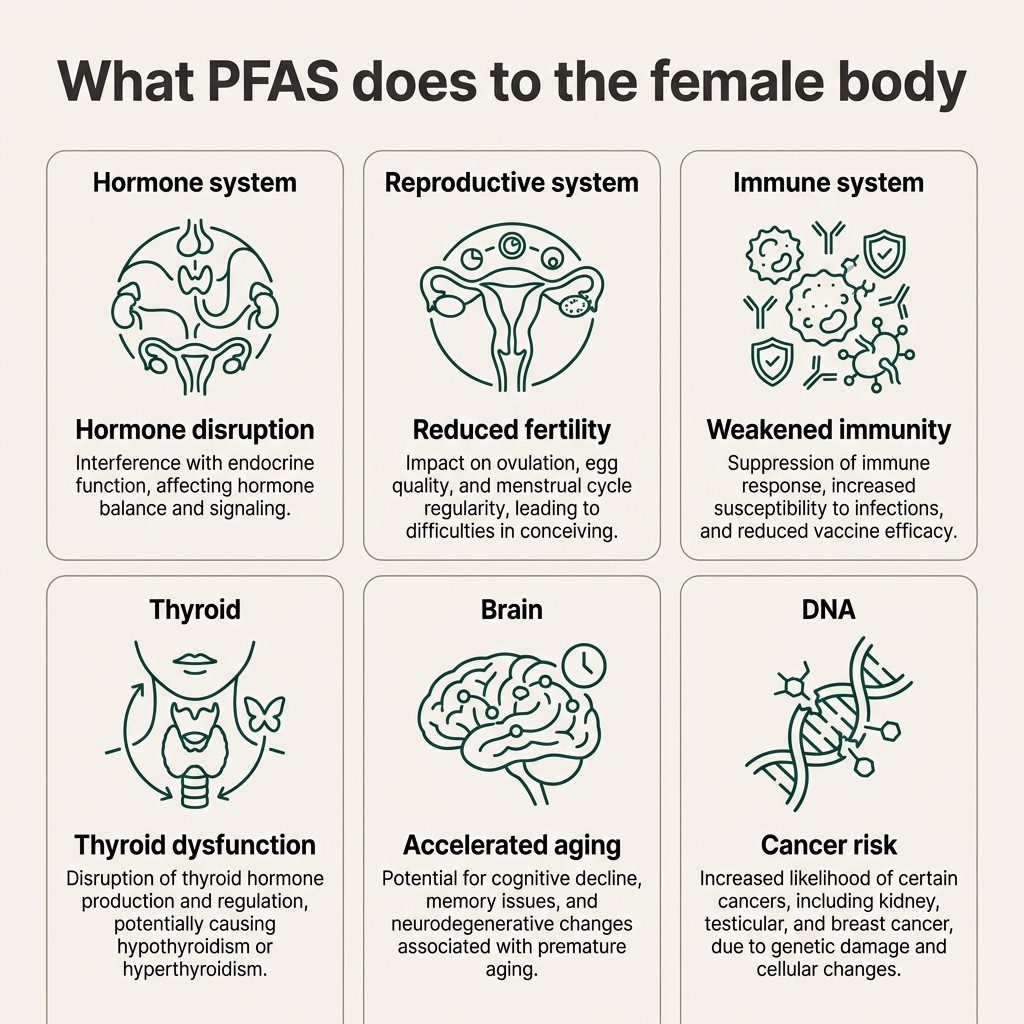
PFAS doesn’t cause immediate, obvious harm. That’s what makes toxic cookware so dangerous. It accumulates silently over years, building up in your blood and organs while disrupting systems you can’t directly observe — until the damage becomes visible as a diagnosis.
Hormonal disruption. PFAS are endocrine disruptors — meaning they interfere with the hormones that regulate virtually every process in your body. Research shows PFAS exposure is directly linked to irregular menstrual cycles, earlier menopause, and disrupted estrogen and progesterone balance. For women managing weight, energy, and mood, this matters enormously. The connection between hormonal balance and overall health is well established — and PFAS actively undermines it.
Cancer risk. A 2025 study estimated that PFAS from U.S. drinking water and cookware may contribute to up to 6,864 additional cancer cases every year. The strongest links are to kidney, testicular, endocrine, and digestive system cancers. UCSF research found women with higher PFAS exposure had double the odds of melanoma diagnosis, and significant associations with uterine cancer.
Thyroid dysfunction. Research published in PMC confirms that PFAS disrupts thyroid hormone synthesis — affecting metabolism, energy, weight regulation, and mood. Thyroid problems are already disproportionately common in women, and PFAS exposure compounds the risk.
Accelerated aging. The February 2026 Frontiers in Aging study found that PFAS compounds are associated with faster biological aging — meaning the cells in your body may be functionally older than your chronological age. This isn’t just about appearance. Accelerated cellular aging affects resilience, immune function, and long-term disease risk.
Immune suppression. According to the EPA, PFAS exposure reduces the body’s ability to fight infections and may even reduce the effectiveness of vaccines. For women navigating busy, demanding lives, a weakened immune system has real daily consequences.
PFAS Risk Level by Cookware Material
Click any row to see details about each material.
How to Read Cookware Labels Without Being Deceived
The toxic cookware industry has become expert at creating the impression of safety without actually delivering it. Labels like “PFOA-free,” “non-toxic,” and “eco-friendly” are widely misused — and most consumers have no idea what they actually mean. Here’s the truth behind every label you’ll encounter.
Is Your Current Pan Safe? Scan It Now
Answer 4 quick questions about the pan you use most often. Get an instant safety assessment — and specific steps to take based on your situation.
5 Safe Alternatives — Tested and Recommended
You don't need to replace everything at once. Start with the pan you use most and work from there. These five options are the best alternatives to toxic cookware — covering every cooking style, budget, and skill level.
1. GreenPan Valencia Pro
Top Pick — Best for Beginners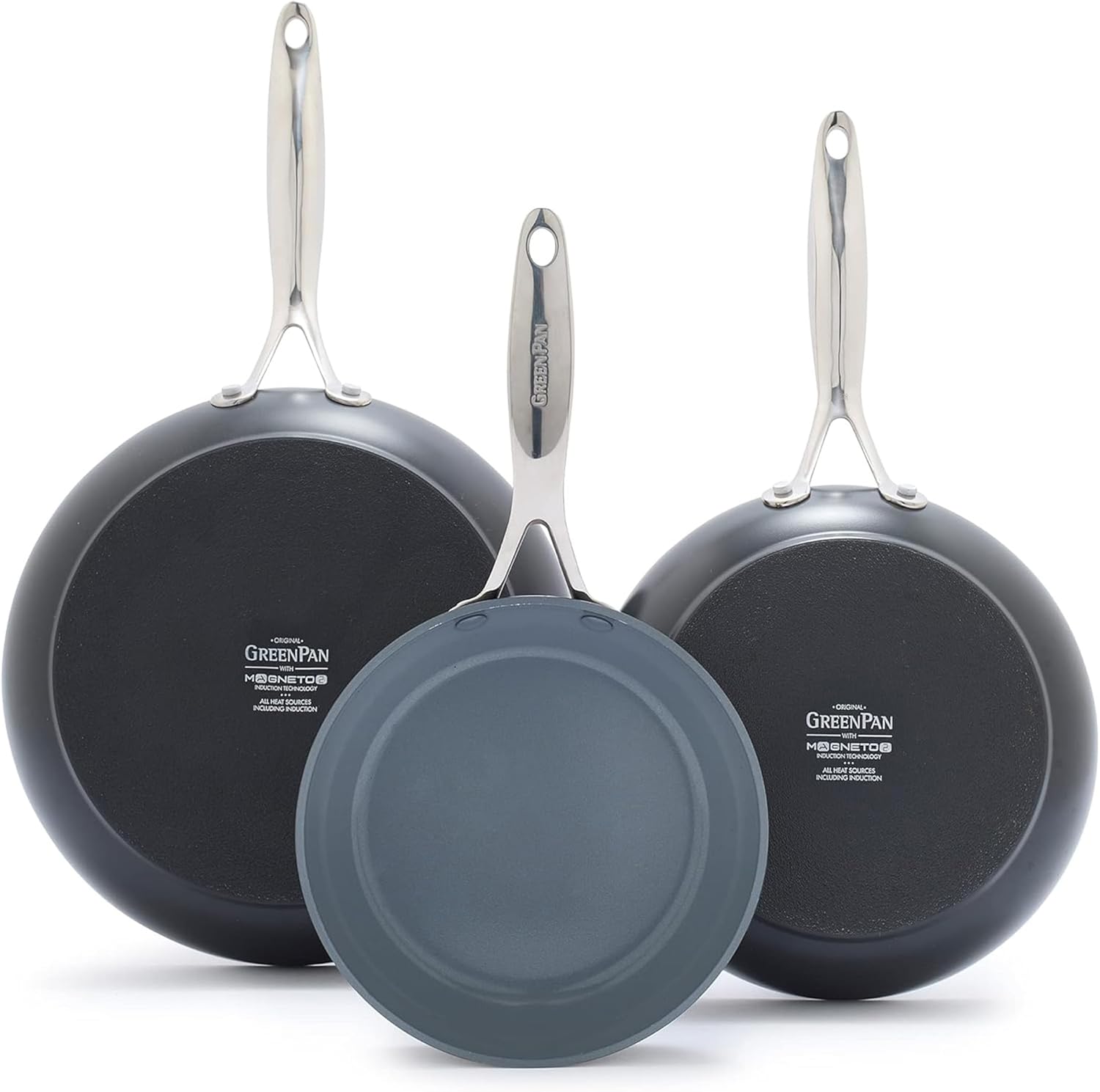
The easiest transition from traditional nonstick. GreenPan's Thermolon coating is sand-based — no PFAS, no PTFE, no lead, no cadmium — and has been third-party verified since 2007. Award-winning, widely available, and the most recommended PFAS-free ceramic brand among dietitians and health professionals.
Pros: Easiest to use, PFAS-free certified, affordable, widely available
Cons: Coating degrades over 2–3 years, avoid very high heat
2. Caraway Home Cookware
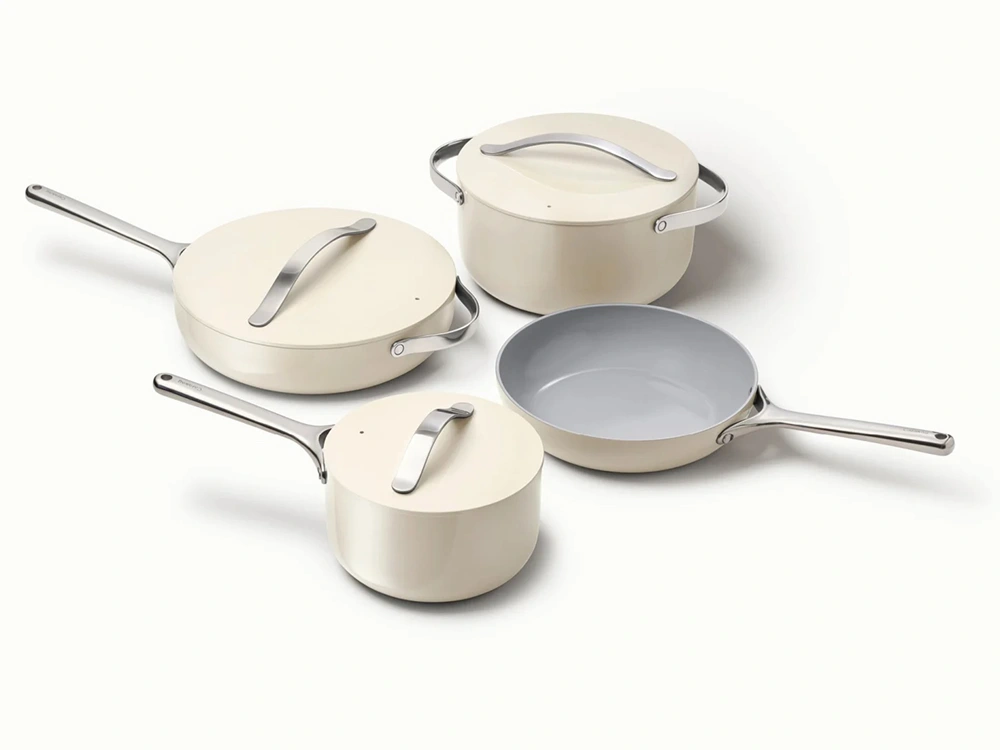
Beautiful design meets serious safety standards. Caraway publishes third-party lab results confirming PFAS-free status. Higher heat tolerance than most ceramic options at 550°F. Comes with magnetic pan racks and canvas lid holder — the most complete package for a kitchen upgrade.
Pros: Stunning design, PFAS-free certified, higher heat tolerance
Cons: Hand wash only, premium price, coating still degrades over time
3. Lodge Cast Iron Skillet
Best Value — Lasts Generations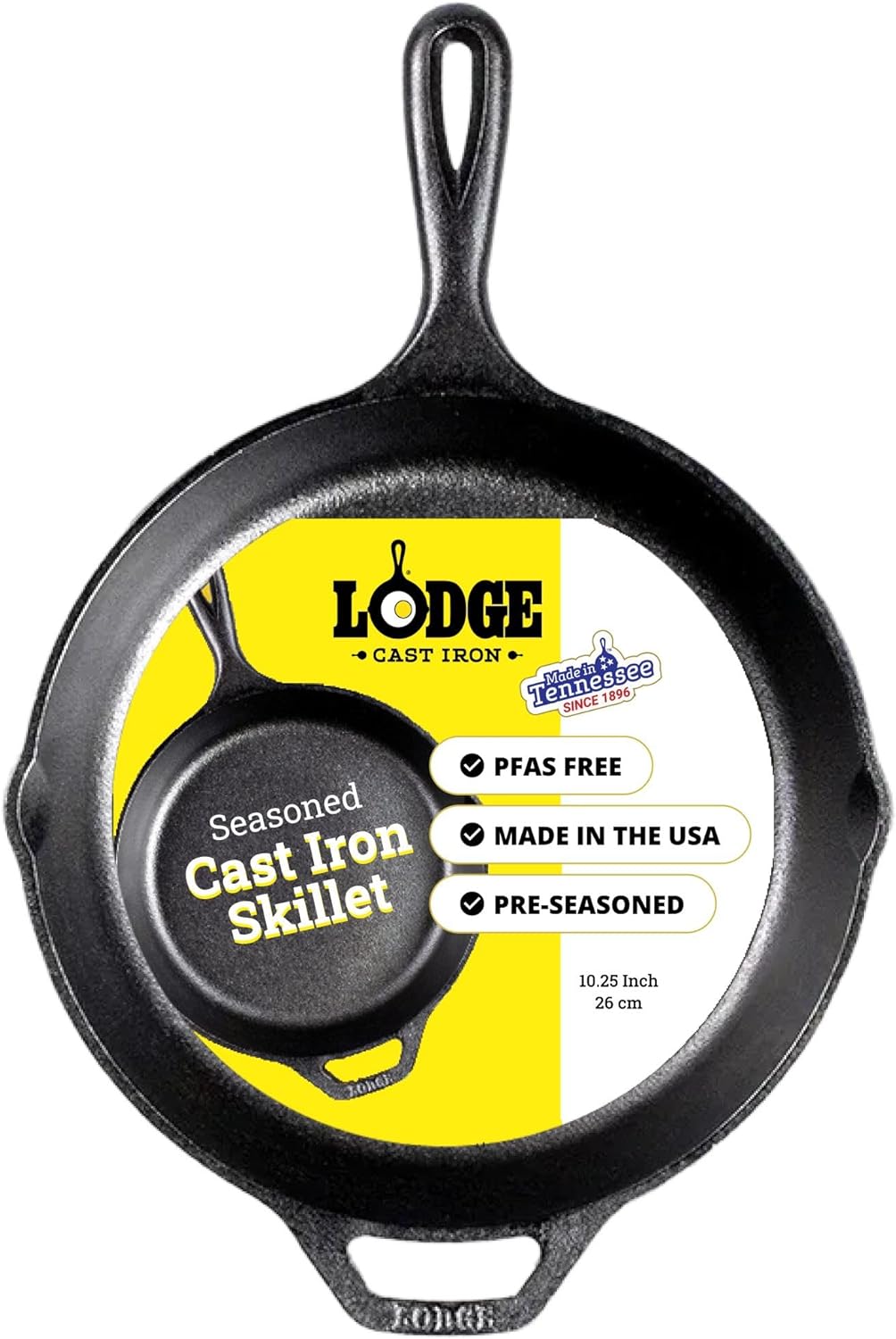
The original PFAS-free cookware — no coating, no chemicals, ever. Naturally nonstick when properly seasoned. Handles any heat including open flame and oven. Adds a small amount of dietary iron to food — a genuine nutritional benefit. A Lodge skillet bought today can outlast you. At $25, it's the highest-value investment in kitchen health you can make.
Pros: Zero PFAS forever, lasts generations, adds dietary iron, incredibly affordable
Cons: Heavy, requires seasoning, not ideal for acidic foods
4. All-Clad D3 Stainless Steel
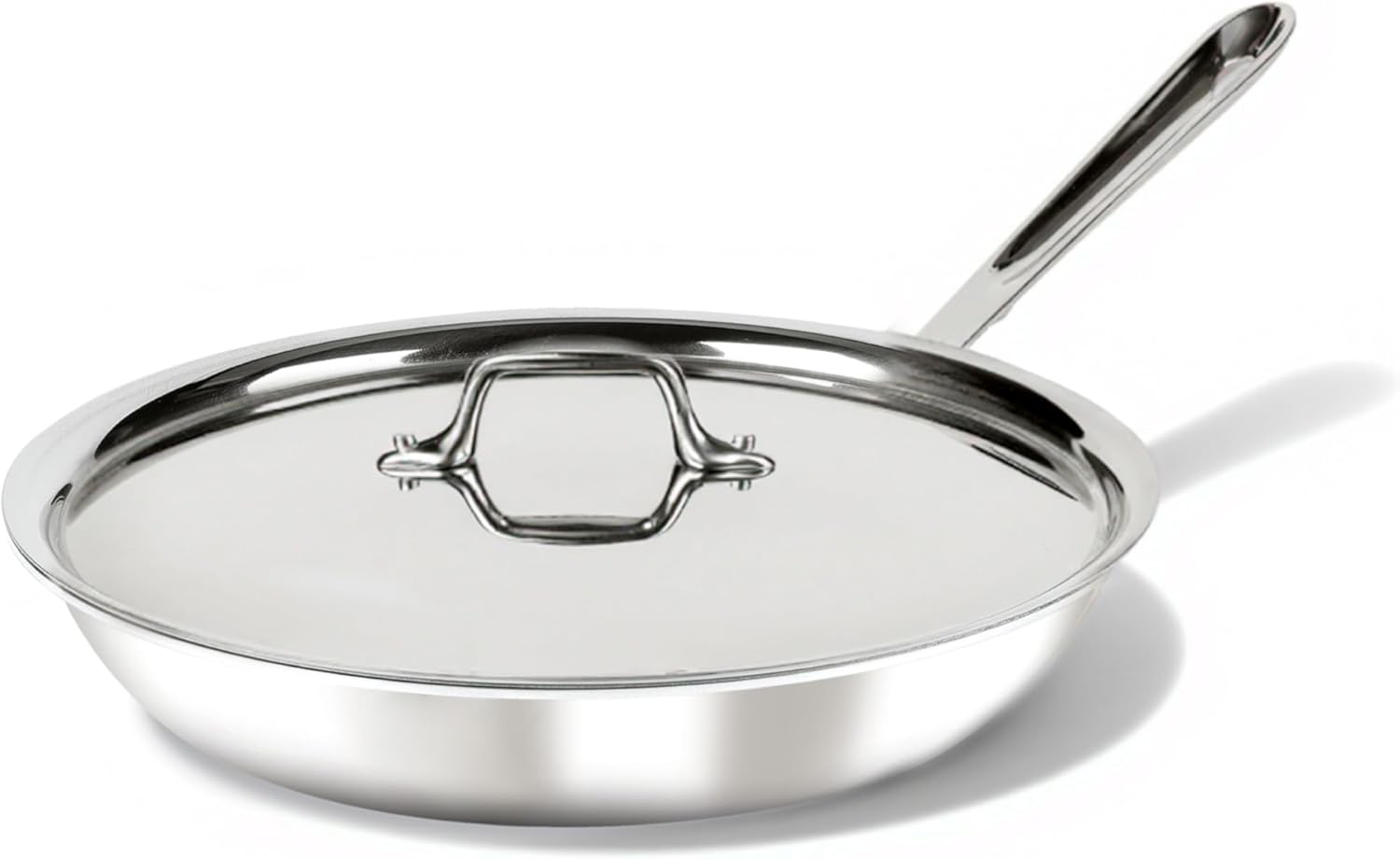
What professional kitchens use. Three-layer construction for perfectly even heating. No coatings of any kind — zero PFAS risk. Dishwasher safe. Use the right technique — preheat, add oil, let food release naturally — and nothing sticks. Built to last decades.
Pros: Zero PFAS risk, dishwasher safe, lasts decades, professional performance
Cons: Learning curve, food sticks without proper technique
5. Made In Carbon Steel Pan
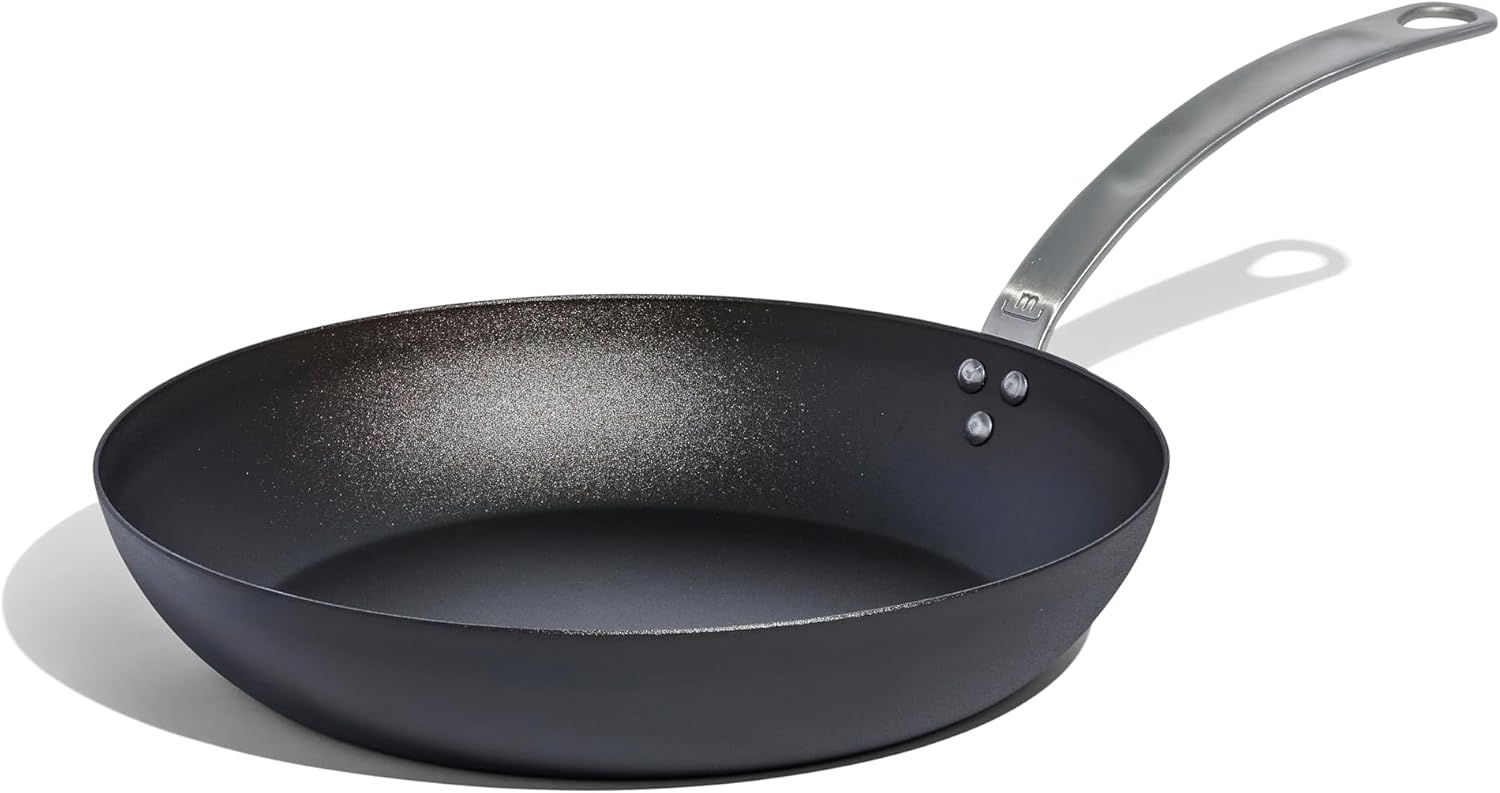
What French professional chefs have used for centuries. Lighter than cast iron, naturally nonstick when seasoned, handles extreme heat, and improves with every use. Made In submits every product to Light Labs for independent PFAS testing — 30 for 30 tests passed. The most technically advanced safe cookware on this list.
Pros: Lighter than cast iron, improves with use, third-party tested
Cons: Requires seasoning, not for beginners, hand wash only
Compare All 5 Safe Options
Use the filters to find the right match for your cooking style and budget.
How to Make the Transition — Without Replacing Everything at Once
You don't need to throw out every toxic cookware item tomorrow. A smart, gradual approach is more sustainable — and still dramatically reduces your PFAS exposure. Here's how to do it.
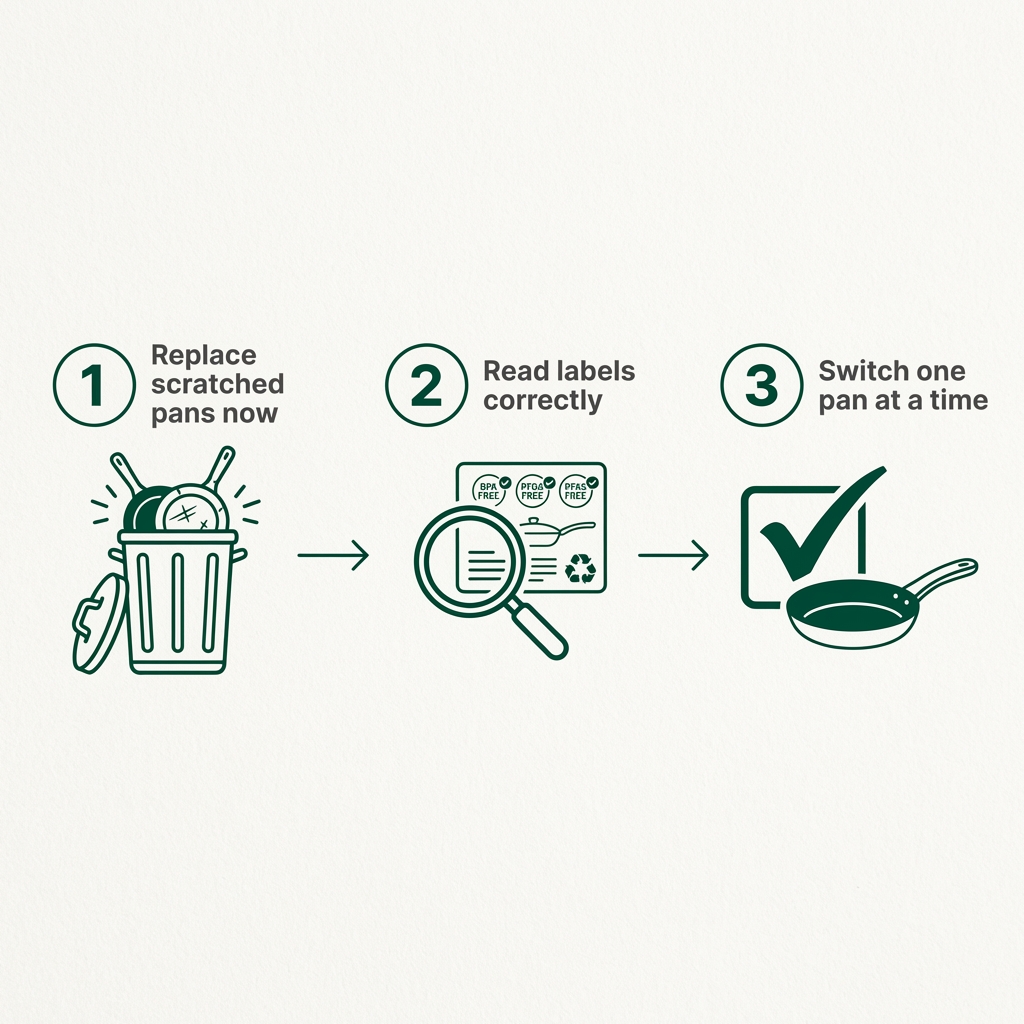
Step 1 — Replace scratched or damaged pans immediately. This is non-negotiable. A scratched nonstick pan is actively releasing PTFE particles into your food every time you cook. Don't donate it. Dispose of it. This is the highest-priority action regardless of budget.
Step 2 — Start with the pan you use most. For most women, that's a medium skillet. Replace it first with a cast iron, stainless steel, or PFAS-free ceramic option. One pan replaced is a meaningful reduction in daily exposure.
Step 3 — While you still have nonstick, reduce the harm. Health authorities recommend cooking below 400°F, never preheating empty, using only wooden or silicone utensils, and hand washing to extend coating life. These steps reduce — but don't eliminate — exposure from existing nonstick pans.
Step 4 — Read labels correctly going forward. Use the label decoder above before buying any new cookware. The only labels that guarantee safety are PTFE-free + PFAS-free + third-party tested — together.
How Many Risk Factors Does Your Kitchen Have?
Check every item that applies. Be honest — this is just for you.
Frequently Asked Questions
My pan says "PFOA-free" — is it safe?
Not necessarily. PFOA was phased out of U.S. production by 2013 — so virtually every pan sold today is PFOA-free by default. The label means nothing beyond what was already required. Your pan may still contain PTFE and hundreds of other PFAS compounds. Look for PTFE-free + PFAS-free + third-party tested to have real confidence.
Is stainless steel hard to cook with?
There is a learning curve — but it's shorter than most people expect. The key is proper preheating: heat the dry pan over medium heat for 2–3 minutes before adding oil, then add your food. When food is ready to release, it will lift naturally without sticking. Once you learn this technique, stainless steel performs beautifully for almost everything except eggs.
Can PFAS from toxic cookware actually enter my food?
Yes — under certain conditions. Research published in PMC shows that PFAS migration from cookware into food increases with repeated use, higher temperatures, acidic foods, and damaged coatings. The concentration found after one use is low — but it increases significantly over time and with damage. Since PFAS accumulate in the body without breaking down, even low repeated exposure matters.
The Bottom Line
The science on toxic cookware is no longer ambiguous. Forever chemicals accumulate in your body, disrupt your hormones, increase cancer risk, and now — according to a 2026 study — accelerate biological aging. And the primary source in most kitchens is the nonstick pan sitting in the cabinet right now.
The good news is that this is one of the most actionable health upgrades you can make. A $25 Lodge cast iron skillet eliminates this exposure source completely — for life. Stainless steel, carbon steel, and PFAS-free certified ceramic give you more options at different price points.
You've already invested in eating well. The foods you choose matter enormously. So does what you cook them in. Start with your most-used pan. Replace anything scratched. Read labels correctly going forward.
Your kitchen should be a place that supports your health — not a source of toxic cookware quietly undermining it.
Related Articles You Might Like