

Zucchini Lasagna That Isn’t Watery: The 10-Minute Fix
Key Takeaways
- Zucchini is about 95% water. That’s the real reason layers turn soggy.
- Salt, rest, and blot — a 10-minute fix that prevents watery lasagna.
- Slice thin (1/8-inch) if you pre-cook. Go thicker (1/4-inch) if you don’t.
- Bake uncovered, then rest the finished dish 15 minutes before slicing.
- One generous slice moves you toward the 2½ cups of daily veggies experts recommend.
You did everything right. You layered the cheese, the sauce, and the zucchini. Then you pulled the pan from the oven — and found a watery mess pooling in the bottom. Sounds familiar? Here’s the thing about zucchini lasagna: it fails for one simple reason. Zucchini is about 95% water. But there’s a 10-minute fix that changes everything.
In this guide, I’ll show you how to make zucchini lasagna that actually holds together. You’ll learn the salting method that chefs rely on, how thick to slice, and the right way to layer. Plus, I’m sharing a high-protein, gluten-free recipe with a sodium-smart twist that most versions miss.
Quick Answer: What Makes Zucchini Lasagna Watery?
Raw zucchini is mostly water. When it bakes, that water escapes. Salt pulls it out before baking, and a paper towel blots it away. That simple step is the whole secret.
Why Your Zucchini Lasagna Turns Watery
Let’s start with the culprit. According to the USDA, raw zucchini is about 95% water. Heat makes that water release, and it pools between your layers. The result? A dish that slides apart on the plate.
Salt fixes this with a process called osmosis. In plain terms, salt pulls water out of the zucchini cells and to the surface. Once it’s there, you blot it away with a paper towel. It’s simple chemistry — and it’s the most important step in any zucchini lasagna recipe.
Plus, zucchini brings more than structure to the table. A 100-gram serving has about 3 grams of carbs and just 17 calories. It also offers vitamin C, potassium, and magnesium. Swapping pasta for zucchini is a vegetable-forward move that most of us could use more of.
The 10-Minute Fix: Salt Your Zucchini Lasagna First
Here’s the method I use every time. It takes 10 minutes, and most of that is hands-off. No grill. No special tools. No fuss.
The Salt-and-Blot Method
- Slice the zucchini (thickness guide below).
- Lay the slices in a single layer on paper towels.
- Sprinkle both sides lightly with kosher salt.
- Let them rest for 10 to 15 minutes.
- As a result, you’ll see beads of water rise to the surface. That’s osmosis at work.
- Blot each slice dry, then pat with a clean towel.
One warning: don’t skip the blotting. Salt pulls the water out, but only the towel actually removes it. If you leave that liquid on the surface, it ends up in the dish anyway.
What about sodium? It’s a fair question. Many zucchini lasagna recipes land between 600 and 1,200mg of sodium per serving. However, most of that comes from jarred sauce and cheese, not the salt you add. Here’s how to keep it in check. Use no-salt-added crushed tomatoes, choose part-skim mozzarella, and go easy on the Parmesan.
How Thick Should You Slice the Zucchini?
This is where recipes disagree — and it’s confusing. The truth? It depends on your method. Thin slices work when you pre-cook the zucchini. Thick slices are safer when you don’t.
Match the Thickness to Your Method
1/8-inch slices (mandoline): Best if you salt, then grill, roast, or pre-bake. Thin slices cook fast, and the pre-cook removes water.
1/4-inch slices (sharp knife): Best for the salt-only method. Thicker slices hold their shape without a pre-cook step.
No mandoline? No problem. A sharp chef’s knife works great for 1/4-inch slices. Just keep them even so the layers cook at the same pace.
Also, choose your zucchini well. Smaller ones — about 7 to 8 inches — have fewer seeds and less water. Look for firm, glossy skin and a heavy feel. That’s the difference between a sturdy layer and a soggy one.
The Recipe: High-Protein, Gluten-Free, and Actually Sliceable
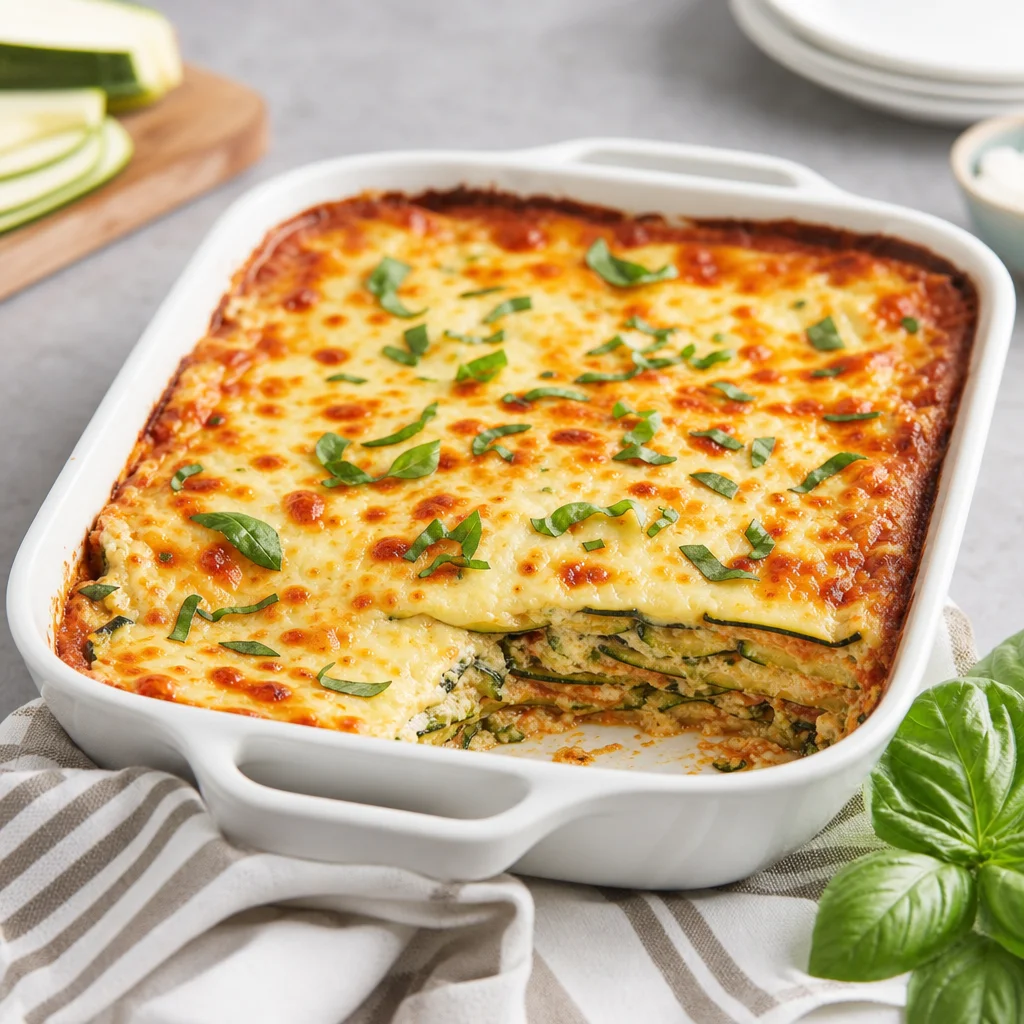
This zucchini lasagna recipe skips the fuss while keeping every moisture trick. It’s high in protein, naturally gluten-free, and lower in carbs than the classic. And yes — it actually slices cleanly.
Ingredients
- 2 pounds zucchini (about 3 medium)
- 1 pound 90/10 ground beef or ground turkey
- 1 small onion, diced
- 3 garlic cloves, minced
- 28-ounce can no-salt-added crushed tomatoes
- 1 tablespoon olive oil
- 1 teaspoon dried basil
- 1 teaspoon dried oregano
- 15 ounces part-skim ricotta
- 1 large egg
- 1/4 cup grated Parmesan
- 1 cup shredded part-skim mozzarella
- 1/2 teaspoon kosher salt, plus black pepper
Method
- Slice the zucchini lengthwise into 1/4-inch planks. Salt and blot using the 10-minute method above.
- Meanwhile, warm the oil in a large skillet. Brown the beef, then drain off any excess fat. Add the onion and garlic, and cook until soft.
- Stir in the tomatoes, basil, oregano, and a pinch of salt and pepper. Simmer for 10 to 15 minutes, until thick. A thick sauce is your second line of defense against a watery bake.
- Mix the ricotta, egg, Parmesan, and a few grinds of pepper in a bowl.
- Spread a thin layer of sauce in a 9×13 dish. Add a layer of zucchini, then ricotta, then sauce, then a little mozzarella. Repeat. Finish with sauce and the rest of the mozzarella.
- Bake uncovered at 375°F for 40 to 45 minutes, until bubbling and golden.
- Finally, rest for 15 minutes before slicing. This is non-negotiable — the layers need time to set.
How do you know it’s done? Look for three signals. Sauce bubbling at the edges, a golden top, and a knife that slides through the zucchini with little resistance. If you used meat, the center should read at least 160°F for beef — or 165°F if you used turkey.
Depending on your cheese and sauce, each serving lands in the ballpark of 250 to 300 calories. It also delivers roughly 25 grams of protein. That’s a dinner that keeps you full — and a generous slice counts toward your daily vegetable goal.
Make It Even More Veggie-Forward
Swap half the zucchini for yellow squash, or add a layer of sautéed spinach and mushrooms. For more summer dinners, try our 7 easy zucchini recipes. A 2023 review of 12 studies found that people who ate a wider variety of vegetables and fruits had lower rates of death from any cause — a modest but consistent association. Large cohort studies also connect vegetable fiber with lower mortality risk.
The Honest Health Check: What the Evidence Says
Let’s be honest about the “healthy” label. This dish isn’t a weight-loss miracle. But the evidence for vegetable-forward eating is strong. A 2025 umbrella review in Advances in Nutrition looked at 41 meta-analyses with over a million people. The pattern was clear: people who ate more vegetables had lower rates of death from any cause.
And the portions add up. The American Heart Association recommends 2½ cups of vegetables a day. One generous slice delivers roughly a cup of vegetables toward the 2½-cup daily goal — a real, measurable step.
What about the low-carb label? A 2026 meta-analysis of randomized trials, published in Nutrients, found only a modest edge. Low-carb diets beat higher-carb diets by a small amount when calories are matched. So call this dish what it is: a lower-carb, gluten-free, protein-rich meal that puts vegetables first. That’s plenty. It doesn’t need to be a cure-all.
Storage, Freezing, and Rescue Tips
Leftovers keep in the fridge for up to 4 days. Reheat slices in the oven at 350°F, or use the microwave for a quick lunch. For another make-ahead idea, try our zucchini oatmeal cups.
Freezing? Yes, with one honest caveat. Baked lasagna freezes well for up to 3 months, but expect extra liquid when it thaws. Thaw it in the fridge, drain off the liquid, and reheat uncovered. An unbaked lasagna is riskier — the zucchini releases water while it thaws. If possible, bake first, then freeze.
And what if it’s already watery? Don’t toss it. Scoop out the extra liquid with a spoon, then return the pan to the oven uncovered for 10 to 15 minutes. It won’t be perfect, but it will be saved.
Can You Freeze Zucchini Lasagna?
Yes, if it’s baked. Freeze portions on a tray first, then store in a sealed container for up to 3 months. Thaw in the fridge, drain any liquid, and reheat uncovered. Unbaked lasagna is more likely to turn watery.
Do I Have to Pre-Cook the Zucchini?
No. Salting and blotting is the baseline. Grilling, roasting, or pre-baking adds extra moisture removal and flavor, but it costs time and equipment. When you’re short on time, the salt-only method works beautifully.
Can I Make It Dairy-Free?
Yes. Swap the ricotta for blended tofu or cashew ricotta, and use a dairy-free mozzarella. Keep the egg if you’re not vegan — it helps the filling set. Vegan cheese melts differently, so watch the top during the last 10 minutes.
The Bottom Line
Zucchini lasagna doesn’t have to be a gamble. Salt it. Blot it. Bake it uncovered. Rest it. That’s the whole secret — four simple steps between you and clean, perfect slices. Save this recipe for zucchini season, and you’ll never fear the watery mess again. Also try our healthy zucchini fritters with feta and mint.
Sources
USDA FoodData Central — Squash, summer, zucchini, raw (SR Legacy). View data
Tasnim OA et al. Advances in Nutrition, 2025. Umbrella review of food groups and all-cause mortality. View study
Zurawski T, Bartosiewicz A. Nutrients, 2026. Ketogenic vs. higher-carbohydrate diets meta-analysis. View study
Nishi SK et al. Nutrients, 2023. Vegetable and fruit intake variety and mortality. View study
Mirrafiei A et al. Food & Function, 2023. Dietary fiber subtypes and mortality. View study
American Heart Association. Fruits and Vegetables Serving Sizes. View guidance