
How Women Over 60 Should Lose Weight (It’s Different)
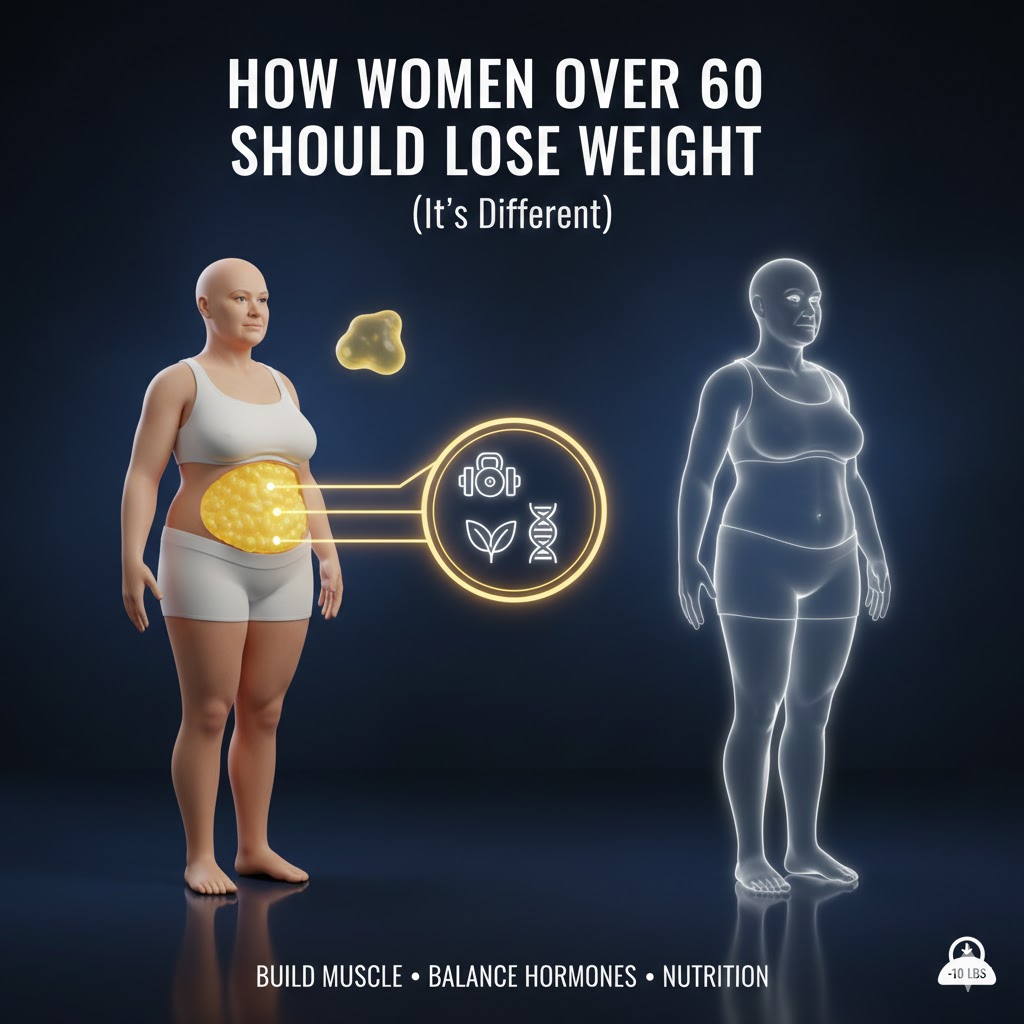
At 62, stepping on the scale feels different. The number creeps up despite eating the same foods. Moreover, strategies that worked in your 50s deliver zero results. Frustration builds each time your favorite pants won’t zip.
Here’s the truth about weight loss for women over 60: it follows totally different rules. In fact, using decade-old strategies often backfires. Hormonally and metabolically, your body has changed greatly. Therefore, you need age-specific approaches that actually work.
Throughout this guide, you’ll discover why your body responds differently after 60. Additionally, you’ll learn safe strategies designed for post-menopausal women. You’ll also get useful programs including meal plans, chair exercises, and medication guidance. By the end, you’ll understand how to lose weight while protecting bones and preventing falls.
🔑 Quick Answer: Weight Loss for Women Over 60
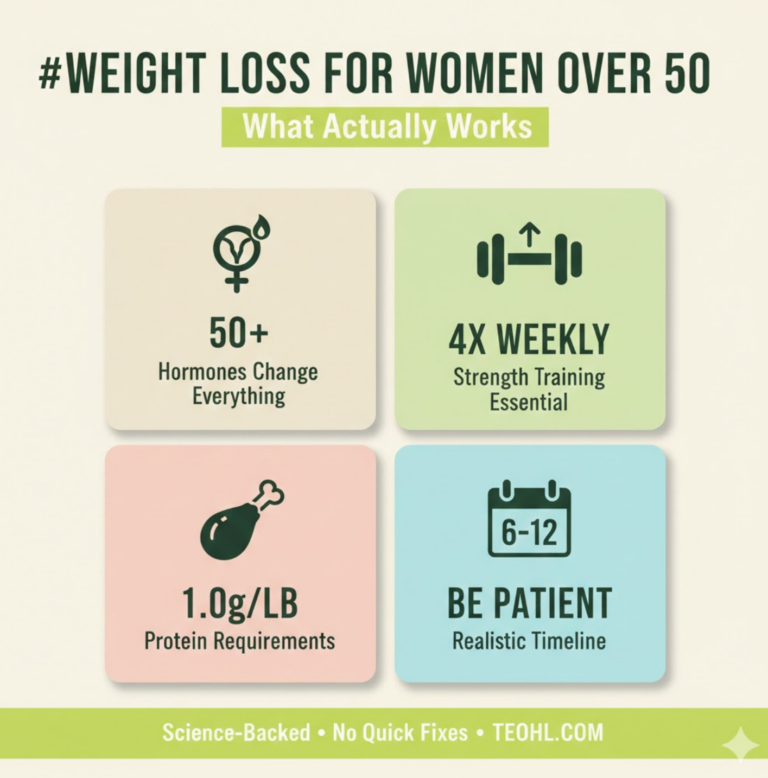
- Post-menopause changes everything: You’ve been estrogen-depleted for 10+ years. Muscle loss speeds to 3% yearly. Moreover, metabolism drops an extra 100-200 calories daily beyond age 50 changes
- Safety comes first: Fall prevention, bone protection, and med management are vital. Weight loss must protect independence, not risk it
- Protein is critical: Target 1.0-1.2g per pound—even higher than your 50s. Additionally, your body absorbs protein 30% less well now
- Chair exercises work: Seated strength training builds muscle safely without fall risk. Balance training 3x weekly is also key
- Timeline is longer: Expect 12-18+ months for big results. However, slower progress protects bones and muscle
Why Weight Loss for Women Over 60 Is Different Than Your 50s
At 60, your body works totally different than at 50. These aren’t minor tweaks. Moreover, they’re major biological shifts requiring age-specific strategies.
You’ve Been Post-Menopausal for a Decade
Women in their 50s often navigate active menopause. By 60, you’ve been estrogen-depleted for 10+ years. Moreover, this extended period creates different metabolic changes. Fat storage patterns shift greatly from early menopause.
Research from the National Institutes of Health shows post-menopausal women face continued metabolic slowdown. Fat piles up around organs rather than hips. Therefore, this pattern increases health risks but responds differently to diet.
Unlike women in their 50s still adjusting, your metabolism has settled. As a result, you need strategies for sustained estrogen loss, not acute shifts.
Muscle Loss Speeds Up Greatly
Sarcopenia speeds up sharply after 60. According to the National Institute on Aging, women lose about 3% of muscle yearly after age 60. Additionally, women face steeper declines than men after 65.
Each pound of muscle lost removes 6 calories from daily burn. Losing 10 pounds over three years cuts 60 calories daily. That’s 21,900 yearly—roughly 6 pounds of potential fat gain. Simply staying the same weight requires eating less or moving more than at 55.
Strength training becomes totally vital. Moreover, your body needs this push to keep muscle. For detailed programs, see our complete strength training programs.
Metabolism Slows Even More
Beyond the slowdown felt in your 50s, metabolism keeps declining. Research in Science identifies age 63 as critical. Therefore, your resting burn drops an extra 100-200 calories daily beyond age 50 changes.
This combined slowdown is large. A woman needing 1,800 calories at 50 might only need 1,400-1,500 by 65. However, needs vary based on muscle, activity, and personal metabolism.
Bone Density Becomes Critical
Osteoporosis risk jumps sharply after 60. Rapid loss can speed bone density decline. The National Osteoporosis Foundation stresses bone-protective strategies for women over 60.
Every pound lost through diet alone costs 25% muscle and bone. Therefore, loss must include bone protection: enough calcium, vitamin D, weight-bearing exercise, and slower rates.
Fall Risk Increases
Balance worsens with age. One in four Americans over 65 falls yearly per CDC data. Moreover, falls can mean broken bones or loss of independence. Therefore, any exercise plan must include fall prevention.
Traditional advice often ignores this reality. High-intensity workouts increase fall risk for women with balance issues. Instead, chair exercises and balance training provide safer choices while delivering results.
Managing Meds That Affect Weight Loss
Over 90% of women over 60 take prescription meds. Many common meds cause weight gain. Addressing this separates success from failure.
Common Meds That Cause Weight Gain
According to Johns Hopkins Medicine, several med classes cause weight gain. Beta-blockers can slow metabolism. Additionally, diabetes meds like insulin promote fat storage.
Steroids cause big weight gain and fat shifts. Thyroid meds not dosed right slow metabolism greatly. Moreover, some sleep aids add weight through appetite changes.
Working With Your Doctor
Never stop meds without medical help. Instead, schedule an appointment to discuss weight. Ask about other meds with less weight impact. For instance, ACE inhibitors typically don’t cause gain like beta-blockers.
For diabetes, newer meds like metformin may support loss not gain. Thyroid tuning is vital—request TSH testing. Therefore, work with your doctor to find the best med mix supporting health and weight goals.
Timing Meds Smartly
Some meds work better at specific times. Thyroid med should be taken on empty stomach. Additionally, ask your pharmacist about best timing to support weight loss while keeping med effectiveness.
Complete Nutrition Strategy for Women Over 60
Nutrition becomes vital after 60 because you eat fewer calories while needing more nutrients. Every bite must count toward needs while supporting weight loss.
Protein Becomes Even More Important
Protein needs increase after 60 due to lower absorption and faster muscle loss. Harvard Medical School recommends higher protein for adults over 60 than standard guidelines.
Target 1.0-1.2g protein per pound of target weight. For a woman targeting 140 pounds, that’s 140-168g daily. Moreover, this serves many vital purposes. Protein keeps muscle during deficit and increases fullness. Also, it has the highest thermic effect—your body burns 25-30% just digesting it.
💡 How to Hit Your Protein Target at 60+
Distribute protein evenly across meals. Research shows spreading 25-30g per meal boosts muscle protein making in older adults.
For 150g daily target:
- Breakfast: 30-35g (Greek yogurt with powder, eggs, cottage cheese)
- Lunch: 35-40g (chicken, fish, tofu, or lean beef)
- Dinner: 40-45g (salmon, turkey, or legumes)
- Snacks: 20-25g (shake, nuts, cheese)
Calculate exact needs using our daily protein calculator. For easy options, try protein powder for women.
Easy-to-Chew Protein Sources
Dental issues become common with age. Choose softer proteins: flaked fish, ground turkey, eggs, Greek yogurt, cottage cheese, shakes, and well-cooked beans. These provide full nutrition without needing strong teeth.
Calcium and Vitamin D Are Must-Haves
Bone health requires enough calcium (1,200mg daily) and vitamin D (2,000-4,000 IU daily). The Cleveland Clinic stresses that rapid loss without calcium speeds bone decline.
Food sources include dairy, fortified plant milks, leafy greens, and canned fish with bones. Vitamin D comes from fatty fish, egg yolks, and sunlight. Moreover, most women over 60 need supplements—discuss with your doctor.
Create a Moderate Calorie Deficit
Harsh calorie cuts backfire after 60. They speed muscle loss and slow metabolism more. Instead, aim for a moderate deficit of 300-400 calories below upkeep.
To estimate upkeep, multiply current weight by 12-13 (for moderate activity). For a 160 lb woman, that’s roughly 1,920-2,080 calories. Therefore, a 300-400 deficit puts you at 1,520-1,780 daily—enough for slow fat loss while keeping muscle.
Sample 7-Day Meal Framework
Rather than rigid plans, use this flexible framework you can adapt. Each day provides about 1,500-1,600 calories with 140-150g protein.
Daily Meal Structure:
Breakfast (350-400 calories, 30-35g protein):
- Option A: Greek yogurt (2% fat) with berries, flaxseed, and powder
- Option B: Scrambled eggs (3) with veggies, whole grain toast, small avocado
- Option C: Protein smoothie with banana, spinach, almond butter, almond milk
Lunch (400-450 calories, 35-40g protein):
- Option A: Tuna salad (5 oz) on greens with olive oil, whole grain crackers
- Option B: Grilled chicken (5 oz) with roasted veggies and small sweet potato
- Option C: Lentil soup (high protein) with side salad and whole grain roll
Dinner (450-500 calories, 40-45g protein):
- Option A: Baked salmon (6 oz) with steamed broccoli and quinoa
- Option B: Lean ground turkey (5 oz) in veggie stir-fry with brown rice
- Option C: Grilled chicken (6 oz) with roasted Brussels sprouts and wild rice
Snacks (250-300 calories, 25-30g protein total):
- Morning: Hard-boiled eggs or protein bar
- Afternoon: Cottage cheese with berries or Greek yogurt
- Evening (if needed): Small shake or string cheese with apple
For more planning, check our 7-day anti-bloat meal plan. Additionally, calculate your personalized macros.
Budget-Friendly Protein Options
Many women over 60 live on fixed incomes. Cheap proteins include eggs, canned tuna, frozen chicken, dried beans, cottage cheese, and yogurt on sale. Moreover, frozen veggies provide nutrients at lower cost than fresh.
Safe Exercise Program for Women Over 60
Exercise after 60 must balance being useful with being safe. The right plan builds muscle, burns fat, and prevents falls without risking injury.
Chair-Based Strength Training Is Your Base
Chair exercises provide safe strength training without fall risk. You can do these at home with little gear. Moreover, research shows seated training builds muscle well in older adults.
3x Weekly Chair Strength Program:
Workout A (Monday):
- Seated chest press with light dumbbells: 2 sets x 10-12 reps
- Seated rows with resistance band: 2 sets x 10-12 reps
- Seated leg lifts (alternating): 2 sets x 10 each leg
- Seated arm curls: 2 sets x 10-12 reps
- Seated marches: 2 sets x 20 total (10 each leg)
Workout B (Wednesday):
- Seated overhead press: 2 sets x 10-12 reps
- Seated torso twists: 2 sets x 10 each side
- Seated leg extensions: 2 sets x 10-12 reps each leg
- Seated bicep curls: 2 sets x 10-12 reps
- Seated knee raises: 2 sets x 10 each leg
Workout C (Friday):
- Seated shoulder raises: 2 sets x 10-12 reps
- Seated back extensions: 2 sets x 10-12 reps
- Seated calf raises: 2 sets x 15 reps
- Seated arm circles: 2 sets x 10 each direction
- Seated core twists with light weight: 2 sets x 10 each side
Start with 2-3 lb dumbbells and light bands. Progress slowly if exercises feel too easy after 2-3 weeks. Moreover, form matters more than weight lifted. For full programs, see our complete training programs.
Balance Training Is a Must-Have
Balance exercises prevent falls and keep independence. The Mayo Clinic stresses balance training for adults over 60. Additionally, practice these 3x weekly near sturdy support.
Key Balance Exercises:
- Single-leg stands: Hold counter, lift one foot slightly. Hold 10-30 seconds each leg. Progress to hands-free when ready
- Heel-to-toe walk: Walk in straight line placing heel right in front of toes. 10 steps forward, turn, return
- Weight shifts: Stand with feet hip-width. Shift weight to one foot, lift other slightly. Hold 10 seconds each side
- Standing marches: Hold counter, lift knees one at a time as if marching. 20 total lifts
Never practice balance without support nearby. Progress slowly from both hands → one hand → fingertips → no hands as balance improves.
Walking for Heart Health
Walking provides joint-friendly cardio without fall risk. The CDC recommends at least 150 minutes weekly for adults 65+. That’s 30 minutes, 5 days weekly.
Start where you are now. Even 10-minute walks provide benefits. Slowly increase time and frequency. Moreover, walk on flat surfaces to cut fall risk. Indoor mall walking provides climate-controlled, safe options.
Protecting Bone Health During Weight Loss
Osteoporosis affects one in two women over 60. Weight loss done wrong speeds bone decline. Therefore, protecting bones while losing weight requires specific strategies.
Why Rapid Weight Loss Destroys Bones
Every pound lost through diet alone costs about 25% muscle and bone. Rapid loss (more than 2 lbs weekly) sharply increases this. Additionally, your body can’t tell good fat loss from bad muscle/bone loss during severe cuts.
Therefore, aim for 0.5-1 lb weekly maximum. This slower rate lets your body burn fat first while keeping muscle and bone. Moreover, patience protects skeletal health while getting lasting results.
Bone-Protective Strategies
Weight-bearing exercise boosts bone formation. Walking, dancing, and strength training all work. Resistance training especially helps—muscle pulling on bone triggers new growth. Additionally, include squats and compound movements when able.
Enough calcium (1,200mg daily) and vitamin D (2,000-4,000 IU daily) provide building blocks. Protein supports bone structure—another reason high protein matters. Moreover, get bone density testing (DEXA scan) before starting and yearly after to track progress.
Managing Chronic Conditions During Weight Loss
Most women over 60 manage at least one chronic condition. Weight loss must fit these realities.
Diabetes Management
Weight loss improves blood sugar but requires careful watching. Check glucose before and after exercise. Additionally, adjust med timing with your doctor as weight drops. Keep fast-acting carbs available during exercise for low blood sugar. As you lose weight, doses often need cuts—work closely with your team.
Arthritis Help
Joint pain makes exercise tough. Focus on low-impact activities: swimming, water aerobics, chair exercises, gentle yoga. Moreover, heat joints before exercise, ice after if needed. Anti-inflammatory foods (fatty fish, berries, greens) may help cut pain. Weight loss sharply cuts joint stress—every pound lost removes 4 pounds from knees.
Heart Disease Care
If you have heart disease, get medical OK before starting exercise. Watch heart rate during activity. Additionally, stay within set limits. Stop right away if you feel chest pain, severe shortness of breath, or dizziness. Therefore, weight loss sharply improves heart health when done safely under medical watch.
Realistic Timeline for Weight Loss After 60
Setting proper expectations prevents giving up. Weight loss for women over 60 happens slower than at younger ages—and that’s actually good.
Month-by-Month Expectations
Months 1-2: You’ll lose 2-5 pounds, mostly water and initial fat. You’re learning new habits and adjusting to meal timing. Moreover, energy goes up and down as your body adapts. However, you’ll notice less bloating and better sleep.
Months 3-4: Fat loss becomes steady at 0.5-1 lb weekly. You’ve lost 6-10 pounds total. Additionally, clothes fit much better now. Strength increases—you’re lifting heavier or doing more reps. Therefore, blood pressure and sugar often improve during this phase.
Months 5-6: You’ll hit your first plateau. Despite perfect habits, weight stalls for 2-4 weeks. However, this is normal—your body adjusts to new weight. Don’t quit now. Moreover, continue steady habits and the plateau will break. Total loss: 10-15 pounds.
Months 7-12: Weight loss continues slowly at 0.5 lb weekly. You’re losing another 10-15 pounds over six months. Additionally, body change becomes obvious—you’re smaller than the scale suggests because muscle replaces fat. Total loss by month 12: 20-30 pounds.
Months 13-18: For big goals (40+ pounds), continue for 18 months total. The longer timeline protects bones and muscle while ensuring lasting habits. Therefore, total potential loss: 30-40 pounds over 18 months.
Why Slower Is Better After 60
Rapid loss in your 60s carries serious risks. It speeds bone decline and causes too much muscle loss. Moreover, it increases fall risk through weakness. Also, it’s simply not doable—most rapid loss returns quickly.
Slower loss (0.5-1 lb weekly) burns fat first while keeping muscle and bone. Additionally, your skin has time to adjust, cutting loose skin issues. Habits you build become permanent rather than short-term. Therefore, think of this as investing in lifelong health, not just a scale number.
Frequently Asked Questions
How much weight can I realistically lose per month at 60?
Aim for 2-4 pounds monthly (0.5-1 lb weekly). This pace protects bone and muscle while ensuring lasting results. Moreover, faster loss risks too much muscle and bone loss. Women over 60 lose weight about 50% slower than women in their 40s. However, this slower pace is healthier. Additionally, over 12 months, this yields 25-50 pounds—life-changing results done safely.
Is it safe to do strength training with arthritis?
Yes, strength training is safe and helpful with arthritis when done right. Start with chair exercises using light weights (2-3 lbs). Moreover, avoid exercises causing sharp pain. Gentle resistance actually cuts arthritis symptoms by making muscles stronger. Warm up joints before exercise. Additionally, use heat before and ice after if needed. Work with a therapist if pain is severe. Therefore, many women find arthritis pain drops as they lose weight and build muscle.
Will I have loose skin if I lose weight at 60?
Slower loss (0.5-1 lb weekly) cuts loose skin by giving skin time to adapt. Skin flexibility drops with age, so some looseness may occur with big loss (40+ pounds). However, strength training helps by building muscle that fills skin. Additionally, stay hydrated—at least 8 glasses daily. Include enough protein for collagen making. Moreover, use moisturizer with vitamin C. Most importantly, loose skin is healthier than carrying extra weight. Therefore, focus on health improvements, not cosmetic perfection.
Can I lose weight if I’m on multiple meds?
Yes, loss is possible even on many meds, though it may be slower. Schedule an appointment to discuss weight with your doctor. Moreover, some meds have other choices with less weight impact. For instance, metformin for diabetes often supports loss, while insulin promotes gain. Additionally, thyroid med must be tuned—request TSH testing. Never stop meds without medical help. However, don’t accept weight gain as sure. Therefore, work with your team to find the best med mix supporting both health and weight goals.
How do I prevent falls while exercising?
Always exercise near sturdy furniture for support. Start with chair exercises that cut fall risk totally. Moreover, when doing standing moves, keep one hand on a counter. Wear proper shoes with non-slip soles—never exercise in socks. Additionally, remove tripping hazards from your area. Practice balance exercises regularly (3x weekly) to improve stability. Progress slowly from seated → standing with support → standing alone over weeks. Therefore, use a walking stick for outdoor walks if balance is unsure. Install grab bars if needed. Remember: preventing falls protects independence. Moreover, there’s no shame using support—it’s smart practice.
Is weight loss even worth it at my age?
Yes! Weight loss after 60 sharply improves quality of life and how long you live. It cuts arthritis pain, lowers blood pressure, improves blood sugar, and drops heart disease risk. Moreover, it boosts mobility and independence. Many women report better sleep, more energy, and improved mood. Additionally, loss and exercise protect brain health, cutting dementia risk. Most importantly, losing weight keeps independence—the ability to live on your own terms. Therefore, you’re not “too old” for health improvements. Every pound lost cuts stress on joints and boosts wellbeing. Moreover, you deserve to feel your best no matter your age.
Your Action Plan: Getting Started Today
You now understand why weight loss for women over 60 requires different strategies. You know what works, what to avoid, and realistic timelines. Moreover, information alone doesn’t create change—action does.
Week 1: Assessment and Planning
Gather baseline data this week. Weigh yourself and take measurements (waist, hips, thighs, arms). Additionally, take progress photos in fitted clothing. Calculate your upkeep calories and target deficit. Therefore, schedule workouts on your calendar—treat them as important appointments.
Also, check current habits honestly. How much protein do you eat now? Moreover, what meds might affect loss? Understanding your starting point helps create a realistic plan. For full healthy aging strategies, explore our optimal wellbeing after 60 guide.
Week 2-4: Building New Habits
Focus on setting core habits one at a time. Week 2 might stress hitting protein targets daily. Additionally, week 3 adds chair exercises 3x weekly. Week 4 brings balance training. Don’t try changing everything at once—that leads to overwhelm and quitting.
Track everything during this phase. Log food, workouts, sleep, and how you feel. Moreover, this data helps spot patterns and make changes. Apps like MyFitnessPal make tracking simple.
Month 2-3: Staying Steady and Refining
By now, habits feel more automatic. You’re seeing first results—better sleep, increased strength, less bloating. Additionally, use this momentum to refine your approach. Spot what works and what doesn’t. Make small tweaks rather than major overhauls.
Find your support system during this phase. Join walking groups, online communities, or work with a trainer familiar with older adults. Moreover, support sharply increases long-term success. For more help, see our healthy aging strategies.
Month 4+: Playing the Long Game
You’re building doable practices for life, not just until reaching goal weight. Therefore, find exercises you truly enjoy. Discover healthy foods you love. Additionally, create routines that fit your lifestyle naturally.
Celebrate non-scale wins: lifting heavier weights, walking farther without fatigue, sleeping better, having more energy. Moreover, these improvements matter as much as pounds lost. They show you’re building health, not just changing numbers.
Final Thoughts: Your Health Matters at Every Age
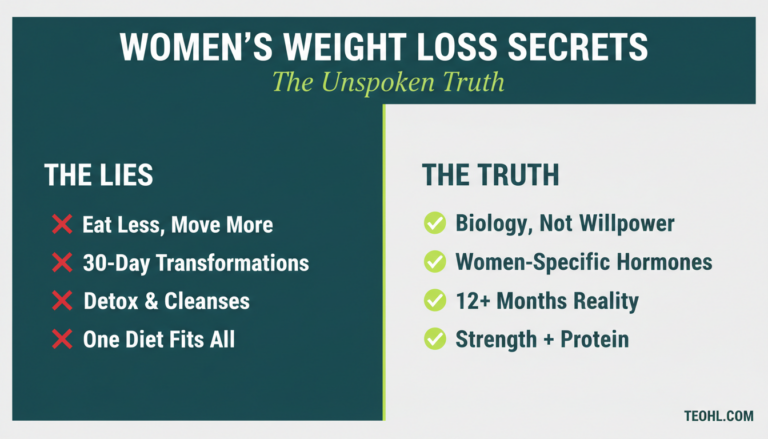
Weight loss for women over 60 presents unique challenges. Hormone loss, faster muscle loss, med interactions, fall risk, and bone health all require age-specific strategies. Additionally, your body has changed in ways making standard advice ineffective or dangerous.
However, thousands of women over 60 win at losing weight using these approaches. They aren’t special or lucky. Moreover, they simply learned what works for their age and committed to doing it steadily, even when progress felt slow.
The next 12-18 months will pass whether you take action or not. You can spend that time wishing for change, or create it. Additionally, start today with one simple action: calculate your protein needs and aim to hit that target. Tomorrow, add another small action. Therefore, build momentum slowly through steady small steps.
Remember, slower progress is still progress. Every pound lost, workout done, nutritious meal eaten moves you closer. Moreover, you’re investing in independence—the ability to live on your own terms and enjoy activities you love.
Be patient with yourself and your body. Additionally, your body is doing its best with the biology it has. Work with it using strategies designed for women over 60. Therefore, you deserve to feel strong, capable, and healthy no matter your age.
You’ve got this. Moreover, one day, one meal, one workout at a time.
Continue Your Journey:
- Weight Loss for Women Over 50: Complete Guide
- Weight Loss Guide for Women Over 40
- Optimal Wellbeing After 60: Complete Guide
- Strength Training Programs for Women
- Best Protein Powder for Women’s Weight Loss
- Macros Calculator for Weight Loss
- 7-Day Anti-Bloat Meal Plan
- Squats for Longevity and Healthy Aging
- Women’s Weight Loss Secrets: The Unspoken Truth
- Best Weight Loss Shakes for Women
- Peptides for Weight Loss in Women
- Intuitive Eating for Beginners Guide