
Weight Loss for Women Over 50: Complete Science-Backed Guide (2026)
At 52, you step on the scale and see a number you’ve never seen before. Despite eating the same foods and staying active, the pounds keep creeping up. Your favorite jeans don’t fit. Moreover, everything you try—from cutting calories to adding extra cardio—seems to make no difference at all.
Here’s what you need to know: weight loss for women over 50 follows completely different rules than it did in your 30s and 40s. In fact, the strategies that worked a decade ago can actually backfire now. Your body has changed at a hormonal level, and ignoring these changes guarantees frustration.
Throughout this guide, you’ll discover exactly why your body responds differently after 50. You’ll learn the science-backed strategies that work specifically for your age group. Also, you’ll get actionable programs—not vague advice—including workout plans, meal strategies, and realistic timelines.
By the end, you’ll understand how to work with your changing body instead of fighting it. You’ll know what actually works, what wastes your time, and how long results truly take. No more guessing, no more confusion—just clear direction.
🔑 Quick Answer: What Makes Weight Loss Different After 50?
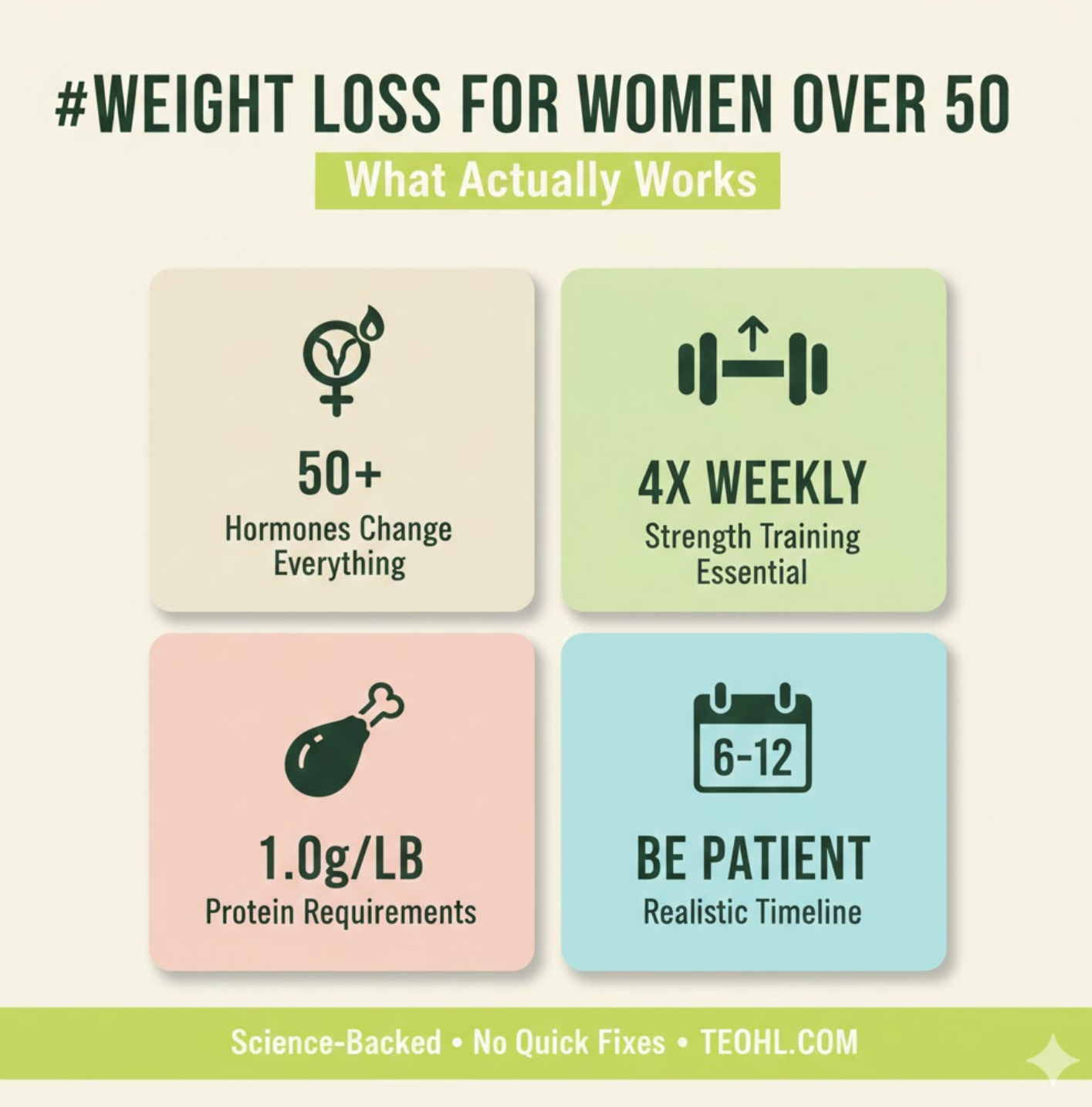
- Menopause hormones shift everything: Estrogen loss causes belly fat storage, muscle loss accelerates to 3-5% yearly, and metabolism drops 200-300 calories daily
- You need MORE protein now: Target 1.0-1.2g per pound of body weight to preserve muscle and maintain metabolism
- Strength training becomes essential: Cardio alone won’t work anymore—you must lift weights 3-4 times weekly to prevent muscle loss
- Timeline is 2-3X longer: Expect 6-12+ months for significant results, not 30-60 days. Slower progress prevents muscle loss and ensures lasting results
- Your approach must change: What worked at 35 will fail at 55. Age-specific strategies are non-negotiable for success
Why Weight Loss for Women Over 50 Is So Different
Your body at 50 operates fundamentally differently than it did at 30 or 40. These aren’t minor changes—they’re major metabolic shifts that affect every aspect of weight management. Understanding these differences is the first step to successful weight loss.
Menopause Changes Everything About Fat Storage
Menopause typically begins around age 51, though perimenopause (the transition phase) can start in your mid-to-late 40s. During this time, estrogen levels plummet by 60-90%. This isn’t just about hot flashes—estrogen directly controls where your body stores fat.
Before menopause, estrogen directs fat storage to your hips and thighs. After menopause, fat preferentially accumulates around your abdomen and organs (visceral fat). Research from the National Institutes of Health shows that postmenopausal women gain an average of 1.5 pounds annually, with most landing around the midsection.
Visceral fat is particularly dangerous. It surrounds your organs, increases inflammation, and raises risks for diabetes, heart disease, and certain cancers. Moreover, this type of fat is stubborn—it resists traditional diet and exercise more than subcutaneous fat. Therefore, targeted strategies become essential.
💡 The Estrogen-Belly Fat Connection
Estrogen doesn’t just control fat placement—it also regulates insulin sensitivity. When estrogen drops, your cells become more resistant to insulin. As a result, your body converts more calories to fat storage instead of using them for energy. This explains why you can eat the same amount but gain weight.
Muscle Loss Accelerates Dramatically
Starting at age 30, women lose about 3-8% of muscle mass per decade. However, this rate accelerates after menopause to 3-5% per year. Since muscle burns about 6 calories per pound daily at rest (compared to 2 calories for fat), losing muscle directly slows your metabolism.
Let’s do the math: If you lose 10 pounds of muscle over five years, you’re burning 60 fewer calories daily just at rest. That’s 21,900 calories annually—equivalent to about 6 pounds of fat. Simply maintaining your current weight requires eating less, moving more, or both.
Strength training is the only proven intervention to prevent and reverse muscle loss. Studies show that women over 50 who strength train 3-4 times weekly maintain muscle mass and keep metabolism elevated. For detailed programs, see our complete training programs for women’s weight loss.
Your Metabolism Naturally Slows Down
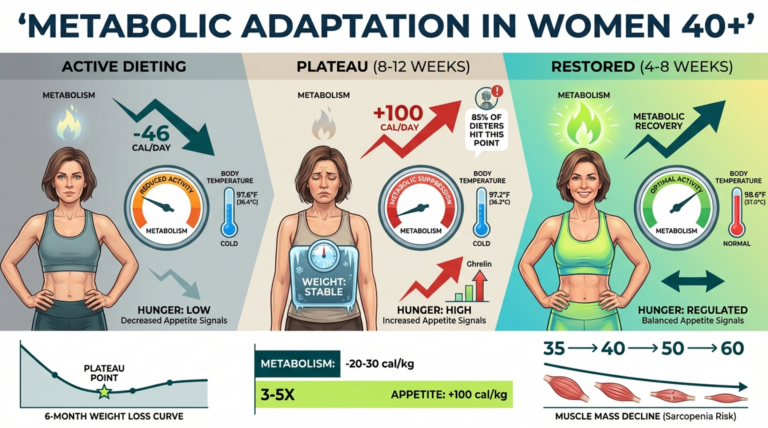
Even without muscle loss, your basal metabolic rate (the calories you burn just existing) decreases about 2% per decade after age 25. By 50, you’re burning roughly 200-300 fewer calories daily than you did at 30—simply due to aging.
This metabolic slowdown comes from multiple factors. Cell function becomes less efficient. Hormone production decreases. Your body temperature regulation changes. Even your organs require slightly less energy to function. While you can’t prevent all of these changes, you can minimize their impact through strategic nutrition and exercise.
Sleep Disruptions Sabotage Progress
Hot flashes, night sweats, and insomnia plague many women during menopause. Poor sleep doesn’t just make you tired—it actively promotes weight gain. Research shows that sleeping less than 7 hours nightly increases ghrelin (hunger hormone) and decreases leptin (fullness hormone).
Women who sleep poorly eat an average of 300+ extra calories daily without realizing it. They also crave high-calorie, high-carb foods more intensely. Additionally, sleep deprivation impairs decision-making, making it harder to stick to healthy choices.
Medications Often Cause Weight Gain
By age 50, many women take medications for conditions like high blood pressure, high cholesterol, depression, or thyroid issues. Several common medications promote weight gain as a side effect. These include certain beta-blockers, antidepressants, corticosteroids, and insulin.
If you’ve started a medication and noticed unexplained weight gain, talk to your doctor. Alternative medications often exist that don’t affect weight. Never stop medications without medical guidance, but don’t accept weight gain as inevitable either.
The Complete Nutrition Strategy for Women Over 50
Nutrition becomes even more critical after 50. You’re eating fewer total calories, so every bite must count toward your nutritional needs. Moreover, protein requirements increase while calorie needs decrease—a challenging combination.
Protein Is Your Most Important Macronutrient
Standard dietary guidelines recommend 0.8g protein per kilogram of body weight. However, research on older adults shows this is inadequate. For women over 50 trying to lose weight, aim for 1.0-1.2g protein per pound of target body weight.
For example, if you weigh 160 pounds and want to reach 140 pounds, you need 140-168g protein daily. This might seem high, but it serves multiple purposes. Protein preserves muscle during weight loss. It increases satiety, keeping you fuller longer. Also, it has the highest thermic effect—your body burns 25-30% of protein calories just digesting it.
💡 How to Hit Your Protein Target
Spread protein across all meals. For 150g daily, aim for:
- Breakfast: 35-40g (Greek yogurt, eggs, protein powder smoothie)
- Lunch: 35-40g (chicken, fish, tofu, or beans)
- Dinner: 35-40g (lean meat, seafood, or legumes)
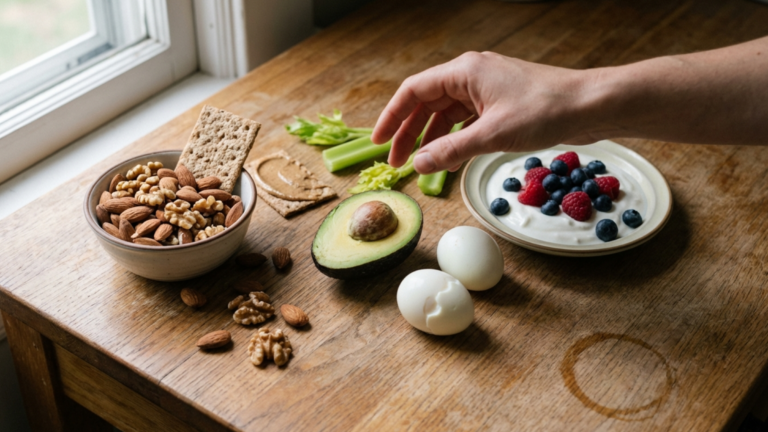
- Snacks: 15-20g (cottage cheese, nuts, protein shake)
Learn exactly how much protein you need daily based on your specific situation.
Adjust Your Macros for Hormonal Changes
The standard macro split (50% carbs, 30% fat, 20% protein) doesn’t work well for menopausal women. Instead, consider this age-appropriate distribution tailored for women over 50:
- Protein: 30-35% of total calories (1.0-1.2g per lb body weight)
- Carbohydrates: 30-35% (lower than standard recommendations)
- Fats: 30-35% (higher healthy fats support hormone production)
Lower carbohydrate intake helps manage insulin resistance that develops after menopause. Focus on complex carbs (vegetables, whole grains, legumes) rather than simple sugars. Healthy fats from avocados, nuts, olive oil, and fatty fish support hormone production and increase satiety. For detailed macro calculations, use our macros calculator for women’s weight loss.
Create a Moderate Calorie Deficit
Aggressive calorie restriction backfires after 50. Eating too little accelerates muscle loss, which further slows metabolism. Instead, aim for a moderate deficit of 300-400 calories below your maintenance level.
To find your maintenance calories, multiply your body weight in pounds by 12-14 (depending on activity level). For a 150 lb moderately active woman, that’s 1,800-2,100 calories. A 300-400 calorie deficit puts you at 1,400-1,800 calories daily—enough for gradual fat loss while preserving muscle.
Sample 7-Day Meal Framework
Rather than providing specific recipes (which may not suit your preferences), here’s a flexible framework you can adapt. Each day includes about 1,500-1,600 calories with 140-150g protein.
Daily Meal Structure:
Breakfast (400 calories, 35g protein):
- Option A: Greek yogurt parfait (2% fat yogurt, berries, 1/4 cup granola, scoop protein powder)
- Option B: Vegetable omelet (3 eggs, vegetables, 1 oz cheese, whole grain toast)
- Option C: Protein smoothie (protein powder, banana, spinach, almond butter, almond milk)
Lunch (450 calories, 40g protein):
- Option A: Grilled chicken salad (5 oz chicken, mixed greens, vegetables, olive oil dressing)
- Option B: Tuna wrap (5 oz tuna, whole grain wrap, avocado, vegetables)
- Option C: Buddha bowl (quinoa, chickpeas, roasted vegetables, tahini dressing)
Dinner (500 calories, 45g protein):
- Option A: Baked salmon (6 oz), roasted vegetables, sweet potato
- Option B: Lean beef stir-fry (5 oz beef, mixed vegetables, brown rice)
- Option C: Grilled chicken (6 oz), steamed broccoli, quinoa
Snacks (250 calories, 25g protein total):
- Morning: Protein bar or hard-boiled eggs
- Afternoon: Cottage cheese with berries or almonds with apple
For more structured meal planning, check our 7-day anti-bloat meal plan which includes shopping lists and recipes.
Essential Supplements for Women Over 50
Even with perfect nutrition, certain supplements become important after 50. These support bone health, muscle maintenance, and overall wellbeing during weight loss.
- Protein powder: Convenient way to hit protein targets (choose whey, casein, or plant-based)
- Vitamin D3: 2,000-4,000 IU daily (supports bone health, mood, and immune function)
- Calcium: 1,200mg daily from food plus supplements if needed
- Omega-3 fatty acids: 1,000-2,000mg daily (reduces inflammation, supports heart health)
- Magnesium: 320mg daily (supports sleep, muscle function, bone health)
Always discuss supplements with your doctor, especially if you take medications. Some supplements interact with prescriptions or aren’t appropriate for certain conditions.
The Essential Strength Training Protocol
If you do nothing else from this guide, start strength training. This single intervention has the biggest impact on maintaining metabolism, preserving muscle, and achieving the body composition you want.
Why Strength Training Is Non-Negotiable After 50
Cardio burns calories during activity, which is beneficial. However, strength training provides benefits that continue 24/7. Each pound of muscle you maintain burns about 6 calories daily at rest. More importantly, strength training is the only proven method to prevent age-related muscle loss.
Research on women over 50 shows multiple benefits beyond weight loss. Strength training improves bone density, reducing osteoporosis risk. It enhances balance and coordination, preventing falls. Also, it improves insulin sensitivity, helping manage blood sugar. Additionally, exercise supports brain health and cognitive function.
Your 12-Week Beginner Strength Training Program
This program assumes you’re new to lifting weights or haven’t done it in years. You’ll work out 3 times weekly with at least one rest day between sessions. For complete details, see our full 12-week training program.
Weeks 1-4: Foundation Phase
Focus on learning proper form and building base strength. Perform each exercise for 2 sets of 10-12 repetitions. Rest 60-90 seconds between sets.
Workout A (Monday):
- Goblet squats: 2 sets x 10-12 reps (targets legs, glutes, core)
- Push-ups (modified on knees if needed): 2 sets x 10-12 reps
- Dumbbell rows: 2 sets x 10-12 reps each arm
- Glute bridges: 2 sets x 15 reps
- Plank holds: 2 sets x 20-30 seconds
Workout B (Wednesday):
- Dumbbell lunges: 2 sets x 10 reps each leg
- Dumbbell shoulder press: 2 sets x 10-12 reps
- Lat pulldowns or assisted pull-ups: 2 sets x 10-12 reps
- Step-ups: 2 sets x 10 reps each leg
- Dead bugs: 2 sets x 10 reps each side
Workout C (Friday):
- Dumbbell deadlifts: 2 sets x 10-12 reps
- Dumbbell chest press: 2 sets x 10-12 reps
- Cable or band face pulls: 2 sets x 15 reps
- Goblet squats: 2 sets x 10-12 reps
- Bird dogs: 2 sets x 10 reps each side
Weeks 5-8: Progressive Overload
Increase to 3 sets of 8-10 repetitions. Use heavier weights that make the last 2 reps challenging but doable with good form. This phase builds real strength.
Weeks 9-12: Strength Building
Perform 3-4 sets of 6-8 repetitions with heavier weights. Rest 2-3 minutes between sets. By now, you should feel significantly stronger than when you started.
⚠️ Form Is More Important Than Weight
Lifting heavy weight with poor form causes injury. Always prioritize proper technique over adding weight. If you can’t complete the movement through full range of motion with control, the weight is too heavy.
Consider working with a trainer for your first month to learn proper form. Many gyms offer one free session with membership. Also, movements like squats require specific technique to maximize benefits and prevent injury.
Home Workout Alternatives
No gym? No problem. You can strength train effectively at home with minimal equipment. Invest in a set of resistance bands and adjustable dumbbells (5-25 lbs). These two items enable hundreds of exercises.
Bodyweight exercises also work effectively. Push-ups, squats, lunges, planks, and glute bridges require zero equipment. As you get stronger, add resistance bands to increase difficulty. Many women find home workouts more sustainable long-term than gym memberships.
Cardio and Daily Movement Strategies
Strength training builds muscle and metabolism. Cardio improves heart health, burns calories, and enhances endurance. You need both, but the balance shifts as you age.
How Much Cardio Do You Really Need?
The American Heart Association recommends 150 minutes of moderate-intensity cardio weekly. For weight loss, aim for 200-250 minutes (about 30-40 minutes daily). However, more isn’t always better.
Excessive cardio raises cortisol (stress hormone), which can promote belly fat storage. It also increases hunger, making calorie control harder. Additionally, long cardio sessions can lead to muscle loss if protein intake is inadequate. Therefore, balance is key.
Effective Cardio Options for Women Over 50:
- Walking: Low-impact, sustainable, and effective. Aim for 7,000-10,000 steps daily
- Swimming: Excellent full-body workout with zero joint stress
- Cycling: Indoor or outdoor, great for maintaining cardiovascular health
- Elliptical: Lower impact than running, easier on knees and hips
- Dance classes: Fun, social, and effective cardio
The NEAT Factor: Non-Exercise Activity
NEAT (Non-Exercise Activity Thermogenesis) refers to calories burned through daily activities outside of formal exercise. This includes walking, standing, fidgeting, household chores, and occupational activities. Research shows NEAT can vary by 2,000 calories daily between sedentary and active individuals.
Simple ways to increase NEAT include taking stairs instead of elevators, parking farther away, standing while on phone calls, doing household chores vigorously, and walking during TV commercials. These small actions accumulate significantly over weeks and months.
Menopause-Specific Weight Loss Strategies
Managing weight during and after menopause requires addressing the unique challenges this life stage presents. Generic weight loss advice fails because it ignores the hormonal changes you’re experiencing.
Perimenopause vs. Post-Menopause: Different Approaches
Perimenopause (ages 45-55) is the transition period before menopause. You’re still having periods, but they become irregular. Hormones fluctuate wildly—estrogen can surge high one month and drop low the next. This unpredictability makes weight management challenging.
Perimenopause Strategies:
- Track symptoms alongside weight to identify patterns
- Be flexible with calorie intake—some weeks you’ll need more due to hormonal hunger
- Don’t compare week-to-week progress; look at monthly trends
- Manage stress aggressively as cortisol compounds hormone imbalances
- Consider strategies that work for women over 40 as a bridge approach
Post-menopause (12+ months without a period) brings hormonal stability, though at lower levels. Estrogen remains consistently low. This makes fat loss more predictable but slower. The strategies outlined in this guide work best during post-menopause.
Should You Consider Hormone Replacement Therapy?
Hormone Replacement Therapy (HRT) involves taking estrogen (with or without progesterone) to replace what your body no longer produces. For some women, HRT makes weight management significantly easier.
Studies show HRT may reduce abdominal fat accumulation and prevent the metabolic slowdown associated with menopause. Additionally, it often improves sleep quality, reduces hot flashes, and stabilizes mood—all factors that indirectly support weight loss efforts.
However, HRT isn’t appropriate for everyone. Women with certain health histories (breast cancer, blood clots, liver disease) shouldn’t take HRT. The decision requires careful discussion with your doctor, weighing benefits against potential risks for your specific situation.
Managing Hot Flashes During Workouts
Hot flashes during exercise can be incredibly frustrating. They make you uncomfortable, self-conscious, and tempted to skip workouts entirely. However, strategies exist to minimize their impact.
- Exercise in cooler environments (air-conditioned gym, outdoor morning workouts)
- Wear moisture-wicking, breathable fabrics
- Keep a cold towel and water bottle nearby
- Choose swimming or water aerobics when hot flashes are severe
- Time workouts for when hot flashes are least likely (track patterns in a journal)
Psychological Strategies for Long-Term Success
Physical strategies alone aren’t enough. Your mindset, emotional relationship with food, and mental approach to weight loss determine whether you succeed or struggle endlessly.
Overcoming the “It’s Too Late” Mindset
Many women over 50 believe their bodies are “broken” or that weight loss is impossible now. This belief becomes self-fulfilling. When you believe something won’t work, you don’t commit fully, ensuring failure.
The truth: your body is different, not broken. It responds to different strategies than it did before. Women in their 60s, 70s, and even 80s successfully lose weight and build muscle when they use age-appropriate approaches. Age is a factor, but not a barrier.
Shift your mindset from “Will this work for me?” to “What adjustments do I need to make this work?” This subtle change moves you from helplessness to empowerment.
Building Patience With Slower Results
Weight loss after 50 happens 2-3 times slower than in your 30s. This pace frustrates many women who remember losing 10 pounds in a month when younger. Now, losing 10 pounds might take 3-4 months.
However, slower weight loss has advantages. You’re more likely to preserve muscle mass. The habits you build become more sustainable. Your skin has more time to adapt, reducing loose skin issues. Also, research shows gradual weight loss maintains better long-term than rapid loss.
Celebrate small victories: losing 1 pound monthly, fitting into jeans better, having more energy, or lifting heavier weights. These non-scale victories keep you motivated when the scale moves slowly. For more perspective on healthy approaches, explore intuitive eating principles.
Managing Emotional Eating After 50
Life at 50+ brings unique stressors: caring for aging parents, empty nest syndrome, career changes, relationship transitions, or health concerns. Food often becomes a coping mechanism for these emotions.
Emotional eating isn’t about hunger—it’s about using food to manage feelings. Therefore, willpower doesn’t solve the problem. Instead, develop alternative coping strategies for common triggers.
Alternative Coping Strategies:
- For stress: 10-minute walk, deep breathing, journaling, calling a friend
- For boredom: Engaging hobby, reading, creative project, volunteer work
- For loneliness: Join social groups, take classes, video chat with family
- For celebration: Non-food rewards like massage, new book, concert tickets
If emotional eating is severe or tied to past trauma, consider working with a therapist who specializes in eating behaviors. This isn’t weakness—it’s strategic problem-solving.
Realistic Timeline: What to Expect Month by Month
Setting realistic expectations prevents discouragement. Here’s what sustainable weight loss for women over 50 actually looks like, based on research and clinical experience.
Months 1-2: Foundation and Initial Loss
You’ll lose 3-6 pounds during the first two months. Much of this is water weight from reducing sodium, carbs, and inflammation. You’re also learning new habits: tracking food, strength training, meal prepping.
Expect to feel challenged as you adjust to new routines. Your body is adapting to lower calories and new exercise demands. Energy might fluctuate. However, you’ll also notice improvements: better sleep, more stable energy, reduced bloating.
Months 3-4: Real Fat Loss Begins
Fat loss accelerates during months 3-4. You’ll lose another 4-8 pounds, bringing total loss to 8-14 pounds. Clothes fit noticeably better. People start commenting on changes. Your strength increases significantly—you’re lifting heavier weights than when you started.
This phase feels rewarding. Habits become more automatic. You’ve proven to yourself that this works. However, you’re still far from your goal, requiring continued commitment.
Months 5-6: First Plateau Hits
Your body adapts to your deficit. Weight loss stalls for 2-4 weeks despite perfect adherence. This plateau frustrates many women, causing them to quit. Don’t.
Plateaus are normal and expected. Your metabolism has adjusted to lower calories and increased activity. To break through, you must either reduce calories by 100-200 daily, increase activity slightly, or both. Also, ensure you’re getting adequate sleep and managing stress, as both affect fat loss.
Months 7-12: Continued Slow Progress
Weight loss slows to 0.5-1 pound weekly. You’re losing another 10-20 pounds over these six months. Progress feels painfully slow, but you’re now 20-30 pounds lighter than when you started.
Body recomposition becomes noticeable. You’re building muscle while losing fat, so the scale doesn’t tell the whole story. Take measurements and progress photos monthly. These show changes the scale misses.
Beyond 12 Months: Maintenance Phase
Once you reach your goal weight, maintenance begins. This isn’t “returning to normal eating”—it’s sustaining the habits that got you here. You’ll eat slightly more than during weight loss (adding back 200-300 calories), but significantly less than before you started.
Successful maintainers continue strength training 3-4 times weekly, track food most days, weigh themselves regularly, and prioritize protein. For aging gracefully while maintaining weight, see our optimal wellbeing after 60 guide and healthy aging strategies.
Frequently Asked Questions
How much weight can I realistically lose per month after 50?
Aim for 2-4 pounds monthly. This might seem slow, but it’s sustainable and preserves muscle mass. Women who lose faster typically regain it quickly. Slower loss (0.5-1 lb weekly) means you’re losing fat, not muscle. Over 12 months, this approach yields 25-50 pounds—life-changing results achieved gradually.
Do I really need to lift heavy weights, or will light weights work?
You need progressive resistance to build and maintain muscle. Light weights (3-5 lbs) with high reps won’t challenge your muscles enough to prevent age-related loss. “Heavy” is relative—it means weight that makes the last 2-3 reps of each set challenging while maintaining proper form. For most women, this means 10-25 lb dumbbells for upper body and 15-40 lbs for lower body exercises. Start lighter and progress gradually.
Can I do intermittent fasting after 50?
Some women over 50 succeed with intermittent fasting (IF), while others struggle. IF can help control calories naturally. However, fasting can worsen hot flashes, disrupt sleep, and cause muscle loss if protein intake is inadequate. If you try IF, ensure you’re eating enough protein during your eating window (1.0-1.2g per lb). Stop if you experience increased hot flashes, sleep problems, or excessive hunger. IF is a tool, not a requirement.
How do I lose menopause belly fat specifically?
You cannot spot-reduce fat from your belly. However, menopause belly fat responds to the same strategies as overall fat loss: calorie deficit, high protein, strength training, and patience. Belly fat is often the last to go and first to return, so it requires sustained effort. Reducing stress and improving sleep also help, as cortisol promotes visceral fat storage. Expect belly fat loss to take 6-12 months of consistent effort.
Is weight loss possible if I’m on thyroid medication?
Yes, but your thyroid medication must be optimized first. Work with your doctor to ensure TSH levels are in the ideal range (typically 1-2 mIU/L for weight loss). Once medication is optimized, follow the same strategies outlined in this guide. Weight loss will be slower than for women without thyroid issues—expect results to take 50-100% longer. However, it’s absolutely achievable with patience and consistency. Some women also benefit from exploring peptide therapy options under medical supervision.
Should I follow a low-carb or keto diet?
Lower carb intake (100-150g daily) often works well for women over 50 due to increased insulin resistance. However, very low carb or keto diets aren’t necessary and can make strength training more difficult. Moderate carbs from vegetables, fruits, and whole grains provide energy for workouts and daily activities. Focus on reducing processed carbs and sugars rather than all carbs. The macro split suggested earlier (30-35% carbs) works well for most women.
How long before I see visible results?
You’ll feel better within 2-3 weeks (more energy, better sleep, less bloating). Clothes will fit better around week 4-6. You’ll notice changes in photos around week 8-10. Others will comment on your progress around month 3-4. Significant visible transformation takes 6-9 months. This timeline requires patience, but remember: the time will pass anyway. You can spend the next year wishing for change or creating it.
Do I need to count calories forever?
During active weight loss, tracking calories and protein ensures you’re in the right range. After reaching your goal, many women can maintain without strict tracking by using portion awareness and intuitive eating. However, research shows successful long-term maintainers typically track at least loosely—checking in with measurements or tracking every few days. Most find tracking becomes quick and automatic after several months of practice. Apps make this easier, taking just 5-10 minutes daily.
Your Action Plan: Getting Started Today
You now understand why weight loss for women over 50 requires different strategies. You know what works, what doesn’t, and how long results truly take. Information alone doesn’t create change—action does.
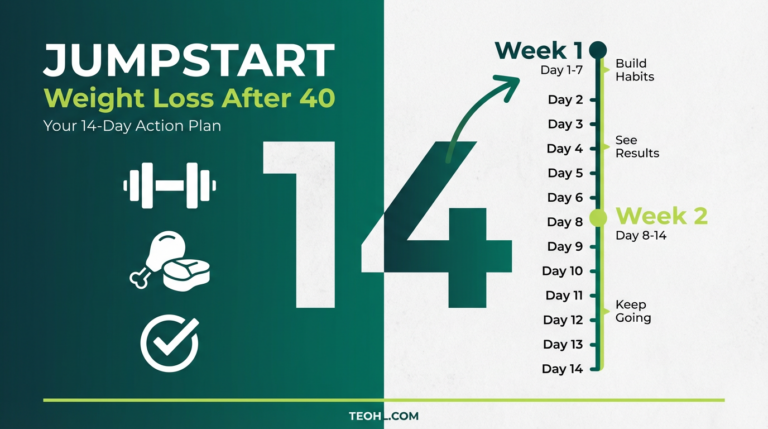
Week 1: Assessment and Planning
Start by gathering baseline data. Weigh yourself, take measurements (waist, hips, thighs, arms), and capture progress photos in fitted clothing. Calculate your maintenance calories and target deficit. Determine your protein needs. Schedule your workout days on your calendar.
Also, assess your current habits honestly. How much protein do you currently eat? How often do you strength train? What are your biggest obstacles? Understanding your starting point helps you create a realistic plan.
Week 2-4: Building New Habits
Focus on establishing core habits one at a time. Week 2 might focus on hitting protein targets daily. Week 3 adds strength training 2-3 times. Week 4 introduces meal prep or planning. Don’t try changing everything simultaneously—that leads to overwhelm and quitting.
Track everything during this phase. Food intake, workouts, sleep, energy levels, and how you feel. This data helps you identify patterns and make adjustments. Apps like MyFitnessPal make tracking simple.
Month 2-3: Consistency and Refinement
By now, new habits feel more automatic. You’re seeing initial results—the scale is down, clothes fit better, strength increases. Use this momentum to refine your approach. Identify what’s working and what isn’t. Make small adjustments rather than major overhauls.
Find your support system during this phase. Join online communities, find a workout partner, or work with a coach. Having support dramatically increases long-term success rates. For additional guidance, explore our collection of resources on women’s weight loss truths.
Month 4+: Playing the Long Game
You’re in this for life, not just until you hit a goal weight. Therefore, build sustainable practices you can maintain forever. This means finding exercises you enjoy, not just tolerate. Discovering healthy foods you love, not just endure. Creating routines that fit your lifestyle.
Celebrate non-scale victories: lifting heavier weights, having more energy, sleeping better, feeling more confident. These improvements matter as much as the number on the scale. They indicate you’re building health, not just losing weight.
Final Thoughts: You Can Do This
Weight loss for women over 50 is challenging. Your body has changed in ways that make fat loss more difficult than it was before. Hormones work against you. Metabolism has slowed. Muscle loss accelerates. These are real obstacles, not excuses.
However, thousands of women over 50 successfully lose weight and transform their health using the strategies in this guide. They aren’t special or lucky. They simply learned what actually works for their age group and committed to doing it consistently.
The next 6-12 months will pass whether you take action or not. You can spend that time wishing for change, or you can create it. Start today with one simple action: calculate your protein needs and aim to hit that target. Tomorrow, add another small action. Build momentum gradually.
Remember, slower progress is still progress. Every pound lost, every workout completed, every healthy meal eaten moves you closer to your goal. Be patient with yourself. Your body is doing its best with the biology it has. Work with it, not against it.
You’ve got this. One day, one meal, one workout at a time.
Continue Your Journey:
- 12-Week Strength Training Program for Women
- Best Protein Powder for Women’s Weight Loss
- Macros Calculator for Weight Loss
- 7-Day Anti-Bloat Meal Plan
- Optimal Wellbeing After 60
- Women’s Weight Loss Secrets: The Unspoken Truth