

Top Vegetables to Buy Fresh (and 3 to Buy Canned)
Key Takeaways
- Texture matters most. Five vegetables are worth buying fresh because canning destroys their crispness, crunch, and textural contrast — and you can taste the difference.
- The nutrition gap is smaller than you think. Research shows frozen and canned vegetables have nutrient profiles close to fresh. The real reason to buy fresh is flavor and texture, not better nutrition.
- Some vegetables are actually better canned. Tomatoes, pumpkin, and corn gain nutritional benefits or convenience from canning — and you’d never notice the texture difference.
- Smart shopping means knowing your cooking method. The same vegetable can be worth buying fresh for a salad but fine canned for a soup. Context is everything.
- Storage is the real challenge with fresh. A few simple tricks — paper towels for spinach, water for asparagus, paper bags for mushrooms — can double the life of fresh vegetables and cut food waste.
You’re in the grocery aisle, can of green beans in one hand, fresh bundle in the other. The canned ones are cheap and last forever. The fresh ones look better. You want the healthy choice — but you’re not sure which it is.
Here’s the thing: the answer changes for every vegetable. Knowing which vegetables to buy fresh isn’t about assuming fresh is always best. It’s about understanding how texture, moisture, cooking method, and nutrition all play a role. Let’s break it down so you can make smarter choices — whether shopping for tonight’s dinner or stocking your pantry for the month.
I’ll walk you through the five vegetables that truly deserve a spot in your produce bag, plus three where canned is actually the smarter move. By the end, you’ll know exactly what to buy and why.
Quick Answer: Which Vegetables to Buy Fresh
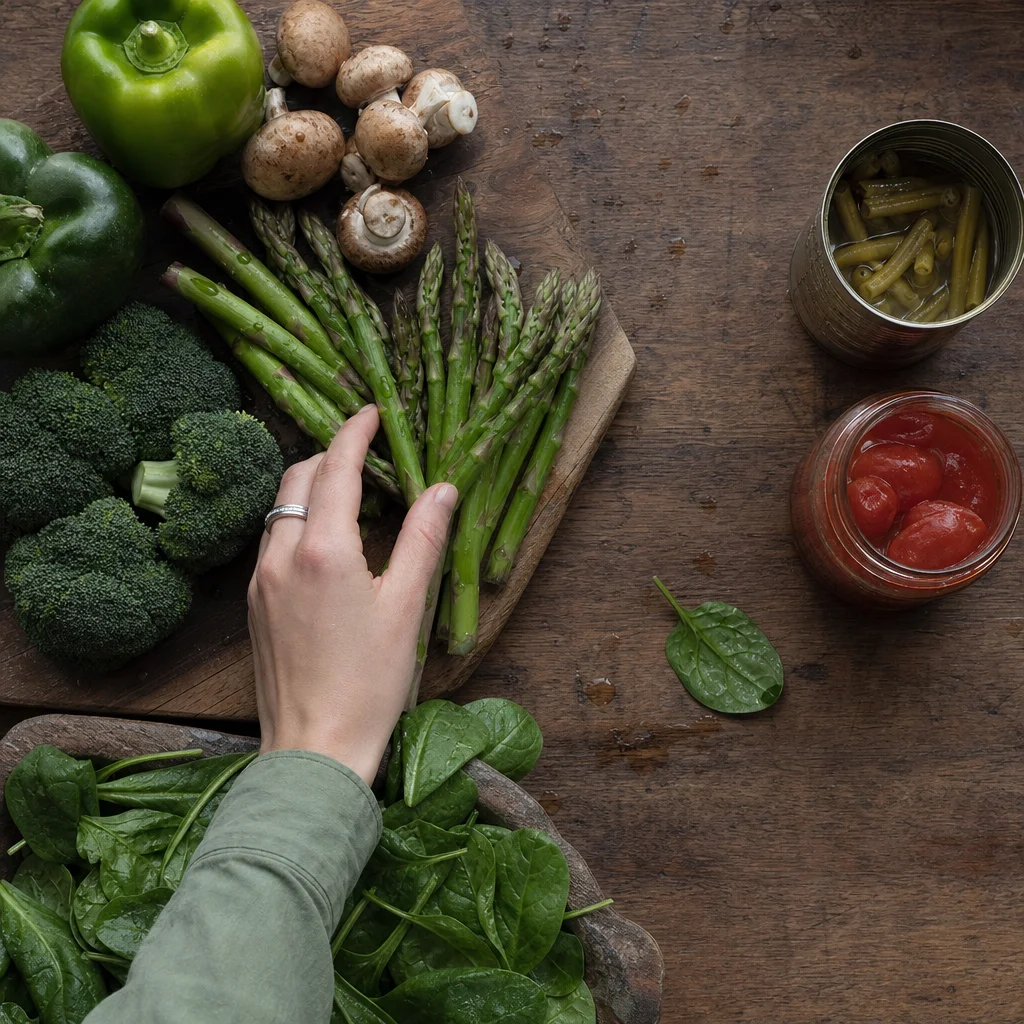
Spinach, broccoli, asparagus, bell peppers, and mushrooms are the five vegetables where fresh makes a real difference. Their texture and moisture content change a lot during canning — crisp leaves become mush, crunchy stalks get soft, firm mushrooms turn spongy. For every other vegetable, frozen or canned works just as well (and sometimes better) for most cooking methods.
Why Understanding Vegetables to Buy Fresh Matters More Than You Think
Let’s be honest — most of us don’t pick vegetables based on nutrients alone. We pick them because they taste good, look nice, and make meals feel satisfying. A 2025 study from the Journal of Nutrition Education and Behavior found that while lower-income homes tend to have more canned vegetables, there was no link between canned vegetable availability and sodium intake. So having canned veggies at home doesn’t automatically mean less healthy choices.
The real reason to choose fresh is texture. When you roast broccoli, you want crispy edges and tender stalks. When you bite a bell pepper, you want that crunch. When you saut\u00e9 mushrooms, you want them to brown and caramelize, not steam into rubbery discs. These textures disappear during canning — and that’s the real reason certain vegetables to buy fresh make such a difference.
But here’s what surprised me: the nutritional differences between fresh, frozen, and canned vegetables are much smaller than most people think. A 2013 study in PLoS One looked at 98 vegetables and found that all three forms have similar nutrient profiles. So when you choose fresh over canned, you’re picking texture and versatility — not because it’s much healthier.
The 5 Vegetables to Buy Fresh Every Time
These five vegetables lose something essential during canning — and once you try them fresh, you’ll understand why.
1. Spinach
Fresh spinach is one of the most versatile vegetables in your kitchen. You can toss it into a salad for a peppery crunch, layer it into a sandwich, or wilt it into hot pasta in under a minute. Canned spinach is already fully cooked and soft — it’s really only useful in dips or creamed dishes. Plus, canned spinach often has added sodium to preserve its color and flavor.
Registered dietitian Theresa Link puts it simply: “Canned spinach tends to be mushy and is often much higher in sodium.” If you’re cooking a dish where spinach wilts anyway (soups, omelets, sauces), frozen spinach is a good middle ground — it’s blanched but not mushy. For salads or raw use, fresh is the only choice.
2. Broccoli
The magic of fresh broccoli is the contrast — crispy brown edges on the florets, tender but firm stalks. That’s impossible with canned broccoli. During canning, the florets soak up liquid and get soft, the stems lose their bite, and the whole thing ends up with a uniform steamed texture. You can’t roast canned broccoli and get those caramelized edges.
Canned broccoli works fine in blended soups or casseroles where texture isn’t the star. But for roasted broccoli, broccoli rice, or stir-fries, fresh is non-negotiable. Frozen broccoli is a good alternative — it’s blanched but still holds its shape when roasted or steamed.
3. Asparagus
Asparagus is one of those vegetables where texture is everything. The delicate tips get lightly crispy when roasted while the stalks stay tender with a bite. Canned asparagus loses this entirely — the whole spear becomes uniformly soft, and the tips often fall apart.
Registered dietitian Carlyne Remedios says: “Fresh asparagus has a firm yet tender bite and a delicate earthy flavor that is hard to keep during canning.” If you’re making a casserole or soup where texture isn’t key, canned asparagus works. But for roasted or grilled asparagus, go fresh.
4. Bell Peppers
Bell peppers are prized for their crunchy texture and bright flavor. Canning destroys the crunch. Even brief heat softens them, and canning goes far beyond brief. Since vitamin C is sensitive to heat, the canning process likely reduces its levels — a shame since bell peppers are one of the richest natural sources of this nutrient.
One exception: roasted red peppers in a jar. These are fire-roasted, not canned in the traditional sense, and they give a completely different experience — soft, smoky, perfect for sandwiches and dips. For fresh crunch in salads or stir-fries, fresh bell peppers are the clear winner.
5. Mushrooms
Mushrooms might have the strongest case for buying fresh. When fresh mushrooms hit a hot pan, they first release moisture, then start to brown and caramelize. That browning creates the rich, savory, umami flavor that makes them so satisfying. Canned mushrooms are already cooked and stored in liquid, so they never get that chance — they just stay soft.
When fresh mushrooms hit a hot pan, they develop a rich, savory aroma that many people find appealing. If you want concentrated mushroom flavor, fresh is the only way. Canned mushrooms are fine for soup or as a topping, but they won’t deliver that earthy depth.
The Nutrition Reality: Fresh Isn’t Always Superior
Here’s something that might surprise you. The UC Davis food science team led by Diane Barrett ran multiple studies comparing fresh, frozen, and processed vegetables. Their 2015 research published in the Journal of Agricultural and Food Chemistry found that frozen vegetables kept comparable — and sometimes higher — vitamin levels than fresh ones stored for several days.
Think about it: that fresh broccoli at the store was probably harvested days ago. It traveled, sat in a warehouse, got stocked, and waited for you. During that time, it lost some vitamin C. Frozen broccoli was blanched and frozen within hours of picking, locking in nutrients.
The companion study on mineral and fiber retention showed similar results — minerals like magnesium, calcium, and iron were just as well kept in frozen vegetables as in fresh refrigerated ones. So if you’re buying vegetables for fiber or minerals, frozen is every bit as good as fresh.
Does this mean skip fresh? No. It means you can feel good using frozen spinach for smoothies, frozen broccoli for stir-fries, or canned tomatoes for sauce — without worrying you’re missing out nutritionally.
3 Vegetables You Should Buy Canned Instead
Before you assume fresh is always the answer, let’s talk about three vegetables where canned is actually smarter. A 2015 study in Nutrients found that people who regularly eat canned foods actually have higher intakes of essential nutrients like potassium, calcium, and fiber compared to those who avoid them. The key is choosing wisely.
Tomatoes
This is the most well-known example — and for good reason. Canned tomatoes are actually healthier than fresh ones. The heat used during canning increases the bioavailability of lycopene, a powerful antioxidant that is beneficial for eye health. Your body can absorb much more lycopene from canned tomatoes than from raw ones. Plus, canned tomatoes are picked at peak ripeness when they’re most flavorful. Fresh supermarket tomatoes are often picked green and ripened in transit.
Pumpkin
Have you ever tried to break down a fresh pumpkin for cooking? It’s a real workout — and the result isn’t much different from canned. Canned pumpkin is cooked before packaging, giving it a smooth, consistent texture and concentrated flavor. Fresh pumpkin is watery and takes serious effort to prep. For pumpkin pie, soups, or baked goods, canned is the smarter choice. Just buy pure pumpkin puree, not pumpkin pie filling (which has added sugar and spices).
Corn
Fresh corn on the cob is a seasonal treat — no argument. But for everyday cooking, canned or frozen corn works great. The kernels hold their texture well during canning because they’re naturally firm and starchy. The difference between fresh and canned corn is much smaller than with leafy greens. And corn is often harvested and processed quickly, so nutrient retention is solid. Frozen corn is also excellent — it’s often sweeter because it’s flash-frozen at peak ripeness.
Two More Vegetables Where Canned Works Well
Beets: Canned beets are widely accepted and often preferred. Fresh beets require roasting or boiling plus peeling (which stains everything). Canned beets are ready to slice into salads. Canned beans (kidney, black, chickpeas): Not strictly a vegetable, but beans are a nutrition powerhouse and canned versions save hours of soaking and cooking time. Rinse them well to reduce sodium, per American Heart Association guidelines.
Making the Call: Your Quick Decision Guide
Here’s a simple way to decide in the aisle:
- Buy fresh when: Texture matters for your dish — salads, roasting, stir-fries, raw snacking, or any recipe where the vegetable is the star. Spinach, broccoli, asparagus, bell peppers, and mushrooms fall into this category for most uses. These are the key vegetables to buy fresh.
- Buy frozen when: You want convenience without losing much texture or nutrition. Frozen broccoli, spinach, peas, and green beans work well in cooked dishes. Freezing pauses nutrient loss, so they’re often more nutritious than week-old produce.
- Buy canned when: The vegetable will be cooked further (soups, stews, sauces, casseroles), or when canning improves the product — tomatoes for lycopene, pumpkin for convenience, beans for time savings. Look for “no salt added” labels or rinse before using.
The same vegetable can fit different categories. Fresh spinach for a salad, frozen spinach for a frittata, canned spinach for a dip — that’s not inconsistency, it’s smart shopping. Knowing which vegetables to buy fresh helps you get the best results every time.
Storage Tricks That Make Fresh Vegetables Worth It
The biggest downside of fresh produce? It goes bad before you can use it. (We’ve shown you how to keep berries fresh for weeks and how to store fresh ginger for months — the same principles apply to these vegetables.) Here’s how to slow that clock:
- Spinach and leafy greens: Line the container with a paper towel to absorb moisture. Replace the towel when damp. This can add 3\u20134 days to your greens.
- Asparagus: Trim the woody ends, stand stalks upright in a jar with about an inch of water, and loosely cover the tops with a plastic bag before refrigerating. They’ll stay fresh up to a week.
- Mushrooms: Keep them in their original container or a paper bag — never sealed plastic, which traps moisture and speeds spoilage. They last 5\u20137 days.
- Broccoli and bell peppers: These are more forgiving. Store in the crisper drawer and they’ll last 7\u201310 days. If they start to soften, roast or saut\u00e9 immediately.
- Freeze before they spoil: Blanch broccoli and asparagus for 2 minutes in boiling water, then freeze on a baking sheet before bagging. Bell peppers and mushrooms can be chopped and frozen raw — they’ll be softer when thawed but perfect for cooked dishes.
Frequently Asked Questions
Q: How much sodium should I look for in canned vegetables?
A: The American Heart Association recommends choosing options with less than 140 mg of sodium per serving or “no salt added” on the label. Rinsing canned vegetables under running water can reduce sodium content.
Q: Are frozen vegetables as healthy as fresh?
A: Yes — and sometimes healthier. Research from UC Davis shows frozen vegetables keep comparable vitamin levels to fresh ones stored for several days. Since they’re frozen within hours of harvest, they can have more nutrients than week-old produce.
Q: Can I use canned vegetables in any recipe that calls for fresh?
A: It depends. Canned vegetables work well in soups, stews, casseroles, and sauces where they’ll cook further. They don’t work well in salads, stir-fries, roasted dishes, or any recipe where texture matters. Adjust cooking time since canned vegetables are already fully cooked — they just need to heat through.
The Bottom Line
Being a smart shopper isn’t about always choosing fresh or always choosing canned. It’s about knowing your vegetables, your cooking method, and buying accordingly. The five vegetables to buy fresh — spinach, broccoli, asparagus, bell peppers, and mushrooms — are worth the extra trip because their texture matters. For everything else, frozen or canned options serve you just as well without the pressure to use them up in days.
The National Library of Medicine puts it simply: frozen and canned vegetables are good choices when processed soon after harvest — and modern food processing does exactly that. So next time you’re in that aisle, give yourself permission to make the practical choice. Your wallet, your schedule, and your meals will thank you.