

Tofu vs Beans: Which Plant-Based Protein Is Healthier?
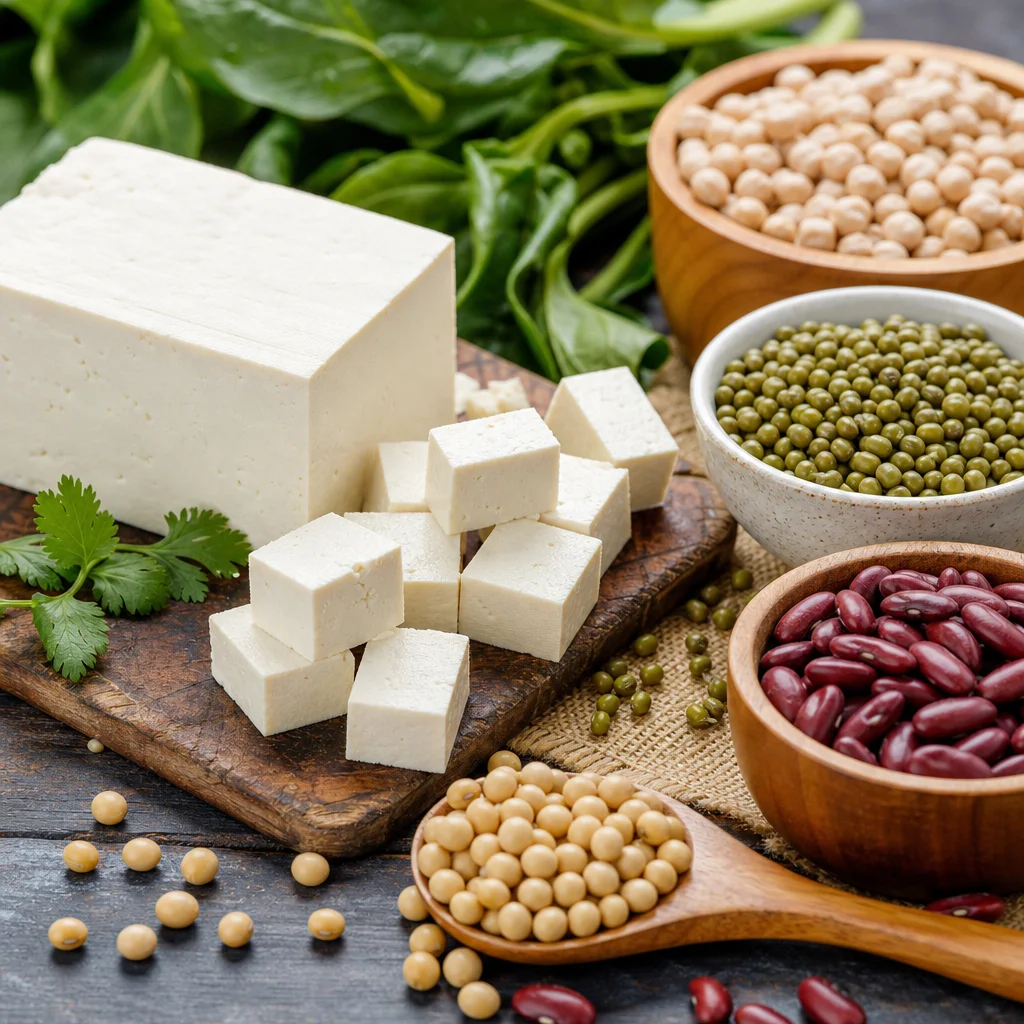
You’re standing in the grocery aisle with a block of tofu in one hand and a can of black beans in the other. Both are among the cheapest protein sources in the store. Both promise plant protein. So which one goes in the cart? The tofu vs beans question shows up in my inbox almost weekly. The short answer surprises people: you don’t have to choose. However, the two foods are not interchangeable. Each one is better at something the other does badly, and knowing where each wins changes how you build a plate.
Quick Answer: Is Tofu or Beans Better for You?
Neither wins outright. Firm tofu brings more protein per half-cup, and it often brings calcium too. Beans bring far more fiber, plus more iron and folate than tofu typically delivers. Use both across your week and you cover more nutritional ground than either food manages alone.
Tofu vs Beans: The Half-Cup Head-to-Head
Half the confusion here comes from mismatched serving sizes. One source measures 100 grams, another a cup, another hides behind “a serving.” Let’s fix that. Every number below refers to a half-cup, cooked or drained.
Half-Cup Comparison: Firm Tofu vs Cooked Beans
- Protein: firm to extra-firm tofu 15 to 22 grams (silken is far lower, about 8 to 9 grams); beans about 7 grams
- Fiber: tofu 1 to 3 grams; beans 6 to 8 grams
- Calcium: not a deciding factor for beans — tofu is the only one of the two where calcium varies enough to matter, so check the tofu label
- Iron and folate: beans are the stronger source — firm tofu contributes some iron, but beans bring more of both
- Saturated fat: both are low — firm tofu has about 1.6 g per half-cup; cooked beans have almost none
- Carbohydrate: tofu is low; beans carry slow-digesting carbs plus fiber
Look at that list and the shape of the answer appears. Tofu is the protein play. Beans are the fiber, iron and folate play. The tofu vs beans comparison only feels like a contest if you assume both foods chase the same goal. They don’t.
Why Tofu Wins on Protein Quality
Tofu starts with an advantage most plant foods lack. Soy delivers all nine essential amino acids, which makes it a complete protein. Your body also digests soy protein easily, so it can use what you eat to build and repair muscle.
Now, the numbers depend on which tofu you buy. Tofu is not one food — it’s a family. Silken tofu is soft and custardy, with only about 8 or 9 grams of protein per half-cup. Firm tofu lands nearer 15 to 18 grams. Extra-firm, pressed tofu pushes toward 22 grams.
In the tofu vs beans protein contest, extra-firm wins by a wide margin. Just don’t assume every block in the store is the same.
Tofu is also low in saturated fat, which makes it an easy swap for fatty cuts of meat. That’s part of why it fits so neatly into weight-friendly meals. And whole soy foods have a quiet edge over supplements. A meta-analysis of soy intake and long-term health outcomes found lower cancer and cardiovascular mortality with higher soy-food intake. Higher soy protein intake on its own was not linked to lower all-cause or cardiovascular mortality. Whole soy foods remain the better-supported choice. The same logic shows up in our soy milk vs dairy comparison. Short version: eat the food, skip the powder.
Why Beans Run Away With Fiber, Iron and Folate
Fiber is where the tofu vs beans matchup stops being close. Beans carry roughly 6 to 8 grams per half-cup. Tofu has only 1 to 3 grams. The fiber-rich solids of the bean get separated out when the soy milk is pressed.
That gap matters more than most people realize. Federal survey data shows a striking shortfall. Only about 3.8 percent of US adults aged 19 to 50 meet the recommended fiber intake. In other words, roughly 96 percent fall short, according to NHANES data on fiber intake in US adults.
Iron is the second bean advantage. Beans supply the plant form of iron, called nonheme iron. Your body absorbs it less efficiently than the iron in meat. The NIH Office of Dietary Supplements on iron bioavailability notes that vitamin C and phytates both change how much you absorb.
So pair them on purpose. A squeeze of lemon, chopped red pepper, or a few tomatoes in the same bowl does real work. We go deeper on the mechanics in our guide to the best ways to eat beans for iron absorption. The same NIH page notes that people eating plant-based diets need more iron than meat eaters. Women with heavy periods are also a recognized at-risk group. If you’re often exhausted, get a blood test before you self-treat.
Folate rounds out the bean case. This B vitamin helps your body make DNA and healthy red blood cells, and beans are one of the better plant sources. Folate dissolves in water, so using beans in soups and stews helps you keep more of it.
The Calcium Question Most Articles Drop
When you weigh tofu vs beans side by side, calcium is the wild card. Most comparisons mention it and then move on. Let’s finish the thought, because brand choice genuinely matters here.
Calcium enters tofu through the coagulant — the mineral that turns soy milk into a solid block. Calcium sulfate leaves calcium behind. Nigari, a seawater-derived coagulant, leaves far less. Two blocks can differ by hundreds of milligrams per serving.
The practical move takes ten seconds. Look for calcium sulfate in the ingredient list. Then check the calcium line in the Nutrition Facts panel. As a rule of thumb, look for a double-digit percentage of the daily value for calcium. The higher the number, the more that block actually contributes.
That’s worth doing. Most adults need about 1,000 milligrams of calcium a day. That rises to 1,200 milligrams for women over 50 and for everyone over 70. People who avoid dairy often fall short. NIH calcium guidance lists tofu among the plant foods that can help close the gap. It also notes that the amount depends on the product. One more detail: your body absorbs calcium best in doses of 500 milligrams or less.
The Soy and Hormone Question, Answered Calmly
Let’s be honest about why many women still skip tofu. Somewhere they heard that soy disrupts hormones or feeds breast cancer. That worry makes sense. It also isn’t supported by the evidence on food-form soy.
Soy contains isoflavones, weak plant compounds that can attach to estrogen receptors. Because they’re weak and act differently from your own estrogen, they don’t behave like a hormone dose. The largest prospective study on this followed more than 300,000 Chinese women for about a decade. Moderate soy intake was not linked to higher breast cancer risk. One pooled analysis of prospective cohorts went further. Each 10 mg daily rise in soy isoflavones was tied to roughly 3 percent lower risk, per this prospective study on soy and breast cancer risk.
Two caveats keep this honest. That research is observational, so it shows association rather than proof. And if you’ve had estrogen-receptor-positive breast cancer, follow your oncology team’s advice, not a magazine article.
One more correction. Soy does not reliably cool hot flashes. A 2025 meta-analysis of soy isoflavones and symptoms reviewed 12 trials. It found no significant effect on hot flushes, sweating or sleep. Some women did report better mood-related symptoms. Think of tofu as a good food, not a treatment.
A few safety notes while we’re here. If you take thyroid medication, ask your pharmacist about timing. And a genuine soy allergy is a real risk, separate from the unfounded hormone fear. If you have kidney disease, know that beans are high in potassium and phosphorus. Talk to your doctor before you increase how much you eat. If you have IBS or another condition where you follow a low-FODMAP diet, beans may need to be limited — lentils are usually the gentler choice.
The Swap Matters More Than the Scoreboard
Here’s the framing that actually changes behavior. On the tofu vs beans question, what you replace matters more than the tally. The strongest evidence on beans isn’t about beans alone. It’s about what beans push off the plate. In the end it comes down to diet quality vs calories, a distinction we’ve unpacked before.
Researchers modeled what happens when people swap red meat for other proteins. Replacing red meat with legumes was linked to a 16 percent lower risk of coronary heart disease. The signal was stronger when the meat being replaced was processed, per this meta-analysis on replacing red meat with legumes.
Long-term mortality data is more modest, and that honesty matters. One meta-analysis of legume intake and mortality risk covered more than 1.1 million participants. Higher legume intake was tied to about 6 percent lower all-cause mortality, plus lower stroke mortality. It found no significant link with heart disease or cancer mortality. The authors rated certainty low to moderate.
What about blood pressure? You’ll read that beans lower it. Randomized trials don’t strongly back that. A review of 16 trials found no meaningful overall effect on systolic or diastolic pressure, according to randomized trial evidence on legumes and blood pressure. One subgroup — people with overweight or obesity — did see a small systolic drop of roughly 3 points. Treat that as a hint, not a benefit. Beans are low in sodium and high in potassium, so they fit a blood-pressure-friendly pattern. They’re not a treatment.
One myth worth retiring: you don’t need beans and rice together at every meal to build a complete protein. Beans are low in one amino acid, grains in another, so they do complement each other. Your body pools amino acids across the day. Variety over 24 hours is enough.
Putting Tofu vs Beans on the Same Plate
The practical side of the tofu vs beans question is easy. Both foods are affordable, keep well, and taste mild enough to take on any flavor you like.
Sandwiches. Slice firm tofu, marinate it, and roast it until the edges crisp. It stands in for deli meat convincingly. On the bean side, mash white beans with olive oil and lemon for a spread that lasts all week.
Smoothies. This sounds odd until you try it. Silken tofu or white beans blended into fruit add creaminess and protein with no detectable bean flavor.
One-pan dinners. Press tofu, cube it, and roast it with chickpeas. You get tofu’s protein and beans’ fiber in a single meal.
Baking. Black beans disappear into brownies. Silken tofu turns into chocolate mousse. Both add moisture, and neither tastes like health food.
Three practical notes. Canned beans are fine — buy no-salt-added, then drain and rinse to wash off surface sodium. If beans make you gassy, start with a small portion — a couple of tablespoons — and build up slowly over a few weeks, drinking enough water as you go. Lentils are usually gentler. On cost, beans and tofu are both budget-friendly ways to buy protein. Dried or canned beans are usually the cheapest way to buy plant protein.
The tofu vs beans debate ends where most meals end anyway: with both on the plate. Nobody needs a winner here.
Common Questions About Tofu and Beans
Is tofu vs beans a real either-or choice?
No. That’s the whole point. Tofu covers protein and often calcium. Beans cover fiber, iron and folate. A week that includes both beats a week that picks a side.
Do I need to pair beans with rice?
Not at every meal. Your body pools amino acids across the day, so variety matters more than perfect pairing. Beans and rice is still a great meal — just not a rule.
Is canned as good as dried?
Mostly, yes. Canned beans often carry added sodium, but choosing no-salt-added cans and draining and rinsing them shrinks the difference. They are a legitimate convenience option on a budget.
Which tofu has the most calcium?
The block that lists calcium sulfate and shows a high calcium percentage on the label. There’s no reliable shortcut by brand name or firmness alone.
The Bottom Line
The tofu vs beans answer isn’t a winner and a loser. It’s a division of labor. Tofu brings complete protein, easy digestion, and label-dependent calcium. Beans bring fiber most of us are missing, plus more iron and folate.
If you take one thing from this tofu vs beans breakdown, make it the swap. Replace some red meat with either food this week. Read the tofu label before you buy. Pair beans with something bright and rich in vitamin C.
That’s a healthy eating pattern you can keep for years. No powders, no perfection, no picking sides.