

Summer Tomato Recipes That Beat Salad for Nutrition
Key Takeaways
- Cooking tomatoes with a little fat makes lycopene — the red antioxidant in tomatoes — much easier for your body to absorb.
- One human study found that cooking tomatoes with olive oil raised blood levels of trans-lycopene — the main form — by 82%.
- A single serving of tomato sauce or paste delivers more lycopene than a raw slice.
- Three flexible formulas — toast, fresh sauce, and a one-pan bake — turn peak tomatoes into easy meals.
- Keep tomatoes at room temperature. The fridge steals their flavor.
Picture this: you just brought home a bag of gorgeous heirloom tomatoes. Then reality hits — what do you actually make with them? Here’s the thing: the best summer tomato recipes aren’t salads at all. They’re warm, juicy, and cooked with a little fat. That’s not just a tasty choice. It’s a smarter one for your health.
Here’s the good news: cooked summer tomato recipes are easy, fast, and flexible. In this article, I’ll break down the science of why cooking changes how much nutrition you get. You’ll also find three simple formulas for toasts, pastas, and one-pan dinners. Plus, I’ll share how to pick, ripen, and store tomatoes so none go to waste.
Quick Answer: Are Cooked Tomatoes Healthier Than Raw?
It depends on what you want. Cooking with a little fat makes lycopene much more available to your body. Raw tomatoes offer more vitamin C. The smartest plan? Enjoy both, but don’t limit peak-season tomatoes to salad.
Why Summer Tomato Recipes Beat Salad for Nutrition
We grow up believing raw vegetables are the gold standard. But tomatoes break that rule. A classic 1992 study in The Journal of Nutrition tested tomato juice. As a result, blood lycopene climbed only when people drank the heat-processed version. Raw juice didn’t do it.
The reason comes down to structure. Because lycopene hides inside tough cell walls, heat helps set it free. A comprehensive CMAJ review explains how this works. Specifically, it points to three helpers: processing, dietary fat, and heat that changes the molecule’s shape.
So when you plan summer tomato recipes this week, don’t default to salad — though our summer salad recipes have their place too. Cooked tomatoes aren’t a compromise. In fact, they’re an upgrade.
What Newer Research Adds
An umbrella review of tomato lycopene and heart health found that tomato-derived lycopene lowers blood pressure. The authors rated that evidence as high certainty, too. A 2026 meta-analysis also linked tomato dishes to modest waist-circumference improvements. Because those benefits showed up with whole foods, experts say the whole tomato matters more than any single compound.
The Fat Factor: Why a Little Oil Changes Everything
Lycopene is fat-soluble, which means your body absorbs it best when fat is present. A 2005 human study made this crystal clear. However, people who ate tomatoes cooked with olive oil saw an 82% boost in blood trans-lycopene. That’s the main form of the nutrient. By contrast, those who ate tomatoes cooked without oil saw almost none.
Even better, oil alone does heavy lifting. A 2015 study in Food Chemistry added olive oil to tomato juice with no heat at all. In fact, every lycopene level in the blood rose significantly. So the formula is simple: cooked tomatoes plus a little fat equals maximum absorption.
Now, you might be thinking: how much oil is enough? That’s why so many great summer tomato recipes pair tomatoes with olive oil, butter, or cheese. Still, you don’t need much. Researchers in the 2005 study used roughly 1½ to 2 tablespoons of oil per meal. Plus, lycopene isn’t the only fat-soluble nutrient in tomatoes. Vitamins A and K — also fat-soluble — benefit from a little fat too.
Three Summer Tomato Recipes That Go Beyond Salad
Now for the fun part. These aren’t rigid recipes. They’re templates you can adapt to whatever is in your kitchen. Each one pairs peak tomatoes with a little fat, so you get flavor and the lycopene payoff. Here are three summer tomato recipes to rotate all season.
Formula 1: The Tomato Toast Template
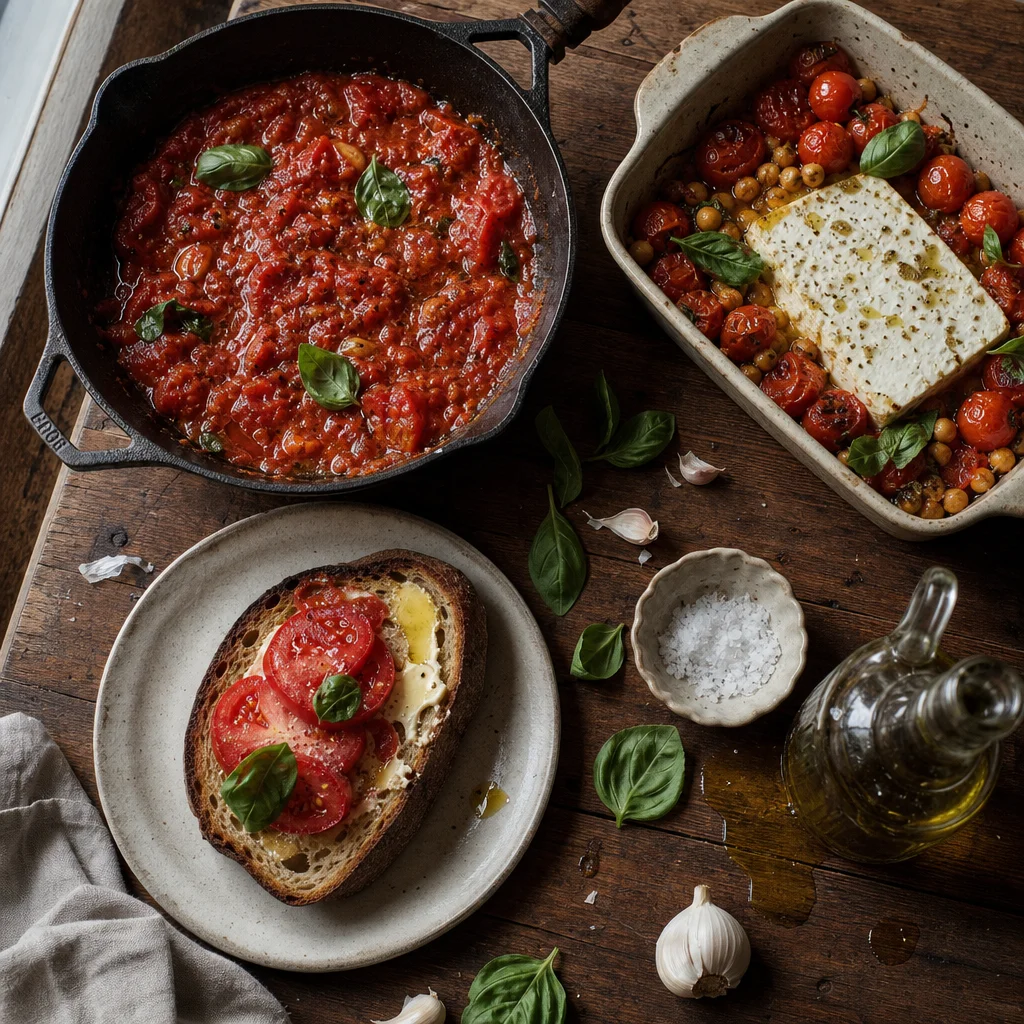
First, toast a thick slice of sourdough. Next, spread on a flavored fat — basil-Parmesan butter, charred corn butter, or whipped goat cheese. Add thick tomato slices, then finish with flaky salt and fresh basil.
Dairy-free? Then smash avocado onto the toast instead. Then pile on tomatoes and a pinch of chili flakes. Either way, this meal takes about 10 minutes.
Formula 2: The 30-Minute Fresh Tomato Sauce
This is the quick dinner you’ll make on repeat. First, warm two tablespoons of olive oil in a pan. Next, add three chopped garlic cloves and two pounds of chopped ripe tomatoes. Then season with salt and simmer for 20 minutes until jammy.
Stir in fresh basil, then toss with chickpea pasta for extra fiber. For more protein, fold in a can of drained white beans. As a bonus, you don’t need cheese — the sauce is rich enough on its own.
Formula 3: The Baked Feta, Tomato & Bean Casserole
This one-pan dinner is almost too easy. First, put cherry tomatoes and a block of feta in brine into a baking dish. Then drizzle with olive oil, add a can of chickpeas, and season with oregano. Finally, bake at 375°F to 400°F for 20 to 25 minutes.
The result is a savory sauce that’s perfect over rice or pita. Skip the cheese? Then use extra olive oil, more beans, and a squeeze of lemon. The dish stays rich, filling, and packed with lycopene.
How Much Lycopene Do You Actually Get?
Here’s a number worth knowing. Specifically, Harvard Health recommends about 10,000 micrograms (10 mg) of lycopene per day from food. In fact, one serving of a cooked tomato dish can get you there fast.
| Food | Lycopene per serving |
|---|---|
| ½ cup canned tomato puree | 27 mg |
| ½ cup marinara sauce | 6.7 mg |
| 1 tablespoon tomato paste | 3.1 mg |
| 1 slice raw tomato | 0.5 mg |
| 1 cherry tomato | 0.4 mg |
See the pattern? Cooked and concentrated forms deliver far more lycopene per bite. That’s why the “one or two raw tomatoes” advice doesn’t add up. For example, a slice of raw tomato has about half a milligram. A half-cup of puree has 27.
Let’s be honest: most of us aren’t eating raw tomatoes by the pound. Harvard experts also advise getting lycopene from food, not pills. Higher blood lycopene is linked with healthier arteries in observational studies. However, supplement trials have disappointed. In the end, whole tomatoes win.
How to Choose, Ripen, and Store Tomatoes (So Nothing Goes to Waste)
Great summer tomato recipes start at the market. A ripe tomato smells sweet at the stem and feels firm and heavy for its size. If they’re rock hard, plan to ripen them at home.
So keep tomatoes on the counter, never in the fridge. Why? Cold air destroys their flavor. For underripe fruit, leave them in a paper bag on the counter. Check daily, and they’ll ripen in a day or two.
If you always buy more tomatoes than you can use, you’re not alone. Then cook them into sauce and freeze it in portions. Roasted cherry tomatoes also freeze well. Even blemished tomatoes work — just cut off the soft spots and roast the rest.
Frequently Asked Questions About Cooking Tomatoes
Does cooking destroy the nutrients in tomatoes?
Some, yes. Vitamin C is heat-sensitive, so raw tomatoes offer more of it. However, cooking boosts the antioxidants your body can actually access. Research in the Journal of Agricultural and Food Chemistry found that cooked vegetables showed higher measurable antioxidant capacity. So eat both raw and cooked — each has a job.
What’s the best way to cook tomatoes for lycopene?
So what’s the best method? Moderate heat wins. Specifically, a 2026 Food Chemistry study found that air frying at about 375°F for 10 minutes worked well. Baking at about 355°F (roughly 180°C) for 20 minutes worked too. The takeaway? Cook, don’t incinerate.
Are canned tomatoes as healthy as fresh?
Yes, often more so. Because canning cooks tomatoes, it boosts lycopene. Just choose no-salt-added versions without added sugar.
Can I freeze fresh tomatoes?
Absolutely. You can freeze them whole for sauces, or cook them into a sauce first. Either way, frozen tomatoes keep for months.
Are tomatoes hard on digestion?
Tomatoes are naturally acidic, and some people with reflux find them triggering. If that’s you, pay attention to your own triggers and portion sizes — everyone is different.
The Bottom Line: Make Every Tomato Count
Summer tomatoes deserve more than a sad side salad. The science is clear: cooking with a little fat unlocks lycopene. It also makes dinner genuinely delicious. These summer tomato recipes are just a starting point.
Pick up a few extra tomatoes this week. Then try a toast, a fast sauce, or a one-pan bake. Your taste buds — and your body — will thank you.