

Social Connection for Loneliness: Why Walk-and-Talk Works
Key Takeaways
- A 2026 randomized trial of 320 adults found both solo and group nature activities ease loneliness. But people with the deepest loneliness improved significantly more with a weekly group program.
- Nature is the setting; social connection is the active ingredient. For loneliness, a walk with a friend may beat a solo walk.
- Quality beats quantity. One regular walking companion matters more than many casual contacts — and the loneliness-to-depression pathway this addresses appears especially strong in women.
- Even one weekly walking date or walk-and-talk phone call is a meaningful dose of connection.
- Solo nature time still helps — particularly for milder loneliness and everyday mood support.
You know that feeling — you’ve been around people all day, yet still feel completely alone? Loneliness isn’t always about being by yourself. Sometimes what’s missing is a sense of belonging, or regular contact with people who truly get you. A walk outside can help. But here’s what the newest science suggests: social connection may be the real medicine.
That’s the takeaway from a 2026 randomized trial that tested nature-based programs in 320 adults. The results point to a simple, hopeful practice: walk-and-talk. Pairing movement with people in one habit may be one of the smartest mental health moves you can make.
Quick Answer: Does a Walk With a Friend Really Help More Than Walking Alone?
For many people, yes. When loneliness runs deep, a recurring outdoor group helps more than going solo. Same people, weekly, for several weeks. That’s what the 2026 RECETAS-BCN trial found. For milder loneliness, both approaches help. The smartest move? Pair nature with social connection. Walk often, and make some of those walks social.
What the New Research on Social Connection Found
The study, known as the RECETAS-BCN randomized trial, took place in the Barcelona metropolitan area. A randomized trial is a study where researchers randomly assign people to different programs. In all, researchers recruited 320 adults who felt lonely. Most were women (80%), with a median age of about 63.
Half joined a nine-week program called “Friends in Nature.” It offered weekly two-hour group sessions in parks, gardens, and coastal areas, led by a facilitator. The other half got a one-time motivational interview, plus ideas for nature activities to do solo.
Who Benefited Most? The Key Finding
Both groups reported less loneliness over time. Scores dropped about 10.5% after three months, and about 16.8% after one year. On the surface, the two programs looked similar. Then researchers looked closer.
People who started with the deepest loneliness and the lowest emotional well-being saw clearly bigger improvements with the group program. For these participants, nature set the stage — but social connection did the heavy lifting. A second randomized trial in Helsinki found the same pattern. Weekly nature group sessions reduced loneliness at three months, compared with usual care.
One honest caveat: neither program improved overall quality of life. The benefit was specific to loneliness. That’s still meaningful — loneliness is a real health risk, and reducing it matters.
Why Social Connection Is a Health Issue, Not Just a Feeling
This isn’t a small problem. It’s a public health priority. The CDC reports that about 1 in 3 U.S. adults feel lonely. About 1 in 4 lack social and emotional support.
Globally, the World Health Organization reports that 1 in 6 people worldwide experience loneliness. Its report also estimates that loneliness may account for about 871,000 deaths each year — roughly 100 deaths an hour. These are modeled estimates, not direct counts.
The Numbers Behind the Loneliness Crisis
The evidence goes back further. A landmark meta-analysis — a study that combines results from many studies — looked at 148 studies and more than 308,000 people. It found that people with stronger social relationships had about a 50% higher chance of survival. That’s comparable to well-known risk factors like smoking and physical inactivity.
A 2015 meta-analysis put specific numbers on it. Loneliness raised the risk of early death by about 26%. Social isolation raised it by about 29%. Living alone raised it by about 32%.
These findings led the U.S. Surgeon General to act. A 2023 advisory called loneliness a public health crisis. The advisory compares the impact of weak social ties to smoking up to 15 cigarettes a day. That’s a framing tool, not a literal comparison — but it sticks with you.
Here’s a detail that surprises many people: this isn’t an older-adult issue. Global data from the WHO shows adolescents and young adults report the highest loneliness rates — around 1 in 5. Social connection matters at every age.
Nature Is the Setting — People Are the Ingredient
So does this mean solo nature walks are useless? Not at all. Let’s be clear about what the science says.
Nature reliably boosts mood and lowers stress. However, a 2026 study on nature exposure found that how you experience nature matters more than simply being near green space. People who felt engaged with nature reported less depression, stress, and loneliness.
But here’s the difference. Nature soothes the nervous system. It doesn’t automatically fill the relational gap at the heart of loneliness. That’s why the group program helped the most isolated participants more than solo nature time.
A solo stroll in the park offers fresh air and movement. A walk with a friend adds conversation and belonging on top. The smartest approach isn’t either/or. It’s both.
Keep solo walks for peace and reflection. Add social walks for connection. You get both benefits.
The Walk-and-Talk Habit: One Activity, Three Health Wins
Here’s the practical part, and it’s simpler than you think. You don’t need to overhaul your social life. You just need to pair social connection with movement you already do.
Think of it as connection stacking. You’re taking a walk you’d do anyway and adding a person. One activity, three health wins: movement, fresh air, and meaningful contact.
Four Low-Pressure Ways to Make Walks Social
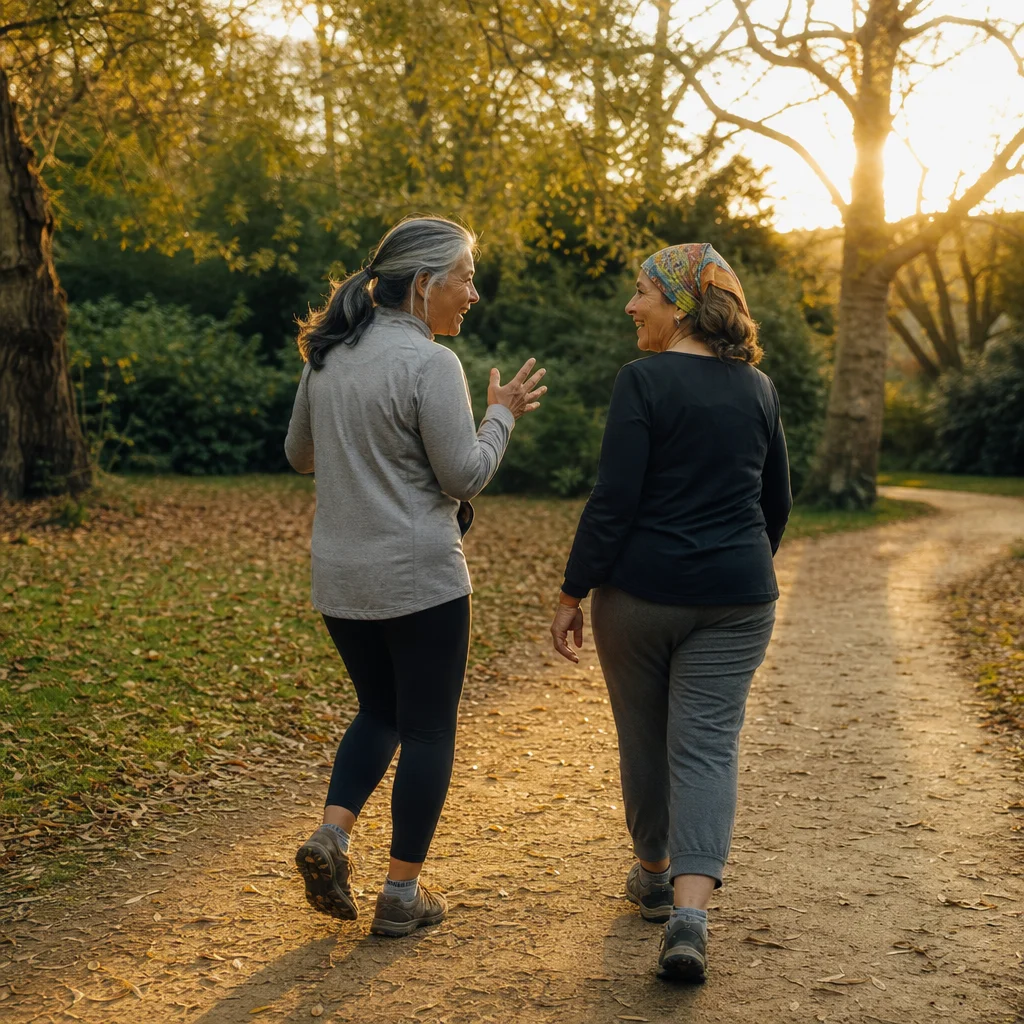
- The walking date. Text a friend: “I’m trying to walk more and would love company. Want to be walking buddies on Tuesdays?” Pick a park, a loop, or a coffee stop halfway. Keep it repeatable.
- The phone-call walk. Call a friend or family member while you stroll. Cleveland Clinic experts recommend choosing a phone conversation over text when you want to feel more connected. Walking makes the call feel lighter, with less pressure to fill silences.
- The walking group. Many communities offer free walking clubs and hiking groups. The National Institute on Aging suggests joining a walking club, or working out with a friend. Both count as staying connected.
- The volunteer walk. Walk a shelter dog, join a trail cleanup, or offer to walk a neighbor’s dog. You get movement, purpose, and easy conversation starters.
What to Say to Get Started
- “I’ve started taking a walk after lunch most days. Want to join me sometime? No pressure.”
- “I’m trying to make my walks less boring. Can I call you while I’m out?”
- “Want to be walking buddies? Same time, same park. We can chat or just enjoy the quiet.”
Low-pressure invitations work best. They leave room for a no.
Quality Over Quantity: Why One Walking Partner Beats a Crowded Room
Here’s the thing about loneliness: it’s not about how many people you know. A 2026 study of nearly 5,000 U.S. adults dug into this. It found that perceived loneliness — the feeling of being disconnected — not contact numbers, is the main link to mental health, and this loneliness pathway was more pronounced in women.
So one close, regular walking companion may protect your mental health more than a packed social calendar. Research consistently shows relationship quality matters more than quantity — and it’s why who you eat with matters, too. A walk with a friend who truly knows you does more for loneliness than a room full of acquaintances.
Your move: choose one person. Someone who makes you feel safe and seen. Schedule a recurring walk with them. Then show up, even on days you don’t feel like it. That consistency is the medicine.
How Much Connection Is Enough? A Realistic Dose
Research offers a reassuring answer: any regular dose helps — even a 5-minute connection break for stress relief counts. A 2026 meta-analysis of 25 studies found that higher social participation was linked to lower risk of early death. And each extra monthly session linked to about a 5% lower risk.
That means one weekly walking date is a genuinely meaningful dose. You don’t need daily plans. You need something recurring that you can count on.
Match the approach to how you’re feeling:
- Mild loneliness: keep solo nature walks, and add small daily hellos. A smile, a compliment, a chat with a regular barista.
- Moderate loneliness: schedule a weekly walking date, or a phone-call walk with a friend who lives far away.
- Deep loneliness: consider a structured, recurring group — a walking club, hiking group, or community garden. The research suggests the same people, weekly, over several weeks, helps most.
And one more reassuring note: any of these is a meaningful dose of social connection.
Low-Pressure Ways to Start (Even If You’re Shy)
If the thought of a walking group makes your stomach flip, start smaller. The phone-call walk is the gentlest option. No eye contact. You can pace. There’s a natural time limit.
Another gentle start: text one friend, “I’m heading out for a walk — call me if you’re free.” No pressure, easy to say yes to.
Remember why the group program worked: people saw the same faces each week. Familiarity builds comfort. You don’t need to be charming on day one. You just need to be repeatable.
When to Talk With a Professional
If loneliness feels heavy and persistent, that’s a sign to reach out. This is especially true with sadness, low energy, or loss of interest. A therapist or doctor can help. Loneliness can be part of depression, and therapy is an evidence-based, effective tool. Asking for help is a health behavior, not a failure.
The Bottom Line: Make Your Next Walk a Little More Social
Here’s the truth: nature helps, but people help more. Social connection is the heart of the loneliness remedy. The smartest habit combines both.
You don’t need to fix your entire social life this week. You just need one small step. This week, schedule one social walk. One phone call while you stroll. One yes to a walking invitation.
That’s it. It’s evidence-based, it’s free, and it’s within reach — your shoes, your phone, and one person who matters. Consider this your gentle nudge. Your next walk could be your most connected one yet.