

Plant Protein for Gut Health: Why Fiber Still Matters
Key Takeaways
- Plant protein for gut health is not just a fiber story. Some of the protein itself reaches your colon and feeds bacteria.
- A 2026 Princeton study found that digestion-resistant plant protein and fiber work as a pair. Together, they shift gut metabolism in a friendlier direction. A companion study found that many of the compounds we call microbiome metabolites are actually made by our own cells.
- When fermentable fuel runs low, gut bacteria may turn to host proteins as a fallback food. That includes the mucins in the mucus barrier that lines your intestine.
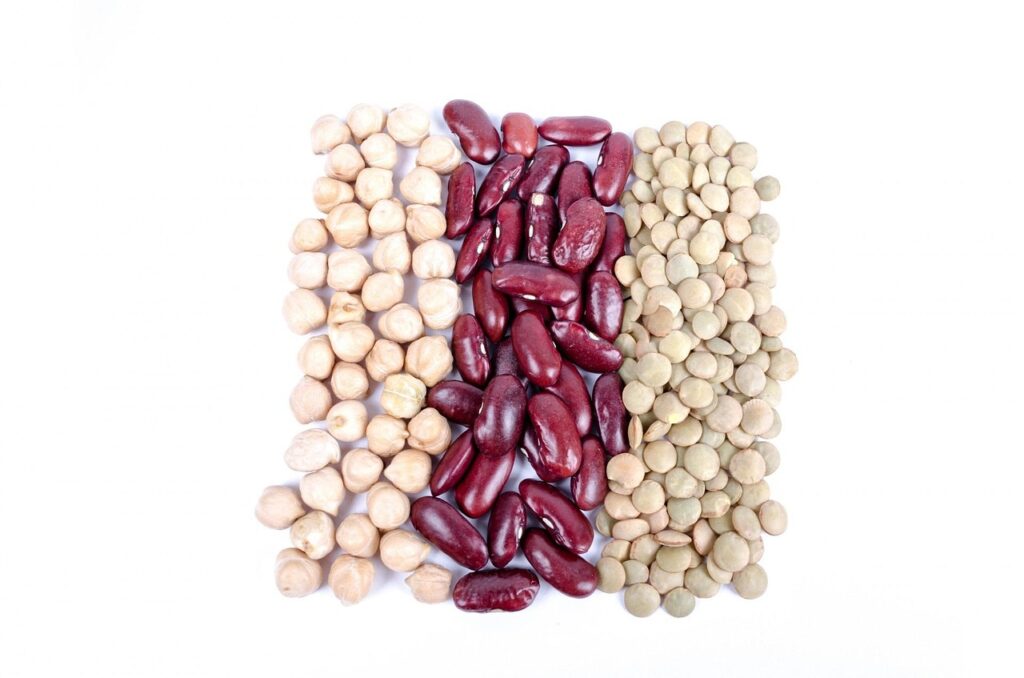
- Beans, lentils, chickpeas and peas deliver protein, fiber and resistant starch in one package.
- Whole foods beat isolated protein powders for gut support, because the fiber matrix changes the outcome.
You have probably heard the same simple rule for years: fiber feeds your gut, and protein builds your muscles. Two new studies suggest that rule is too tidy. It turns out plant protein for gut health is a real thing in its own right. Some plant proteins survive digestion and end up as dinner for your gut bacteria.
Here’s the thing. Your gut microbes will ferment whatever reaches them undigested. That includes fiber, resistant starch and resistant protein. What they do with it depends on the substrate, because different microbes specialize in different nutrients.
So what does that mean for your plate? Let’s walk through what the research actually found, what it does not prove, and how to use it without an upset stomach.
Quick Answer: Does Plant Protein for Gut Health Really Matter?
Yes — but not the way most headlines suggest. Plant protein for gut health works best when the protein and the fiber arrive in the same food. Protein alone is not a substitute for fiber, and fiber alone misses half the picture. Pair them; do not swap one for the other.
Why Plant Protein for Gut Health Is Bigger Than Fiber
For years, the advice was simple. Eat more fiber, and your gut bacteria will thrive. That advice is not wrong. It is just incomplete.
Plant foods do not deliver fiber alone. They also deliver protein. And a growing body of research suggests that some of that protein resists digestion too.
That matters because your colon is not picky. Bacteria there will ferment whatever shows up. Fiber is the well-known fuel. Certain plant proteins appear to be fuel as well.
However, the packaging is what counts. In whole plant foods, protein and fiber arrive together. That is why researchers now describe plant protein for gut health as a two-part story, not a single nutrient.
What the New Research Actually Found
Let’s clear up something important first. Many headlines describe the 2026 Princeton study as a survey of people’s diets. It was not.
The research, published in the Proceedings of the National Academy of Sciences, used a technique called stable isotope tracing. Researchers tagged specific nutrients and tracked where those nutrients ended up. Much of the work happened in cells and animals, plus some human samples.
What they found was striking. Certain plant proteins resist digestion and reach the colon. There, gut bacteria can use them as fuel. The team nicknamed these proteins “proteins imitating fiber.”
One honest note: that phrase is a brand-new label from a single research group. It is not yet standard nutrition language, so treat it as a working idea rather than an established category.
The second finding may be more useful. Fiber and resistant protein appear to act as a team. Fiber curbs the bacterial breakdown of proteins your own body makes, including the mucins in your mucus layer. Meanwhile, resistant protein gives bacteria a different raw material to work with.
What Actually Shifted in the Gut
Two compounds linked to healthy plant-based diets went up: hippuric acid and 3-phenylpropionate. Two compounds considered less desirable went down: phenol sulfate and p-cresol sulfate. Fiber and resistant protein each played a different role in that shift.
Where Microbiome Metabolites Really Come From
If you have ever bought a microbiome test, this next part matters. A companion study in Nature Metabolism asked a simple question. When we find a so-called microbiome metabolite in the blood, who actually made it?
The answer surprised the researchers. Human cells produced many of these compounds on their own. Only a specific few required bacteria.
In other words, a metabolite level is not a direct readout of your bacteria. That is worth remembering next time a product claims to boost your postbiotics.
The Catch: Plant Protein Digests Differently
Now you might be thinking: isn’t undigested protein a bad thing? That is a fair question, and there is real evidence on both sides.
A 2026 review in Advances in Nutrition points out that plant proteins are less digestible than animal proteins. In theory, that could push more protein into the colon. Without enough fiber, that fermentation can produce less friendly compounds.
So which is it? Here is the resolution. The same property — resistance to digestion — can be a liability or an asset. It depends on whether fiber is present.
Therefore the practical message is not simply to eat more plant protein. It is to eat plant protein and fiber together. Whole legumes do both by default, which is why they sit at the center of any plant protein for gut health plan.
Your Mucus Layer, Without the Scare Tactics
You may see alarming headlines about gut bacteria eating your gut lining. Let’s slow that down, because the reality is more nuanced.
Your intestinal mucus layer is not static. It renews constantly, and that turnover is normal and healthy.
The concern is different. When fermentable fuel is scarce, bacteria may turn to host proteins as a fallback food source. That includes the mucins in the mucus barrier that lines your intestine. Over time, that pattern has been linked to higher levels of the compounds mentioned earlier.
Here the fiber story comes full circle. A 2022 review in Nutrients reports that bean feeding increased mucus-related gene activity and short-chain fatty acid production in animal studies. Fiber appears to protect the mucus layer by giving bacteria a preferred meal.
What This Looks Like on a Plate
Enough theory. This is what plant protein for gut health looks like in real food.
The numbers below come from a 2022 review of pulses in the journal Nutrients. That review gathered human and animal studies on beans, lentils, chickpeas and peas.
Fiber and Resistant Starch in Pulses
- Fiber per 100 g dry weight: beans 23-32 g, chickpeas 18-22 g, lentils 18-20 g, peas 14-26 g
- Resistant starch: cooked pulses are among the highest sources among commonly cooked foods, at 3.75-4.66% of dry weight
- Also included: plant protein, minerals and bioactive compounds
Notice the pattern. The foods richest in fiber also bring protein along. That is not a coincidence — it is how legumes are built. Nuts and seeds play the same two-for-one role — see our walnuts for gut health guide.
And the payoff shows up in people, not just in labs. In one four-month trial, 150 grams of mixed pulses per day lowered total cholesterol by 8.3 percent and LDL cholesterol by 7.9 percent. That is a measurable result from ordinary food. These staples cover more than one body system, too — our guide to foods for heart and gut health shows how they fit a week of meals.
Do Protein Powders Help Your Gut?
This is the question readers ask most, and the honest answer has two parts.
First, some plant proteins resist digestion even in isolated form. A 2026 laboratory study on pea protein found that pea protein isolate and a pea protein called 7S globulin were partially resistant to stomach digestion.
When fermented in that model, pea protein produced significantly less TMAO than beef protein. It also boosted short-chain fatty acid production.
Because this was a lab study, not a feeding trial, it shows a mechanism rather than a proven effect in your gut. The fermentation used stool samples from people with high uric acid, so results may not apply to everyone.
Second, isolates still lack the fiber matrix. A pea protein shake brings no fiber along for the ride. So it may feed bacteria, but it does not do what a bowl of lentils does.
Practical verdict: use powders for convenience on busy days. Do not build your plant protein for gut health strategy around them. The same logic applies to packaged plant foods — see how to choose the best veggie burger for your health.
How to Add Legumes Without the Bloating
If you have avoided beans because of gas, you are not alone. This is completely normal, and it is usually about pace rather than tolerance.
A gentle approach is to start with about two tablespoons of beans. Build to a quarter cup, then work up toward a half cup over three to four weeks.
In the cholesterol trial mentioned above, the effective dose was 150 grams of mixed pulses per day — about three-quarters of a cup. So there is room to build further once your gut adjusts.
Three prep habits also help. Rinse canned beans thoroughly before using them. Soak dried beans overnight and discard the soaking water. Finally, cook, cool and reheat your pulses. That cycle has been reported to slightly increase resistant starch, which may make them a little gentler.
Also, drink water steadily as your fiber intake rises. Fiber needs fluid to move comfortably through your system.
Who Should Move More Slowly
Most people can add legumes safely. However, a few groups should start slower or check with a clinician first.
If you have irritable bowel syndrome, SIBO, or follow a low-FODMAP plan, legumes can trigger symptoms. That does not mean they are off limits forever. It means portion size and type matter, and a registered dietitian can help you find your range.
Additionally, if you have a digestive condition or take regular medication, ask your clinician before making large changes to your diet.
How Strong Is the Human Evidence, Really?
Let’s be honest about the limits, because this is where many articles go quiet.
A 2026 review in Frontiers in Nutrition found only three human trials looking at legume intake and the gut microbiome. Effects on bacterial makeup were modest and inconsistent. The authors also said we cannot yet claim that microbiome changes cause the metabolic benefits.
On the other hand, an NIH-funded randomized feeding trial in 17 healthy adults offers genuine human proof of principle. Over about three weeks, participants who ate a microbiome-nourishing diet lost more calories in their stool and showed higher fullness hormones. It was a small but tightly controlled study.
What We Still Do Not Know
No human trial has yet tested pulse-derived resistant starch on its own. No source sets a target gram amount for resistant protein. And individual gut responses vary widely, so your results may differ from your neighbor’s.
Frequently Asked Questions
Do I need protein and fiber in the same meal?
Same day is enough, but same meal is easier to remember. Since legumes deliver both at once, a serving of beans or lentils handles it. That simplicity is exactly why plant protein for gut health is easier to get right with whole foods than with supplements. Our guide to what synbiotics are covers the fermented-food version of this pairing.
Is “proteins imitating fiber” the same as resistant starch?
No. Resistant starch is a carbohydrate that escapes digestion. Resistant protein is protein that escapes digestion. They are different molecules that happen to end up in the same place.
Do microbiome tests tell me what my bacteria are doing?
Only partly. Your own cells make many compounds long attributed to gut bacteria, so a single number on a report is not a clean window into your microbiome.
The Bottom Line on Plant Protein for Gut Health
Here is what to take away. Plant protein for gut health is not a miracle solution. It is a food pattern, and a fairly simple one.
Beans, lentils, chickpeas and peas bring protein, fiber and resistant starch in a single package. Tofu is mostly protein, so if tofu is your pick, pair it with a fiber source. Do not swap fiber out for it.
You do not need to go vegetarian. Swap one protein source a day and see how you feel. Add fiber gradually. Rinse your beans. Let your gut adjust on its own schedule.
Keep your expectations honest, too. Your gut will not transform overnight. Still, feeding it well day after day is one of the most reliable habits you can build for your health.