

Plant-Based Fast Food: The 4-Part Plate Formula
Key Takeaways
- The best plant-based fast food order comes down to the build, not the brand. Aim for four parts: plant protein, fiber-rich carb, healthy fat and produce.
- Beans, lentils, tofu and hummus deliver protein and fiber together. Fried or processed patties are lower in saturated fat than beef, but they are not a whole food.
- Sodium is the quiet problem. The WHO suggests keeping sodium under 2 grams a day — a bit stricter than the US guideline of 2,300 milligrams.
- A meatless drive-thru order can cover protein and fiber — but only when you build it around beans, tofu or lentils. Meatless items that are mostly refined carbs, cheese or a fried side can be light on protein, so treat the plant protein as the part you never skip.
- It does not cover vitamin B12, iodine or omega-3 fats — and dairy-free eaters can fall short on calcium too.
It’s 6:40 p.m., you’re hungry, and the only thing between you and dinner is a drive-thru menu. If you eat meatless, that menu can feel like a trap. Most chains still build their bestsellers around meat. So where does that leave plant-based fast food? Honestly, in better shape than you’d expect. But only if you know what to order.
Here’s the thing. The chains that keep winning vegetarian praise all share one trait. They let you build the meal yourself. That means the winner isn’t a brand at all. It’s a formula you can use at almost any counter in the country.
Below you’ll find that formula, the four nutrients your order probably misses, and the exact words to say when you order. No guilt required. No perfection either — that’s the spirit of our intuitive eating guide.
Quick Answer: What Is the Best Order for Plant-Based Fast Food?
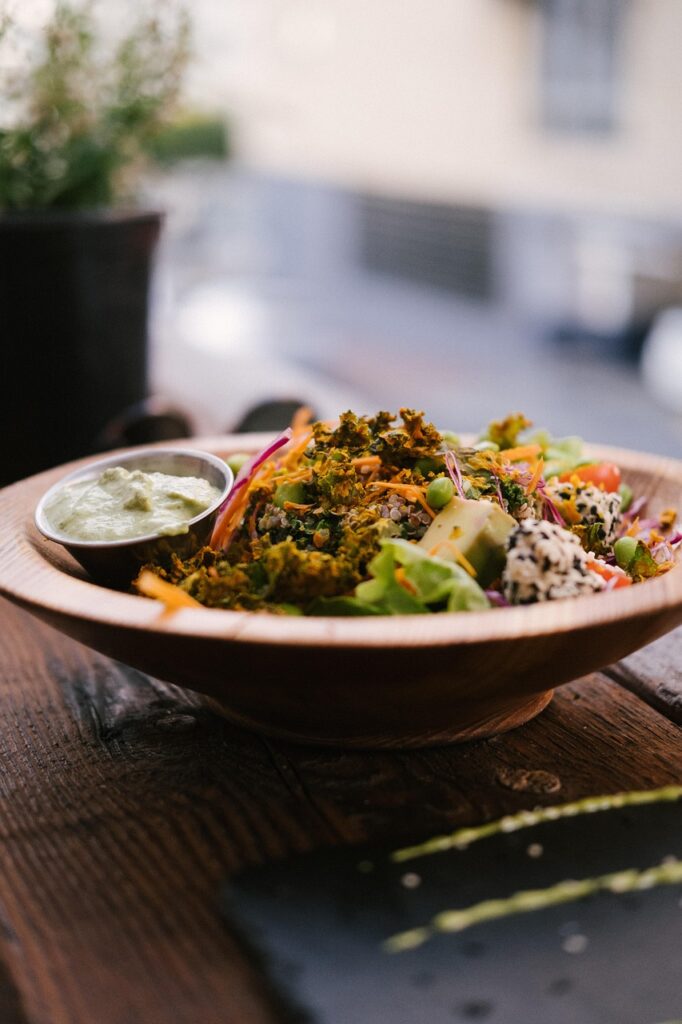
The best order has four parts. A plant protein like beans, tofu or lentils. A fiber-rich carb like brown rice or quinoa. A healthy fat like guacamole, olive oil or tahini. And real vegetables. Order at a chain that lets you build your own bowl, then go light on cheese, creamy sauces and fried sides.
Why Plant-Based Fast Food Is a Build Problem, Not a Brand Problem
Every year, food editors ask dietitians to name the best chain for vegetarians. The answer is usually the same. The most flexible plant-based fast food platform is a build-your-own spot with beans and tofu sitting right on the line. That’s a useful signal. It also answers the wrong question.
Here’s what’s actually happening. “Plant-based” isn’t one diet. A review in the Proceedings of the Nutrition Society found the term covers vegan, vegetarian, pesco-vegetarian and flexitarian eating. So the right order depends on what you actually eat.
The good news is real. A study of 240 adults found that vegans and vegetarians met protein needs just fine. They also took in less sodium than meat eaters did across their overall diets. So the whole protein worry is mostly noise.
The catch is everything else. That same study found vegans and lacto-vegetarians fell short on vitamin B12, iodine and long-chain omega-3 fats. Calcium ran low in the vegan group too. However, none of that is a strike against meatless meals. It just means a bowl is one part of your day, not all of it.
Nutritionally, a build-your-own bowl wins for one simple reason. You decide how much of it is beans, greens and whole grains. You also decide how much is cheese and white rice.
The 4-Part Plate Formula for Any Drive-Thru
Picture this. You’re standing in line, and the menu is a wall of noise. You don’t need to memorize it. You need four categories in your head.
The Four Parts, Every Time
- Plant protein: beans, lentils, tofu or sofritas, falafel, hummus, edamame.
- Fiber-rich carb: brown rice, quinoa, black lentils, corn tortillas or a whole-grain wrap.
- Healthy fat: guacamole, olive oil dressing, tahini, nuts, seeds or olives.
- Produce: fajita vegetables, salsa, pico de gallo, leafy greens or roasted vegetables.
Why those four? Because together they answer the targets public health bodies actually set. WHO guidance on healthy eating suggests at least 400 grams of fruit and vegetables a day and at least 25 grams of fiber.
Sodium is the part most people forget. The WHO suggests keeping sodium under two grams a day. That’s a bit stricter than the US guideline of 2,300 milligrams. Cheese, creamy sauces and processed sides spend that budget quickly, even in a meatless meal.
Additionally, beans hit protein and fiber in the same bite. That’s the pairing that keeps you full well past 3 p.m.
What the Formula Looks Like at Real Chains
Build-your-own chains are the easiest place to start. Chipotle, Cava, Sweetgreen, Qdoba and Moe’s all let you pick a base, a protein and toppings. Cava adds falafel and lentil-based proteins to the line. Moe’s offers organic tofu. Both widen your choices fast.
At value chains, the formula still works. It just takes one swap. Taco Bell will put black beans in almost anything on the menu. Its black beans are cooked without animal fat, so they are vegetarian-friendly. Del Taco also keeps a separate section of its menu for vegetarian and vegan eaters. Subway’s Veggie Delite covers the produce half of the formula. A veggie patty, where it’s available, helps with the protein side. Panda Express offers Super Greens, eggplant tofu and steamed rice.
Then there are the ultra-processed plant-based patties. The Impossible Whopper at Burger King and the Beyond Famous Star at Carl’s Jr are the common ones. Are they a healthy choice? Here’s the honest answer. They beat the beef version. That doesn’t make them a whole food.
Shake Shack’s Veggie Shack is a different case. That is a veggie burger, and it contains cheese unless you ask for it without. So it is not plant-based by default. Treat it as a vegetarian swap with dairy, not as a meat alternative.
Back to the patties. A 2024 review in Food Research International looked at these products. It found they are lower in calories, saturated fat and cholesterol than meat, and higher in fiber. However, they also carry more sodium, less vitamin B12 and lower-quality protein. Notably, the authors name women as one group at higher risk of iron and B12 shortfalls.
The cholesterol question is still open. An 8-week randomized trial swapped patties for meat at 2.5 servings a day. It enrolled 89 adults, and data from 82 were analyzed. It found no meaningful change in LDL cholesterol. A cardiology review the same year reported more hopeful results. So treat a patty as a craving fix, not a health upgrade.
The Carb-and-Cheese Trap (and How to Escape It)
Here’s the most common mistake I see in plant-based fast food ordering. Someone picks a veggie bowl and ends up with white rice, cheese, sour cream and a fried side. It’s meatless, yes. It’s also mostly refined carbs, saturated fat and sodium.
Escaping the trap takes about ten seconds. Swap white rice for brown. Keep the beans. Add fajita vegetables, salsa and guacamole. Then skip the cheese, sour cream or creamy dressing, or just ask for half.
If you eat dairy-free, that swap matters twice. Cheese and sour cream are the usual protein crutches in a vegetarian build. Take them out, and you need extra beans, tofu or hummus to fill the gap.
What Plant-Based Fast Food Won’t Cover
A meatless bowl can absolutely be a balanced meal. Yet a steady diet of plant-based fast food has four known blind spots. None of them is a reason to avoid it. They’re simply things to cover elsewhere in your day — the same shortfalls we mapped out in our guide to plant-based nutrient gaps.
Four Nutrients to Cover Elsewhere
Vitamin B12. The NIH Office of Dietary Supplements sets the adult target at 2.4 micrograms a day. B12 occurs naturally almost only in animal foods. So fortified plant milks, fortified cereal, nutritional yeast or a supplement do the work.
Iodine. Mayo Clinic’s guidance on vegetarian nutrition notes that people who skip seafood and dairy may fall short unless they use iodized salt. Seaweed is another plant option.
Calcium. This one mostly applies to dairy-free eaters. Lean on fortified plant milks, calcium-set tofu and dark greens like kale and collard greens.
Omega-3 fats. Plant foods give you ALA, found in walnuts, ground flaxseed and soy. DHA and EPA are the harder ones without fish.
Notice what’s missing from that list. Protein. Studies of people eating plant-based diets keep finding protein intake is adequate overall. That’s about whole diets, though, not about any single drive-thru order. So if a friend asks where you get your protein, smile and point at your beans.
What to Say at the Counter
The counter script for plant-based fast food is shorter than you’d think. You don’t need to interrogate anyone. A few short sentences get you a better meal without a fuss.
Six Lines That Work
- “Could I get extra beans instead of the meat?”
- “Can you make it off the shared grill or broiler?”
- “No cheese and no sour cream, and add guacamole, please.”
- “Brown rice instead of white.”
- “Extra fajita vegetables and extra lettuce.”
- “Dressing on the side, please.”
That second line matters more than people expect. Cross-contact is real in a busy kitchen. Shared fryers, grills and woks handle meat all day long. For ethical reasons, or for a serious allergy, it’s worth asking.
Also worth knowing: some places charge extra for plant swaps. Plant milk in coffee often costs more than dairy. So it pays to ask about the build before you commit.
Portions are the quiet win here. Many dietitians report that one bowl is big enough for two meals. So split it, save half, and you trim both sodium and cost in one move.
Frequently Asked Questions
Is plant-based fast food actually healthy?
It can be. A bowl of beans, greens, whole grains and guacamole is a solid meal. Fried sides, cheese-heavy builds and sugary drinks are what turn it into junk food. Judge the whole order, not the label.
How often is it okay to eat this way?
There’s no magic number. A large French cohort study followed more than 105,000 adults. It linked higher ultra-processed food intake — the category most drive-thru food falls into — to higher heart and stroke risk. The study was observational, so it can’t prove cause and effect, but it’s a good reason to keep drive-thru meals occasional rather than daily.
What if there’s no build-your-own chain nearby?
Fall back on grocery stores and convenience marts. A can of beans, a bag of baby carrots and a tub of hummus beat a fried snack. Many deli counters also sell bean salad, hummus cups or plain yogurt if you eat dairy.
The Bottom Line
The best plant-based fast food meal isn’t a secret menu item. It’s a pattern you can repeat. Plant protein, fiber-rich carb, healthy fat and produce.
Start with a chain that lets you build your own bowl, because control is the whole game. Then carry the four-part formula everywhere else you go.
Finally, cover your gaps. Add a fortified plant milk, keep iodized salt at home, and find a reliable B12 source. Then keep fast food occasional rather than routine.
You’re not chasing perfection at a drive-thru window. You’re making one calm, informed choice. Afterwards, you get on with your evening.