

PCOS Makeup Over Shaved Skin: 6 Steps for Smooth Coverage
Key Takeaways
- PCOS makeup over shaved skin looks textured for three reasons: razor bumps, razor burn, and blunt hair regrowth.
- The fix is prep and technique, not more product. Thin layers always beat heavy foundation.
- Shave the dermatologist way: warm compress, shaving cream, sharp single-blade razor, with the grain.
- Choose fragrance-free, alcohol-free, non-comedogenic products for post-shave skin.
- Persistent bumps, signs of infection, or hirsutism with irregular periods? See a clinician.
You’ve shaved. You’ve moisturized. And your foundation still looks textured on your chin. If PCOS makeup is part of your daily routine, you know this exact moment. The bumps. The patchiness. The way makeup settles into every tiny flaw. Sound familiar?
Here’s the thing: makeup over freshly shaved skin doesn’t have to look this way. The problem usually isn’t your skin. And it definitely isn’t you. The real issue is the order of operations. When you fix the prep, the technique, and the aftercare, smooth coverage becomes completely possible.
Quick Answer: Can You Fix Textured Makeup Over Shaved Skin?
Yes. Textured makeup over shaved skin is fixable. The fix has three parts: a dermatologist-approved shaving routine, lightweight makeup technique, and gentle aftercare. This guide walks through why PCOS makeup looks patchy and how to solve it step by step. More foundation is never the answer.
Why PCOS makeup looks textured over shaved skin
Let’s be honest about something. Facial hair is a completely normal part of PCOS. Research suggests that 65-75% of women with PCOS have hirsutism. That’s the medical term for excess hair on the chin, upper lip, or jawline.
More than 4 in 10 women will experience hirsutism at some point in life, notes the Cleveland Clinic. So no, you’re not alone. And you’re not doing anything wrong. If shaving has left your skin sore, our guide to healing skin after PCOS facial hair is a good next step.
But why does makeup look textured on shaved skin? It usually comes down to three things.
The three texture culprits
- Razor bumps. Coarse, curly hairs get cut short. Then they curl back into the skin. Your skin reacts with red, inflamed bumps. Dermatologists call this pseudofolliculitis barbae. A 2023 review in Clinical and Experimental Dermatology confirms that prevention — getting shaving technique right — is a core first step in managing razor bumps. A 2025 review in Cutis notes women get these bumps too.
- Razor burn. Shaving scrapes away part of your skin’s outer barrier. That causes redness, stinging, and a tight feeling. This is irritation, not an infection.
- Blunt regrowth. Shaved hairs grow back with a flat tip. The hair isn’t thicker or darker. The blunt edge just feels rougher as it returns. Foundation clings to that rough edge.
The good news? Most PCOS makeup texture problems trace back to these three causes. And every single one has a fix. It starts with how you shave.
Razor Burn vs. Razor Bumps: What’s the Difference?
Razor burn: red, stinging patches right after shaving. It’s irritation of the skin’s outer layer. Usually clears in a day or two.
Razor bumps: small, pimple-like bumps that appear as shaved hairs grow back and curl into the skin. They need prevention, not just soothing.
Before makeup: shave the way dermatologists recommend
Here’s the thing. Most texture problems start at the razor, not the foundation. The right shaving routine prevents the exact bumps that makeup later settles into. The American Academy of Dermatology has a clear, step-by-step protocol. It works for anyone who shaves, including women with PCOS.
The routine, step by step
Dermatologists suggest this exact routine to prevent razor bumps:
- Wash your face with a gentle cleanser. Look for one labeled non-comedogenic, meaning it’s made not to clog pores. Use a soft washcloth in small circles to lift away dead skin.
- Hold a warm, damp cloth on the area for five minutes. Or shave at the end of your shower. Heat and moisture swell the hairs. They cut cleanly, so they’re less likely to curl back in.
- Apply a moisturizing shaving cream. Never dry shave. Let the cream sit for one to two minutes before you start.
- Use a sharp, single-blade razor. Replace it every 5 to 7 shaves. And keep a separate razor just for your face.
- Shave with the grain. That means in the direction the hair grows. Use short, light strokes. Never pass over the same spot more than twice.
- Rinse the blade after every swipe. This keeps it clean and sharp.
- After shaving, press a cool, damp cloth on your skin for five minutes. This calms inflammation fast.
- Finish with a soothing, fragrance-free moisturizer. If an aftershave stings or burns, stop using it.
How often should you shave?
Dermatologists also suggest shaving every day, or every 2 to 3 days. That may sound like a lot. It actually prevents bumps. Short hairs don’t have time to grow long enough to curl back into your skin. These steps match the AAD’s basic shaving tips for men and women.
Two hard no’s: never pluck a hair inside a razor bump. And never stretch your skin tight while shaving. Both make things worse. These tips come straight from the AAD’s razor bump guide.
Pre-makeup prep: build a smooth canvas
Ideally, you’ll shave at night. That gives your skin hours to settle before makeup. Clinical research on barrier-repair moisturizers shows they reduce redness and speed recovery in irritated skin. A calm skin barrier helps makeup sit smoother.
If you must shave and apply makeup the same day, wait at least 15 to 30 minutes. Freshly shaved skin needs a beat to calm down.
Then follow this order:
- Pat your skin dry. Don’t rub.
- Apply a thin layer of barrier-repair moisturizer. Look for ceramides or glycerin on the label. These ingredients help rebuild your skin’s outer layer.
- Wait two minutes for it to absorb.
- Dab a little aloe gel on any red spots. Patch test it first. Even aloe can irritate some people, per a 2024 safety review.
- Keep the routine minimal. Freshly shaved skin needs fewer products, not more.
If your skin is burning, very red, or broken out, give it a day off. Skip makeup on that area. Let the skin heal first.
Timing matters, too. PCOS makeup looks best when your skin has had time to recover after shaving. If someone asks for one secret, that’s it.
PCOS makeup that works: texture-minimizing techniques
Now for the part you actually want. Here’s the first rule of PCOS makeup over shaved skin: use less product, not more.
Heavy foundation settles into every bump. Thin layers sit on top of the skin. That single shift changes everything.
The application sequence
Here’s the application sequence that works:
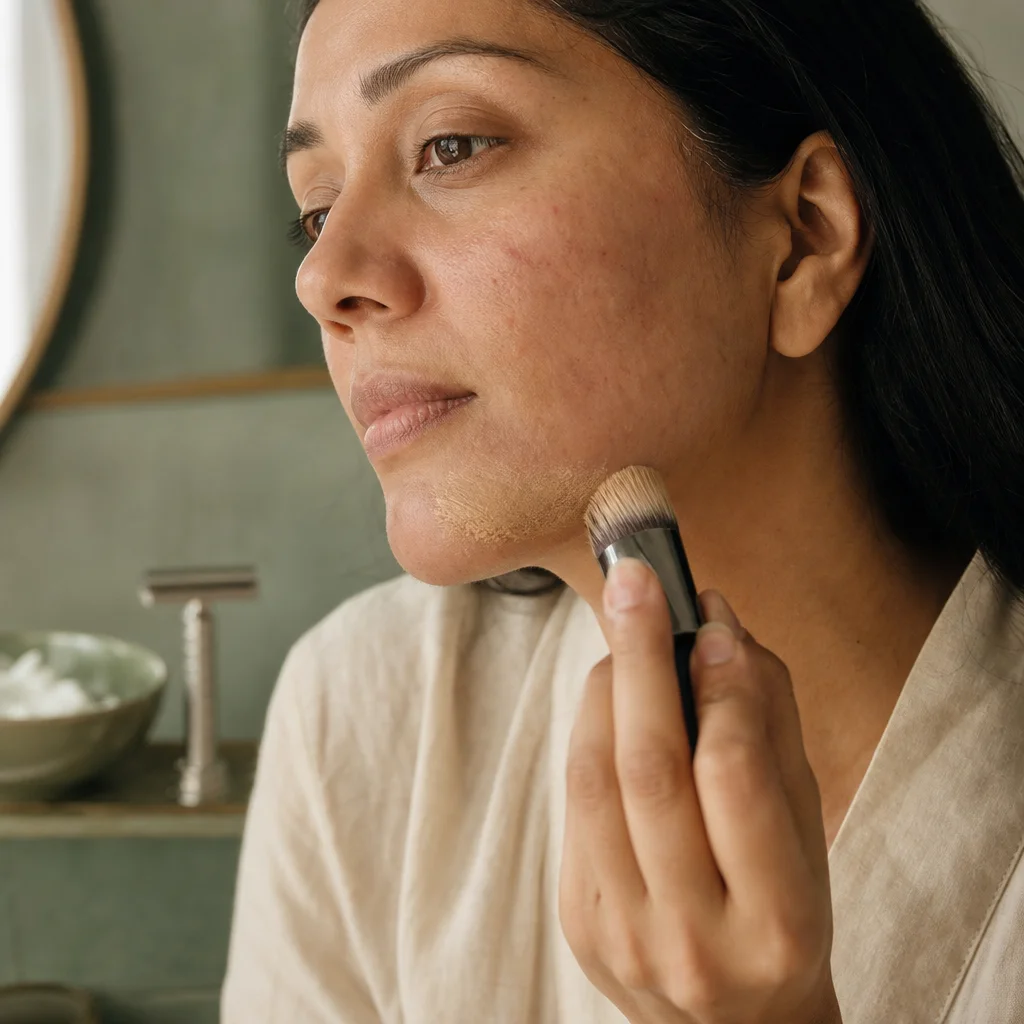
- Press a thin layer of lightweight foundation or tinted moisturizer into your skin. Use a damp sponge or a buffing brush. Don’t drag the product across your face.
- Build coverage only where you need it. A targeted concealer on the chin and jaw beats a full face of heavy foundation.
- Conceal with small dabs. Stipple with your fingertip or a tiny brush. Swiping catches hairs and highlights texture.
- Neutralize shadow with color correction. See a bluish tint on your chin or upper lip? That’s the five o’clock shadow effect. Peach or coral corrector works for lighter skin. Orange works for deeper skin. Use a tiny amount of cream formula, blend, then conceal on top.
- Blend in the direction of hair growth. This smooths product over the hair instead of lifting it.
- Set lightly. A small dusting of translucent powder controls shine. Heavy powder over bumps looks cakey, so go easy.
What I find interesting: many makeup tutorials tell you to pile extra foundation onto hairy areas. That advice is backwards. Extra product magnifies texture. Thin layers are the entire secret.
Here’s the full PCOS makeup sequence, start to finish: prep, correct, conceal, foundation, set. Write it down. It’s simpler than you think.
What to look for in products (and what to skip)
Your skin changes after shaving. It becomes more sensitive. So your product choices matter more than usual.
Fragrance-free comes first. The EDEN Fragrance Study, published in 2021, found that scented leave-on products are linked to fragrance allergy. It ran in the journal Contact Dermatitis. Women and people with sensitive skin face the highest risk. Your chin doesn’t need perfume.
Alcohol-free matters, too. Alcohol dries out freshly shaved skin. That makes irritation worse.
The non-comedogenic label is helpful, but know this: the term isn’t strictly regulated by the FDA. Think of it as a starting point, not a promise.
Here’s a quick shopping list for your next makeup run. These are the building blocks of comfortable PCOS makeup:
- A gentle, fragrance-free cleanser
- Moisturizing shaving cream labeled for sensitive skin
- A barrier-repair moisturizer with ceramides or glycerin
- Cream color correctors in peach and orange
- Lightweight foundation or tinted moisturizer
- A buffing brush or damp sponge
- Translucent setting powder
Patch test anything new on your jaw or neck first. Give it a day or two before using it on your whole face.
After makeup removal: care that prevents bumps
How you take off your makeup matters as much as how you put it on. Your evening routine sets up tomorrow’s canvas.
The evening routine
- Remove makeup gently. Use a cleansing balm or micellar water, and let it do the work. No scrubbing.
- Rinse with lukewarm water. Hot water can aggravate freshly shaved skin.
- Skip exfoliation on irritated skin. Light exfoliation between shaves is fine. On red or bumpy skin, it makes things worse.
- Soothe with aloe or colloidal oatmeal. Both have solid evidence for calming skin. A 2026 survey of dermatologists rated colloidal oatmeal among the top barrier-repair ingredients.
- Use hydrocortisone cream only when needed. Dermatologists advise no more than three days in a row on the face.
- Wear SPF in the morning. A fragrance-free SPF 30 moisturizer is a smart daily habit — freshly exfoliated skin deserves extra protection.
A quick note on natural remedies. Some popular ones, like tea tree oil and witch hazel, can irritate freshly shaved skin. Colloidal oatmeal and aloe have the best evidence. And even aloe needs a patch test first. Natural doesn’t automatically mean safe.
If a bump still appears, press a warm cloth on it. That helps the hair work its way out. Then leave it alone. Never dig, pick, or pluck. Shaving won’t remove an ingrown hair, and shaving over an active bump makes it worse.
Beyond makeup: long-term options worth knowing
Makeup handles today. These options handle tomorrow.
Prescription eflornithine cream slows facial hair regrowth. It won’t remove existing hair. But over time, new growth comes in finer and lighter. Many women pair it with laser or electrolysis. The Mayo Clinic’s hirsutism treatment guide explains these options in detail.
Laser hair removal works best on dark hair. A 2026 study of 50 people treated for razor bumps found that 88% were satisfied. About 70% saw at least 75% fewer bumps right after treatment. However, 84% saw bumps return, often within six months. And 96% could go back to shaving comfortably. So think of laser as reduction with maintenance, not a cure.
Electrolysis is the only FDA-cleared method for permanent hair removal. It works on all hair and skin types. It also takes multiple visits over many months.
Hormonal treatments go after the root cause. Birth control pills lower androgen levels over time, while anti-androgens like spironolactone block androgens from acting on hair follicles. If high testosterone is fueling your hair growth, our guide to PCOS high testosterone explains the treatment ladder. Results take at least six months. And spironolactone can cause birth defects, so doctors usually pair it with birth control.
None of these mean you must stop shaving today. Shaving is quick, painless, and completely valid at any point on this journey.
When to see a doctor or dermatologist
Most texture problems improve with better technique. But some signs deserve a professional’s eyes.
- Bumps that keep returning after you change your routine. Untreated razor bumps can leave permanent scars.
- Signs of infection, like pus, blisters, or spreading redness.
- Hirsutism with irregular periods, acne, or hair thinning. That combination warrants a PCOS evaluation. If your doctor is unsure where to start, our guide to getting a PCOS endocrinologist referral can help.
- An ingrown hair that doesn’t heal after a month.
And one more thing. Facial hair affects how we feel, not just how we look. A 2026 study in the European Journal of Endocrinology looked at body image in women with PCOS. It found that distress is strongly tied to hirsutism. That distress links to higher rates of depression and anxiety. If this weighs on you, you’re not alone. Talking with a counselor or your care team is a healthy step.
Frequently asked questions
How long should I wait after shaving before applying makeup?
Overnight is ideal. For daily PCOS makeup, shaving at night and applying makeup the next morning gives the smoothest result. In a pinch, wait at least 15 to 30 minutes.
Does shaving make facial hair grow back thicker?
No. Shaving cuts hair at the surface. The blunt tip can feel rougher as it grows in. But it doesn’t change thickness, color, or growth rate.
Can I shave every day?
Yes. Dermatologists suggest daily or every 2 to 3 days. Short hairs don’t have time to curl back into the skin. So bumps have less chance to form.
What if makeup irritates my freshly shaved skin?
Wash it off gently. Skip makeup on that area for a day. Apply a fragrance-free barrier moisturizer. If irritation lasts more than a few days, or you see pus or blisters, see a clinician.
The Bottom Line
Here’s the honest truth. PCOS makeup doesn’t have to be a daily battle.
Your skin isn’t broken. It’s doing something many women’s bodies do with PCOS. The fix is simple in theory: shave right, prep well, apply thin, cleanse gently. Every step builds on the last one.
Start with one small change today. Swap in a fragrance-free moisturizer after shaving. Or use half the foundation you normally would tomorrow morning. Small shifts add up. Smooth, comfortable makeup is closer than you think.