

PCOS Hair Loss: What Actually Works to Regrow Thick Hair
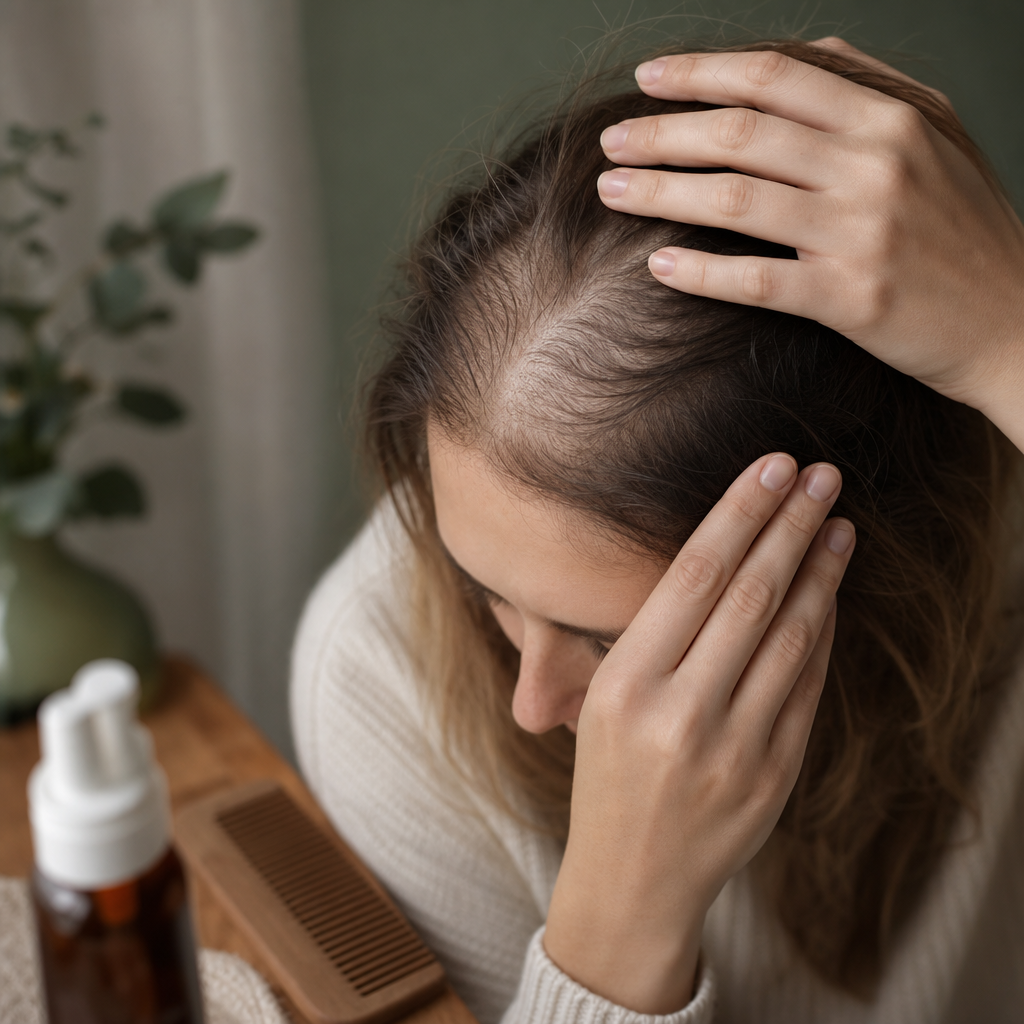
“I used to have really healthy, thick wavy hair. Since my PCOS flared up, it’s considerably thinning, dryer, and sheds all the time.” This is a real question from a woman in the PCOS community, and it’s one we hear often. You’re doing everything right — washing gently, oiling weekly, taking biotin, avoiding heat — yet your hair still feels thin and limp. It’s frustrating, and it’s not your fault. PCOS hair loss is driven by hormones, not by your hair care routine. The good news? There are proven treatments that can help you regrow thicker hair. This guide explains why PCOS causes hair thinning and what actually works to reverse it.
Key Takeaways: What Actually Works for PCOS Hair Loss
- Treat the root cause first: Insulin resistance drives androgen production. Managing blood sugar is the foundation of any PCOS hair loss treatment plan.
- Minoxidil 5% is first-line therapy: It’s available over-the-counter and is the only FDA-approved treatment for female pattern hair loss. Expect 4-6 months for visible results.
- Spironolactone blocks androgens: This prescription medication targets the hormonal driver of PCOS hair loss. It’s widely used, though large trials are still needed.
- Natural options can help, but have limits: Spearmint tea, rosemary oil, and saw palmetto have evidence, but they work best as complements to medical treatment — not replacements.
- Biotin rarely helps PCOS hair loss: Unless you have a confirmed deficiency, biotin won’t address the androgen-driven cause. It can also interfere with thyroid lab tests.
Why PCOS Hair Loss Happens: The Hormone Connection
Here’s the thing: PCOS hair loss isn’t like normal shedding. It’s driven by a specific hormonal chain reaction. Women with PCOS have higher levels of androgens (male hormones like testosterone). An enzyme in your body called 5-alpha-reductase turns testosterone into a much more potent form called DHT. DHT is five times stronger than testosterone, and it directly attacks hair follicles on your scalp, shrinking them over time. This process is called follicle miniaturization, and it’s why your hair gets thinner, shorter, and less pigmented with each growth cycle.
But here’s what many articles miss: the real engine behind this is often insulin resistance. When your body doesn’t respond well to insulin, your ovaries produce more androgens. This means that managing your blood sugar isn’t just about weight or energy — it’s directly connected to your hair health. The Androgen Excess and PCOS Society clinical guidelines confirm that treating the underlying hormonal imbalance is essential for managing PCOS hair loss.
Is PCOS Hair Loss Reversible?
Yes — partially. The key is catching it early. Hair follicles that have been miniaturized for years may not fully recover, but many women see significant regrowth with consistent treatment. The best results come from addressing both the hormonal driver (with medication or lifestyle changes) and stimulating the follicle directly (with minoxidil). Most women see first signs of regrowth within 4-6 months, with maximum results at 12 months. The important thing: you need to stay consistent. Stopping treatment means the hair loss will return within 3-6 months.
Medical Treatments for PCOS Hair Loss: What the Evidence Says
Let’s start with what has the strongest evidence. The Androgen Excess and PCOS Society recommends starting treatment for female pattern hair loss with minoxidil 5% — the same active ingredient in Rogaine. It’s available over-the-counter, no prescription needed. Here’s how it works: minoxidil boosts blood flow to hair follicles and pushes them from the resting phase into the growth phase. You apply it directly to your scalp once daily.
What to expect with minoxidil: In the first 2-4 weeks, you may notice more shedding. This is normal — it means the medication is working, pushing out old hairs to make room for new ones. By month 4, you should see small, fine new hairs. By month 6, those hairs should be thicker and more visible. The foam version causes less scalp irritation than the liquid. Some women prefer oral minoxidil (a low-dose pill), but this is off-label and requires a prescription.
Spironolactone: This prescription medication blocks androgen receptors, directly targeting the hormonal cause of PCOS hair loss. A 2026 systematic review on spironolactone for PCOS found that while it’s widely prescribed and many women see improvement, the high-quality trial evidence is surprisingly limited. This doesn’t mean it doesn’t work — clinical experience strongly supports its use. It means we need larger studies. Spironolactone is often combined with minoxidil for the best results. It requires blood pressure and potassium monitoring.
Important: Birth Control and PCOS Hair Loss
Not all birth control is created equal when it comes to your hair. Combined oral contraceptives with anti-androgenic progestins — like drospirenone (found in Yaz, Yasmin) or cyproterone acetate (Diane) — can help by raising SHBG (a protein that binds androgens) and lowering free testosterone. However, progestin-only methods (like the mini-pill or hormonal IUD) and pills with pro-androgenic progestins (like levonorgestrel) may actually worsen hair loss. If you’re on birth control and noticing hair thinning, talk to your clinician about whether your specific pill might be contributing.
Supplements for PCOS Hair Loss: What Helps and What Doesn’t
This is where a lot of online advice gets it wrong. Let’s separate what works from what’s a waste of money.
Zinc: Zinc is essential for hair health, and some studies show that women with PCOS tend to have lower zinc levels. Some research suggests zinc supplements may reduce hair loss, though the best dose is still being studied. What we know for sure: the NIH sets the safe upper limit for zinc at 40mg per day. Taking more than that long-term can cause copper deficiency and other issues. A safe approach: aim for 30mg of elemental zinc daily (from zinc picolinate or citrate, which absorb well) and get the rest from food. Good food sources include oysters, beef, pumpkin seeds, and lentils.
Spearmint tea: This is one of the most promising natural options. A randomized controlled trial on spearmint tea for PCOS found that drinking two cups daily for 30 days significantly reduced free and total testosterone levels. The study looked at hirsutism (excess facial/body hair), but the anti-androgen mechanism applies to scalp hair loss too. It’s low-risk, pleasant, and easy to add to your routine.
Saw palmetto: This herb inhibits 5-alpha-reductase — the same enzyme that turns testosterone into DHT. One study in men found that 320mg daily improved hair growth in 38% of participants. However, there are no PCOS-specific studies. The effect is modest, and it’s weaker than prescription options. It’s not recommended during pregnancy or if you’re trying to conceive.
Biotin: Let’s be honest here. Biotin is unlikely to help PCOS-driven hair loss unless you have a confirmed deficiency. The scientific consensus is that there’s insufficient evidence for biotin in PCOS hair loss. What’s worse, high-dose biotin can interfere with thyroid lab tests, potentially leading to incorrect results. If you’re taking biotin and your thyroid numbers look off, that could be why.
Natural Scalp Treatments: Rosemary Oil and More
If you prefer a more natural approach, rosemary oil has the best evidence. A clinical trial found that rosemary oil matched minoxidil 2% for hair count increase after 6 months — with less scalp itching. (This study was published in a peer-reviewed but non-MEDLINE-indexed journal, so results should be interpreted with that context.) Keep in mind that the study used minoxidil 2%, which is weaker than the 5% strength now considered standard. Rosemary oil is a great complementary option, but it likely won’t outperform minoxidil 5% on its own.
How to use it: Mix a few drops of rosemary essential oil with a carrier oil (like jojoba or coconut oil) and massage into your scalp for 2-3 minutes. Leave it on for at least 30 minutes or overnight before washing. Do this 2-3 times per week. The massage itself is beneficial — it boosts blood flow to the scalp.
The Insulin Connection: Why Blood Sugar Matters for Your Hair
This is the piece that most articles miss. Insulin resistance is the hidden driver of PCOS hair loss for many women. When your cells don’t respond well to insulin, your pancreas produces more. High insulin levels tell your ovaries to make more androgens. It’s a vicious cycle: insulin resistance leads to more androgens, which leads to more DHT, which leads to more hair loss.
What does this mean for you? Addressing insulin resistance can directly improve your hair. This doesn’t mean extreme dieting. It means focusing on balanced meals with protein, fiber, and healthy fats; reducing added sugars; and considering supplements like myo-inositol — some research suggests it may help with insulin sensitivity in PCOS, so talk to your clinician about whether it’s right for you. Even modest improvements in insulin sensitivity can lower androgen levels over time. If you want a deeper dive into managing PCOS through nutrition, our PCOS Weight Loss: Medications, Diet & Supplements Guide covers the full picture.
When to See a Doctor — and Which One
You don’t need to figure this out alone. Here’s who can help:
- Dermatologist: Best for diagnosing the type of hair loss, prescribing minoxidil, and performing scalp biopsies if needed. They can also offer in-office treatments like PRP (platelet-rich plasma) therapy.
- Endocrinologist: Best for addressing the hormonal root cause — PCOS, insulin resistance, thyroid issues. They can prescribe spironolactone and order comprehensive hormone panels. If your primary care doctor is hesitant to refer you, check out our guide on how to get a PCOS endocrinologist referral.
- OB-GYN: Can manage PCOS, prescribe birth control, and order initial labs. They may refer you to a specialist for complex cases.
What to ask for at your appointment: Ask for a full hormone panel (testosterone, free testosterone, DHEA-S, SHBG), thyroid panel (TSH, free T4), iron studies (ferritin), vitamin D, and zinc. The AE-PCOS Society recommends assessing androgen levels in all women with female pattern hair loss. Your clinician can help you understand what your specific ferritin level means for your hair health.
FAQ: PCOS Hair Loss
Q: Does minoxidil need a prescription?
A: No. Minoxidil 5% (Rogaine) is available over-the-counter at any pharmacy. No prescription needed. Oral minoxidil does require a prescription.
Q: Will my hair fall out if I stop using minoxidil?
A: Yes, within 3-6 months. Minoxidil works by keeping hair follicles in the growth phase. When you stop, they return to their previous state, and the hair loss resumes.
Q: Can I use minoxidil while pregnant or breastfeeding?
A: Minoxidil is not recommended during pregnancy. During breastfeeding, use with caution and only after consulting your clinician.
Q: How long before I see results?
A: First signs of regrowth typically appear at 4-6 months. Maximum results take 12 months. Be patient and consistent.
Q: Can diet alone reverse PCOS hair loss?
A: Diet helps address the root cause (insulin resistance), but full reversal usually requires medical treatment. Think of diet as the foundation, not the complete solution.
Your PCOS Hair Loss Action Plan
Here’s a practical step-by-step plan to get started:
- Start minoxidil 5% once daily. It’s available at any drugstore. Use the foam version if liquid irritates your scalp. Apply to dry scalp, not wet hair.
- Schedule a doctor’s appointment. Ask for the lab tests listed above. Bring a list of your symptoms and questions.
- Address insulin resistance. Focus on balanced meals with protein and fiber. Consider myo-inositol (4g daily) after discussing with your clinician.
- Add supportive supplements. Zinc (30mg daily, not 50mg), vitamin D (if deficient), and spearmint tea (2 cups daily).
- Track your progress. Take monthly photos in the same lighting and angle. Hair grows slowly — photos help you see changes you might miss day-to-day.
- Be patient. This is a 6-12 month journey, not a quick fix. Consistency matters more than perfection.
The Bottom Line
PCOS hair loss is frustrating, but it’s not hopeless. The key is understanding that this isn’t about your hair care routine — it’s about hormones. The most effective approach combines treating the root cause (insulin resistance and androgens) with directly stimulating hair growth (minoxidil). Natural options like spearmint tea and rosemary oil can support this, but they work best alongside medical treatment, not instead of it.
Start with minoxidil 5% and a doctor’s appointment. From there, build your personalized plan. Your thick hair isn’t gone forever — it just needs the right conditions to grow back.
Related Articles You Might Enjoy
- PCOS Insulin Resistance Test: What to Ask For — because managing blood sugar is foundational to hair health
- PCOS Weight Loss: Medications, Diet & Supplements Guide — covers inositol, GLP-1s, and anti-inflammatory eating for PCOS
- Low Spoons Meals for PCOS: 5 No-Cook Ideas That Work — practical eating strategies for PCOS and insulin resistance