

Orange Peel Benefits: 6 Easy Ways to Eat the Pith & Zest
Key Takeaways
- Orange peel benefits start with the pith. That white layer holds more vitamin C, fiber, and calcium per gram than the flesh.
- Hesperidin, a plant compound linked to heart health, lives in the peel and white membranes — not the juice.
- Updated meta-analyses show hesperidin can improve cholesterol, blood sugar, and inflammation with consistent use.
- Pesticides concentrate in the peel. So scrub before you zest — washing removes 26–84% of residues.
- Skip the peel if you have a citrus allergy or take certain medications. Ask your pharmacist first.
Picture this: you’re holding the white, spongy layer of an orange you just peeled — the part with surprising orange peel benefits. It’s headed for the trash without a second thought — just like pumpkin seeds, another food with hidden benefits. Here’s the thing — that’s the part researchers are most excited about.
Orange peel benefits go far beyond a fancy cocktail garnish. The peel and pith pack more vitamin C, fiber, and calcium per gram than the flesh. They also carry a unique plant compound called hesperidin, which research links to heart and metabolic health.
So should you start eating orange peels? Not the whole fruit, peel and all. However, a few small habits can add real nutrients to your day.
Think: keeping the pith, zesting the peel, or dropping strips into water. Here’s what the science says, how to do it safely, and who should skip it.
Quick Answer: Can You Eat Orange Peel?
Yes — in small, culinary amounts. The zest and pith are safe for most healthy adults. They’re nutrient-dense and easy to cook with.
Wash the orange first, start with a little, and stick to zest or thin strips. If you have a citrus allergy, digestive issues, or take daily medication, check with your doctor or pharmacist first.
Orange Peel Benefits: The Nutrient Case
Let’s start with the numbers. According to the USDA FoodData Central, raw orange peel is surprisingly nutrient-dense. Per 100 grams, it has 136 mg of vitamin C. That’s about a cup of chopped peel. It also has 10.6 grams of fiber and 161 mg of calcium.
Now compare that to the flesh. Orange flesh has roughly 45–60 mg of vitamin C per 100 grams. It also has about 2.4 grams of fiber and around 40 mg of calcium. Per gram, the peel has more than double the vitamin C. It has over four times the fiber.
Peel vs. Flesh: The Numbers
| Per 100 grams | Orange peel, raw | Whole orange (with peel) | Orange flesh |
|---|---|---|---|
| Vitamin C | 136 mg | 71 mg | 45–60 mg |
| Fiber | 10.6 g | 4.5 g | ~2.4 g |
| Calcium | 161 mg | 70 mg | ~40 mg |
| Potassium | 212 mg | 196 mg | ~180 mg |
Here’s the honest catch. You eat the whole flesh of an orange, but you only use a teaspoon of zest. One tablespoon of zest weighs about 6 grams. It provides roughly 8 mg of vitamin C.
So in a real serving, the flesh still wins on vitamin C. But this is where orange peel benefits get interesting.
Every gram of zest you add to yogurt, salads, or smoothies is a bonus. You get fiber, calcium, and plant compounds you were throwing away. Small amounts add up over time.
Orange Peel Benefits for Heart Health: What the Science Says
This is where the science gets exciting. The peel and white pith are the main home of hesperidin.
Hesperidin is a flavanone — a type of flavonoid. Flavonoids are natural plant compounds with antioxidant and anti-inflammatory properties. You’ll find it almost exclusively in citrus peels and membranes. The juice, on the other hand, has very little.
What Human Trials Show
Why does that matter? A 2024 meta-analysis in Current Developments in Nutrition combined 12 clinical trials with 589 participants. It found that hesperidin lowered LDL (the “bad” cholesterol), total cholesterol, and fasting blood sugar. It also reduced markers of inflammation, including C-reactive protein.
A separate 2025 systematic review and meta-analysis in Nutrition Reviews reached similar conclusions. Hesperidin reduced blood sugar, triglycerides, LDL cholesterol, and systolic blood pressure. The strongest benefits appeared at doses above 500 mg per day. They also needed more than 12 weeks of consistent use.
One randomized controlled trial in the European Journal of Nutrition is worth noting. People with metabolic syndrome took 500 mg of hesperidin twice daily for 12 weeks. Compared to placebo, they saw improvements in blood sugar, triglycerides, blood pressure, and inflammation.
Why Research Headlines Differ
Now, the honest part. An earlier 2019 meta-analysis in Phytotherapy Research found no effect on cholesterol or blood pressure. As more trials were published, the picture shifted. Researchers now believe dose and duration drive the results. Benefits come with consistent use over months, not occasional orange snacks.
Realistic Expectations: Food vs. Supplements
The trials used concentrated hesperidin at 500–1,000 mg per day. A tablespoon of zest provides a fraction of that. Taking hesperidin with a meal that contains fat may help absorption, since it doesn’t dissolve well in water.
That’s the reality of orange peel benefits — they come from small, consistent daily habits, not occasional bites. Skip the supplements unless your doctor suggests them.
What About Your Gut? The Fiber and TMAO Story
Orange peel benefits may extend to your gut as well. The peel is rich in fiber, including pectin. Pectin is a soluble fiber that works as a prebiotic. Prebiotics feed beneficial bacteria, like Bifidobacterium and Lactobacillus. That part is well-established science.
The newer research is more surprising. A 2024 University of Florida study found something unexpected. A compound in orange peel can block an enzyme that gut bacteria use to make TMA. TMA is linked to TMAO, which research associates with higher cardiovascular risk.
Here’s the thing, though. Researchers did this study in mice and lab dishes, not humans. It’s fascinating early science, not a proven health benefit.
However, it suggests the parts we toss may hold real value. A 2023 review of citrus peel research agrees — peels are packed with flavonoids, polyphenols, and fiber.
How to Eat Orange Peel Safely: Wash, Prep, and Buy Smart
Safety first, because orange peel benefits come with one big caveat: pesticides.
A 2022 study in Foods found that washing oranges under running water removed 26–84% of residues. Cooking removed even more. Jam processing eliminated 90–100%.
If you plan to eat peel regularly, organic is a reasonable choice when your budget allows. If organic isn’t an option, don’t stress. A good scrub removes most residues. Plus, residues on compliant produce stay within legal safety limits.
How to Wash an Orange Before You Zest It
- Rinse it under running water, then scrub with a vegetable brush.
- Dry it well. This helps the zest grate more easily.
- For recipes using whole peel, blanch strips in boiling water for 30–60 seconds first.
- Never eat the whole peel like a fruit. It’s tough, bitter, and hard to digest in large pieces.
One more tip: start small. Some people feel cramps or bloating after eating larger pieces of peel. The tough fiber is the culprit. Begin with half a teaspoon of zest and see how you feel.
Easy Ways to Use Orange Peel and Pith Every Day
You don’t need elaborate recipes to enjoy orange peel benefits. Here are six simple habits that take minutes.
Six Simple Ways to Use the Peel
- Keep the pith on. The white layer is where hesperidin concentrates. It’s milder than lemon pith — sometimes even slightly sweet. Eat segments with the pith attached.
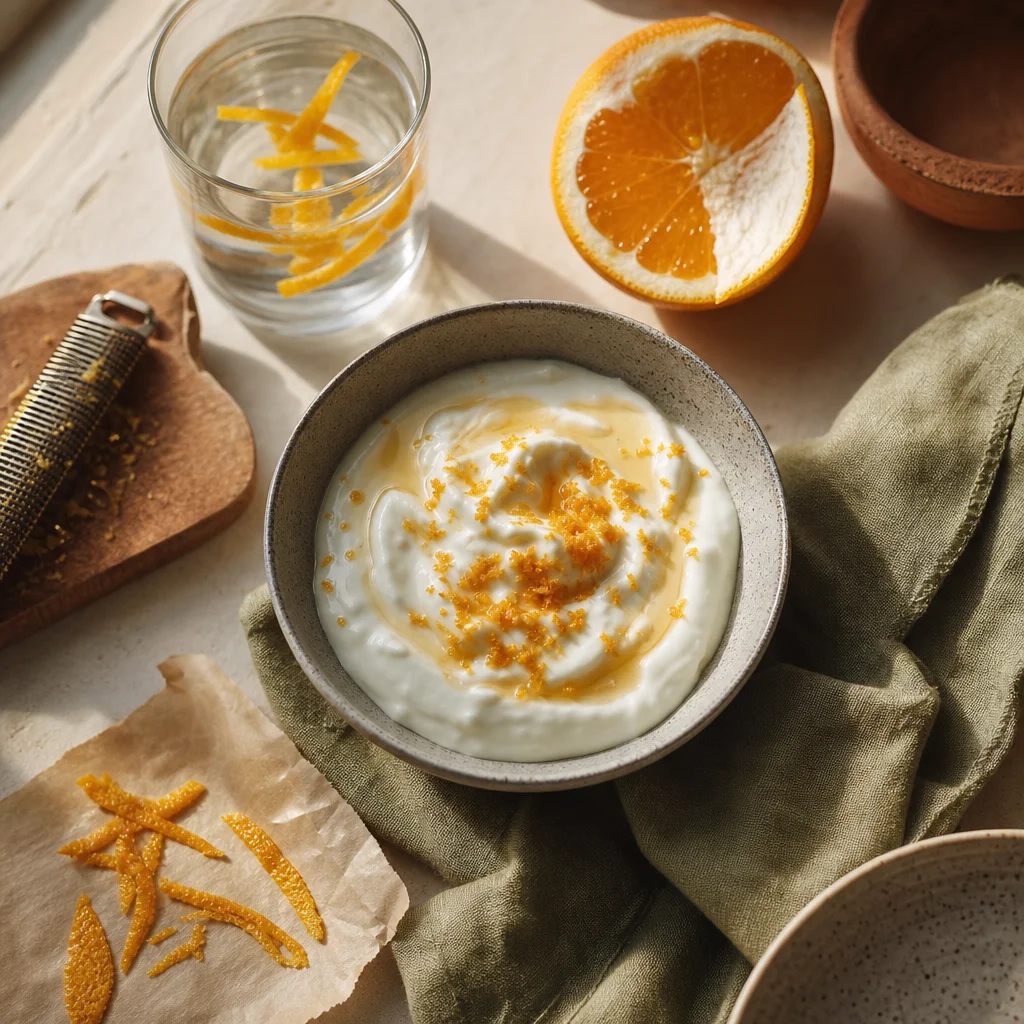
- Zest everything. A teaspoon of fresh zest brightens yogurt, oatmeal, salad dressings, marinades, muffins, and roasted vegetables.
- Blend a whole orange. Seed it, then blend with banana and yogurt. The pith disappears, and you keep all the fiber.
- Infuse your water. Add a few peel strips to a pitcher of cold water. Subtle flavor, zero sugar.
- Make citrus peel tea. Steep dried peel strips in hot water for five minutes. Add a little honey if you like.
- Freeze your zest. Keep a bag of zest strips in the freezer. Grab a pinch whenever a recipe calls for it.
Love candied peel or marmalade? Enjoy them — but know the sugar math. Candied peel comes from simmering peel in a 1:1 sugar-water syrup.
It’s a treat, not a daily health food. A small piece after dinner is lovely. A whole jar isn’t doing your blood sugar any favors.
Who Should Be Careful With Orange Peel
For most people, a little peel is perfectly fine. However, some people should think twice. Here’s who needs to be cautious.
Who Should Skip the Peel
- Citrus allergy or fragrance sensitivity. Citrus peel allergy is rare but real. It’s usually triggered by d-limonene, the main compound in peel oil. Case reports in the journal Dermatitis document skin reactions in cooks and bartenders. If your skin reacts to citrus, skip the peel.
- Digestive sensitivity. The peel is tough and high in fiber. Large pieces can cause cramps, bloating, or stomach upset — especially with IBS. Start small.
- Medication interactions. Compounds in orange peel and juice can interact with statins, some blood pressure medications, and certain antibiotics. If you take daily medication, mention your peel habits to your pharmacist.
- Children. Health databases flag large amounts of orange peel as possibly unsafe for kids. A bit of zest in baking is fine. Whole peels are not.
- Pregnancy. Normal food amounts are safe. Stick to culinary uses — not peel extracts or supplements.
Remember the golden rule. A little is lovely, a lot is not better. That applies to most foods, and orange peel is no exception.
Frequently Asked Questions About Orange Peel
Is the white pith of an orange good for you?
Yes. The pith is where hesperidin concentrates. It also adds fiber. Leave it on your segments instead of peeling it away.
Does orange peel have more vitamin C than the fruit?
Per gram, yes. The peel has about 136 mg per 100 grams, versus 45–60 mg in the flesh. However, you eat much more flesh than peel.
In practice, the flesh delivers more vitamin C per serving. The peel is a bonus, not a replacement.
Can you eat orange peel raw?
Yes, in small amounts. Wash the orange first, then zest it or cut thin strips. Avoid large chunks — they’re bitter, tough, and hard to digest.
The Bottom Line
Here’s the simple truth. You’ve been throwing away one of the most nutrient-dense parts of the orange. But you don’t need to eat whole peels to benefit. Start with one small habit.
Keep the pith on your orange. Add a teaspoon of zest to your morning yogurt. Or drop a peel strip into your water.
The orange peel benefits worth knowing are straightforward. More nutrients, less waste, and one tiny habit that makes your healthy eating smarter.
It’s food-as-medicine at its simplest. You rescue a nutrient-rich part of a food you already eat. Your gut will thank you.