

MIND Diet and Brain Aging: What the Evidence Shows
Key Takeaways
- The MIND diet blends the Mediterranean and DASH eating plans into one pattern built for brain health.
- A 2026 study of 1,647 adults linked closer follow-through to about 2.5 years of delayed brain aging.
- But a three-year trial found no clear edge in thinking or memory over a low-calorie control diet.
- Berries and poultry looked helpful. Sweets and fried fast food went the other way.
- Improving your overall pattern may matter more than hitting a perfect score.
Have you ever stood in a grocery aisle, wondering which foods really protect your brain? You’re not alone. The MIND diet is one of the most talked-about eating plans for long-term brain health. And the science behind it just got more interesting.
New brain scans suggest that people who follow this pattern closely show slower shrinkage in key brain areas. Over time, that gap worked out to roughly 2.5 years of delayed brain aging. But the same field also produced a large trial that found no clear gain in thinking or memory.
So what’s going on here? Let’s walk through what the research shows, what it doesn’t, and how you can use it tonight.
Quick Answer: Is the MIND diet good for your brain?
It’s a sensible, heart-friendly way to eat. Studies that track people over time link it to slower brain aging. Still, a three-year trial found no clear edge over a low-calorie control diet. So it’s worth trying, not proven, and not a cure.
What is the MIND diet?
Picture this. It’s 2015, and a team at Rush University Medical Center is trying to build an eating plan for the aging brain. Their lead researcher was Martha Clare Morris, ScD. She blended two well-studied patterns: the Mediterranean diet and DASH, a plan made to lower blood pressure.
The result became the MIND diet. The name stands for Mediterranean-DASH Intervention for Neurodegenerative Delay. A $14.5 million grant from the NIH paid for the work that followed. You can read Rush University’s own account of the trial for the full history.
Instead of counting calories, this plan hands you two short lists.
The two lists, at a glance
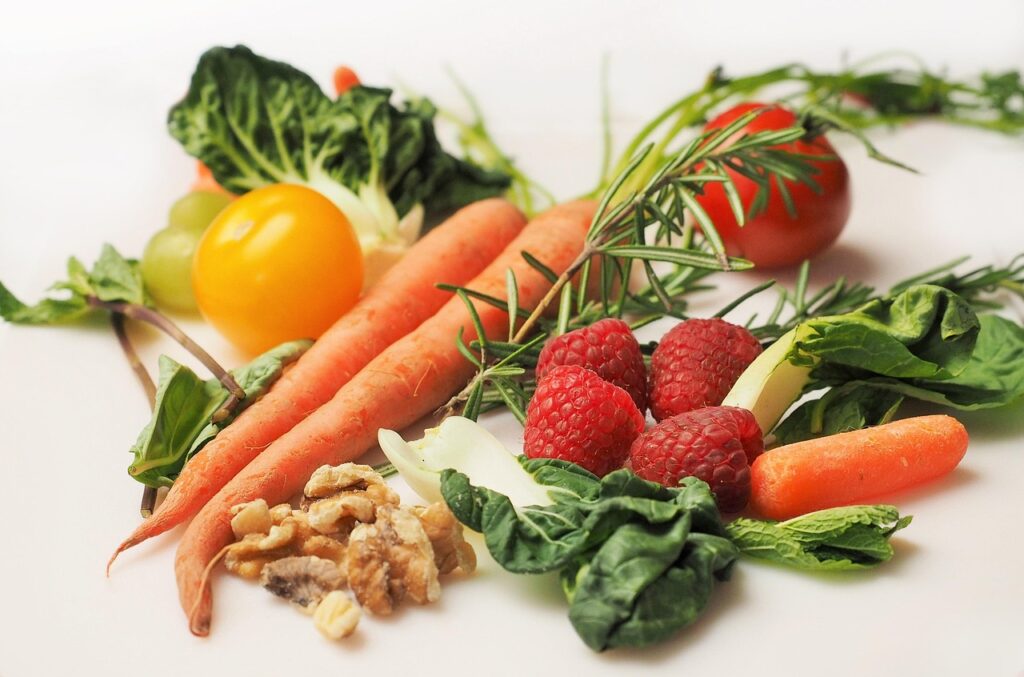
Enjoy often: leafy greens (6+ servings a week), other vegetables (1+ a day), berries (2+ a week), nuts (5+ a week), olive oil (your main cooking fat), whole grains (3+ a day), fish (1+ a week), beans (4+ meals a week), poultry (2+ a week), and wine (optional).
Keep rare: butter or margarine (under 1 tablespoon a day), cheese (under 1 serving a week), red meat (under 4 servings a week), fried and fast food (under 1 serving a week), and pastries and sweets (under 5 servings a week).
Here’s the thing, though. There is no single official version of this plan, and no agreed score. Some studies use a 15-point scale. Others use 14. So the numbers from different studies can’t be lined up side by side.
So treat it as a direction, not a finish line. And even partial follow-through has shown up in a good light in the research.
For the bigger picture on how eating patterns shape long-term memory and thinking, our brain healthy diet guide walks through the wider evidence.
Does the MIND diet really work? The trial evidence
Now, you might be thinking: this all sounds great. So why would a big trial come up empty?
In 2023, Rush University and Harvard ran a three-year trial. It signed up 604 older adults with no memory problems. All had a family history of dementia, a body mass index over 25, and a diet that needed work. The team put half on the diet and half on a control plan.
Both groups got better on thinking tests. The diet group gained 0.205 units. The control group gained 0.170. The gap between them was 0.035 units. The 95% confidence interval ran from -0.022 to 0.092, with a P value of 0.23. Because that range crosses zero, the result isn’t a sure thing. MRI results looked alike too. You can read the full trial in the New England Journal of Medicine.
But here’s what makes this study so useful. Both groups got intense coaching from dietitians. Both cut about 250 calories a day. Both lost roughly 5 kilograms, or about 11 pounds. By the end, the control group scored 8.3 on the diet’s own scale. That’s already inside the range tied to slower decline.
So the trial didn’t test this eating plan against a typical Western diet. It tested it against a truly better diet. As a result, the two arms ended up far closer than anyone planned. That’s also why the diet’s own inventors reported the flat result plainly instead of spinning it.
Then, in 2026, a follow-up analysis of that same trial looked at how closely people followed the plan instead of which group they were in. Of 590 people, 42.3% made big gains in their diet score. Those people showed real yearly gains in thinking, with a beta of 0.035 and a 95% confidence interval of 0.006 to 0.064. Blood tests backed this up, showing higher lutein-zeaxanthin and beta-carotene. Notably, the gain showed up no matter which group people were in.
In other words, how much you change may matter more than the label. On the flip side, small changes alone didn’t move the needle. So real, repeated change looks like the active ingredient.
Why the two types of studies disagree
Studies that follow people over time compare those who eat well with those who eat poorly. That sounds clean, but it isn’t. In the largest group, the top scorers were also more likely to be women, college educated, non-smokers, and free of diabetes and high blood pressure. All of those things shape the brain on their own. Trials fix that problem by handing out diets at random. But they also shrink the gap, because everyone gets support and gets better.
What the new brain-imaging study found
Meanwhile, the newest research measured something else: the physical shape of the brain.
Published in 2026 in the Journal of Neurology, Neurosurgery and Psychiatry, the study tracked 1,647 middle-aged and older adults from the Framingham Heart Study Offspring group. Their average age at the start was around 60. The team scored each person on a 15-point scale. People also had at least two brain scans, with follow-up running about 12.3 years.
Over that time, every 3-point jump in score was linked to 0.279 cubic centimeters per year slower grey matter loss. The 95% confidence interval ran from 0.089 to 0.469. According to the researchers, that equals 20.1% less age-related change. In plain terms, it’s about 2.5 years of delayed brain aging. Here’s the study itself in the Journal of Neurology, Neurosurgery and Psychiatry.
The brain’s fluid spaces told a like story. Those spaces normally grow as tissue shrinks. Here, each 3-point rise was linked to 0.071 cubic centimeters per year slower growth. That’s roughly 8% less change, or about one extra year.
It also fits a wider pattern we’ve looked at before: the way healthy aging diet patterns tend to show up in long-term health data, not just in single meals.
Before you get too excited, though, read this part closely. Nobody knows yet whether these shifts lead to better memory or thinking. The study measured brain tissue, not test scores. And the design tracked people over time, so it can’t prove cause and effect.
What the scans did not measure
A thinner cortex and a sharper memory are not the same thing. So treat the 2.5-year figure as a hopeful sign about brain shape, not a promise about your recall.
Which foods stood out, and two that surprised everyone
Not every food acted the same way. When the team split the MIND diet into its parts, two results clearly leaned helpful.
Berries were linked to slower growth of the brain’s fluid spaces. That fits the plan’s logic, since it favors berries over fruit in general. Poultry was also linked to slower fluid growth and slower grey matter loss. In practice, poultry works as a lean protein swap for red meat and fried food.
On the other side, sweets were linked to faster fluid growth and more shrinkage in the memory center. Fried fast food showed a larger drop in that same memory area. Since those two habits are also the easiest to change, they may be the best swaps on your list.
The two findings that surprised everyone
Here’s where honesty matters. Two results ran against the plan’s own rules. More whole grains was linked to faster grey matter loss, faster memory-center shrinkage, and faster fluid growth. Meanwhile, more cheese was linked to slower decline on all of those same measures. You can see the food-by-food findings reported in detail.
What should you do with that? Honestly, not much, at least for now. These are single-food findings from one group of people. Memory bias and other hidden factors can both push results sideways. For instance, people told to eat more fiber for blood pressure may already be at higher risk. In the same way, the whole grain group in a food survey lumps sugary cereals in with oats and barley.
Also, whole grains keep strong support for heart and metabolic health — the same foundation behind the Mediterranean diet’s heart benefits. So keep eating them. The real lesson is wider: single-food findings from tracking studies are fragile. In fact, the National Institute on Aging states that no evidence shows eating or avoiding one specific food can prevent Alzheimer’s or age-related mental decline.
Where the 25% lower risk headline comes from
You’ve likely seen a headline promising a 25% drop in dementia risk. That number is real, but it answers a much narrower question than most people think.
It comes from a study shared at NUTRITION 2025, the yearly meeting of the American Society for Nutrition. Researchers looked at diet data from nearly 93,000 US adults aged 45 to 75. Importantly, the work had not yet been peer reviewed when it was reported.
Here’s the breakdown. People with the highest scores at the start had a 9% lower risk of dementia. That rose to 13% among white, Latino, and African American people. The 25% figure compared people who improved over 10 years with people whose scores fell. So it doesn’t compare the MIND diet with an average diet.
For context, an earlier analysis of more than 900 older adults with no dementia found that close follow-through was linked to a 53% lower rate of Alzheimer’s over roughly 4.5 years. That figure comes from data that tracked people over time, so it shows a link rather than a proven cause. The National Institute on Aging says the evidence on diet and brain health is truly mixed.
The big picture is mixed too, and a 2025 systematic review sums it up well. Across 39 studies from 14 countries, 14 of 19 studies on overall thinking, 10 of 11 on dementia risk, and 16 of 18 on specific mental skills reported good results. But the reviewers also found that trial results stay mixed. On top of that, they found no standard best score, which explains why the published numbers don’t line up.
So treat any single big number with calm doubt. Always ask what it compared, and how strong the study design was.
How to start without overhauling your life
Let’s be honest. Nobody changes 15 food habits overnight. The good news is that you really don’t have to.
Start with the swaps that take the least effort. All of them fit the MIND diet. First, swap fried fast food for an oven-baked version at home. Next, trade pastries and sweets for berries with a spoonful of nut butter. Then make olive oil your go-to cooking fat.
Making it work on a real budget
Cost is a real barrier, and it deserves a straight answer. Frozen berries with no added sugar often cost less than fresh ones and keep most of their nutrients. Canned beans work well too. Buy no-salt-added kinds, or rinse them to cut sodium. Also, cooking a big batch once or twice a week saves both time and money.
If you don’t eat fish, poultry, or dairy
This pattern leans hard on fish, poultry, and dairy. That leaves plenty of readers out. But the core ideas travel well. Fill up on leafy greens, other vegetables, berries, nuts, olive oil, beans, and whole grains. Use tofu, tempeh, lentils, or edamame in place of poultry or fish.
Still, be clear-eyed about the proof. No trial has tested a dairy-free version of the MIND diet, or a vegan one. So treat those swaps as sensible, not proven. On a related note, wine is a legacy part of the plan rather than health advice. Many public-health bodies now advise that no level of drinking is entirely risk-free. If you don’t drink, there’s no reason to start.
Finally, talk with your clinician before making big diet changes. That’s extra true if you take medicines or manage a health condition.
Common questions, answered honestly
Do I need to follow the MIND diet perfectly?
No. The 2026 follow-up found that big change mattered, while small change alone didn’t show a clear effect on thinking. So aim for real, repeated shifts rather than a perfect score.
Should I drink wine for brain health?
No. Wine is a legacy part of the plan, and it’s fully optional. Many public-health bodies now advise that no level of drinking is entirely risk-free. If you don’t drink, don’t start for your brain.
Can I just take a supplement instead?
No. The National Institute on Aging is direct here: no vitamin or supplement has been proven to prevent Alzheimer’s or mental decline. The proof stays weak because many supplement studies were too small or too short to settle the question.
The bottom line
Here’s the honest summary. A food pattern built for brain health is worth a try, and the MIND diet is a well-built version of one.
The newest brain scans link closer follow-through to slower grey matter loss, equal to about 2.5 years of delayed aging. But that study measured brain shape, not memory. And the best trial found no clear edge over a low-calorie control diet.
The most hopeful finding sits in between. People who truly improved their diet, by about 4 points on a 14-point scale, showed real gains in thinking, whichever group they landed in. So the goal isn’t a perfect score. It’s a better pattern, kept up for years.
So tonight, pick one swap. Add berries to breakfast, or trade fries for roasted potatoes in olive oil. Then do it again tomorrow. That’s how a food pattern becomes a habit, and how habits quietly shape a healthier brain.