

Microplastics and Fatty Liver: What the Research Shows
Key Takeaways
- The microplastics and fatty liver science is young. Most of the proof comes from mice, not people.
- In mice, one common plastic raised signs of liver harm — even on a normal diet.
- The harm grew worse when mice also ate a lot of fat, fructose, and cholesterol.
- That same plastic is the main one found in human liver tissue.
- No human study shows microplastics cause fatty liver. Your best lever is still metabolic health.
Could the plastic wrap on your leftovers be quietly stressing your liver? That’s the fear behind a wave of scary headlines about microplastics and fatty liver. Teams have now seen real liver changes in mice. Does the same thing happen in people? That part is still an open question.
Here’s the thing. This is not a story about proof. It’s a story about what’s likely, what we touch every day, and which changes are worth making in your kitchen.
So let’s walk through what the new study found. We’ll look at how much plastic is really inside us. Then we’ll rank the fixes by how strong the science is.
Quick Answer: Do Microplastics Cause Fatty Liver?
No. So far, no study shows that microplastics and fatty liver are connected by cause. However, a 2026 mouse study found that one common plastic made signs of liver harm worse. That was mainly true alongside a high-fat, high-sugar diet. So think of plastic as a possible booster of a problem you already have — not the root cause.
Microplastics and Fatty Liver: What the New Study Found
A team at Texas A&M University, working with the University of Oklahoma, studied polyethylene. It is the most-made plastic on earth. It makes up about one third of all plastic made. You’ll find it in food wrap, storage boxes, and the lining of drink cups.
The team used a gene-mapping tool. It shows which genes switch on, and where, inside a tissue. So the team could see exactly where the liver was reacting.
What they found was a surprise. This plastic switched on a liver protein tied to fat burning. That protein is called PPAR-alpha. It also affected a gene called ANXA2, which helps with tissue repair. For years, scientists thought the body mostly ignored this plastic. They even called it inert, meaning it did not react with living tissue.
Even more striking, signs of liver harm rose in mice on a normal diet. When those mice also ate food high in fat, fructose, and cholesterol, the harm grew worse. You can read the full write-up in the Texas A&M research release.
Notably, the effects showed up on their own and alongside diet. That mix matters. We’ll come back to it.
How Worried Should You Be?
Now, you might be thinking: mice are not people. You’re right. And this is where the microplastics and fatty liver talk needs some honesty.
The U.S. Food and Drug Administration says current science does not show that microplastics in food pose a risk to human health. The agency also notes that test methods are not yet standard. That makes studies hard to compare.
On the human side, the picture is mixed. The one liver study so far compared three groups. Six lean donors with healthy livers. Six people with obesity and normal livers. Eleven people with MASH. At the start, their stool plastic levels looked the same. No real gap. However, a year after weight-loss surgery, some patients still had liver disease. Those patients carried more plastic bits than the ones who got better. You can read that human study here.
That’s a faint signal, not a smoking gun. It hints that plastic may matter more for whether a liver problem lingers than for whether you get one at all.
Meanwhile, a 2026 view piece in Nature Reviews Gastroenterology & Hepatology reports that plastic levels in human liver have risen over the past ten years. The authors even suggest a new name: plastic-induced liver injury. Still, they call the cause question open.
Is Plastic Building Up in Human Livers?
Yes. And this part is well known. A 2025 Nature Medicine study used three separate methods to find plastic bits in human kidney, liver, and brain tissue.
Polyethylene was the top polymer in all three. What’s more, tissue levels did not track with age, sex, race, or cause of death. The year of death did matter. From 2016 to 2024, plastic levels in liver and brain samples rose by a lot.
A 2025 systematic review also describes a small study of six people with scarred livers. That study found polystyrene bits at 4.6 to 11.9 per gram of tissue. Scarred livers held a heavier plastic load than healthier ones.
Here’s what that means in daily life. Your liver can hold a small amount of plastic and still work fine. What worries experts is what happens over decades. Nobody has tracked a large group of people long enough to know yet.
Here’s the key caveat. Finding a bit of plastic in a tissue does not prove it did harm. It proves you were exposed. So the real question about microplastics and fatty liver is not whether the plastic is there. It’s what that plastic is doing.
The Dose Gap No One Mentions
Let’s be honest about what most headlines skip. The doses used in lab tests are huge next to what people really take in.
A 2025 systematic review of 25 studies in Frontiers in Pharmacology estimated that plastic in human blood sits at about 5 micrograms per milliliter and that human liver tissue holds roughly 3 to 10 particles per gram — while many of the cell studies it pooled used 10 to 100 milligrams per milliliter.
That’s a gap of three to four orders of magnitude. The review’s own authors say so. The harm they saw may come from extreme lab doses, not from real life.
This does not mean microplastics are safe. It means many scary numbers online rest on doses your body will never reach.
Also, only one of those 25 studies followed a human group — 1,057 pregnancies. The review also notes that just two studies looked at human liver tissue directly. That is the honest state of the microplastics and fatty liver science today.
Why a Poor Diet Makes Plastic Worse
This may be the most useful idea in the whole field. A liver already under stress seems more open to harm from whatever else it meets. That’s the core of the microplastics and fatty liver story.
Think about a 2026 study on the liquid that leaks from plant-based food boxes. The team used doses close to real life, not extreme lab ones. In mice with obesity, that liquid made fatty liver worse. In normal-weight mice, the effect was near zero.
In plain terms, the harm hinged on the liver already being strained. That’s a weak-liver model, not a harm-for-everyone model.
It also raises a surprise about “biodegradable” boxes. That word is about what happens in a landfill. It says nothing about your body. So far, there’s no proof these boxes are safer for heating food.
Finally, keep some scale. A 2025 review in the World Journal of Hepatology puts it plainly. Fatty liver is driven mostly by lifestyle and metabolism. Microplastics may add to that. They are not the star of the show.
Steps That Are Worth Your Time
So what really moves the needle on microplastics and fatty liver risk? Let’s rank the steps by how strong the science is. Strongest first.
Ranked by How Strong the Science Is
1. The basics (strongest proof). Aim for a healthy weight. Eat more greens, beans, nuts, and whole grains. Cut back on sugary drinks and white carbs — see our report on diet soda and liver disease risk if fizzy drinks are your daily habit. Move your body most days. Manage blood sugar, triglycerides, and blood pressure. Limit alcohol. These steps shield your liver. The proof here is deep and wide. Even everyday habits count — see what dietitians say about coffee for liver health.
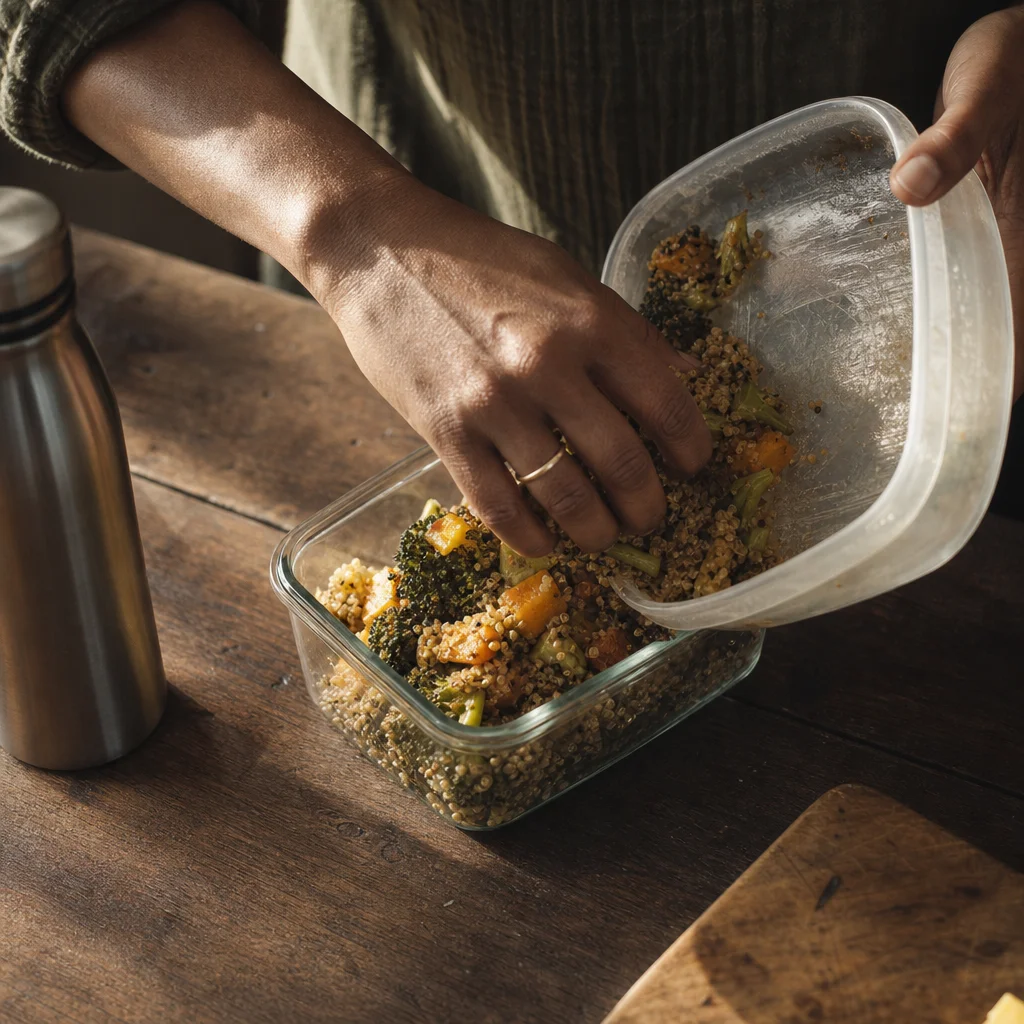
2. Easy kitchen swaps (wise, low cost). Stop heating food in plastic. Store leftovers in glass or steel. Retire plastic containers as soon as they show wear — a scuffed surface, a fogged-up look, or grooves that hold onto food. Worn plastic is the one worth replacing first. Pick a glass or steel bottle over bottled water.
3. Water filters (reasonable). A 2026 review in Food Chemistry: X found plastic bits in bottled, tap, and groundwater worldwide, and it lists coagulation, membrane filtration, and boiling among the methods studied — though it notes removal varies widely between methods and studies. One small laboratory study reported large reductions from boiling hard water and then straining it, but that was a single experiment on hard water only. Treat it as a promising sidelight, not a proven fix.
4. Skip the “detox” (no proof). No pill, tea, or cleanse has been shown to clear microplastics from the body. Please don’t spend money there.
Notice the order. The strongest steps have nothing to do with plastic. That’s not a dodge. It’s what the data shows. Still, some everyday exposures do deserve a second look — our guide to a common dry cleaning chemical linked to liver cancer covers five safer alternatives.
Who Should Ask About Liver Tests?
Fatty liver often causes no signs for years. So it’s usually found by chance. If you have type 2 diabetes, insulin resistance, extra belly weight, high triglycerides, or high blood pressure, ask your doctor if liver tests make sense for you. Simple blood tests and a risk score can show who needs a closer look. That talk is far more useful than any plastic worry.
What You Cannot Control (And Why That’s Fine)
Let’s deal with the worry head-on. You can’t remove all plastic from your life. It’s in air, water, dust, and food. Even the scientists who study it say so.
What you can do is pick where your focus goes. Constant fear is not a health plan. And stress has its own costs for the body.
On the flip side, small kitchen changes are cheap and safe. They cut waste, too. Those are wins no matter how the microplastics and fatty liver science turns out.
Common Questions
Can microplastics cause fatty liver disease?
Not based on today’s proof. In mice, the plastic made liver harm worse. In people, no one has shown that yet. So the honest word on microplastics and fatty liver is simple: not proven.
What is fatty liver disease, exactly?
It starts when extra fat builds up in liver cells. Doctors now call it MASLD. When that fat comes with swelling and cell damage, it becomes MASH — a worse form. Most people feel fine for years.
Is there a microplastic blood test I should get?
No. There are no standard tests for plastic levels in the body. And no treatment would change based on the result. If you have metabolic risk factors, ask about liver tests instead. That’s something you can act on.
Does cutting plastic exposure help my liver?
No one has shown that yet. Cutting back is wise and low risk. But it is not a proven liver cure. The steps with real proof are the basics: food, weight, movement, blood sugar, and alcohol.
Should I eat more fiber to flush out plastic?
Early animal work hints that some fibers may trap plastic bits in the gut and help them pass. However, this has not been shown in people. Eat fiber for what we know it does. It helps blood sugar, weight, and gut health — and a white beans and rice skillet is an easy 20-minute place to start.
The Bottom Line
Here’s the bottom line on microplastics and fatty liver: the science is hopeful, troubling, and unfinished — all at once.
In mice, this common plastic made liver harm worse, mainly with a Western-style diet. In people, we know plastic builds up in liver tissue. We also know that build-up is rising. We don’t yet know that it causes disease.
So keep some scale. Your liver does best with the things you already know. Real food. Regular movement. Steady blood sugar. Less alcohol. Then make the easy plastic swaps. And skip the detox fakes.
Curious, informed, and calm — that’s the goal. Not fear. Not a plastic-free life.