

Mediterranean Chickpea Meals: 3 Easy No-Recipe Dinners
Key Takeaways
- One can, three dinners. A can of chickpeas can anchor a cozy soup, a one-skillet rice dish, or a fresh wrap.
- Real nutrition. A half-cup of cooked chickpeas delivers about 7 grams of protein and 6 grams of fiber.
- Learn the formula. Legume + produce + healthy fat + whole grain + fresh herbs = endless Mediterranean meals you can improvise.
- Rinse the can. Draining and rinsing canned chickpeas removes excess sodium. Choose no-salt-added when you can.
- Honest evidence. Chickpea meals may steady blood sugar and modestly lower LDL cholesterol as part of a Mediterranean pattern.
Picture this: it’s 5:30 p.m., you’re hungry, and dinner is a blank slate. The Mediterranean diet sounds lovely — until the shopping list starts to feel complicated. Here’s the thing: Mediterranean chickpea meals don’t need specialty ingredients or elaborate recipes. They start with one humble can.
That can costs about a dollar — and Mediterranean diet on a budget doesn’t get much easier than this. It sits in your cabinet for months without going bad. And it can become three very different dinners. No recipe required. This guide walks you through all three, plus the simple formula behind them.
Quick Answer: Can a can of chickpeas really become a Mediterranean meal?
Yes. Pair chickpeas with whatever produce you have, a drizzle of olive oil, a cooked whole grain or pita, and fresh herbs or lemon. That combination — the “Mediterranean formula” — turns a $1 can into a balanced dinner in about 20 minutes.
Why Mediterranean Chickpea Meals Start with a $1 Can
For centuries, people around the Mediterranean have built meals around chickpeas, also called garbanzo beans. The simplest Mediterranean chickpea meals begin in the canned-goods aisle. And the reasons are both practical and nutritional.
According to USDA nutrition data, a half-cup of cooked chickpeas delivers about 7 grams of protein and 6 grams of fiber. That protein-fiber duo does real work. Fiber slows digestion, so you feel full longer. Protein supports muscle repair and countless everyday functions. Chickpeas also provide folate, iron, magnesium, and potassium.
Here’s something most people miss: plain cooked chickpeas are naturally low in sodium. The USDA lists just 7 mg per 100 grams. The sodium in a chickpea dinner usually comes from the can liquid and the add-ins. That’s why rinsing matters.
The American Heart Association recommends beans and legumes as part of a heart-healthy eating pattern. The MedlinePlus guide to the Mediterranean diet puts legumes, whole grains, vegetables, and olive oil at the center of the plate. One can of chickpeas checks the legume box for three nights of dinners.
3 Mediterranean Chickpea Meals for Busy Weeknights
Here are three Mediterranean chickpea meals that come together from everyday staples. Think of each one as a flexible template. Use whatever vegetables, grains, and herbs you already have.
Template 1: Cozy Chickpea & Spinach Soup
This is the meal for cold evenings and comfort-food cravings. Sauté chopped onion and garlic in a drizzle of extra-virgin olive oil. Stir in a can of diced tomatoes and two cans of rinsed chickpeas. Pour in 3 to 4 cups of low-sodium vegetable broth. Add dried basil and oregano, then let everything simmer for 15 to 20 minutes.
In the last few minutes, stir in a few handfuls of fresh spinach until it wilts. Finish with a squeeze of fresh lemon juice. Add carrots, celery, or zucchini at the start if you have them. Serve with whole-grain bread for dipping.
Template 2: One-Skillet Lemon Chickpea Rice
Skillet meals are the easiest way to get dinner done with minimal cleanup. Sauté diced onion and garlic in olive oil until soft. Add one can of rinsed chickpeas, halved cherry tomatoes, and a splash of low-sodium broth. Season with oregano, salt, and pepper.
Fold in cooked brown rice and let everything warm through. Top with crumbled feta, chopped parsley, and a squeeze of lemon. This works beautifully with quinoa, farro, or any cooked grain you have on hand. Want more vegetables? Stir in baby spinach or kale until wilted.
Template 3: No-Cook Chickpea Hummus Wraps
Some nights, you don’t want to turn on the stove. That’s what no-cook Mediterranean chickpea meals are for. Roughly mash one can of rinsed chickpeas with a fork. Mix in olive oil, lemon juice, minced garlic, red onion, and a pinch of dried mint or oregano.
Spread hummus on a whole-wheat tortilla. Add a handful of baby spinach, then pile on the chickpea mash. Roll it up, slice it in half, and dinner is done. Need more lunch-ready ideas? These 5 easy Mediterranean lunch recipes are ready in 15 minutes. Add sliced cucumber, tomato, or shredded carrot for crunch. Crumbled feta, olives, or a spoonful of Greek yogurt adds more protein and flavor.
Both the soup and the skillet keep well in the fridge. Make a double batch when you have time, and you’ll thank yourself at lunch the next day.
The Mediterranean Formula: Your No-Recipe Shortcut to Endless Chickpea Dinners
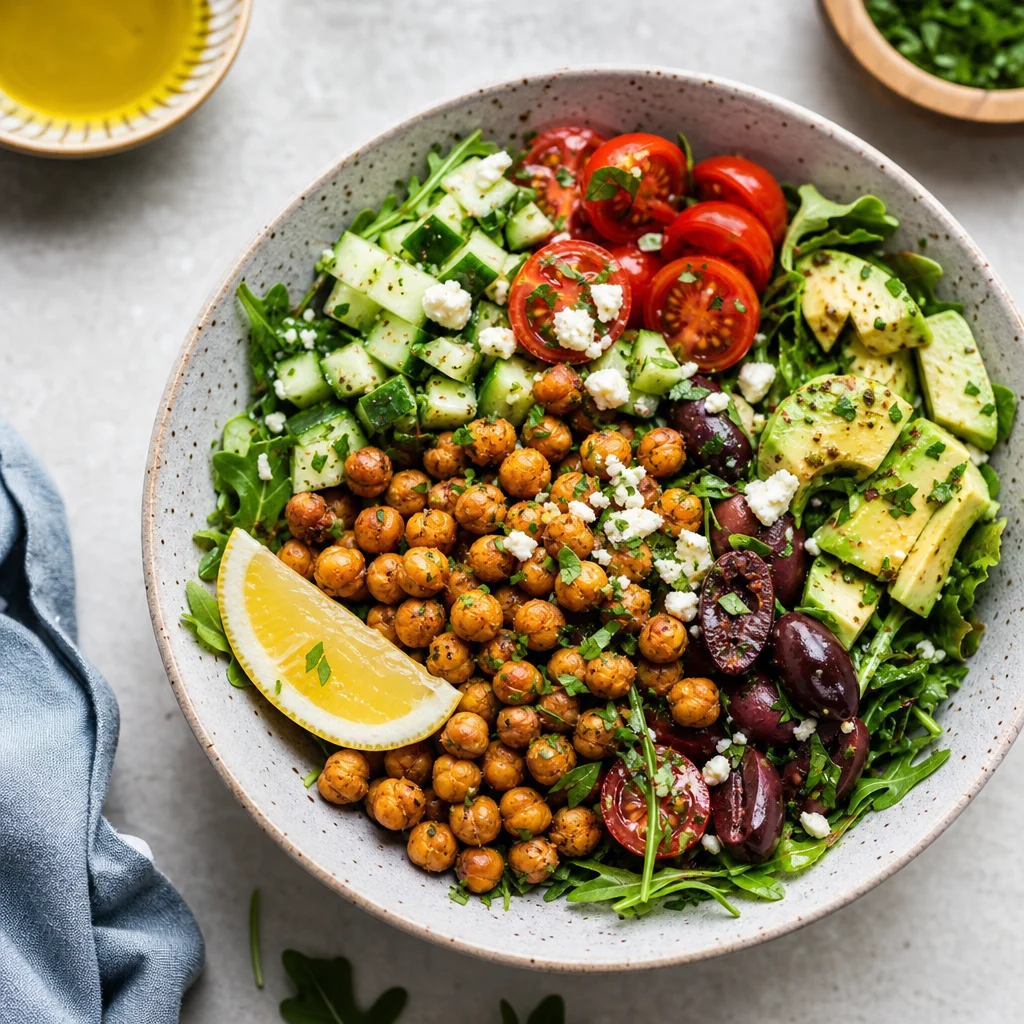
Now, here’s the part most recipe roundups skip. You don’t need to memorize recipes. You need one pattern. Let’s call it the Mediterranean formula: legume + produce + healthy fat + whole grain + fresh herbs.
The Five Pieces of the Formula
- Legume: chickpeas, lentils, or white beans
- Produce: spinach, tomatoes, peppers, zucchini, onion, or carrots — fresh, frozen, or canned all work
- Healthy fat: extra-virgin olive oil, olives, avocado, or a few toasted nuts
- Whole grain: brown rice, quinoa, farro, whole-wheat pita, or pasta
- Fresh herbs + acid: parsley, mint, basil, oregano, lemon juice, or a splash of vinegar
Pick one item from each column, and you have a balanced Mediterranean meal. Looking for more inspiration? These quick Mediterranean diet recipes to fight inflammation build on the same staples. That’s the beauty of Mediterranean chickpea meals — the pattern does the thinking for you. Eat a different combination every night for a week, and you won’t repeat a single dinner.
This pairing is smart nutritionally, too. Chickpeas bring plant protein, and whole grains supply amino acids that complement it. It’s a traditional match across the Mediterranean — and it makes your meal more complete.
What the Research Really Says About Chickpea Health Benefits
Let’s be honest about the science. Some claims about Mediterranean chickpea meals are solid. Others are overstated. Here’s how the evidence actually shakes out.
Fullness and steady energy. A 2022 randomized trial in Food & Function tested chickpea meals in three forms. Whether whole, pureed, or as pasta, they kept people fuller than a potato-based meal with the same carbs. They also produced lower blood sugar. So the form doesn’t matter — soup, mash, or skillet all work.
Blood sugar control. A 2025 meta-analysis of 28 controlled trials found that chickpeas significantly reduced the post-meal blood sugar response. The researchers rated the evidence as low to very low certainty, so “may help” is the right phrase here. Even so, the direction is consistent with what we know about pulses.
Heart health. A 2026 meta-analysis in the Journal of the American Heart Association pooled 38 trials. Eating about a half to two-thirds cup of pulses daily lowered LDL cholesterol by a small but meaningful amount. The certainty was moderate to high. Chickpeas are one heart-healthy food in a broader pattern, not a magic bullet.
An Honest Note on Disease Claims
You may have seen headlines saying chickpeas prevent diabetes or protect against cancer. The evidence doesn’t support those strong claims. A 2021 federated meta-analysis of 27 studies found no clear link between pulse intake and lower diabetes rates. A 2023 systematic review reached a similar conclusion for heart disease. However, the Mediterranean pattern itself is different. A 2026 meta-analysis of 60 studies found that people who followed the diet closely had a lower risk of type 2 diabetes and obesity. So the meal pattern matters more than any single food.
How to Enjoy Chickpea Meals Without the Bloat
Here’s the thing about beans: if you don’t eat them often, they can cause gas and bloating at first. This is completely normal. It usually fades as your gut adjusts. NIH MedlinePlus recommends adding fiber slowly to avoid discomfort.
- Start with a half-cup. Build up gradually over a week or two — many people comfortably settle into a half-cup to one cup a day.
- Rinse canned chickpeas. The American Heart Association recommends draining and rinsing canned beans to remove excess sodium. Choose no-salt-added cans when you can.
- Mind the add-ins. Canned tomatoes, broth, and feta all carry sodium. Pick no-salt-added tomatoes and low-sodium broth. Use feta as a finishing touch, not a full layer.
- Pair chickpeas with lemon or tomatoes. Chickpeas provide iron, and vitamin C helps your body absorb plant-based iron. The lemon juice and tomatoes in these meals do exactly that.
- Drink plenty of water. Fiber works best when you’re well hydrated.
Frequently Asked Questions
Q: Are canned chickpeas as healthy as dried?
A: Yes, nutritionally they’re very similar. Canned is faster and still budget-friendly. Just rinse them well to remove excess sodium. Dried chickpeas cost less per serving and let you control the salt completely.
Q: How much protein do chickpeas really have?
A: A half-cup of cooked chickpeas has about 7 grams of protein. A full cup has about 14.5 grams. Pair them with whole grains, feta, yogurt, or an egg to make the meal even more protein-rich. Need more ideas? These 13 quick high protein meals come together in 5 minutes.
Q: Can I eat chickpeas every day?
A: Yes. Many people comfortably settle into a half-cup to one cup a day. If you’re new to beans, start small and let your digestion adjust.
The Bottom Line: One Can, Endless Dinners
Mediterranean chickpea meals prove that healthy eating doesn’t have to be complicated, expensive, or time-consuming. One dollar can. One simple formula. And a whole week of nourishing, satisfying dinners.
Keep a few cans in your pantry, and you’re always close to a good meal. Tonight, try the no-cook wrap. Tomorrow, one-pan lemon rice. Your future self — and your blood sugar — will thank you.