

Make-Ahead Black Bean Enchiladas: Bake One, Freeze One
Key Takeaways
- One batch of black bean enchiladas makes two casseroles: bake one tonight, freeze one for later.
- Each serving delivers 9 grams of fiber — about a third of the daily target for adult women.
- You also get 31 grams of protein per serving, thanks to chicken plus beans.
- Smart swaps can trim the sodium even further.
- Per USDA guidance, enjoy frozen casseroles within 2 to 3 months for best quality.
Picture this: It’s 6 p.m. on a Tuesday, you’re tired, and dinner has to happen. Wouldn’t it be great to pull a homemade casserole from the freezer instead of staring into a sad fridge? That’s the real-life magic of black bean enchiladas made ahead. One batch of filling, two pans, two dinners — one for tonight, one for the busy night you can’t predict.
Here’s what this guide covers. We’ll dig into why fiber deserves more dinner credit, how beans keep you satisfied, and the best sodium swaps. Plus, the freezer rules that keep this meal safe and delicious.
The best part? This isn’t a complicated project. You’re looking at about 35 minutes of active time that pays off for weeks.
Why Black Bean Enchiladas Are the Ultimate Make-Ahead Dinner
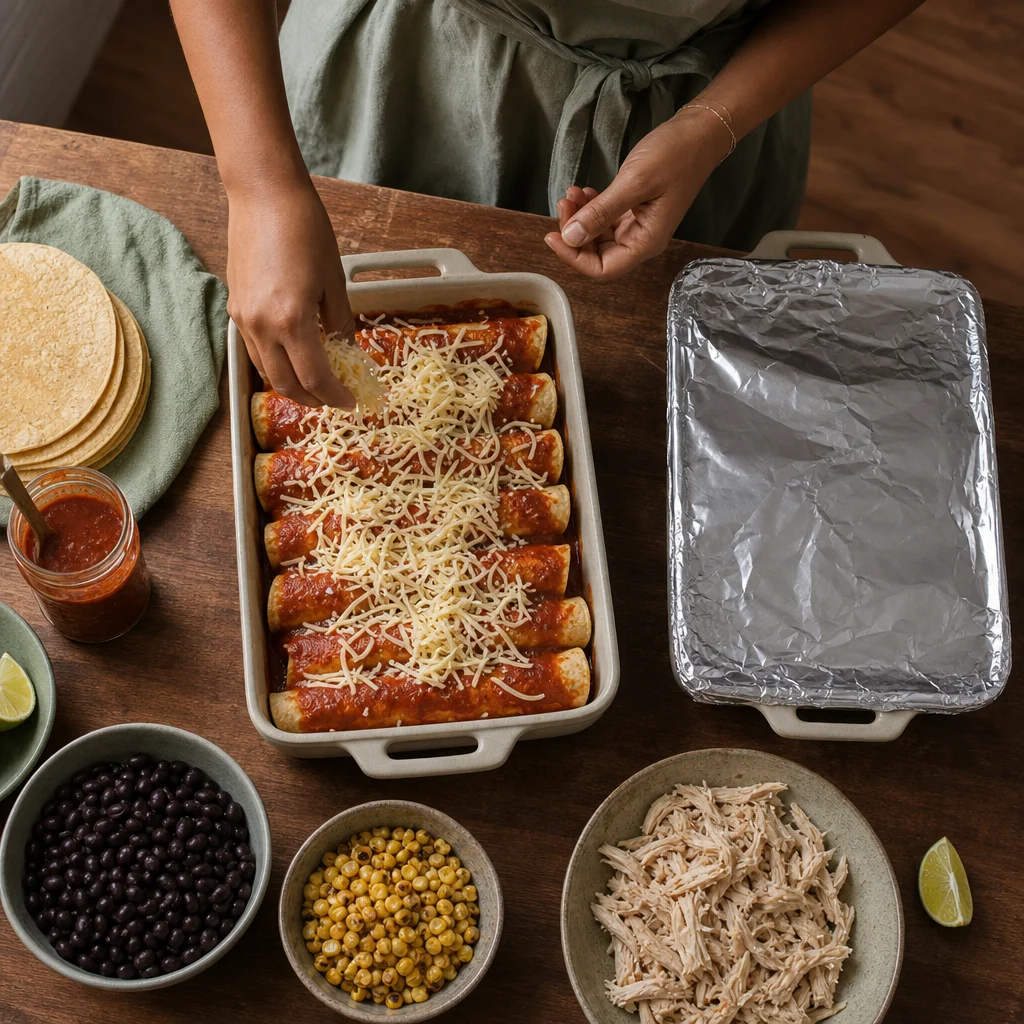
The double-batch idea is beautifully simple. You cook the filling once, roll 16 tortillas, and split them between two baking dishes. One goes straight into the oven. The other gets wrapped, frozen, and saved for a day when cooking feels impossible.
Shortcuts keep the prep honest. Rotisserie chicken adds protein without any cooking. Frozen fire-roasted corn brings smoky flavor straight from the bag. Canned no-salt-added black beans are already cooked and ready to go.
A store-bought enchilada sauce does the flavor work, but choose it wisely. Many sauces pack far more sodium than you’d expect. Look for one with less than 300mg per serving, or make your own with lower-sodium broth.
Now for the payoff. A two-enchilada serving comes in at 456 calories, 31 grams of protein, and 9 grams of fiber. That protein-fiber combo is what turns a “diet dinner” into a meal that actually satisfies.
Black Bean Enchiladas: The Fiber Math
Here’s a number that might surprise you. Most American adults get only about half the fiber they need. That works out to roughly 16 grams a day, well below the 22 to 34 grams in the Dietary Guidelines. For adult women, the daily target sits at about 25 to 28 grams — see our guide to fiber for women. The MedlinePlus guide to how much fiber you need each day confirms the gap.
One serving of these black bean enchiladas delivers 9 grams of fiber. Do the math, and that’s about one third of the daily target in a single dinner. From there, you’re just a couple of servings of fruit and veggies away from a full day.
Black beans do most of the heavy lifting. According to USDA nutrient data for cooked black beans, one cup packs about 15 grams of fiber. It also delivers 15 grams of protein, with almost no sodium. The corn and tortillas add a bit more fiber on top.
Why does fiber matter so much? It adds bulk, helps you feel full, and supports steady blood sugar. The CDC notes that fiber helps keep blood sugar steady because your body doesn’t fully digest it. The soluble fiber in beans also helps lower cholesterol.
One quick reality check. You may see bold claims that beans “prevent heart disease.” The evidence is more measured.
A 2023 systematic review of 47 studies found that legumes improve cholesterol and blood sugar in controlled trials. They also help the body handle insulin better. However, the same review graded the evidence for preventing heart disease events as limited. What the evidence actually shows about legumes and heart health: beans are a smart swap, not a miracle food.
The Science of Satisfaction: Why Beans Keep You Full
Satiety — the feeling of being truly satisfied after a meal — is the real test of a healthy dinner. If you’re hungry an hour later, the nutrition panel doesn’t matter much. Beans pass this test in a surprising way.
A 2025 randomized trial in the Journal of Nutrition compared black beans, red kidney beans, and beef in tortilla-based meals in older adults. All three increased fullness and satisfaction. All three reduced hunger. The verdict? Beans improved satiety just as well as beef. For a plant protein, that’s impressive.
Beans also change how your body handles the meal. A 2023 study found that even a quarter cup of beans measurably lowers the blood sugar response to starchy foods. That includes rice, pasta, and potatoes. In this recipe, the beans do that work for the tortillas and corn.
One more honest note. Fiber contributes to fullness, but it’s not a magic appetite switch. A 2026 systematic review of 48 studies found that cereal fiber improves perceived fullness. But its effect on how much people actually eat is limited. How fiber affects fullness depends on the type of fiber. That’s the secret of black bean enchiladas: satisfaction comes from the whole package — protein, fiber, vegetables, and volume. This dinner has all of it.
The Sodium Guide: How to Keep Enchiladas Heart-Healthy
Here’s where enchilada recipes often stumble. Depending on the sauce, cheese, tortillas, and canned goods, sodium can range widely. Expect anywhere from under 500mg to more than 1,200mg per serving. The American Heart Association suggests capping sodium at 2,300mg a day, with an ideal limit of 1,500mg for many adults.
This version lands at 652mg per serving — about 28% of the daily value. Even healthy black bean enchiladas can sneak in extra sodium, though. These five swaps keep the flavor and cut the salt:
- Rinse your beans. Draining and rinsing canned beans removes a meaningful share of added sodium — commonly cited at about 40%. Choose no-salt-added beans and rinse anyway.
- Vet your sauce. Enchilada sauce is often the biggest sodium source. Read labels and pick one under 300mg per serving, or make your own with lower-sodium broth.
- Watch the rotisserie chicken. Many store-bought birds are injected with a salty brine. If you’re sodium-sensitive, roast your own or use less.
- Shred your own cheese. Block cheese melts better and lets you control the portion. Lower-sodium options like Swiss work beautifully.
- Skip the added salt. Between the taco seasoning, chili powder, sauce, and cheese, you genuinely won’t miss it.
How to Freeze Enchiladas the Smart Way
The freezer is where black bean enchiladas really earn their keep. Freezer advice online varies wildly, though. Some blogs say six months; others say three. The USDA settles it: frozen food stays safe indefinitely, and freezing is about quality, not safety.
According to USDA’s guidance on freezing casseroles, enjoy them within 2 to 3 months. That window keeps flavor and texture at their best. Label your pan with the date so future you never has to guess.
Here’s the freezer plan, step by step:
- Cool it completely. Let the assembled casserole chill before wrapping.
- Wrap it tightly. Start with plastic wrap, then add a layer of foil. Airtight packaging prevents freezer burn.
- Label and date it. Write the dish name and freeze date on the foil.
- Bake from frozen. Remove the plastic, cover with foil, and bake at 400°F for about 1 hour 10 minutes, until bubbling and hot. If it contains chicken, check that the center reaches 165°F.
One warning about glass dishes. If you used a glass baking dish, let it come to room temperature before baking. The sudden change from freezer to hot oven can crack the glass. Metal or ceramic freezer-safe dishes handle the shift better.
This make-ahead approach has serious credibility. Canada’s Food Guide includes a freezer-friendly black bean enchilada recipe built on the same double-batch idea. National dietary guidance approves of your meal plan.
Boost the Fiber, Round Out the Meal
Want even more fiber? This recipe flexes easily. Try any of these add-ins:
- Shredded zucchini. Add a cup to the filling. It cooks down and disappears into the sauce.
- Extra beans. Use two cans instead of one. More fiber, more plant protein.
- Spinach. A few handfuls wilt into almost nothing.
- Whole-wheat tortillas. They add a couple of extra grams of fiber per tortilla. Corn tortillas stay the traditional, naturally gluten-free choice.
Tortilla Choice Changes the Fiber Math
Standard 6-inch corn tortillas add roughly 2 to 3 grams of fiber each. Whole-wheat flour tortillas add a bit more. White flour tortillas offer the least. Processed “low-carb” wraps can pack 11 grams or more per tortilla. They’re a processed product, not a whole food. For this recipe, corn or whole-wheat is the sweet spot.
Toppings are another chance to add nutrition. Plain Greek yogurt replaces sour cream with more protein and less saturated fat. Guacamole brings fiber and healthy fats. Cilantro and a squeeze of lime finish the plate.
For sides, think simple and fiber-forward. A cabbage-lime slaw, a corn and black bean salad, or sliced avocado with tomato all add nutrients without much effort.
Frequently Asked Questions
Can you freeze black bean enchiladas before baking?
Yes. Assemble the casserole fully, wrap it tightly, and freeze unbaked. Bake straight from frozen at 400°F until hot and bubbling — about 1 hour 10 minutes. For best quality, enjoy within 2 to 3 months.
Are corn or flour tortillas better?
Corn tortillas are traditional, naturally gluten-free, and contribute a bit more fiber. Whole-wheat flour tortillas are softer and add extra fiber. Both work well — just warm them before rolling so they don’t crack.
Is store-bought enchilada sauce okay?
Yes, with one check. Read the label and choose a sauce with less than 300mg of sodium per serving. Or make your own with lower-sodium broth for full control.
The Bottom Line
Black bean enchiladas are proof that healthy eating doesn’t require a separate “health food” menu. This is comfort food with a real nutrition story. Think 9 grams of fiber and 31 grams of protein, plus a freezer plan that rescues busy nights.
Make the filling once. Roll two pans. Bake one tonight and freeze one for later. Your future self — tired, hungry, and thrilled that dinner is already done — will thank you.
Looking for more make-ahead dinner ideas? Our high-protein bean dinners and a week of easy high-protein dinners are great places to start.