

Low Carb PCOS: Yes, You Can Still Eat Fruit
Key Takeaways
- A 130g goal is the moderate end of low carb PCOS eating — not extreme. Fruit fits, no half-apples needed.
- Whole fruit is linked to lower gestational diabetes risk — not higher.
- Low-glycemic, high-fiber eating improved insulin resistance and testosterone in PCOS trials.
- The 2023 International Guideline found no single diet is best. Sustainability drives results.
- The doctor’s goal and your fruit bowl aren’t in conflict.
Picture this: your doctor recommends a low carb PCOS diet. You already eat mostly whole foods, and you love fruit. Then your dietitian does the math — 130 grams of carbs a day — and suddenly you’re cutting apples in half.
If that sounds familiar, you’re not alone. It’s one of the most common frustrations in PCOS support groups. Here’s the good news: the problem is a misunderstanding. A low carb PCOS plan at 130 grams is moderate — not extreme — and fruit fits comfortably. Let’s explore the science, the portion math, and how to talk with your care team.
Quick Answer: Can You Eat Fruit on a Low Carb PCOS Plan?
Yes. A 130-gram target is the moderate end of low-carb eating — roughly 2.5 times the keto cutoff. A full medium apple, about 25 grams of carbs, fits easily. Pair fruit with protein and fat, lean on high-fiber choices, and there’s plenty of room in your day.
Why a Low Carb PCOS Plan Doesn’t Mean Giving Up Fruit
Let’s address the half-apple problem head-on. Between the doctor’s office and the dietitian’s spreadsheet, “low carb” got translated into “almost no carbs.” But 130 grams is not extreme. For context, keto diets for PCOS usually cap carbs at about 50 grams per day. At 130 grams, you have more than twice that room.
Here’s the thing about low carb PCOS advice: carbohydrate quality matters more than the total count. A 2021 meta-analysis of 10 randomized trials tested this idea. Low-glycemic-index eating — think whole fruit, legumes, and intact whole grains — improved insulin resistance and testosterone. It also helped cholesterol and waist size. And it did this without asking anyone to slash carbs.
Translation: you don’t have to choose between your health and your fruit bowl. The evidence says they work together.
Is a Low Carb PCOS Diet Even Necessary?
Is it really worth it? That’s the question you came with. The honest answer: a moderate low-carb approach can support blood sugar and insulin sensitivity. But the version that asks you to ration apples is more extreme than the evidence requires. It’s also harder to sustain.
The honest truth about low carb PCOS is that no single diet wins. The 2023 International Guideline for PCOS — backed by 39 organizations across 71 countries — found no single diet is best. Its exact words: “There is no one superior approach.”
An umbrella review of 28 meta-analyses reached a similar conclusion. No high-certainty evidence shows that any one eating pattern beats the others. So what actually matters? Finding a healthy way of eating you can sustain. Notably, healthy habits have benefits even without weight loss.
The guideline also warns about fad diets and disordered eating. It directs care teams to consider disordered eating risk in lifestyle plans. That’s a signal that restrictive rules like “half an apple” deserve a closer look.
Why Carb Quality Matters More Than Carb Grams
So if low carb isn’t the magic answer, what is? Carbohydrate quality. Specifically glycemic index, glycemic load, and fiber.
Here’s a quick translation. Glycemic index (GI) measures how fast a food raises blood sugar. Glycemic load (GL) also counts how much of that food you eat. Fiber slows digestion and softens blood sugar spikes.
These three ideas explain why an apple is not the same as white bread. Even equal carb grams can act differently in the body. The same logic applies within fruit. As a general rule of thumb, melons are lower in carbs but higher on the glycemic index. Berries are lower in carbs and gentle on blood sugar.
What the research shows
The research backs this up. More fiber and a lower glycemic load improved blood sugar control, cholesterol, and androgen markers in women with PCOS. That’s what the 2021 meta-analysis of 10 randomized trials concluded. Supporting 2025 analyses point the same way. A 2025 review also called low-GI eating an efficient first-line dietary solution for PCOS.
What does this mean for you? The goal isn’t fewer carbs. It’s better carbs. And fruit is a better carb.
Fruit Isn’t the Enemy — Here’s the Proof
Let’s be honest: fruit has spent years in the crossfire of low-carb culture. The evidence points the other way.
In a large Australian study, women who ate more fruit had a lower risk of gestational diabetes. Meanwhile, researchers linked a low-carb eating pattern to a 54% higher risk. That’s a striking reversal of the “fruit is sugar” story.
Here’s the context that matters. A meta-analysis of 39,471 women found that women with PCOS already eat fewer fruits and vegetables. That’s compared with women without the condition. Their overall diet quality is lower, too. Cutting fruit would push an already produce-short diet in the wrong direction.
Whole fruit vs. juice and dried fruit
Here’s what’s actually happening with whole fruit. It delivers fiber, vitamins, antioxidants, and inositol — a compound some research links to better insulin sensitivity and ovulation. What you want to limit is juice and dried fruit. Those concentrate sugar and strip away fiber.
Love dried apricots? Treat them as a topping — a sprinkle on yogurt — rather than a snack bowl.
How to Actually Eat Fruit on a Low-Carb Plan
Now for the practical part. Here’s how fruit fits into a low carb PCOS day — no half-apples needed.
First, learn the basic math. A medium apple has about 25 grams of carbs. That’s your whole apple — not half. If you pair it with protein and fat, the blood sugar impact is even gentler.
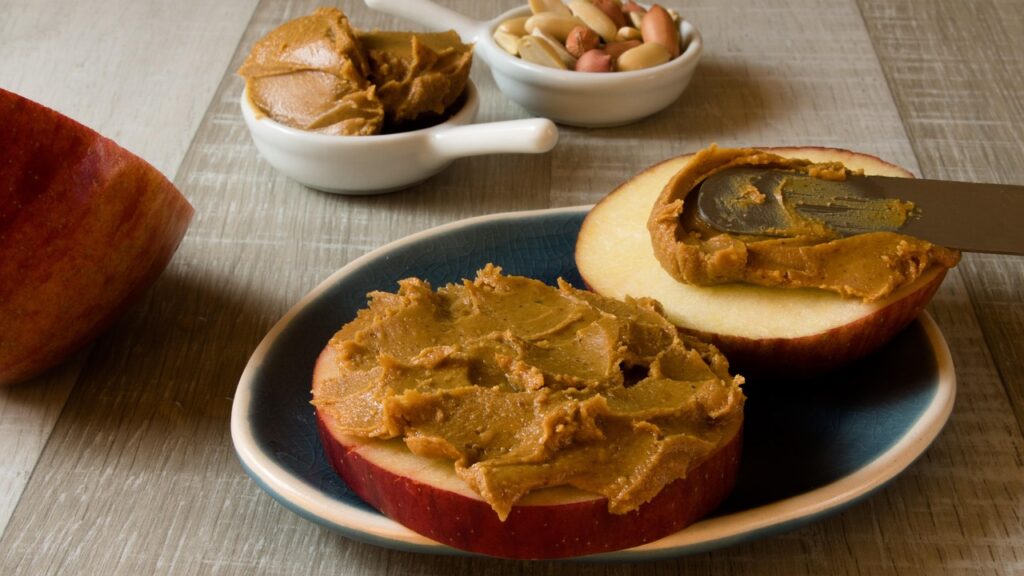
Second, pair fruit with protein or fat. Apple with peanut butter. Berries with Greek yogurt. Peach with cottage cheese. These combos slow digestion and steady blood sugar.
Third, lean on lower-glycemic fruit most of the time. Berries, apples, pears, kiwi, peaches, plums, and citrus are gentle on blood sugar. Melons and tropical fruits are a bit higher on the GI scale. Still fine — just pair them and watch portions.
Fourth, watch the hidden traps. Dried fruit, juice, and fruit canned in syrup concentrate sugar. Whole fruit and unsweetened frozen fruit are your best bets.
Fiber deserves extra credit here. Your body doesn’t digest fiber like other carbs. That’s why many women track net carbs — total carbs minus fiber. An apple’s fiber softens its blood sugar impact either way.
Timing can help, too. Some women feel best when they eat most of their carbs earlier in the day or around exercise — a pattern our carb cycling guide explores. Use that as a personal tweak, not a rule.
What a Fruit-Friendly 130-Gram Day Looks Like
- Breakfast: Greek yogurt with berries and chopped nuts
- Morning snack: A whole apple with peanut butter
- Lunch: Big salad with chicken, avocado, and a small scoop of quinoa
- Afternoon snack: A pear with string cheese
- Dinner: Salmon, roasted vegetables, and a small sweet potato
Three fruit servings, zero half-apples, and still room in the budget. For easier days, our low spoons meals for PCOS help.
What About Keto?
Now, you might be wondering: if moderate low-carb is good, is keto even better? The short answer: for some women, in the short term, maybe. But it’s not necessary. And it’s hard to sustain.
A 2026 meta-analysis of ketogenic diets in PCOS found real short-term benefits. Weight loss. Better insulin resistance. Lower LH, a hormone tied to ovulation. But the researchers flagged high variability between studies and urged caution.
Here’s the kicker. Evidence here is mixed. Some meta-analyses found short-term keto advantages for weight loss — our PCOS weight loss guide explains why. But pooled head-to-head trials comparing keto with standard low-calorie diets found no significant weight difference. Either way, keto is harder to sustain.
If you and your care team choose keto together anyway, that’s a valid option for some women. Just go in knowing the trade-off.
Remember the definition. Keto means under about 50 grams of carbs a day. That genuinely means giving up most fruit. If you love fruit, keto is probably not your path — and the evidence says it doesn’t have to be.
Talking to Your Doctor About Fruit
One more thing before we wrap up. If your care team prescribed low-carb, you don’t have to struggle in silence. You can have a real conversation.
Here’s a script that works. “I want a plan that supports my blood sugar and that I can maintain long-term. I’d love to keep fruit in my diet. Can we talk about moderate low-carb with a focus on low-glycemic choices?”
The 2023 guideline actually encourages this. It calls for “co-developed, realistic and tailored” goals. It also says individual preferences should guide food choices. If you want personalized support, ask about a referral to a dietitian who specializes in PCOS.
Your doctor’s goal — better insulin sensitivity — and your love of fruit are not in conflict.
The Bottom Line
A low carb PCOS approach is one tool — not a life sentence. At 130 grams, you have a moderate budget that leaves real room for fruit. Pair it with protein and fat. Lead with fiber-rich, low-glycemic choices.
You don’t have to choose between managing PCOS and enjoying an apple. The best PCOS diet is the one you can sustain — not the most restrictive one. So have the fruit. Your health — and your happiness — will thank you.