
Is Guacamole Healthy? A Dietitian’s Truth About This Fan-Favorite Dip
Let’s settle this once and for all. Guacamole shows up at every party, on every menu, and in every “healthy eating” conversation — yet women are still genuinely confused about whether it’s a smart food choice or a calorie trap dressed in green. As a dietitian, I hear this question constantly. And my honest answer is: guacamole is healthy — but the full picture is more interesting than a simple yes or no, especially for women navigating hormonal shifts, weight management goals, and long-term health.
Quick Answer: Is Guacamole Actually Healthy?
Yes — guacamole is genuinely healthy. Its star ingredient, avocado, delivers monounsaturated fats that lower LDL cholesterol, fiber that feeds beneficial gut bacteria, folate critical for women’s hormonal and reproductive health, and plant sterols that support hormonal balance. Two to four tablespoons paired with vegetables or whole grain crackers is a nutritionally dense, satisfying snack that works for most women’s health goals. The caveats are real but manageable: watch sodium in store-bought versions, be mindful of portion size, and choose your dippers wisely.
Why “Is Guacamole Healthy” Deserves a Real Answer — Not Just a Hype Reel
Here’s the problem with most guacamole nutrition content out there: it either oversells (“a magical superfood!”) or underdoes it (“it’s just fat, watch your portions”). Neither serves women who are trying to make genuinely informed choices about what they eat. The truth lives in the details — and the details, as I’ll walk you through here, are actually pretty compelling.
Guacamole is fundamentally a whole-food dip. Traditional guacamole contains ripe avocados, lime juice, salt, cilantro, onion, tomato, and sometimes jalapeño. Every single one of those ingredients comes with documented nutritional value. That’s a meaningful distinction from most dips and spreads, which derive their flavor from sodium, sugar, artificial additives, and saturated fat.
Moreover, for women specifically, several of guacamole’s nutrients — folate, healthy fats, plant sterols, vitamin B6, and potassium — address health priorities that are uniquely relevant across different life stages. Whether you’re in your 20s, navigating perimenopause, or managing metabolic health in your 50s, this dip does more work than most people realize. Let me show you exactly what the science says.
Guacamole Nutrition Facts: What You’re Actually Eating
Before anything else, let’s establish what a realistic serving of guacamole actually contains. According to USDA FoodData Central, a standard two-tablespoon (30g) serving of traditional homemade guacamole provides approximately 45 calories, 4 grams of fat (mostly monounsaturated), 2.5 grams of carbohydrates, 1 gram of fiber, and 0.6 grams of protein. Those numbers look modest — and they are, at a standard serving size.
The honest conversation, though, is that most people eat significantly more than two tablespoons in a single sitting. A realistic serving at a restaurant or social gathering is closer to a quarter cup — which brings the numbers to roughly 90 calories, 8 grams of fat, and 3.5 grams of fiber. That’s still entirely reasonable for the nutritional return you’re getting. However, understanding your actual intake matters, especially if you’re tracking macros or managing calorie targets.
Beyond the macro numbers, guacamole delivers meaningful micronutrients per serving — folate, potassium, vitamin K, vitamin E, vitamin B6, magnesium, and lutein. These aren’t trace amounts; they’re nutritionally significant contributions to daily intake, particularly for women whose needs in several of these categories are higher than men’s. This micronutrient density is ultimately what elevates guacamole from “pretty good” to genuinely strategic.
Guacamole Nutrition at a Glance (¼ cup / ~60g serving)
Calories: ~90 | Total Fat: 8g (mostly monounsaturated) | Carbohydrates: 5g | Fiber: 3.5g | Protein: 1.2g | Folate: ~40mcg (10% DV) | Potassium: ~350mg (10% DV) | Vitamin K: ~14mcg (12% DV) | Vitamin B6: ~0.2mg (12% DV). Values will vary slightly based on recipe and avocado ripeness. Store-bought versions may contain significantly more sodium.
Is Guacamole Healthy for Women’s Heart Health? The Fat Conversation You Need
The most persistent myth about guacamole is that its fat content makes it something to limit. Let’s dismantle that. The fat in guacamole is predominantly oleic acid — the same monounsaturated fatty acid that makes olive oil a cornerstone of the Mediterranean diet. This isn’t a neutral fat. It’s an actively beneficial one.
Oleic acid lowers LDL (bad) cholesterol, raises HDL (good) cholesterol, reduces arterial inflammation, and improves blood pressure regulation. These effects are well-documented and clinically meaningful, particularly for women. A large-scale study published in the Journal of the American Heart Association found that women who ate at least two servings of avocado per week had a significantly lower risk of cardiovascular disease compared to those who rarely ate it. The study also found that swapping half a serving of butter, processed meat, or eggs for avocado was associated with lower cardiovascular risk.
For women, this cardiovascular benefit becomes increasingly important after perimenopause, when estrogen’s natural heart-protective effects decline and LDL cholesterol tends to rise. Including guacamole as part of a consistent dietary pattern — rather than as an occasional indulgence — is one practical, enjoyable way to support cardiovascular health during and after this transition. It pairs beautifully with the broader strategy of choosing heart healthy snacks that do real work for your cardiovascular system.
The Hormonal Health Angle Most Guacamole Articles Completely Miss
This is where guacamole’s story gets genuinely interesting for women — and where almost every other nutrition article stops short. Avocados, guacamole’s primary ingredient, contain significant amounts of plant sterols, phytochemicals that interact directly with hormonal pathways in the body. These plant sterols have been shown to influence estrogen metabolism and support hormonal balance, particularly relevant for women in perimenopause and postmenopause.
Additionally, avocados are one of the best food sources of vitamin B6 — a nutrient directly involved in hormone regulation. Vitamin B6 supports progesterone production, reduces the severity of PMS symptoms, and helps the liver metabolize excess estrogen efficiently. For women dealing with hormonal imbalance, this is a meaningful dietary contribution, not a trivial one. If you’re actively working on eating foods that balance hormones naturally, avocado-based guacamole belongs in that conversation.
The healthy fats in avocado also serve as literal building blocks for hormone synthesis. Sex hormones — estrogen, progesterone, testosterone — are produced from cholesterol and fat. A diet chronically low in healthy fats can compromise hormone production, contributing to fatigue, irregular cycles, mood instability, and libido changes. The monounsaturated fats in guacamole provide the raw material the body needs to manufacture hormones appropriately. This is one reason why extremely low-fat diets consistently worsen hormonal symptoms in women — and why including quality fats from whole food sources like guacamole matters.
Guacamole and Gut Health: The Fiber Benefit Women Underestimate
A quarter cup of guacamole delivers about 3.5 grams of fiber — a combination of both soluble and insoluble varieties from the avocado, tomato, and onion components. That’s a meaningful fiber contribution from a dip, and it matters enormously for gut health. Soluble fiber from avocado specifically feeds the beneficial bacteria in your colon, acting as a prebiotic that supports microbiome diversity.
A 12-week clinical trial published in the Journal of Nutrition found that participants who ate avocado daily had significantly higher populations of fiber-fermenting gut bacteria, lower bile acid concentrations, and higher levels of short-chain fatty acids — compounds that reduce gut inflammation and strengthen the intestinal lining. These are precisely the gut health markers associated with better immune function, lower systemic inflammation, and improved nutrient absorption.
For women specifically, gut microbiome health has downstream effects on estrogen metabolism through the estrobolome — the collection of gut bacteria responsible for processing and recirculating estrogen. A healthier gut microbiome means more balanced estrogen metabolism, which has implications for everything from menstrual regularity to menopausal symptom severity. This is one more reason why guacamole’s fiber contribution is worth appreciating beyond just digestion and bloating. If you’re working through an anti-bloat eating reset, the fiber and healthy fat in guacamole can actually support rather than hinder that process when portioned appropriately.
Is Guacamole Healthy for Weight Loss? The Honest Dietitian Answer
This is where I need to be genuinely honest with you, because this question deserves nuance rather than cheerleading. Guacamole is calorie-dense relative to its volume — but that doesn’t make it a weight loss obstacle. Whether it supports or hinders your goals depends entirely on context: how much you eat, what you eat it with, and what it replaces in your diet.
The case for guacamole supporting weight management is real. Its fat and fiber combination produces strong satiety — research consistently shows that meals including avocado reduce appetite and extend the time before hunger returns, compared to equal-calorie meals without avocado. As Harvard Health’s registered dietitian Teresa Fung notes, avocado is genuinely healthy but not a low-calorie food — the strategic move is substitution, not addition. Swap guacamole for sour cream, cream cheese, or butter-based spreads and you’re upgrading your nutritional profile while keeping calories comparable.
For women managing weight loss after 40, guacamole fits well into higher-fat, lower-carbohydrate eating patterns that many women find effective for metabolic health. Its effect on blood sugar is particularly noteworthy: the combination of healthy fat and fiber blunts the glycemic response of carbohydrate foods eaten alongside it — meaning guacamole on a corn tortilla produces a gentler blood sugar spike than the tortilla alone. For women with insulin resistance, this blood sugar stabilization effect has real metabolic value. If you’re dialing in your macros for weight loss, counting guacamole toward your healthy fat allocation rather than treating it as an “extra” makes it easy to include intentionally.
How Much Guacamole Should Women Eat Per Day?
Two to four tablespoons (roughly ¼ cup) is the evidence-backed sweet spot that delivers cardiovascular, hormonal, and gut health benefits without excessive caloric impact. This amounts to roughly half a medium avocado across your daily intake. Women with higher caloric needs, very active lifestyles, or who are eating in an intentionally higher-fat dietary pattern can comfortably eat more. There is no medical reason to avoid guacamole — the key is understanding its calorie density and pairing it thoughtfully.
Folate: The Guacamole Benefit That Matters From Your 20s Through Menopause
Folate is one of the most critical — and most consistently under-consumed — nutrients for women across their entire lifespan. Guacamole is a genuinely good source of it. A quarter cup provides approximately 10% of the daily recommended value, and when guacamole is eaten regularly as part of a folate-rich diet, the contribution becomes meaningful.
For women of reproductive age, folate is essential for DNA synthesis, cell division, and preventing neural tube defects in early pregnancy — often before women even know they’re pregnant. This is why folate adequacy is important well before conception, not just during it. For postmenopausal women, adequate folate intake helps regulate homocysteine levels — elevated homocysteine is an independent cardiovascular risk factor that becomes increasingly relevant as estrogen protection declines.
Beyond reproduction and cardiovascular health, folate supports serotonin and dopamine synthesis — two neurotransmitters that directly affect mood, motivation, and emotional resilience. Women are twice as likely as men to experience depression, and folate deficiency is associated with worsened depressive symptoms and poorer response to antidepressant medication. Getting adequate folate from whole foods like guacamole is one small but meaningful contribution to mental wellbeing alongside other lifestyle factors.
Skin, Hair, and Eye Health: The Beauty Benefits Backed by Real Science
This isn’t the kind of wellness fluff that belongs in a TEOHL article — but in this case, the skin and hair benefits of guacamole’s nutrients are legitimately science-backed, not marketing copy. So let’s talk about them honestly.
Avocado’s vitamin E content is one of the primary reasons skin health benefits are associated with regular consumption. Vitamin E is a fat-soluble antioxidant that protects skin cell membranes from oxidative damage — the kind driven by UV exposure, pollution, and normal metabolic processes. It works synergistically with vitamin C (present in guacamole’s lime and tomato components) to support collagen production and skin elasticity. For women experiencing skin changes related to declining estrogen — thinning, dryness, reduced elasticity — the vitamin E and healthy fat content of avocado provides genuine nutritional support for skin structure from the inside.
Guacamole also contains lutein and zeaxanthin — carotenoid antioxidants best known for protecting eye health and reducing the risk of age-related macular degeneration. Women are at higher risk for macular degeneration than men, partly due to longer lifespan and partly due to hormonal factors. Regular dietary intake of lutein and zeaxanthin from whole food sources is one of the most evidence-backed preventive strategies available. The fact that guacamole delivers these compounds alongside delicious flavor makes it a practical way to support long-term eye health without supplements.
Homemade vs. Store-Bought Guacamole: Which Is Actually Healthier?
This distinction matters more than most people realize, and it’s worth addressing directly. Homemade guacamole made from fresh avocados, lime, salt, cilantro, onion, and tomato is nutritionally excellent. You control the sodium, you’re using fresh whole ingredients, and there are no preservatives, artificial flavors, or stabilizers interfering with the nutritional profile.
Many store-bought guacamoles, however, tell a different story. Some commercial versions contain added sour cream, artificial flavors, preservatives, and sodium levels that push a single serving well past 15–20% of the daily recommended sodium intake. Excessive sodium intake raises blood pressure — a concern that becomes increasingly significant for women post-menopause. The good news is that cleaner store-bought options exist. Look for guacamole with a short, recognizable ingredient list — avocado, lime, salt, onion, cilantro, tomato — and check the sodium content on the label before buying.
Individual portion packs from cleaner brands can be a genuinely practical option for women who want the convenience of pre-made guacamole without the ingredient compromise. Paired with sliced vegetables or lean protein, a single serving pack makes a fast, balanced snack that requires zero preparation.
What to Dip in Guacamole — and What to Avoid
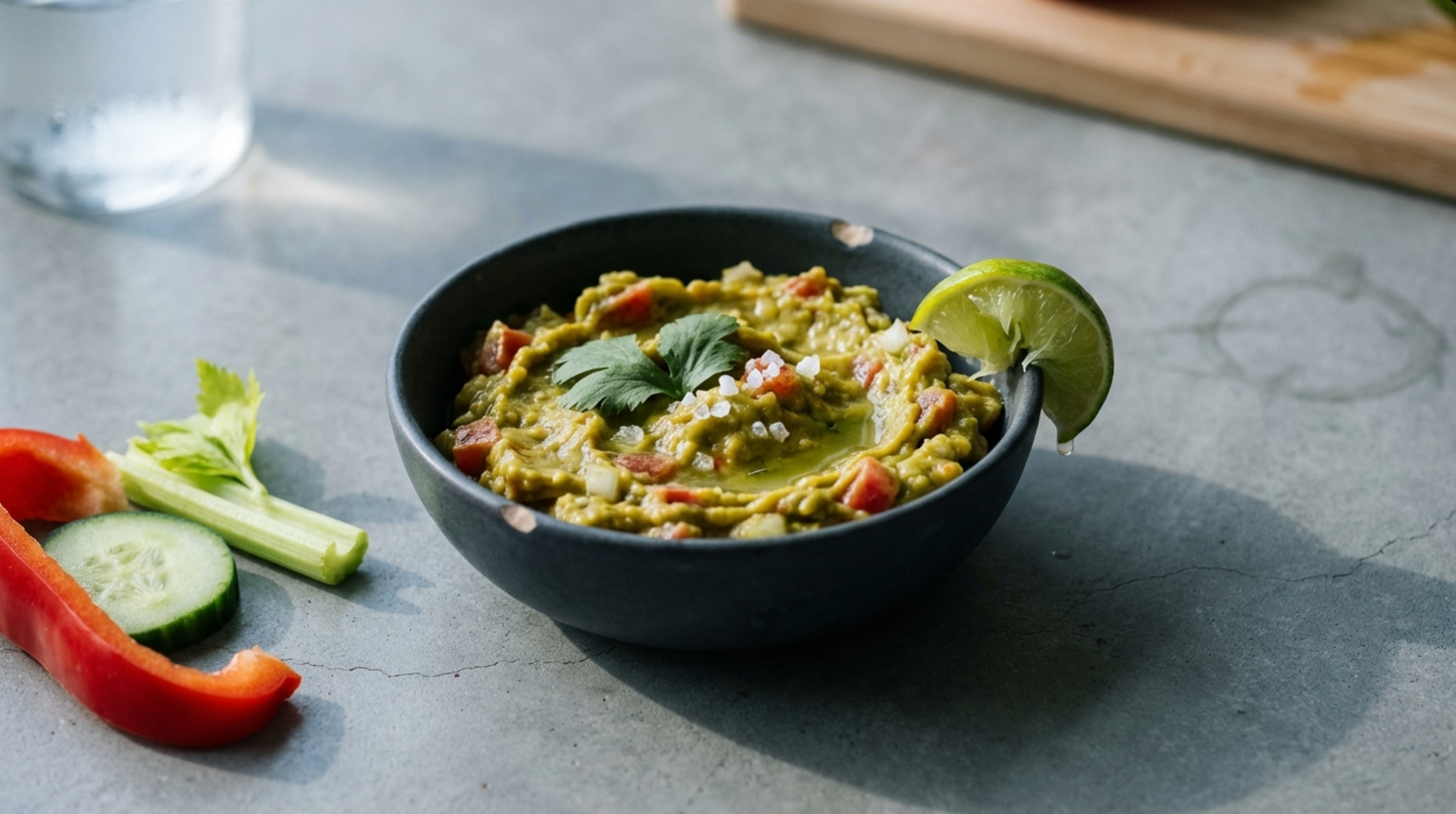
Your dippers matter as much as the guacamole itself. Best choices: raw vegetables (bell peppers, cucumber, carrots, celery, jicama), whole grain crackers, or lightly salted corn tortillas. These add fiber, crunch, and additional nutrients without dramatically increasing calories. Avoid: deep-fried tortilla chips loaded with refined oil and salt, flavored pita chips with long ingredient lists, or processed crackers with added sugars. The chip is often the variable that turns a healthy dip into a high-calorie, high-sodium snack.
Creative Ways to Eat More Guacamole Beyond the Chip Bowl
One of guacamole’s most underused qualities is its versatility as a whole-meal ingredient rather than just a dip. When you move it beyond the chip bowl, you get the full nutritional benefit without defaulting to sodium-heavy fried chips as the delivery vehicle.
Try spreading guacamole on whole grain toast instead of butter or cream cheese — this is one of the simplest, most nutritious breakfast swaps available. Use it as a sandwich spread in place of mayonnaise, where it delivers significantly more nutrition at comparable calories. Stir a spoonful into scrambled eggs for a creamy, filling breakfast that provides healthy fat, fiber, and protein in one pan. Dollop it over a grain bowl, use it as a topping for baked fish or chicken, or thin it with extra lime juice to create a quick salad dressing.
Each of these uses integrates guacamole as a fat and flavor component that displaces less nutritious options — which is exactly the substitution framework that makes avocado consumption genuinely beneficial for health outcomes rather than just additive to an already high-calorie diet.
The One Concern Women With Specific Conditions Should Know
For most women, guacamole is a straightforward nutritional win. However, a few specific situations warrant a more careful approach — and transparency here is important.
Women on blood-thinning medications like warfarin need to be mindful of their vitamin K intake, and avocado is a meaningful source of vitamin K. This doesn’t mean avoiding guacamole — it means eating consistent amounts rather than dramatic swings in intake, so that medication dosing can be calibrated accordingly. Always discuss dietary vitamin K with your prescribing provider if you’re on anticoagulant therapy.
Some women also find that the raw onion and acidic lime juice in traditional guacamole exacerbates digestive sensitivity, particularly those with IBS or acid reflux. If this applies to you, a gentler version — mild avocado mash with just lime, salt, and a little cumin — delivers the core nutritional benefits without the digestive triggers. The avocado itself is the source of virtually all the cardiovascular and hormonal health benefits, so a simplified recipe works just as well nutritionally.
Finally, women with latex allergy should be aware that some individuals with latex sensitivity also react to avocado due to cross-reactive proteins — a phenomenon known as latex-fruit syndrome. If you have a known latex allergy and have never eaten avocado, start with a small amount and monitor for any reaction before eating guacamole regularly.
Frequently Asked Questions: Is Guacamole Healthy?
Is guacamole healthy to eat every day?
Yes — daily guacamole consumption is nutritionally sound for most women when portioned appropriately. The research on avocado consumption consistently shows benefit from regular rather than occasional intake. Two to four tablespoons daily as part of a balanced diet provides meaningful cardiovascular, hormonal, and gut health contributions without excess calories. The key is substitution: replace less nutritious fats rather than simply adding guacamole on top of an already high-calorie diet.
Is guacamole healthier than hummus?
Both are excellent whole-food dips — but they have different nutritional strengths. Hummus provides more protein (about 3–4g per two tablespoons) and comparable fiber, making it slightly more balanced macronutritionally. Guacamole provides superior monounsaturated fat content, more vitamin K, folate, and fat-soluble antioxidants like lutein. For women focused on hormonal health and cardiovascular fat quality, guacamole edges ahead. For women prioritizing protein intake, hummus offers a slight advantage. Ideally, alternate between both.
Is guacamole healthy during pregnancy?
Absolutely yes — guacamole is one of the most pregnancy-supportive whole foods available. Its folate content helps prevent neural tube defects, its potassium supports blood pressure regulation during pregnancy, and its healthy fats aid in fetal brain development. The one caveat: avoid store-bought guacamoles with unpasteurized ingredients or extended shelf life due to listeria risk. Freshly made homemade guacamole is entirely safe and nutritionally excellent throughout pregnancy.
Does guacamole make you gain weight?
Guacamole does not inherently cause weight gain — but portion context matters. Eating guacamole in place of other calorie-dense spreads like mayonnaise, butter, or sour cream is associated with better body composition outcomes in research. Eating guacamole in addition to an already high-calorie diet can contribute to excess caloric intake. The satiety-promoting fat and fiber in guacamole actually makes it harder to overeat than most other high-calorie foods — but unlimited chip-and-guac snacking will still add up. Mindful portioning (¼ cup) with vegetable dippers keeps it firmly in the “supports healthy weight” category.
Is guacamole good for women with PCOS?
Yes — guacamole’s nutritional profile aligns well with the dietary approach most beneficial for PCOS management. Its healthy fats and fiber reduce the glycemic impact of carbohydrate foods eaten alongside it, supporting the blood sugar and insulin stability that is central to PCOS management. Its vitamin B6 supports progesterone production and hormone metabolism. And its anti-inflammatory fatty acids help address the chronic low-grade inflammation that underlies many PCOS symptoms. Including guacamole as a regular fat source in a PCOS-supportive diet is a well-founded strategy.
The Bottom Line: Is Guacamole Healthy for Women?
After looking honestly at the nutrition science — not the wellness hype, not the fear of fat — the answer is a clear yes. Guacamole is one of the most nutritionally dense dips available, and for women specifically, its combination of monounsaturated fats, folate, plant sterols, vitamin B6, fiber, and fat-soluble antioxidants addresses a cluster of health priorities that are genuinely relevant across every stage of life.
The caveats are real and worth respecting: watch sodium in commercial versions, choose your dippers thoughtfully, and understand that guacamole works best as a substitution rather than an addition to your existing diet. Two to four tablespoons eaten with vegetables or whole grain crackers is a nutritionally serious snack, not a guilty pleasure dressed up as healthy.
The next time someone at the table hesitates over the guacamole because “it’s full of fat,” you can tell them — with the evidence behind you — that those fats are doing something genuinely good. And then enjoy your guacamole without a second thought.