

Is Ginger Good for Bloating? Doses, Timing, and Safety
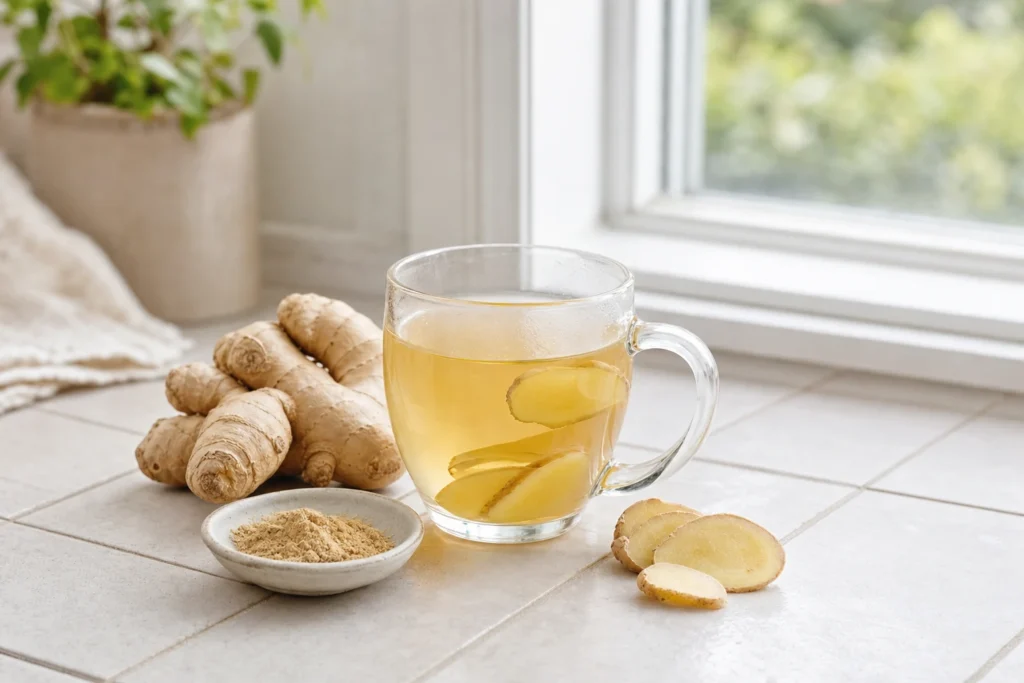
Is ginger good for bloating? Yes, for most women — but the effect is modest and it depends on why your belly feels full. In the clearest trial, 1.2 grams of ginger cut stomach-emptying time from 16.1 minutes to 12.3. That is roughly 24% faster.
Last updated: November 15, 2026
The same trial found no difference in how people felt. That gap — fast mechanics, slower relief — shapes every practical decision below. You get a real dose, a realistic timeline, and four reasons ginger backfires.
Quick Answer: Is Ginger Good for Bloating?
Yes for slow digestion and trapped gas. Use 1 to 1.5 grams of dried ginger a day — about 0.8 of a teaspoon of ground ginger, so a scant teaspoon. Or steep 2 to 3 cm of fresh root in 250 ml of water for 10 minutes. Expect less fullness inside an hour. Expect real change in repeat bloating after 2 to 4 weeks. Go easy, or check with your doctor first, if you have reflux, gallstones, or take warfarin — food and tea amounts are usually fine, concentrated capsules are the ones to discuss.
Is Ginger Good for Bloating? The Direct Answer
Ginger does two things well in the gut. It speeds gastric emptying, which is how fast food leaves the stomach. It also eases nausea, ginger’s best-supported use by a wide margin.
A 2011 randomized trial in the World Journal of Gastroenterology tested this directly. Eleven adults with functional dyspepsia took 1.2 grams of ginger, then a placebo, on separate days. Median half-emptying time fell from 16.1 minutes to 12.3 minutes. Stomach contractions trended upward. Gut symptom scores did not budge.
That last detail matters more than it looks. Fast emptying is real. Feeling better is a separate question.
| What ginger does | Evidence |
|---|---|
| Speeds stomach emptying | Measured in trials, about 24% faster |
| Eases nausea | Strongest evidence of any use |
| Moves trapped gas | Plausible, never directly measured |
| Hormonal or FODMAP bloating | No effect expected |
Two later trials did find symptom relief. One, in 50 adults with functional dyspepsia, gave a standardized ginger extract at 200 mg twice a day (400 mg a day) for four weeks. Complete relief of postprandial fullness, upper abdominal bloating and early satiation reached 64%, against 13% on placebo. The second ran 12 weeks at 480 mg a day in 80 adults. Both were small, and both tested proprietary extracts made by, or with, the companies selling them — not tea, and not the ground spice in your cupboard.
Bloating Ginger Cannot Fix: Gas, Intolerance, and IBS
Several types of bloat barely respond, and knowing them saves you a month of guessing.
Gas from fermentable carbs is the big one. Beans, onions, wheat and sugar alcohols ferment in the colon and produce gas there. Ginger speeds the stomach, not the colon. No trial has measured gas volume directly, so the carminative claim stays plausible rather than proven.
Food intolerance is next. If your body cannot break down lactose, ginger will not fix that. You need to cut the trigger or add an enzyme.
IBS-related bloating comes third. Ginger evidence for IBS is thin and mixed. Peppermint oil, especially enteric-coated capsules, has been studied far more than ginger in IBS and has the better track record for pain and bloating.
If that sounds like your pattern, start with our guide to foods that reduce bloating fast before you buy a bottle of capsules.
How Much Ginger for Bloating Relief: Teaspoons, Grams, and Cups
Dose is the difference between ginger helping and nothing happening. So is ginger good for bloating with a weak tea bag? Probably not.
A systematic review of ginger in gut disorders looked at dose closely. It found that about 1,500 mg a day, split into doses, helps nausea. The same review says plainly that the evidence for complaints like bloating is too thin. For bloating, the two trials that showed relief used 400 to 480 mg a day of a standardized extract.
Kitchen math helps here. One teaspoon of ground ginger weighs 1.8 grams, per USDA FoodData Central. So half to about 0.8 of a teaspoon lands inside the studied range.
| Form | Amount near the trial dose | What to know |
|---|---|---|
| Ground ginger | ½ to 0.8 teaspoon (0.9 to 1.5 g) | Easiest daily measure |
| Fresh root | 10 to 20 g a day, about 2 to 3 cm per cup | Mostly water, so you need more mass |
| Standardized extract | 400 to 480 mg a day | What the symptom trials used |
| Tea bag | Usually below the studied dose | Check the label, many are mostly flavoring |
| Ginger ale, candied ginger | Not a dose | Sugar can add gas |
Stay under 4 grams a day in total. That ceiling comes from a widely cited WHO monograph, not from a trial result. Nobody needs to go near it. Two to three cups of fresh infusion is a sensible daily cap for tea.
How Long Until Ginger Works: Minutes for the Mechanics, Weeks for the Feeling
Two clocks are running here. Mixing them up is why so many women give up after one cup.
The first clock runs in minutes. The 2011 trial dosed ginger one hour before a meal and found the stomach moving faster inside that window. Give a cup about an hour before you decide it failed.
The second clock runs in weeks. Symptom relief in the four-week trial built with daily use. A twelve-week trial at 480 mg a day found gains in indigestion and reflux scores too.
My rule: use it daily for two to four weeks before judging. Then stop for a week and notice whether you miss it.
Is Ginger Bad for Bloating? Four Ways It Backfires
For a minority, ginger makes the problem worse. Each failure mode has a simple workaround.
Reflux comes first. NIH NCCIH lists heartburn among ginger’s real side effects. Researchers think ginger may relax the valve at the top of the stomach. Your bloat fix becomes chest burn. Workaround: halve the strength, drink it with food, and stop after three days if it stings.
Gallstones come second. Some clinicians caution that ginger can affect bile flow, which matters if you have stones. Ask your doctor first if you have known gallstones or a bile duct problem.
Blood thinners come third. Ginger has antiplatelet activity. Food amounts are usually fine. Concentrated capsules deserve a call to your prescriber. Guidance commonly advises stopping ginger supplements about two weeks before elective surgery.
Sugar is fourth, and this one is a trap. Commercial ginger ale and candied ginger carry fermentable sugar that feeds gas. You get the ginger and the bloat together. Swap the sweet drink and watch what happens. That swap alone often explains the relief people credit to ginger.
Nutrient Table: Fresh Versus Ground Ginger
Ginger is a spice, not a multivitamin. The numbers still matter, because the forms differ a lot.
| Form and serving | Fiber | Potassium | Manganese |
|---|---|---|---|
| Fresh root, ¼ cup slices (24 g) | 0.48 g | 99.6 mg | 0.055 mg |
| Fresh root, 1 tsp grated (2 g) | 0.04 g | 8.3 mg | 0.005 mg |
| Ground ginger, 1 tsp (1.8 g) | 0.25 g | 23.8 mg | 0.6 mg |
Values are calculated from USDA FoodData Central raw ginger root and the ground ginger record. One teaspoon of the ground spice supplies about 0.6 mg of manganese. That is roughly a quarter of the 2.3 mg daily value. That is a lot for a spice.
There is no USDA record for brewed tea. Gingerol and shogaol levels depend on root mass, cut size, water heat and steep time. Treat exact milligram claims on a tea label with suspicion.
How to Make a Cup With Enough Ginger to Matter
Most supermarket tea bags are why ginger seems to do nothing. Make this version instead.
Peel and slice a 2 to 3 cm piece of fresh root, about 5 to 7 grams. Thin coins release more than thick chunks. Pour 250 ml of just-boiled water over them and cover the cup. A saucer keeps the fragrant oils in.
Steep 10 minutes, then sip it warm. Skip honey the first time so you can judge the ginger itself. Drink two to three cups a day. Trials dosed before eating, while most people prefer it after a meal. That after-meal timing is practical judgment, not a tested protocol.
For a stronger pairing, add a teaspoon of lightly crushed fennel seed. Both are traditional gas remedies and neither adds sugar. Want a spiced version of the same root? Our guide to ginger and cinnamon tea benefits takes it further. Not a fan of the flavor? This guide to anti-bloating teas for fast relief covers peppermint, fennel and chamomile.
Ginger Benefits for Cold: What the Evidence Says
Ginger will not shorten a cold. No human trial has shown that it prevents or treats a respiratory infection.
So why does the tea help when you are sick? Warm liquid soothes a raw throat. Ginger’s best skill, settling nausea, also helps with postnasal drip. That is comfort, not cure.
NCCIH lists nausea, menstrual cramps and knee osteoarthritis as the studied uses. Colds are not on that list. Use the infusion above, with lemon and a little honey if you like. Two cups is plenty when you are unwell.
Ginger for Women’s Health: Cramps, Nausea, and Period Bloating
Three separate questions hide inside that one phrase. The evidence is uneven across all three.
Period pain has the best data. A Cochrane review pooled three trials covering 266 women. Ginger cut pain by 1.55 points on a 10-point scale versus placebo. The authors rated all of that evidence low or very low quality.
A 2024 meta-analysis found ginger clearly beat placebo for period pain, and performed about the same as NSAIDs such as ibuprofen. Encouraging, with two caveats. The trials were small, and side effects were barely reported.
Pregnancy nausea is where ginger shines. An umbrella review of 18 reviews found doses of 450 to 1,950 mg a day helped. Relief was comparable to vitamin B6. Pregnant readers should still clear any supplement with their clinician.
Period bloating is the weak spot, and I will not pretend otherwise. No trial has measured bloating as an outcome in menstrual research. Warmth may soothe, but hormone-driven fluid shifts still cause the swelling. For that pattern, our guide to foods that help period bloating is more useful than a stronger cup of tea.
Is Ginger Good for You? The Everyday Verdict
Yes, at kitchen doses, for almost everyone. Ginger is a whole food with real potassium and manganese, and it costs pennies per serving.
It is not a weight loss aid. Small studies show minor shifts in appetite markers. None show pounds lost from ginger alone.
Three simple ways to use it every day:
- Grate a teaspoon into a stir-fry or a soup.
- Simmer two slices in broth for a savory dose.
- Steep a 250 ml cup after dinner, no sweetener.
Daily beats occasional if bloating is your target. The four-week trials used steady daily doses, not one heroic cup.
Who Should Be Careful With Ginger
- Reflux or GERD: start weak, take it with food, stop if it burns.
- Gallstones or bile duct problems: ask your doctor first.
- Warfarin, aspirin, clopidogrel: food amounts are usually fine, capsules need a conversation, and stop two weeks before surgery.
- Any prescription medicine: check with your provider before herbal products.
- Pregnancy and breastfeeding: nausea doses are well studied, but confirm with your clinician. Little is known about breastfeeding.
- Burning, loose stools or mouth irritation: these are documented side effects, so cut the dose.
Standard clinical advice flags bloating that comes with weight loss, blood in the stool, repeated vomiting, fever, or pain that wakes you. Bloating that never settles deserves a workup, not another cup.
How we researched this
We reviewed 9 sources, including government health agencies, randomized controlled trials, systematic reviews, and meta-analyses.
- Ginger: Usefulness and Safety — government health agencies, 2025
- Effect of ginger on gastric motility and symptoms of functional dyspepsia — randomized controlled trials, 2011
- A Randomized, Double-Blind, Placebo Controlled, Parallel-Group, Comparative Clinical Study to Evaluate the Efficacy and Safety of OLNP-06 versus Placebo in Subjects with Functional Dyspepsia — randomized controlled trials, 2022, 50 adults
- Efficacy and safety of steamed ginger extract for gastric health: a randomized, double-blind, placebo-controlled multi-center clinical trial — randomized controlled trials, 2025, 80 adults
- Ginger on Human Health: A Comprehensive Systematic Review of 109 Randomized Controlled Trials — systematic reviews, 2020, 109 trials
This article is for general information and is not a substitute for advice from your doctor or dietitian.
Frequently Asked Questions About Ginger and Bloating
Is ginger good for bloating and gas?
Partly. Ginger counts as a carminative, meaning it may help move trapped gas along. No trial has measured gas volume directly, though. Use it for the pressure and fullness after meals, and treat the gas claim as plausible rather than proven.
Is ginger good for bloating and constipation?
Only indirectly. Ginger speeds the stomach, not the colon. If constipation is driving the bloat, a cup of tea is not the answer — you need fluid, fiber and movement. Our guide to chia seeds for constipation is a better starting point than another cup.
Is ginger bad for bloating?
For some women, yes. Reflux, gallstones, blood thinners and sugary ginger drinks are the four trouble spots. If heartburn shows up within about 30 minutes of a cup, use a weaker brew with food or stop entirely.
How much ginger should I take daily?
About 1 to 1.5 grams of dried ginger, or 10 to 20 grams of fresh root. That is roughly half to 0.8 of a teaspoon of ground spice, so a scant teaspoon. Keep the total under 4 grams a day and split it across two servings.
Does ginger help IBS bloating?
Less than you would hope. Trials of ginger in IBS are small and mixed. Peppermint oil has been much better studied in IBS than ginger, particularly for pain and bloating. Ginger fits post-meal fullness and nausea better than an IBS flare.
Is ginger ale good for bloating?
No. Commercial ginger ale is mostly sugar and fizzy water, with very little real root. The sugar ferments and can add gas. If you want the drink, make a fresh infusion and leave out the sweetener.
Can I drink ginger tea with my blood thinner?
Ask your prescriber first. Ginger has antiplatelet activity, so capsules at gram doses matter more than one cup of tea. Guidance commonly advises stopping ginger supplements about two weeks before elective surgery.
Does ginger help with weight loss?
Not meaningfully. Small studies show slight changes in appetite markers. No trial shows noticeable pounds lost from ginger alone. Use it for digestion and flavor, not as a slimming aid.
The Bottom Line
So is ginger good for bloating? Yes, modestly, and mostly for the heaviness that follows a slow meal. About 0.8 of a teaspoon of ground ginger or a properly steeped cup, taken daily for two to four weeks, is a fair test. Go easy on it with reflux, gallstones and blood thinners. Skip the ginger ale, and give it time before you decide.