

6 Hydrating Foods for Blood Sugar, Dietitian-Approved
Key Takeaways
- Food provides about 20% of the water you need each day. Water-rich foods also bring fiber and protein that steady blood sugar.
- Your kidneys filter excess sugar from your blood. They need fluids to do that job well.
- Whole fruit is not the enemy. Pair it with protein or healthy fat to slow digestion.
- Plain Greek yogurt is a hydration and protein standout. The FDA permits a qualified health claim linking regular yogurt intake and lower type 2 diabetes risk (limited evidence).
- Safety first: grapefruit can interact with some medications. Check with your pharmacist.
Picture this: it’s mid-afternoon, your energy has flatlined, and you realize you’ve barely had a glass of water since breakfast. You reach for a snack to wake up. But here’s the thing — hydration and blood sugar are deeply connected. Most of us overlook a simple tool: hydrating foods for blood sugar. These water-rich foods, from cucumbers to yogurt, count toward your daily fluids. They also deliver fiber and nutrients that help keep glucose steady.
It’s a two-for-one strategy that dietitians say most women miss. In this guide, you’ll learn why hydration matters for blood sugar, which foods earn their spot, and how to use them today.
Quick Answer: Can food help with hydration and blood sugar at the same time?
Yes — and the evidence is growing. Your kidneys need water to filter excess sugar from your blood. Hydrating foods for blood sugar — think cucumbers, apples, and Greek yogurt — supply fluids plus fiber and protein that slow digestion. Food provides about 20% of your daily water needs. For the steadiest response, pair any fruit with protein or healthy fat.
Why Hydrating Foods for Blood Sugar Are a Two-for-One Win
Let’s start with a part of the story most articles skip: your kidneys. These two organs filter your blood and pull excess sugar out through urine. When blood sugar runs high, your body sends more sugar to the kidneys. More fluid is lost as a result. If you don’t replace it, your kidneys have to work harder.
The research connects the dots. One study followed 3,615 adults for nine years. It found a link between lower water intake and a higher risk of developing hyperglycemia. That’s the medical term for high blood sugar. People who drank about 0.5 to 1 liter of water daily had a roughly 32% lower risk. That’s compared with people who drank less. This kind of study can’t prove cause and effect. Still, the pattern is consistent.
Another study tested the idea directly. Nine adults with type 2 diabetes spent three days with low water intake. Their blood sugar responses to a glucose drink were worse than when they were well hydrated. It’s a small study — just nine men. But it’s direct human evidence that a few days of low water intake can impair glucose regulation.
What’s happening inside your body? When you’re low on water, you release a hormone called vasopressin. It tells your kidneys to hold onto fluid. But high vasopressin levels are also linked to higher blood sugar and a greater risk of type 2 diabetes. That’s where hydrating foods for blood sugar shine. They deliver fluids plus the fiber and protein that slow digestion. The emerging science connecting hydration and metabolic health keeps pointing the same way.
How Much of Your Daily Water Actually Comes From Food?
Here’s a number that surprises most people: food provides about 20% of the water you need each day. Many fruits and vegetables are 85% to 95% water by weight. A snack of cucumber, or a cup of watermelon, genuinely counts toward your daily fluids. Hydrating foods for blood sugar are one of the easiest ways to put that 20% to work.
The Mayo Clinic puts total daily fluid needs at about 11.5 cups (2.7 liters) to 15.5 cups (3.7 liters). That’s for average healthy adults. It includes water, tea, coffee, milk — and food. The “eight glasses a day” rule is a fine starting point, not a universal law. Needs rise with heat, exercise, and pregnancy.
How do you know if you’re on track? Check two clues: thirst and urine color. If you rarely feel thirsty, and your urine is light yellow, you’re likely doing fine. Dark urine, headaches, and low energy are early signs you need more fluids.
One honest note: food water helps you top up, but it doesn’t replace drinking water when you’re truly thirsty. Think of water-rich foods as a bonus layer. They work alongside the glass on your desk, not instead of it.
The 6 Hydrating Foods for Blood Sugar Worth Reaching For
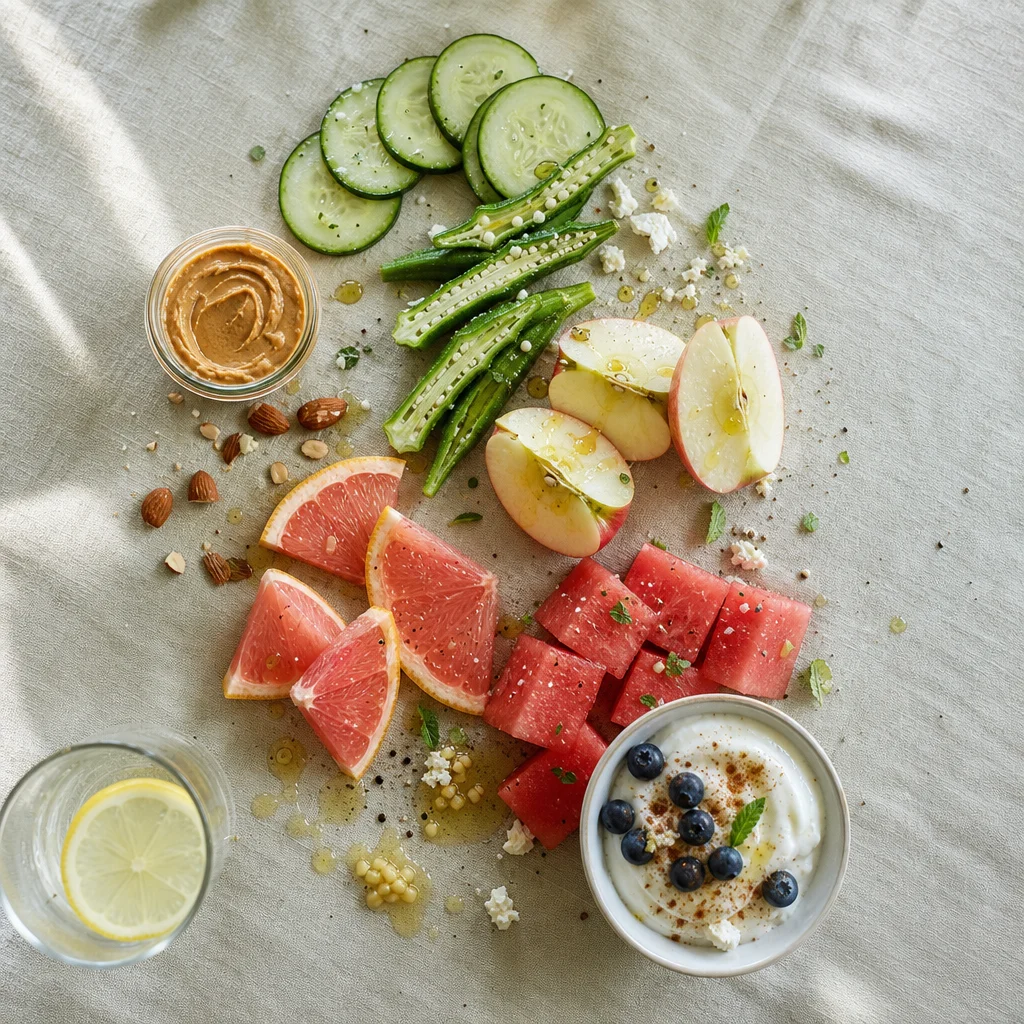
These six hydrating foods for blood sugar show up again and again in dietitian guidance. They share a pattern worth copying: high water content, plus fiber or protein that slows digestion. Here’s the lineup.
| Food | Water | What it brings | Best pairing |
|---|---|---|---|
| Cucumbers (1 cup) | ~95% | 4g carbs, a little fiber | Hummus or tzatziki |
| Okra (1 cup cooked) | ~93% | 4g fiber, 7g carbs, magnesium | Roasted with lemon and garlic |
| Apple (1 medium) | ~85% | 4g fiber, pectin in the skin | Peanut butter or almonds |
| Grapefruit (half) | ~90% | Potassium and fiber | Walnuts or plain yogurt |
| Watermelon (1 cup) | ~91% | 11g carbs, vitamin C | Feta, almonds, or cheese |
| Plain Greek yogurt (5.6 oz) | ~80% | 16g protein, 6g carbs | Berries and cinnamon |
Cucumbers — the easiest add
Cucumbers top nearly every list of hydrating foods for blood sugar, and for good reason. They’re almost 95% water. One cup has only about 4 grams of carbs, making them a gentle choice for glucose. The skin adds a little fiber that slows sugar absorption. Add slices to your lunch, or dip them in hummus for protein and healthy fat.
Okra — the sleeper pick
Okra tends to fly under the radar in most kitchens. But it’s quietly one of the most useful vegetables for hydration and steady glucose. It’s about 93% water. One cooked cup delivers 4 grams of fiber and just 7 grams of carbs. That gel-like fiber slows how fast sugar enters your blood. In a clinical trial on okra and blood sugar in type 2 diabetes, 120 adults took okra capsules for 8 weeks. They took them alongside their usual medication. Fasting blood sugar and HbA1c (a long-term blood sugar marker) dropped more than with placebo. One caveat: that was a supplement, not a dinner portion. Enjoy okra as a vegetable, and never use it to replace medical treatment. Roast it with olive oil, lemon, and garlic. Or add sliced okra to a tomato-based stew. For more, see our high-fiber snacks for better blood sugar.
Apples — the pre-meal trick
Apples are about 85% water. A medium apple carries 4 grams of fiber, and much of it lives in the skin — so eat the peel. That fiber slows the release of the apple’s natural sugars. You get steady energy instead of a spike. One small study found that eating an apple before a high-carb meal lowered the glucose peak. That benefit showed up in people with higher-than-normal blood sugar. Promising, though not conclusive. Another showed apples worked even when people ate 30% more carbs than usual. Keep it to one medium apple. Pair it with peanut butter or almonds for staying power.
Grapefruit — with one important check
Grapefruit is about 90% water. It’s also rich in potassium, an electrolyte that supports fluid balance. Its fiber slows sugar absorption for steadier energy. A small study linking grapefruit and improved insulin response showed modest benefits. It was one small, older trial, though. Treat that as preliminary, not proven.
Before you make grapefruit a daily habit
Check your medicine cabinet first. The FDA warns that grapefruit can change how your body absorbs certain drugs. That includes some statins, blood pressure medications, and antihistamines. Ask your pharmacist or doctor if grapefruit is safe for you.
Watermelon — enjoy it without the guilt
Watermelon lives up to its name at 91% water. One cup has about 11 grams of carbs, which fits easily into a balanced blood sugar plan. You may have heard that citrulline — a compound in watermelon — helps blood sugar. The honest answer? The evidence is mixed. What the research really says about watermelon and blood sugar is mixed. Some studies show benefits. Recent human trials found no change in glucose. So enjoy watermelon for what it is: a hydrating, satisfying treat. Pair a cup with feta, almonds, or cheese to balance the carbs.
Plain Greek yogurt — the protein powerhouse
Plain Greek yogurt is roughly 80% water. A 5.6-ounce container delivers about 16 grams of protein and just 6 grams of carbs. Protein slows digestion, which steadies blood sugar after meals. In 2024, the FDA announced a qualified health claim linking regular yogurt intake and lower type 2 diabetes risk. Eating at least 2 cups — about 3 servings — per week may reduce your risk. The evidence is limited, but it’s official. One rule matters: choose plain, unsweetened. Flavored yogurts often hide added sugar. No dairy? Unsweetened soy or coconut yogurt works. Just add nuts or seeds for protein.
What About the Sugar in Fruit?
This is the most common question I hear, and it deserves a straight answer. Whole fruit is not the problem. Fruit juice and added sugar are.
Here’s why. Whole fruit comes wrapped in fiber. Fiber slows how fast sugar enters your bloodstream. That makes whole fruit one of the best hydrating foods for blood sugar — water and fiber in one package. An umbrella review of diet and type 2 diabetes risk synthesized 60 systematic reviews and meta-analyses. Fiber, yogurt, and magnesium all stood out as protective. Sugary drinks raised the risk.
So when you crave something sweet, choose the fruit — not the juice. Juice strips away the fiber and delivers a fast sugar hit. Whole fruit hydrates you, fills you up, and gives blood sugar a slower, gentler ride.
Use the pairing formula: fruit plus protein or fat equals steadier glucose. Apple plus peanut butter. Watermelon plus feta. Grapefruit plus walnuts. Small habit, real payoff.
Your Same-Day Plan: Turn These Foods into Meals
Here’s how to use these hydrating foods for blood sugar in one real day. No fancy recipes. Just smart combinations.
- Breakfast: Plain Greek yogurt with berries, cinnamon, and walnuts. Protein, fiber, and probiotics in one bowl. Prefer a smoothie? Our blood sugar smoothie formula works, too.
- Mid-morning: One apple with 1 to 2 tablespoons of peanut butter. The apple-first trick, working for you.
- Lunch: A big cucumber salad with tomatoes, chickpeas, feta, and olive oil. Hydrating vegetables plus plant protein.
- Afternoon snack: One cup of watermelon cubes with almonds or a cheese stick. Fruit plus protein and fat.
- Dinner: Roasted salmon with lemon-garlic okra. Add a grapefruit-walnut salad if your meds allow grapefruit.
See the pattern? Every combo pairs hydrating foods for blood sugar with protein or healthy fat. It hydrates you. It satisfies you. And it keeps blood sugar steady. That’s the whole game.
Safety Notes to Keep in Mind
Hydrating foods for blood sugar are safe choices for most people. Still, a few cautions are worth your attention.
- Grapefruit and medication: If you take prescription drugs, confirm with your pharmacist before eating grapefruit regularly.
- Keep yogurt plain: Flavored yogurt is a hidden source of added sugar. Look for “no sugar added” on the label.
- Water needs vary: Some health conditions, like kidney disease or heart failure, require fluid limits. Ask your clinician what’s right for you.
- Food is not medicine: These foods support blood sugar, but they don’t replace diabetes medication or medical care. Always follow your care team’s advice.
Frequently Asked Questions
Can hydrating foods replace drinking water?
Not entirely. Food provides about 20% of your daily water needs. The rest should come from beverages. Drink water when you’re thirsty, and let water-rich foods top you up between glasses.
Can I eat watermelon if I’m watching my blood sugar?
Yes. One cup has about 11 grams of carbs, which fits a balanced plan. Pair it with protein or fat — almonds, cheese, or feta all work. Keep the portion to about a cup.
Can I eat grapefruit with my medication?
Maybe not. Grapefruit can interact with certain statins, blood pressure drugs, and antihistamines. The FDA has clear guidance on this. Check with your pharmacist or doctor first.
The Bottom Line
Here’s the takeaway. Hydrating foods for blood sugar are one of the simplest levers you can pull. They support steadier energy and better daily health. They hydrate you, nourish you, and help keep glucose in check — all at once. Start with one change this week. Add cucumber to your lunch. Swap flavored yogurt for plain. Small choices, made daily, add up to real results.