

High-Volume Foods for Weight Loss: Eat More, Weigh Less
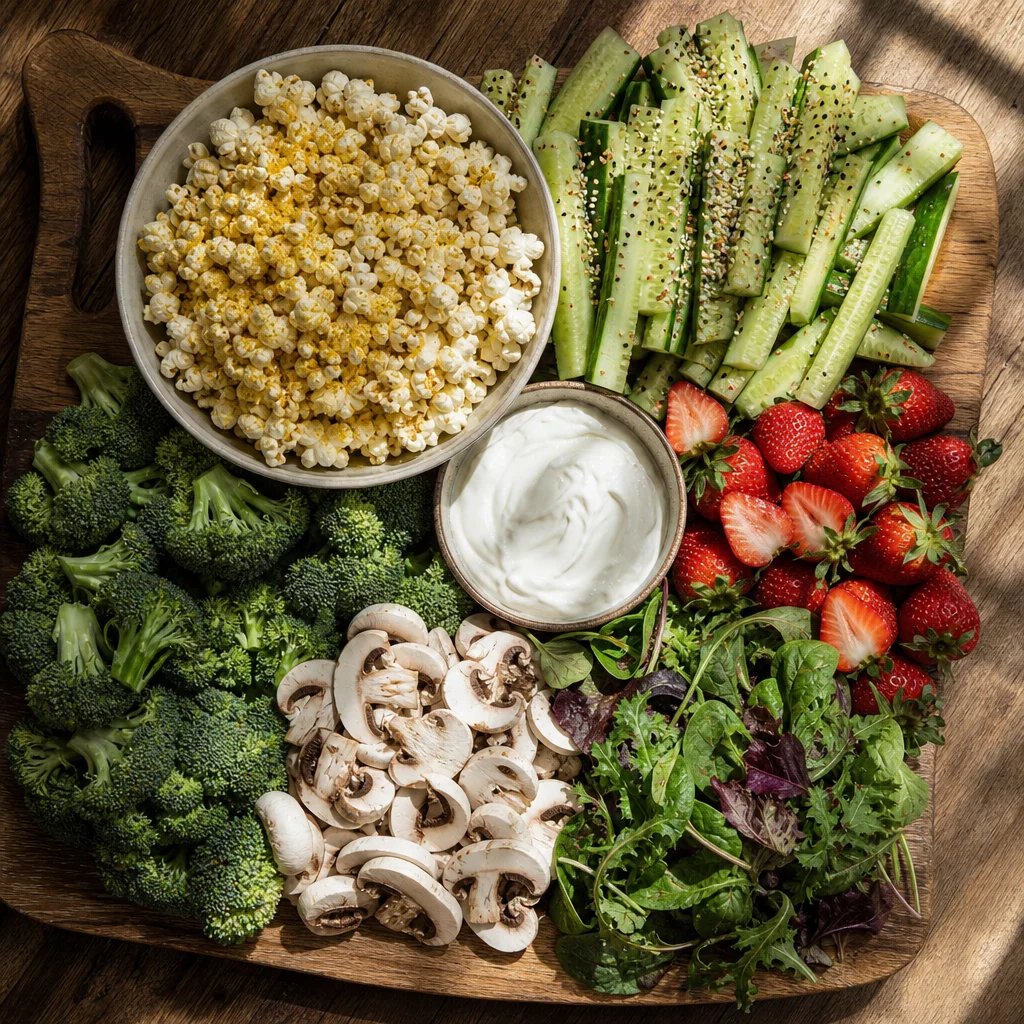
Imagine eating more food — bigger portions, fuller plates — and still reaching your health goals. Sounds too good to be true, right? Well, that’s the science-backed premise behind high volume foods. These are foods that let you eat satisfying amounts while keeping your calorie intake in check. It’s not a fad. It’s a strategy backed by decades of research from Penn State’s Dr. Barbara Rolls and confirmed by the Mayo Clinic and the CDC. In this guide, we’ll explore what makes a food high-volume, which ones deserve a spot in your kitchen, and how to build satisfying meals around them — without the deprivation.
Key Takeaways
- High volume foods are low in calorie density (calories per gram) but high in water and fiber, so you can eat more and feel full on fewer calories.
- Best choices include fruits, non-starchy vegetables, broth-based soups, and air-popped popcorn.
- Use the simple plate method: fill half with vegetables, a quarter with whole grains, and a quarter with lean protein.
- Don’t skip healthy fats and protein — they’re essential for satisfaction and nutrient absorption, even though they’re calorie-dense.
Quick Answer: What Are High Volume Foods?
High volume foods are foods with low energy density — think lots of water, fiber, and air, but not many calories per gram. Common examples include cucumbers (15 calories per cup), strawberries (49 calories per cup), air-popped popcorn (31 calories per cup), leafy greens, broccoli, mushrooms, and broth-based soups. These foods allow you to eat a large, visually satisfying portion for very few calories, which helps you feel full without going over your energy needs.
What Are High Volume Foods, Really?
Here’s the thing. The volume of a food comes down to how much water, fiber, and air it contains versus how many calories it packs. Foods that are high in water and fiber take up more space in your stomach. They also slow down digestion, which sends stronger signals to your brain that you’re full.
The Mayo Clinic explains that three main factors determine energy density: water, fiber, and fat. Water and fiber lower it. Fat raises it. So an apple (high water and fiber) has very low energy density. A handful of nuts (high fat) has high energy density. Both are healthy — you just eat them differently.
A landmark clinical review published in The Medical Clinics of North America found that reducing energy density is effective for both weight loss and long-term weight maintenance. The beauty of this approach? It works across any eating style — Mediterranean, plant-based, or your own mix.
The Best High Volume Foods for Snacking
Let’s start with what you can grab between meals. These are the snacks that let you munch without worry.
Air-popped popcorn. Three cups clock in at under 100 calories. It’s a whole grain with fiber and crunch. Spritz with a little olive oil and sprinkle with herbs or nutritional yeast for flavor.
Cucumbers. Just 15 calories per cup. Cut them into spears, season with everything-bagel seasoning, and pair with hummus or Greek yogurt. You can even use cucumber rounds as a crunchy base for toppings instead of bread.
Strawberries. Only 49 calories per cup and packed with vitamin C and fiber. Toss them into overnight oats, slice them onto a salad, or freeze them for a sweet, cold treat.
Grapefruit. Half a grapefruit has about 52 calories and delivers roughly 2 grams of fiber. Pair it with cottage cheese or a hard-boiled egg for a balanced mini-meal.
Meal-Building High-Volume Picks
These foods shine when you build meals around them. They add bulk, texture, and nutrients without piling on calories.
Broccoli. One cup of raw broccoli has just 31 calories plus fiber and plant compounds linked to lower inflammation. Broccoli works beautifully roasted, quickly steamed, or pulsed into rice-sized pieces for stir-fries.
Mushrooms. White mushrooms are 15 calories per cup raw. They’re rich in B vitamins and beta-glucan, a compound that helps reduce inflammation — similar to the benefits found in anti-inflammatory foods dietitians recommend. Use portobello caps as burger buns or pizza bases. Slice them into stir-fries or omelets for extra bulk.
Leafy greens. Spinach, kale, arugula, and bok choy are nutritional powerhouses. A whole cup of kale has just 7 calories while delivering 68 percent of your daily vitamin K and 20 percent of your vitamin C. You can pile your plate high for almost no calories. Enjoy them raw, saut�ed, or baked into crispy chips.
Soup and Salad Foundation Foods
Research from Penn State shows that starting a meal with a low-energy-density soup or salad can reduce total calories consumed during that meal. It’s one of the most practical evidence-based strategies available.
Broth-based soups. Chicken, vegetable, or tomato — choose clear broths over creamy ones. The liquid adds volume and helps trigger fullness signals in your brain.
Big salads. Use a mix of leafy greens as your base, load up with cucumber, bell peppers, tomatoes, and shredded carrots. Add a lean protein like grilled chicken, chickpeas, or tofu. Keep dressing to one to two tablespoons — oil-based dressings add calories fast.
How to Build a High-Volume Plate
Here’s the simplest way to start, recommended by registered dietitians at the Cleveland Clinic: Fill half your plate with vegetables. Fill a quarter with whole grains like quinoa or brown rice. Fill the remaining quarter with lean protein such as chicken, fish, tofu, or beans.
This plate automatically tilts toward high-volume eating. No counting required. It works for lunch, dinner, and even breakfast if you swap in veggie scrambles and fruit.
Try This: The Starter Swap
Instead of 1 cup of white rice (about 200 calories), use 1 cup of riced cauliflower (about 25 calories). You save 175 calories while eating the same volume. That’s the power of the swap.
A Full Day of Volume-Focused Eating
Let’s make this real. Here is what a high-volume day might look like.
Breakfast: A veggie scramble with 2 eggs (or ½ cup tofu), 2 cups of spinach, ½ cup of mushrooms, and ½ cup of bell peppers, plus ½ grapefruit on the side. Total volume is large. Calories are around 300.
Lunch: A big salad with 3 cups of mixed greens, 1 cup of chopped cucumber, ½ cup of cherry tomatoes, 4 ounces of grilled chicken, and 1 tablespoon of vinaigrette. Plus a cup of broth-based vegetable soup as a starter. Around 400 calories.
Snack: 3 cups of air-popped popcorn with nutritional yeast plus 1 cup of sliced strawberries. About 180 calories.
Dinner: Stir-fry with 2 cups of broccoli, 1 cup of snap peas, 4 ounces of shrimp or tofu, and ½ cup of quinoa, all tossed in a light ginger-soy sauce. About 450 calories.
Total for the day: roughly 1,330 calories with generous, satisfying portions at every meal. You eat a lot of food — and you feel it.
What About Healthy Fats?
This is the big question that most articles skip or oversimplify. In the formal Volumetrics system, nuts, seeds, avocados, and oils land in the highest calorie-density category, right alongside candy and chips. Many dietitians push back on this.
Here’s the honest take. Nuts and seeds are calorie-dense — yes. But they’re also nutrient-dense. They provide healthy fats, protein, and fiber that support heart health and keep you satisfied. The answer is not to avoid them. It’s to be mindful of portions.
Aim for about one ounce of nuts (a small handful) or one to two tablespoons of oil per meal. Don’t let the category system scare you away from foods that are genuinely good for you. The goal is balance, not perfection.
Practical Tips for Starting
If you want to try high-volume eating, start slow. Increasing fiber too fast can cause bloating and gas. Give your gut a week or two to adjust.
Drink plenty of water. Fiber pulls water into your digestive tract, so you need extra fluids to keep things moving smoothly.
Don’t forget protein. Many high-volume foods are naturally low in protein. Pair your vegetables with eggs, chicken, fish, tofu, beans, or lentils to keep your meals balanced and satisfying.
Use frozen vegetables. They’re just as nutritious as fresh, often cheaper, and always ready when you need them. Stock your freezer with broccoli, spinach, cauliflower rice, and mixed vegetables — these are some of the best frozen foods for gut health recommended by dietitians.
Frequently Asked Questions
Will I lose weight eating high-volume foods?
Many people do, because replacing calorie-dense foods with high-volume options naturally reduces your total calorie intake while keeping you satisfied. Clinical research confirms that reducing energy density is effective for both weight loss and weight maintenance. Results vary by person, so give it a few weeks and see how your body responds.
Do I need to count calories?
Not necessarily. Many people succeed with the simple plate method — half vegetables, quarter whole grains, quarter lean protein. If you want more precision, you can look up energy density values, but it’s not required. The core principle is what matters: prioritize foods with more water, fiber, and volume per calorie.
Can I eat high-volume foods if I have IBS or digestive issues?
Some high-volume foods are high in fiber, which can trigger symptoms in sensitive individuals. Start with well-cooked vegetables (like steamed zucchini or carrots) instead of raw ones. Introduce high-fiber foods gradually over two to three weeks. If symptoms persist, consult a dietitian or gastroenterologist for personalized guidance.
Is this the same as the Volumetrics diet?
The principle is the same — both prioritize low-energy-density foods. The Volumetrics diet is a specific program with a four-category system and calorie targets. High-volume eating is the broader, more flexible approach. You don’t need to follow a structured diet. You just need to shift your eating toward foods that give you more volume for fewer calories.
The Bottom Line
High volume foods are one of the most practical, evidence-based tools for sustainable weight management. They let you eat satisfying portions, feel full, and nourish your body — all without the deprivation that derails so many well-intentioned efforts. Start with the simple plate method. Experiment with the foods that appeal to you. And remember, the goal isn’t perfection. It’s progress.
Your body knows how to eat when you give it the right signals. Trust the volume. Enjoy the satisfaction.