High Protein Pasta Salad with Lemon, Chickpeas & Zucchini
Key Takeaways
- This high protein pasta salad delivers over 20 g of plant-based protein per serving — perfect for a light but satisfying summer meal.
- Whole-wheat pasta and chickpeas add fiber that keeps you full and supports steady energy.
- It stays fresh in the fridge for up to 5 days, making it ideal for weekly meal prep.
- Two easy variations — grilled chicken or vegan tahini-lemon — let you customize without missing the protein target.
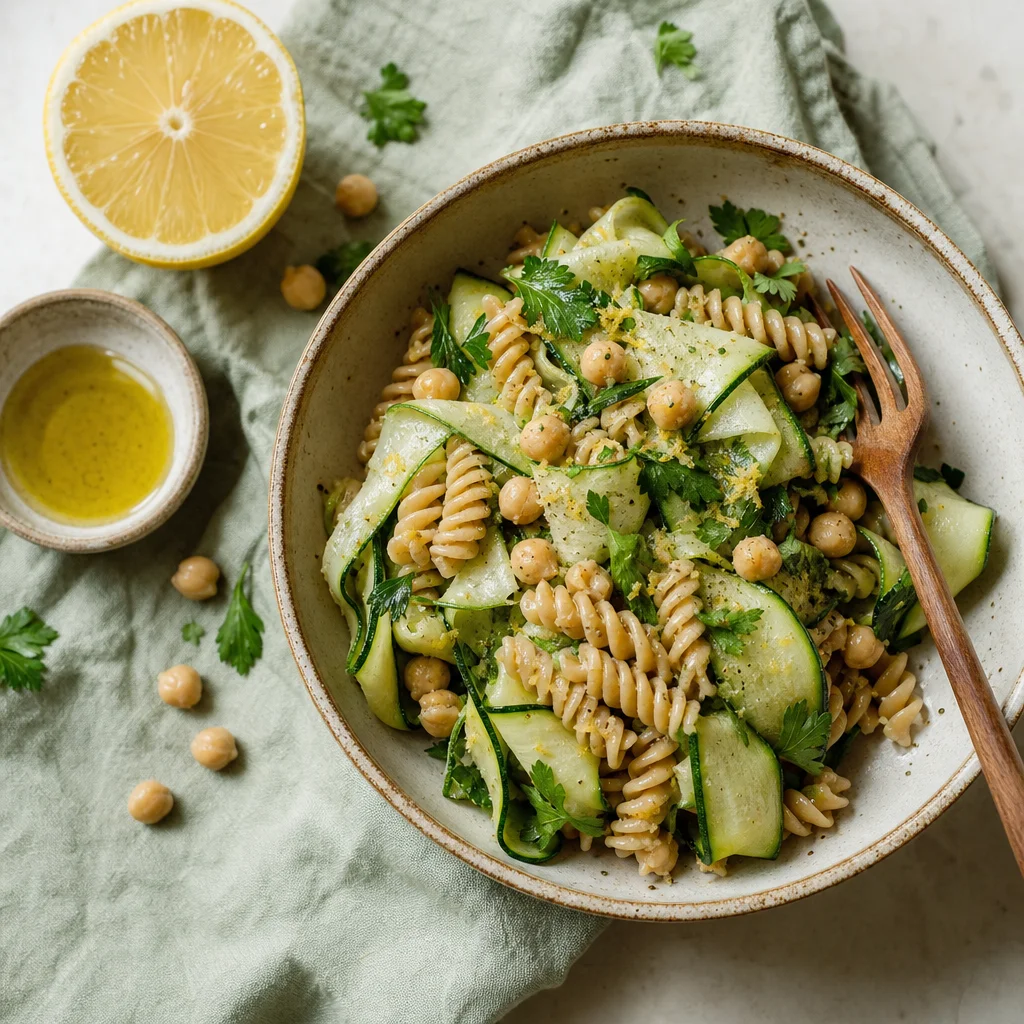
When summer heat makes you want something light but satisfying, a high protein pasta salad is the answer. Packed with tender zucchini, fiber-rich chickpeas, and a bright lemon dressing, this recipe proves that healthy eating doesn’t have to be complicated. Whether you’re meal prepping for the week or bringing a dish to a backyard gathering, this salad delivers protein, flavor, and freshness in every bite.
Why This High Protein Pasta Salad Works
Let’s be honest — summer salads often lean on mayo and cheese for flavor. This one takes a different route. It uses wholesome ingredients that work together to create a balanced meal without weighing you down.
Chickpeas are the star here. They provide a solid dose of plant-based protein and fiber. A single cup of cooked chickpeas offers roughly 12 grams of protein and about 8 grams of fiber, based on the values reported in a 2016 review in Nutrients that examined chickpea composition and health benefits. That same review found that people who regularly eat chickpeas tend to have higher overall diet quality and a lower risk of obesity. The research on chickpea nutrition and health benefits confirms they’re a nutrient powerhouse.
Zucchini adds a summer-fresh crunch and a surprising amount of hydration — it’s about 95% water. It also contains vitamin C and potassium, making it a smart choice for keeping cool and nourished on hot days.
Whole-wheat pasta bumps up the fiber content. The 2025-2030 Dietary Guidelines for Americans protein recommendations emphasize choosing whole grains over refined ones whenever possible. The extra fiber also helps stabilize blood sugar and keeps you feeling full longer.
High Protein Pasta Salad: How Much Protein Are We Talking?
Here’s where the numbers get exciting. A serving of this high protein pasta salad (about 1½ cups) provides roughly 22 grams of protein. That’s enough to cover a significant chunk of your daily needs.
How much protein do you actually need? According to the Dietary Guidelines for Americans 2025-2030, adults should aim for 1.2 to 1.6 grams of protein per kilogram of body weight each day. For a woman who weighs 68 kilograms (about 150 pounds), that works out to 82 to 109 grams of protein daily. A single serving of this salad covers roughly 20 to 27% of that target.
To put it in perspective: many traditional mayo-based pasta salads land much lower on the protein scale. This version delivers a substantial protein boost without any heavy ingredients.
Protein Math at a Glance
- Chickpeas (1 cup cooked): ~12g protein + ~8g fiber
- Whole-wheat pasta (2 oz dry): ~8g protein + ~6g fiber
- Zucchini (1 medium): ~2g protein + ~1g fiber
- Lemon-olive oil dressing: adds healthy fats but minimal protein
- Total per serving: ~22g protein + ~15g fiber
Why Chickpeas and Zucchini Are a Summer Dream Team
You probably already know chickpeas are good for you. But what makes them stand out in this salad is how they pair with zucchini on hot days.
Chickpeas are a satiety powerhouse. A 2010 review in Advances in Nutrition looked at pulse consumption — beans, chickpeas, lentils — and found that people who eat them regularly tend to have lower body mass indexes and better weight control. The fiber and protein work together to slow digestion and keep hunger at bay for hours. Researchers note that these benefits may be linked to overall healthier dietary patterns in people who eat pulses regularly, rather than the pulses alone. The study on pulse consumption satiety and weight management explains that pulses’ slowly digestible carbohydrates and high fiber content are key to these effects.
Zucchini is more than just filler. It’s a great source of vitamin C, which supports immune function and skin health. It also provides potassium, an electrolyte that becomes especially important when you’re sweating in the summer heat. And because zucchini is very low in calories, you can pile it on without worrying about portion control.
Together, chickpeas and zucchini create a meal that’s hydrating, satisfying, and aligned with CDC guidance on healthy meals and protein, which recommends including a protein source and vegetables at every eating occasion.
Two Easy Variations to Keep It Fresh
One recipe, two twists — so you never get bored. Both variations keep the protein content high.
Variation 1: Grilled Chicken Addition
Add 6 to 8 ounces of sliced grilled chicken breast to the salad. This bumps the protein to about 38 grams per serving. It’s a great option if you want a heartier meal or are training and need extra protein. Toss the chicken in the same lemon dressing for extra flavor.
Variation 2: Vegan Tahini-Lemon Twist
Skip the Parmesan cheese in the dressing and replace it with 2 tablespoons of tahini. Whisk tahini with lemon juice, olive oil, a clove of minced garlic, and a pinch of salt. The tahini adds a creamy, nutty flavor and adds about 5 grams of protein to the whole salad (roughly 1 gram per serving). This keeps the salad entirely plant-based and still delivers about 22 grams of protein per serving from the base ingredients.
Tips for the Best High Protein Pasta Salad
Making a great pasta salad comes down to a few simple techniques. Here’s what I’ve learned from testing this recipe.
- Cook pasta al dente. Overcooked pasta turns mushy once it sits in the dressing. Cook it 1 to 2 minutes less than the package directs.
- Salt your pasta water generously. It’s the only chance to season the pasta from the inside. Aim for about 1 tablespoon of salt per 4 quarts of water.
- Cool the pasta quickly. Rinse under cold water after draining to stop the cooking and bring down the temperature for mixing.
- Dress while warm. Add about half the dressing while the pasta is still warm — it absorbs better. Then add the rest just before serving.
- Let it marinate. This salad tastes even better after 2 to 3 hours in the fridge. The flavors meld and the chickpeas soak up the lemon dressing.
Frequently Asked Questions
How long does this pasta salad last in the fridge?
Stored in an airtight container, it stays fresh for up to 5 days. The flavors actually improve after a day or two. Just give it a stir before serving.
Can I use a different pasta shape?
Absolutely. Short shapes like rotini, farfalle, penne, or fusilli work best because they hold onto the dressing and chickpeas. Avoid long strands like spaghetti — they don’t mix as well in a salad.
Is this recipe gluten-free?
It can be. Swap the whole-wheat pasta for a gluten-free variety like chickpea pasta or brown rice pasta. Chickpea pasta will even boost the protein further. Check the package for cooking times, as gluten-free pastas can vary.
Can I make it without oil?
You can reduce the oil, but the dressing needs a little fat to carry the lemon flavor. Try using 2 tablespoons of olive oil and adding more lemon juice or a splash of water. The tahini variation already has natural fats from the sesame seeds.
The Bottom Line
This high protein pasta salad is proof that healthy summer eating can be both simple and delicious. It gives you a full serving of vegetables, a generous hit of plant-based protein, and a fiber boost that keeps you satisfied for hours. The lemon-chickpea-zucchini combination is a smart way to use seasonal produce while meeting your nutrition goals without spending hours in the kitchen.
Try the basic recipe first, then experiment with the chicken or tahini variations. Your future self — the one with a fridge full of ready-to-eat lunch bowls — will thank you.