

High-Fiber Snack: 3-Ingredient Roasted Chickpeas
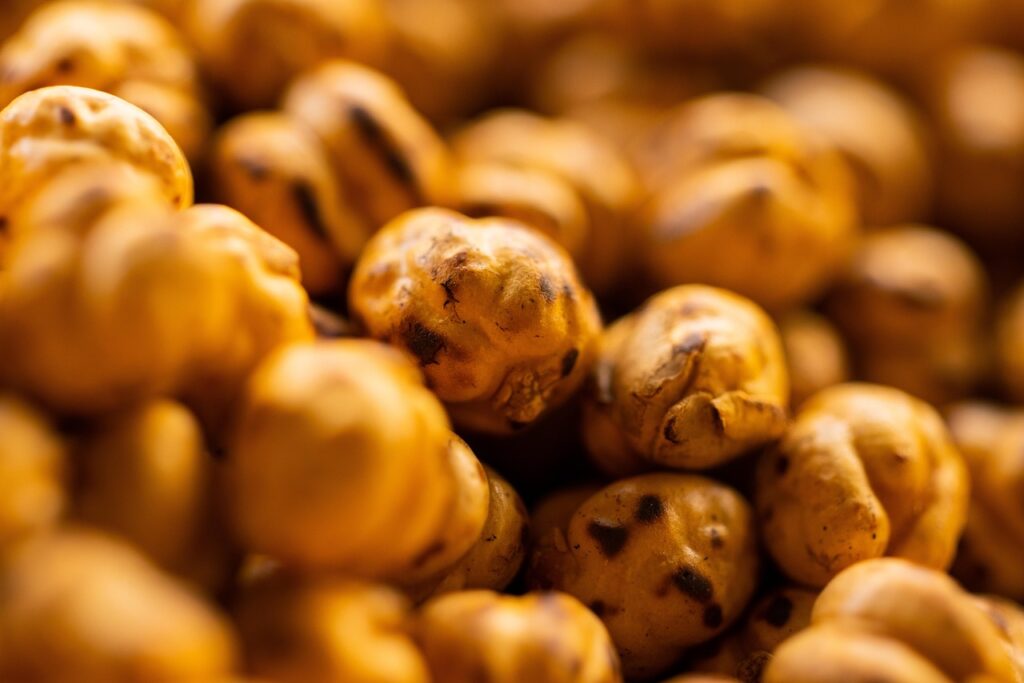
Key Takeaways
- Most adults get only about half the fiber they need each day.
- Crunchy roasted chickpeas take three ingredients: a can of chickpeas, a little oil, and salt.
- Cooked chickpeas give you about 6 to 6.5 grams of fiber per half cup, plus both fiber types and resistant starch.
- Ramp up slowly and drink more water. Gas usually settles within three to four weeks.
- Cool them completely, and store them away from moist foods, to keep the crunch.
Ever stood in the snack aisle holding a bag of “fiber” puffs and wondered what you’re really paying for? Fiber is having a moment on grocery shelves right now. But the best high-fiber snack in your kitchen costs a fraction of that bag. And it starts with three ingredients.
Here’s the thing. Most adults get only about half the fiber they need each day. Closing that gap supports digestion, heart health, and steadier blood sugar. Higher fiber intake is also linked with a lower risk of dying from any cause, including heart disease.
So let’s talk about the snack worth making instead of buying: crunchy roasted chickpeas. I’ll give you the real method, with numbers. I’ll also show you how to check the cost math yourself, plus storage tricks that save the crunch and a ramp-up plan for your gut.
Quick Answer: Are Roasted Chickpeas Worth Making at Home?
Yes. Three ingredients and about 30 minutes turn a can of chickpeas into a crunchy snack. Cooked chickpeas bring roughly 6 to 6.5 grams of fiber per half cup. You also get full control over salt and sugar. One note: roasting drives off water. So a half-cup scoop of roasted chickpeas weighs less and carries a bit less fiber than the cooked figure. The catch is storage. They soften fast without the right handling.
Why This High-Fiber Snack Beats the Packaged Version
Let’s start with what’s actually in this high-fiber snack. Cooked chickpeas come in at about 6 to 6.5 grams of fiber per half cup. That one ingredient brings you soluble fiber, insoluble fiber, and resistant starch.
Resistant starch is a starch your body doesn’t fully break down. It travels further down your digestive tract than most carbs do.
Here’s what surprised me most. The form of the chickpea may matter as much as the fiber number. A 2023 randomized crossover trial fed people bread baked with chickpeas and tracked what happened after. When the chickpea cells stayed intact, participants released more of two gut hormones that signal fullness. Their blood sugar response fell by more than 40% at one dose level.
Milling chickpeas into fine flour destroys those cells. So a chickpea-flour puff is not the same food as a roasted chickpea. Same fiber on the label, different result in your body.
What about cholesterol and blood sugar? A 2024 review of legume trials pooled 24 randomized studies. Total cholesterol dropped by about 0.23 mmol/L. LDL cholesterol fell by roughly 0.16 mmol/L, which is about 6 mg/dL. Fasting blood sugar improved slightly too. These are modest wins, not miracles, and the reviewers graded the evidence as moderate.
Now the honest part. That same review found no legume trial that measured gut microbiome outcomes at all. Gut benefits are biologically plausible, and early lab work is promising. Human trials simply haven’t confirmed them yet.
Fiber also helps you feel full. One analysis of 21 trials found that about one serving of pulses a day, around 132 grams, led to a small weight drop of about 0.34 kg over six weeks. That happened even when people weren’t cutting calories.
A Quick Correction on Soluble vs. Insoluble Fiber
You’ve probably heard that soluble fiber is the more valuable type. Current evidence doesn’t back that ranking. A 2025 review on fiber and inflammation found that insoluble fiber shows stronger links to long-term health than soluble fiber does. A separate analysis of 28 studies covering more than 1.6 million people found insoluble fiber had the strongest link to lower death rates. Chickpeas hand you both types at once, so you can skip the ranking game.
The Three-Ingredient Method, With Real Numbers
Most recipes for this snack skip the details that decide whether it works. Temperature, drying, and cooling all matter. Here they are.
Crunchy Roasted Chickpeas
You need: one 15-ounce can of chickpeas (no-salt-added if you can find it), 1 teaspoon olive oil or cooking spray, and 1/2 teaspoon salt.
- Heat the oven to 400 degrees F.
- Drain and rinse the chickpeas well. Rinsing won’t make them low-sodium, but it does rinse away some of the packing liquid.
- Spread them on a clean towel and pat them completely dry.
- Toss with the oil and salt.
- Spread them in a single layer on a sheet pan. Crowding steams them.
- Roast 25 to 30 minutes, shaking the pan halfway through.
- They’re done when they rattle and feel light in your hand.
- Cool them completely on the pan before storing.
That last step is where most batches fail. People seal warm chickpeas in a container and then wonder why they’re chewy the next day. Trapped steam softens them. Full cooling is the difference between crisp and leathery.
The Two-Minute Cost Check
Several articles on this high-fiber snack claim homemade is cheaper. Almost none of them show the math, so here’s how to check yours in two minutes.
Look at the price of one can of chickpeas and the number of half-cup servings on the label. Divide price by servings. Then do the same with a bag of packaged fiber snacks. You’ll have a real answer from your own store.
Two things usually tip the scale toward homemade. Packaging, shipping, and marketing all sit inside the price of the packaged version. And you decide the salt, the oil, and whether sugar shows up at all.
How to Fit a High-Fiber Snack Into Your Day
Daily fiber targets vary more than you’d expect, and that’s fine. The Dietary Guidelines for Americans put adults at 22 to 34 grams a day. The National Academy of Medicine sets 25 grams for women 50 or younger and 21 grams for women over 50. The UK’s NHS uses a flat 30 grams.
Practically speaking, aim for 25 to 30 grams. Most US adults land at about half that, so the shortfall is real.
A high-fiber snack is one of the easiest places to close that gap. Where does it fit? NHS guidance walks through one realistic day: breakfast at 8.3 grams, lunch at 11 grams, dinner at 11.2 grams. That’s roughly 30 grams before any snack. On a lighter day, a serving of chickpeas covers the last 6 grams.
Our high-fiber Mediterranean breakfast can get you a head start.
Labels help too. A food counts as high in fiber when it has 6 grams or more per 100 grams.
One more habit worth building: pair fiber with protein or fat. Chickpeas next to cottage cheese or a boiled egg keep you full far longer than fiber alone.
Will Chickpeas Make You Gassy? Here’s the Honest Answer
Maybe at first, and that’s completely normal. Chickpeas contain fibers your gut bacteria ferment. Fermentation produces gas.
The answer isn’t to swear off this high-fiber snack. It’s to start small. The CDC warns that a sudden fiber jump can bring bloating, gas, constipation, diarrhea, or cramps. Water helps move fiber through your system.
A Four-Week Ramp-Up Plan
- Week 1: 2 tablespoons every other day.
- Week 2: 2 tablespoons daily, plus one extra glass of water.
- Week 3: 1/4 cup daily.
- Week 4: 1/4 to 1/2 cup daily, if your gut feels settled.
Here’s the reassuring part. Cleveland Clinic dietitian Anna Taylor, RD, LD, notes that after three to four weeks of regular intake the gut adapts. Perceived gas levels typically return to baseline. The bloating phase is temporary, not a permanent tax.
Water deserves its own line. More fiber without more fluid can leave you constipated, which is the opposite of the goal. Add both together, slowly.
How to Keep Roasted Chickpeas Crunchy
Storage is where a homemade high-fiber snack usually fails. Chickpeas soften when moisture moves back in, so the whole goal is keeping water out.
- Cool them completely before sealing. Steam is the enemy.
- Leave the lid slightly loose for the first few hours, so any last steam escapes.
- Store at room temperature. The fridge draws in moisture.
- Keep them apart from wet foods like yogurt, dips, and dressed salads.
- Plan to eat them within a few days. They’re crispest early on, then slowly soften.
For packed lunches, give the chickpeas their own small container. Add them at the table. That one habit protects the texture you worked for.
Flavor Variations Worth Trying
The base recipe is a blank canvas, and this high-fiber snack carries seasoning well. Season before roasting, because the oil helps the spices stick.
- Smoky paprika with garlic powder
- Everything bagel seasoning
- Chili powder, with a squeeze of lime after roasting
- Rosemary and cracked black pepper
- Cinnamon with a light dusting of sugar
One note on that sweet version. The NHS points out that sticky, sweet foods are better eaten with meals than between them, because they linger on teeth. A savory chickpea snack sidesteps that problem.
Prefer sweet? Our strawberry walnut parfait checks the same boxes.
Who Should Check With a Clinician First
A high-fiber snack is safe for most people. Yet it isn’t right for everyone, and not at every moment. Mayo Clinic’s dietary fiber guidance lists several situations where a high-fiber diet should be reduced.
- An active flare of Crohn’s disease or ulcerative colitis
- Active diverticulitis
- Gastroparesis, where the stomach empties slowly
- A narrowed intestine, known as a stricture
- Recent stomach or intestinal surgery
- Radiation therapy to the belly or pelvis
If you manage IBS with a low-FODMAP diet, chickpeas are one of the foods many people find triggering. That is exactly the kind of situation where you should ask your dietitian or clinician before adding a high-fiber snack. The same applies if you have any of the conditions listed above.
In any of those situations, ask your clinician before you raise your fiber intake. That’s a real safety line, not a formality.
Frequently Asked Questions
How much fiber is in a serving of roasted chickpeas?
Cooked chickpeas have about 6 to 6.5 grams per half cup. Roasting drives off water, so the same scoop weighs less. Do your own per-serving math instead of assuming the cooked number transfers.
Canned or dried chickpeas?
Canned is faster and works well for roasting. Dried chickpeas, soaked overnight, tend to give a firmer crunch, though canned is far quicker on a weeknight.
Can I make this high-fiber snack in an air fryer?
Yes. It’s faster and uses less oil. Check them every few minutes, since air fryers vary a lot in power.
Do they help with blood sugar?
Legume trials show modest improvements in fasting blood sugar. Chickpea structure also appears to blunt the glucose response after a meal. Pair them with protein for a steadier effect.
How much should I eat?
Start with 2 tablespoons if beans are new to you. Work up to a quarter or half cup a day over three to four weeks.
The Bottom Line
The best high-fiber snack isn’t sitting in the snack aisle. It’s a can of chickpeas, a teaspoon of oil, and a hot oven.
The half-cup of cooked chickpeas in each batch brings about 6 grams of fiber. You also get both fiber types and resistant starch. There’s real evidence behind the cholesterol and blood sugar benefits too. And you get full control over salt, oil, and sugar.
Start small. Drink more water. Cool them completely before you store them. Do those three things, and this becomes one of the easiest healthy habits you keep.
And if you live with a digestive condition, ask your clinician first. Healthy living runs on good information, including the parts that come with a caveat.
Not a chickpea fan? Our white bean dip takes five minutes.