

High Fiber Recipes to Reach 25g a Day (No Supplements)
Key Takeaways
- Most U.S. women eat about 15 grams of fiber a day — 10 grams short of the 25-gram target.
- Higher fiber intake is linked to lower heart disease risk, steadier blood sugar, and easier weight management.
- Soluble fiber forms a gel that slows digestion. Insoluble fiber adds bulk. You need both.
- Avoid the bloat by adding 3–5 grams every few days and drinking plenty of water.
- Real food beats supplements. Beans, oats, fruit, and vegetables can close the gap deliciously.
Here’s the thing about high fiber recipes: they aren’t a diet trend — they’re one of the most evidence-backed health upgrades you can make. If you’re like most American women, you know fiber is good for you. But you’re probably not getting enough. Research shows U.S. women eat an average of just 15 grams of fiber a day — about 10 grams below the 25-gram daily target.
Now, you might be thinking: “Do I really need another meal plan?” Let’s be honest — no. What you need is a simple way to eat a little better every day. That’s exactly what this guide delivers. We’ll cover how much fiber you need, which types matter most, and how to close the gap with food you’ll actually enjoy.
Quick Answer: How do I eat 25 grams of fiber a day?
Start with one fiber-rich food at each meal. Think oats with berries at breakfast, beans or lentils at lunch, fruit or nuts as a snack, and vegetables plus whole grains at dinner. Then add 3–5 grams every few days and drink plenty of water. That’s how you reach 25 grams — no supplements, no bloat.
Why High Fiber Recipes Are a Smart Health Move
Fiber does more than keep things moving. The evidence is genuinely impressive. An umbrella review of 33 meta-analyses looked at data from more than 17 million people. It found convincing evidence that higher fiber intake is linked to lower risk of death from heart disease. It also found strong links to lower all-cause mortality, coronary heart disease, and pancreatic cancer.
Fiber steadies blood sugar, too. It supports healthy cholesterol. And it helps you feel full longer. Mayo Clinic notes that soluble fiber in beans, oats, and flaxseed can lower LDL cholesterol. High-fiber foods are also more filling and less energy-dense. That’s a fancy way of saying they satisfy without overloading calories.
Here’s what I find interesting. Fiber is one of the few nutrients where the science keeps getting stronger. It’s also cheap, easy, and available at any grocery store. That’s why high fiber recipes deserve a regular spot in your weekly rotation.
How Much Fiber Do You Need?
The National Academy of Medicine recommends 25 grams of fiber per day for women 50 and younger. Women over 50 need about 21 grams. Men need more: 38 grams under 50, and 30 grams over 50.
So how are we doing? Not great. A 2025 study using national data found U.S. women average about 15 grams a day. Other analyses show fiber inadequacy exceeds 90% across many life stages. That’s why fiber is a nutrient of public health concern.
Here’s the good news. That 10-gram gap is smaller than it sounds. One bowl of oatmeal with berries adds about 9 grams. A medium pear delivers 5.5 grams. Half a cup of cooked lentils brings 8 grams. You don’t need a total overhaul — just a few smart additions.
Soluble vs. Insoluble: Two Fibers, One Team
Fiber comes in two types, and both matter. The National Library of Medicine and Mayo Clinic explain how they differ: soluble fiber dissolves in water to form a gel. That gel slows digestion, helps lower cholesterol, and steadies blood sugar. You’ll find it in oats, barley, beans, apples, avocados, and citrus. Insoluble fiber doesn’t dissolve. Instead, it adds bulk to stool and helps food move through your system. Look for it in whole-wheat flour, wheat bran, nuts, green beans, and potatoes.
Most plant foods contain both types. That’s another reason whole foods beat supplements. And if regularity is your goal, science points to one winner. A 2026 network meta-analysis of 17 studies found that viscous soluble fibers — the gel-forming kind in oats, barley, beans, and psyllium — were most effective for improving stool consistency and frequency.
Practical rule: aim for a mix. But if you tend toward constipation, lean into the gel-forming fibers.
High Fiber Recipes for Every Meal of the Day
Here’s what a full day of high fiber recipes looks like. Zero supplements. Zero bland diet food. Fiber grams come from standard serving data in a Cleveland Clinic dietitian’s guide to high-fiber foods.
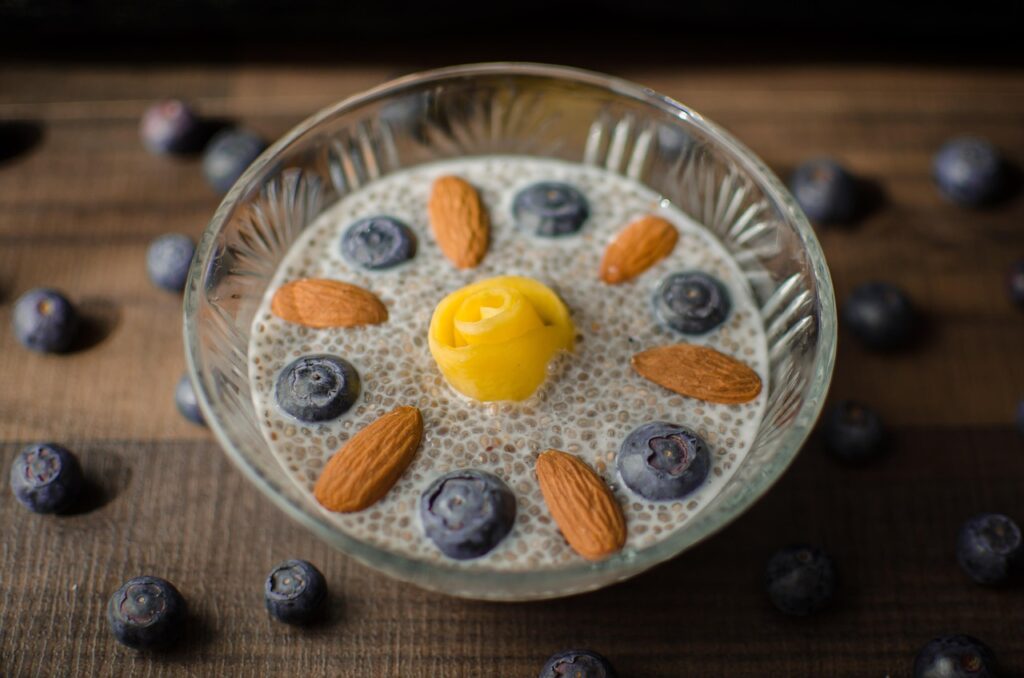
Breakfast: Cocoa-Chia Overnight Pudding. Chia seeds are the breakfast workhorse of high fiber recipes. Two tablespoons pack about 10 grams of fiber on their own. Add half a cup of raspberries for 4 more grams. That’s a 14-gram start to your day. For more morning options, browse our high fiber breakfast ideas.
Lunch: Lentil & Roasted Broccoli Bowl. Half a cup of cooked lentils delivers 8 grams of fiber. Half a cup of cooked broccoli adds 2.5 grams more. Toss with olive oil, lemon, and feta. Lunch comes in around 10 grams. Need more midday options? Our high fiber lunch ideas have you covered.
Snack: Roasted Chickpeas or a Pear. Half a cup of roasted chickpeas adds 6.5 grams of crunchy fiber. Prefer something sweet? A medium pear with the skin on delivers 5.5 grams.
Dinner: Crispy Black Bean Tacos. Half a cup of black beans brings 8.5 grams all by itself. Add a quarter of an avocado for roughly 2.5 grams more. One satisfying meal, about 11 grams total.
Dessert: Berry-Chia Pudding. Yes, dessert counts. A cup of raspberries offers 8 grams of fiber. Blackberries come in at 7.5 grams per cup. Blend either into a chia pudding for a treat that works for you.
One Day at 25+ Grams
Here’s a simple day that clears the target: the chia-raspberry breakfast (14 grams), the lentil-broccoli lunch (10.5), and a pear for a snack (5.5). That’s 30 grams before dinner. Or go lighter — oatmeal with flaxseed (about 8.5 grams), the lentil-broccoli bowl (10.5), and black bean tacos (11). Either way, you win. The 25-gram goal is very doable once plants are the default.
How to Ramp Up Fiber Without the Bloat
The number one fear about fiber is gas and bloating. Let’s address it head-on. Here’s what’s actually happening: your gut bacteria ferment the fiber, and gas is a natural byproduct. It’s a sign your microbiome is adapting — not a sign you’ve done something wrong.
That adaptation takes a few weeks. A Cleveland Clinic dietitian notes that after three to four weeks of regular intake, the gut adapts and perceived flatulence returns to baseline. The key is a gentle on-ramp.
Your 4-Week Fiber Ramp-Up
- Week 1: Add one serving of fruit or vegetables with the skin on. That’s about 3–5 extra grams a day.
- Week 2: Add beans or lentils to one meal. Half a cup adds 6–8 grams.
- Week 3: Make half your grains whole. Swap white rice for quinoa or barley.
- Week 4: Add seeds and nuts as snacks. You should be at or near 25 grams.
Now, the hydration rule. Fiber works like a sponge. Mayo Clinic emphasizes drinking plenty of water because fiber absorbs water to do its job. Without enough fluid, more fiber can actually worsen constipation. So when you add fiber, add water too.
One more caveat. If you have irritable bowel syndrome or a sensitive gut, fiber type matters even more. Choose slower-fermenting options like oats and psyllium. Increase even more gradually. And talk with your clinician if symptoms continue.
Painless Fiber Swaps That Add Up
You don’t need to overhaul every meal. Small swaps compound. The American Heart Association recommends eight simple ways to focus on fiber. Choose whole grains. Add beans to soups and salads. Bake with oat bran. Snack on fruit, raw veggies, or unsalted nuts.
Here’s a budget-friendly secret: frozen and canned vegetables count. The American Heart Association recommends frozen broccoli and canned no-salt-added beans as easy, budget-friendly ways to add fiber — they last longer than fresh and cost less. Want the veggie rankings? Our high fiber vegetables guide has them.
Label reading helps, too. Mayo Clinic suggests choosing cereals with 5 or more grams of fiber per serving. It also recommends making half your grains whole — when you buy bread, that means choosing whole-grain options over refined white bread.
Quick FAQ: Your Top Fiber Questions
Q: Will high fiber recipes help me manage my weight?
They can help. High-fiber foods are more filling and less energy-dense, so you naturally eat less. However, the effects are modest. Think of fiber as a helpful tool, not a magic bullet.
Q: Can I just take a fiber supplement instead?
Whole foods come first. Mayo Clinic notes that whole foods provide a variety of fiber types plus vitamins, minerals, and plant compounds that supplements lack. Supplements like psyllium have a role for specific situations. But they’re a backup — not the plan.
Q: How fast should I increase my fiber?
Slow and steady wins. Add 3–5 grams every few days. Drink more water. Give your gut a few weeks to adapt. The high fiber recipes in this guide are designed to make that easy.
Q: Is 25 grams realistic on a busy schedule?
Yes, absolutely. Canned beans, frozen vegetables, oats, and fruit take minutes to prepare. The sample day above clears 30 grams with no special ingredients and no complicated cooking.
The Bottom Line
Fiber is one of the simplest, most affordable health upgrades you can make. Most of us fall 10 grams short every day. But closing that gap doesn’t require supplements, deprivation, or a radical diet. It takes a few delicious high fiber recipes you actually look forward to.
Start with one change this week. Add berries to your morning oats. Toss a can of chickpeas into your salad. Swap white rice for quinoa. And pour yourself an extra glass of water. Your gut, your heart, and your future self will thank you.
Remember: the best high fiber recipes are the ones you’ll actually make again. Find your favorites, and let them become the default.
Want more inspiration? TEOHL’s 7-Day High-Fiber Meal Plan and our one-pan high-fiber dinner collections are great next reads.