

Heart Healthy Salmon Dinners: 11 Easy Weeknight Ideas
Key Takeaways
- The American Heart Association recommends two servings of fatty fish per week. One serving is 3 ounces cooked — about the size of a deck of cards.
- One salmon dinner delivers roughly 1.8 grams of omega-3s. That’s far above the daily intake linked to heart benefits.
- The heart benefits of fish come from fatty fish like salmon. Lean fish doesn’t show the same effect.
- Baking, roasting, and broiling keep salmon heart-healthy. Deep-frying adds unhealthy fats.
- Salmon is a low-mercury “Best Choices” fish. It’s safe to eat 2-3 times a week, even during pregnancy.
Here’s a stat that might surprise you: heart disease is the leading cause of death among women in the U.S. Yet most of us underestimate our risk. The good news? One of the most science-backed foods for heart health is also one of the easiest weeknight dinners to make. I’m talking about heart healthy salmon. It’s protein-rich, quick to cook, and loaded with omega-3s — the healthy fats your body can’t make on its own. In this guide, you’ll learn why salmon earns the “heart healthy” label, how much omega-3 you get per serving, the smartest ways to cook it, and 11 easy dinner ideas to get you started. And if you want to carry the heart-healthy pattern into your morning, our heart healthy breakfast recipes are a great start.
Quick Answer: Is Salmon Heart-Healthy?
Yes. Salmon is a fatty fish rich in EPA and DHA — the two omega-3s linked to lower triglycerides, healthier blood pressure, and reduced heart disease risk. The American Heart Association recommends two 3-ounce servings of fatty fish per week. Heart healthy salmon is one of the safest, lowest-mercury ways to hit that target.
Why Heart Healthy Salmon Deserves a Spot in Your Weekly Rotation
The evidence here is about as solid as nutrition science gets. The American Heart Association recommends eating fish at least twice a week. Regular fish intake is consistently linked to lower cardiovascular risk. A 2018 science advisory from the AHA, published in the journal Circulation, looked at the best available evidence. Its conclusion: one to two seafood meals per week reduce the risk of heart failure and heart disease. That holds true especially when fish replaces less healthy foods. A 2025 review on omega-3s and heart disease in women adds that female heart risk profiles differ, making regular oily fish a smart prevention strategy.
Let’s look at the numbers. One meta-analysis of fish consumption and heart disease pooled 40 studies with more than one million participants. It found that higher fish intake was linked to a 9% lower risk of coronary heart disease. Fish eaters also had a 15% lower risk of dying from it. A separate meta-analysis on fatty versus lean fish found the benefit is driven by fatty fish. Lean fish showed no significant effect. So when you choose a heart healthy salmon dinner, you’re picking the fish with the strongest heart data behind it.
What Actually Makes a Dinner Heart-Healthy?
Now, you might be wondering what “heart healthy” really means. It’s not just a marketing label. A heart-healthy dinner is lower in saturated fat and sodium. It’s built on nutrient-dense foods like fatty fish, vegetables, and whole grains. The FDA uses exactly this framework. Strong evidence shows that fish, as part of a healthy eating pattern, may have heart health benefits.
Cooking method matters too. Mayo Clinic notes that grilling, broiling, or baking fish are healthier options than deep-frying, which adds unhealthy fats. That’s one reason sheet-pan salmon dinners are so popular. The fish roasts in its own healthy fats beside a pile of vegetables. Dinner is done in about 30 minutes.
How Much Omega-3 Is in One Salmon Serving?
Let’s get specific about what a heart healthy salmon dinner actually delivers. The NIH fact sheet on omega-3 fatty acids gives us the exact math. A 3-ounce serving of cooked farmed Atlantic salmon provides about 1.24 grams of DHA and 0.59 grams of EPA. That’s roughly 1.8 grams of omega-3s total. Wild-caught salmon is similar, at 1.22 grams of DHA and 0.35 grams of EPA. Even canned pink salmon, the budget-friendly pick, gives you 0.63 grams of DHA and 0.28 grams per serving.
Here’s what those numbers mean for you. Evidence-linked intake targets for heart support are often cited at roughly 250 mg (0.25 g) per day of EPA plus DHA. One salmon dinner clears that in a single serving. That’s why two servings a week is such a realistic goal. For comparison, light canned tuna offers just 0.19 grams per serving. That makes salmon the clear omega-3 winner. For a deeper dive into salmon’s nutrient profile, our guide to whether salmon is really healthy for women has the details.
Why Salmon on the Plate Beats Fish Oil in a Capsule
You may have seen headlines linking fish oil supplements to heart risks. Let’s untangle that. A 2024 observational study in BMJ Medicine found that heart-healthy people who regularly took fish oil supplements had a 13% higher risk of atrial fibrillation — an irregular heartbeat. However, here’s the context those headlines often miss. The American Heart Association doesn’t recommend omega-3 supplements for people without high cardiovascular risk. The evidence for supplements is strongest in specific groups. Those include people with existing heart disease or high triglycerides, usually under a clinician’s guidance.
For most of us, the answer is salmon on the plate, not fish oil in a capsule. Mayo Clinic notes that eating fish rich in omega-3s seems to be better for the heart than taking supplements. Whole salmon also provides protein, vitamin D, and selenium — nutrients no pill can fully replicate. Here’s the encouraging part: an analysis of the VITAL trial found the heart benefits of omega-3s were strongest in people who ate little fish. If that’s you, you have the most to gain.
How to Cook Heart Healthy Salmon Dinners: Three Winning Templates
Now for the fun part. You don’t need complicated recipes to make heart healthy salmon dinners a weekly habit. Most great ones follow one of three simple templates. Here’s how each works, plus tips to keep every version lower in sodium and saturated fat.
Template 1: Sheet-Pan Salmon
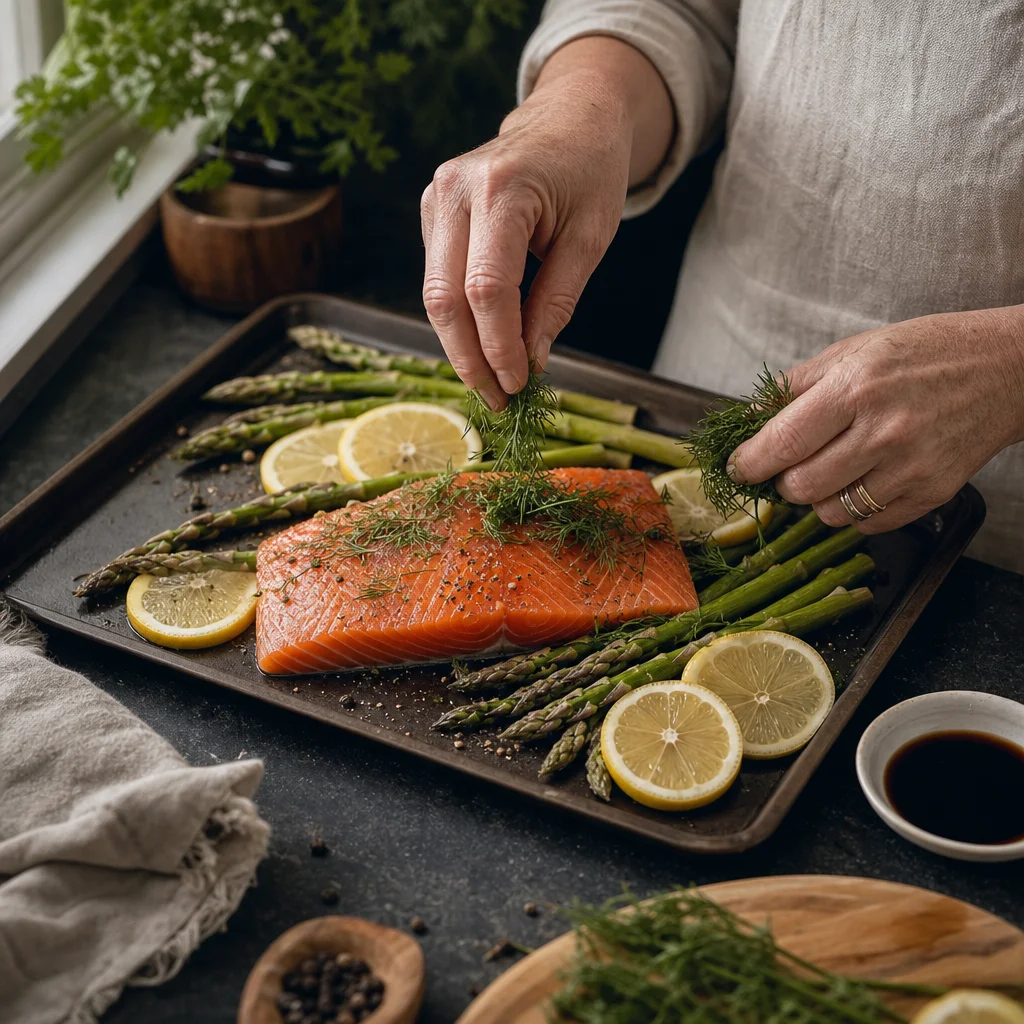
This is the ultimate weeknight shortcut. Salmon, vegetables, and a simple seasoning all roast together on one pan. Try balsamic salmon with asparagus, salmon with broccoli and lemon, teriyaki salmon with green beans, or salmon with baby potatoes and green beans. You get a complete meal with minimal prep and even less cleanup. TEOHL tip: choose reduced-sodium soy sauce in any glaze, and skip the butter. A squeeze of lemon adds brightness without the saturated fat. For more fast weeknight dinners, check out our 7 gut healthy dinners in 30 minutes.
Template 2: Salmon Cakes
Salmon cakes prove that heart healthy salmon dinners don’t require pricey fresh fillets. Canned pink salmon delivers nearly a gram of omega-3s per serving at a fraction of the cost. Easy salmon cakes with greens, or baked garlicky salmon cakes, turn canned (or leftover) salmon into golden patties in about 30 minutes. Serve them over a simple salad with a bright vinaigrette. It’s a balanced meal that works for lunch too.
Template 3: Bowls and Skillets
When you want something more substantial, bowls and skillet dinners have you covered. Thai sweet chili salmon bowls pair salmon with fluffy rice and crisp coleslaw. Honey salmon with potatoes and spinach comes together with just five ingredients. Skillet salmon with orzo and green pea pesto feels special enough for a weekend. Just watch the added sugar in sweet glazes — a little goes a long way.
Safety First: How Much Salmon Is Too Much?
Here’s the reassurance you’ve been waiting for. Salmon is on the FDA and EPA’s “Best Choices” list of low-mercury fish. That means it’s safe to eat two to three servings a week — including for women who are pregnant or breastfeeding. The FDA recommends 8 to 12 ounces of low-mercury seafood per week for this group. Salmon fits right in.
For most people, heart healthy salmon can be part of a weekly rotation without any mercury worries. The main safety note is preparation. Fully cooked salmon is safe for almost everyone. Raw or undercooked salmon carries a risk of parasites and bacteria, so skip it if you’re pregnant or have a weakened immune system. If sustainability matters to you, look for a certification like the Marine Stewardship Council label when you shop.
Frequently Asked Questions
Can I eat salmon every day?
You can, but you don’t need to. Two to three servings a week gives you the omega-3s linked to heart benefits. Since salmon is among the lowest-mercury fish on the FDA’s “Best Choices” list, an extra serving here and there is not a concern — but the evidence-backed target is two to three servings a week. Adding variety with sardines, mackerel, or herring is a nice bonus.
Is frozen salmon as healthy as fresh?
Yes. Frozen salmon is a budget-friendly, convenient option with nutrition comparable to fresh, and it goes straight onto a sheet pan for a quick dinner.
What if I don’t like fish?
Start mild. Salmon cakes are a great entry point because the texture is familiar. Canned salmon is also the least “fishy” and the most budget-friendly. If you truly can’t do fish, talk to your clinician about whether an algae-based omega-3 supplement makes sense for you.
The Bottom Line
The evidence is clear. Heart healthy salmon is one of the smartest, simplest dinners you can put on your plate. Two servings a week — about the size of a deck of cards each — is a goal backed by the American Heart Association and decades of research. Whether you roast it on a sheet pan, shape it into cakes, or layer it into a nourishing bowl, you’re making a choice your heart will thank you for. Now, let’s get cooking.