

Summer Casserole Recipes: 8 Healthy Veggie-Forward Bakes
Key Takeaways
- Only about 1 in 10 U.S. adults eats enough vegetables. Summer casseroles are a tasty way to close that gap.
- Peak-season zucchini, corn, tomatoes, and eggplant are so flavorful they only need light sauces.
- Roasting vegetables first prevents watery bakes and deepens flavor.
- Whole grains, beans, and homemade sauces can lighten any classic casserole.
- Most summer vegetable casseroles freeze and reheat well for busy weeknights.
Picture this: it’s August, your counter is covered in zucchini, and you’re tired of the same grilled vegetables. Summer casserole recipes are the answer — but maybe not the ones you grew up with. I’m talking about bakes that skip the canned cream soup and let peak-season produce shine. Here’s the thing: a casserole is just a format. It can be a heavy, cheese-laden relic from the 1970s. Or it can be the easiest way to eat more vegetables. Let’s explore how to make it the latter.
Quick Answer: Are Casseroles Healthy?
A casserole is a cooking format, not a food group. Summer casserole recipes range from comforting to healthy — it all depends on what you put in them. Vegetable-forward bakes made with whole grains, beans, lean protein, and lighter sauces are a genuinely healthy, meal-prep-friendly dinner.
Why Summer Casserole Recipes Deserve a Spot in Your Rotation
Here’s a surprising statistic: only about 1 in 10 U.S. adults eats enough vegetables, according to the CDC. Women do a bit better, with about 12.4% meeting vegetable recommendations. But that still means most of us fall short. And the goal isn’t extreme — the Dietary Guidelines call for just 2 to 3 cups of vegetables a day.
When you picture summer casserole recipes, you might imagine something heavy from the 1970s. But here’s the thing: a casserole is just a format. One veggie-packed serving can deliver two or even three servings toward your daily vegetable target. It’s one of the easiest ways to eat more plants without thinking about it.
The benefits add up over time. A 2026 meta-analysis of 151 studies found that higher vegetable intake is associated with a lower risk of elevated triglycerides. The authors note the evidence is observational. Still, it supports what nutrition experts have said for years: eating more vegetables is good for your heart.
Why Peak-Season Produce Needs Less Heavy Sauce
Think about the casseroles your grandmother made. Canned cream of mushroom soup. Frozen mixed vegetables. A blanket of cheese. There’s a reason those bakes were so heavy: the ingredients weren’t at their best. Off-season vegetables are less juicy, less sweet, and less flavorful, so they need cream and cheese to taste like anything at all.
A ripe August tomato is sweet and jammy. Fresh corn barely needs anything. Tender zucchini has a mild, delicate flavor that gets lost under a thick sauce.
So here’s the beauty of summer casserole recipes: when you cook with peak-season produce, the smartest move is to get out of its way. A little olive oil, a sprinkle of salt, some fresh herbs, and a modest amount of cheese — that’s often all you need.
However, I want to be honest with you here. The science on peak-season produce having more nutrients is mixed. What’s not in question is flavor. When vegetables taste amazing, you naturally eat more of them. And eating more vegetables is the real health goal.
Summer Casserole Recipes: The Roast-First Trick That Fixes Watery Bakes
Here’s what’s actually happening when your zucchini casserole turns into soup: summer vegetables hold a lot of water. As they bake, that moisture releases and pools in the dish. The result is a soggy, diluted casserole that no amount of cheese can save.
The fix is simple. Roast the vegetables first. Spread your zucchini, eggplant, or tomatoes on a sheet pan and pop them into a hot oven — around 425°F — until they’re lightly browned. The high heat evaporates surface moisture. It also triggers the Maillard reaction, the browning that gives roasted vegetables their deep, caramelized flavor. This one step is what separates great summer casserole recipes from watery ones.
There’s a second trick for zucchini and summer squash. Salt the slices, let them rest for 15 to 20 minutes, then pat them dry with a clean towel. This pulls out excess water before baking.
These steps do double duty. As a result, you get the right texture and more flavor in every bite. That’s why so many Mediterranean-style recipes roast first. It concentrates flavor while keeping the bake from turning watery.
Skip the Canned Soup: How to Lighten Any Casserole
Now, you might be thinking: this all sounds good, but what do I actually change? Here’s a practical checklist you can apply to almost any casserole recipe.
The 6-Swap Lightening Checklist
- Swap the canned cream soup. Canned cream of chicken or mushroom soup is the classic shortcut. It’s also a big source of sodium and processed ingredients. Instead, whisk 2 tablespoons of flour into 1 cup of milk or low-sodium broth. Simmer until thick, then season with garlic, thyme, or smoked paprika. Or blend white beans with broth for a creamy, fiber-rich sauce.
- Cut the heavy cream. Swap cream or full-fat sour cream for plain Greek yogurt, part-skim ricotta, or evaporated skim milk. You’ll save saturated fat without losing the creamy texture.
- Halve the cheese — but make it count. Use a smaller amount of a strongly flavored cheese like sharp cheddar, Parmesan, or feta. You get plenty of flavor with less.
- Bulk with vegetables and beans. Double the vegetables and cut the meat or pasta in half. Fold in cannellini beans, chickpeas, or lentils for fiber and plant protein.
- Choose whole grains. Whole-wheat orzo, brown rice, quinoa, and farro add fiber and a pleasant chew.
- Watch the sodium. Use low-sodium broth and no-salt-added canned tomatoes and beans. Salt at the end, to taste.
These summer casserole recipes prove that light can still be comforting. And making the sauce yourself has an extra payoff — for another one-dish favorite, try our healthy chicken broccoli casserole. A 2025 study of nearly 12,000 Italian women found that women who cooked at home more often ate fewer ultra-processed foods and had a less inflammatory diet. What you cook matters, of course. But building meals from whole ingredients is a solid foundation.
Mediterranean-Style Bakes: An Evidence-Backed Eating Pattern
The Mediterranean diet is one of the most extensively studied eating patterns in the world. A 2026 expert review noted that large studies and clinical trials consistently support its protective effects on heart and metabolic health. The pattern is plant-forward: lots of vegetables, legumes, whole grains, nuts, and olive oil, with moderate amounts of fish and dairy.
Mediterranean summer casserole recipes fit this pattern beautifully. Picture roasted eggplant layered with tomato sauce and a dusting of Parmesan. Or a Greek-style bake of potatoes, zucchini, and tomatoes with a generous drizzle of olive oil. White beans, chickpeas, and whole-wheat orzo turn a simple side into a satisfying vegetarian main.
One honest note: no single recipe prevents disease. It’s the overall pattern that matters. Think of these casseroles as building blocks for a healthy eating style, not magic dishes.
Meal Prep, Freezing, and Reheating: Make Summer Last
One of the best things about summer casserole recipes is that they’re made for batch cooking. Here’s how to make the most of the season’s abundance.
Which freeze well? Bean-based bakes and egg-based breakfast casseroles freeze beautifully. So do pasta-and-sauce bakes like orzo or lasagna-style dishes. For best results, freeze the casserole fully baked and completely cooled. Or assemble it in a freezer-safe dish and bake from frozen when you’re ready.
Which are best fresh? Gratins and anything with a crispy panko or breadcrumb topping are best baked fresh. If you freeze them, expect the topping to soften. Revive it by reheating in a 400°F oven until the top crisps again.
Reheating rule of thumb: use the oven, not the microwave. A 350°F oven for 20 to 30 minutes restores texture that a microwave destroys. Let frozen casseroles thaw overnight in the fridge for even heating.
And can you use frozen vegetables? Absolutely. The American Heart Association recommends filling half your plate with vegetables and fruit — and notes that fresh, frozen, and canned all count. Choose unsweetened frozen produce and low-sodium canned options. Frozen corn, zucchini, and tomatoes are weeknight savers once fresh produce is past its peak.
8 Vegetable-Forward Casserole Ideas to Try Now
Ready to put this into practice? These eight summer casserole recipes run from quick weeknight dinners to meal-prep breakfasts. Use them as a starting point, and swap in whatever your garden or farmers market gives you.
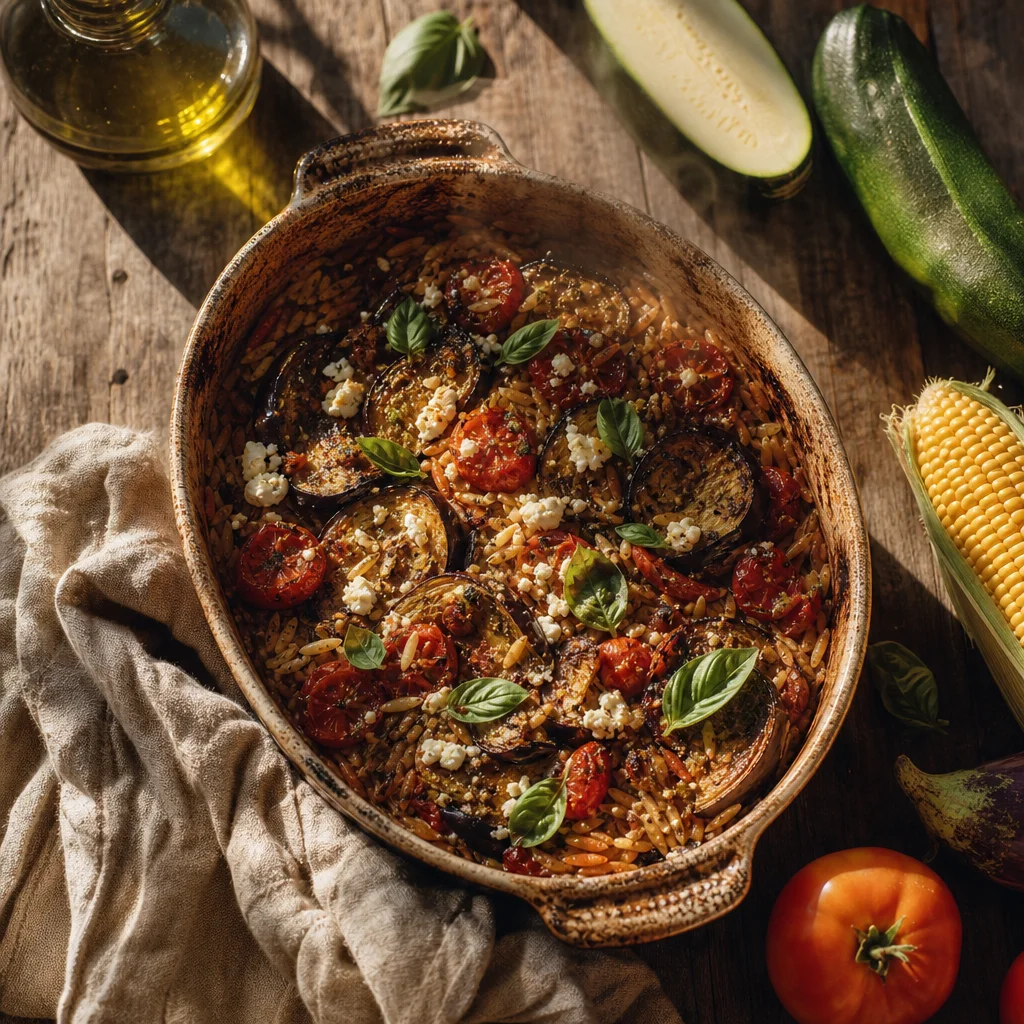
- Roasted Tomato, Eggplant & Whole-Wheat Orzo Bake. Roast eggplant and cherry tomatoes at high heat until charred. Then bake with whole-wheat orzo, broth, and crumbled feta for a vegetarian dinner full of caramelized flavor.
- Lightened Creamy Zucchini-Corn Casserole. Skip the heavy cream. Use Greek yogurt and a little Parmesan, fold in sweet corn and zucchini, and top with whole-wheat panko. The perfect summer side dish.
- High-Protein Veggie Breakfast Bake. Whisk eggs with cottage cheese and black beans. Add roasted zucchini and cherry tomatoes, then bake until puffed. Make it Sunday and eat it all week.
- White Bean & Pepper Fajita Bake. Layer corn tortillas with sautéed peppers, onions, and cannellini beans. Top with a little Cheddar-Jack and broil until bubbly. Serve with avocado, cilantro, and lime.
- Summer Vegetable Tian. Slice zucchini, yellow squash, and tomatoes thin. Arrange them in overlapping rows over garlic-infused olive oil, then bake low and slow. It’s vegan, gorgeous, and great at room temperature.
- Herbed Tomato Gratin. Tuck cubes of whole-grain bread under ripe tomato slices. Drizzle with olive oil and fresh basil or marjoram, then bake until the bread soaks up all the juices.
- Unstuffed Zucchini Casserole. All the flavors of stuffed zucchini without the work. Layer shredded zucchini with lentils or lean ground turkey, tomato sauce, and a sprinkle of cheese. Bake until bubbly.
- Sesame Chicken & Brown Rice Skillet Bake. Brown bone-in chicken thighs over a bed of brown rice, green beans, and bell peppers with a sesame-soy sauce. One pan, big flavor, and it reheats beautifully.
Can I use frozen vegetables in summer casseroles?
Yes. Frozen vegetables count toward your daily vegetable goal, just like fresh. Choose packages without added sauces or salt, and add them straight to the baking dish. No need to thaw first.
How many vegetables do I need each day?
Most adults need about 2 to 3 cups of vegetables daily. A generous casserole serving can get you a big chunk of the way there. A simple visual guide: fill half your plate with vegetables and fruit at each meal.
Why do my zucchini casseroles turn watery?
Zucchini and summer squash hold a lot of water. As they bake, that moisture releases into the dish. The fix: roast the zucchini first, or salt it, let it rest, and pat it dry before adding it to the casserole.
The Bottom Line
Here’s the takeaway: summer casserole recipes don’t have to mean heavy, cream-laden comfort food. With peak-season produce, a roast-first technique, and a few smart swaps, you can turn the humble casserole into one of the healthiest — and easiest — dinners of the season.
Start with one recipe this week. Roast some vegetables, pick a whole grain, and let the oven do the work. Your future self, on a busy Tuesday night in September, will thank you.