

Why Healthy Fat Tissue Is Key to Your Metabolic Health
Key Takeaways
- Fat is not the enemy. Healthy fat tissue is an active organ that produces hormones, stores energy safely, and protects your metabolism.
- Not all fat loss is good. When fat cells become damaged and die, they trigger inflammation that can disrupt your metabolism and even raise diabetes risk.
- Quality beats quantity. The health of your fat cells matters more for metabolic health than how much fat you carry.
- Track these markers. Waist-to-hip ratio, blood glucose trends, and energy levels tell you more than the scale alone.
Imagine working hard to lose weight — only to find out that losing the wrong kind of fat could actually harm your metabolism. That’s exactly what researchers have been uncovering in recent studies. They’ve shown that damaged fat cells can become inflamed, lose their ability to store lipids, and eventually vanish — disrupting the body’s metabolism in the process. The takeaway surprised many: diabetes can result not only from excess fat, but also from losing the healthy fat tissue your body needs to function properly.
This changes how we think about weight loss. For years, the message has been simple: lose fat, get healthier. But the science tells a more nuanced story. Your fat tissue is not just storage. It’s an active organ that plays a vital role in your metabolic health. And when you lose the wrong kind of fat — or lose it in the wrong way — you may be doing more harm than good.
Here’s what the latest research says about healthy fat tissue, how to tell if your fat cells are working for you or against you, and why sustainable weight management matters more than rapid fat loss.
Quick Answer: What Is Healthy Fat Tissue?
Healthy fat tissue (also called healthy adipose tissue) is made of fat cells that are insulin-sensitive, produce anti-inflammatory hormones like adiponectin, have good blood supply, and can safely store lipids without triggering inflammation. It’s the kind of fat that protects your metabolism rather than harming it.
What Exactly Is Healthy Fat Tissue?
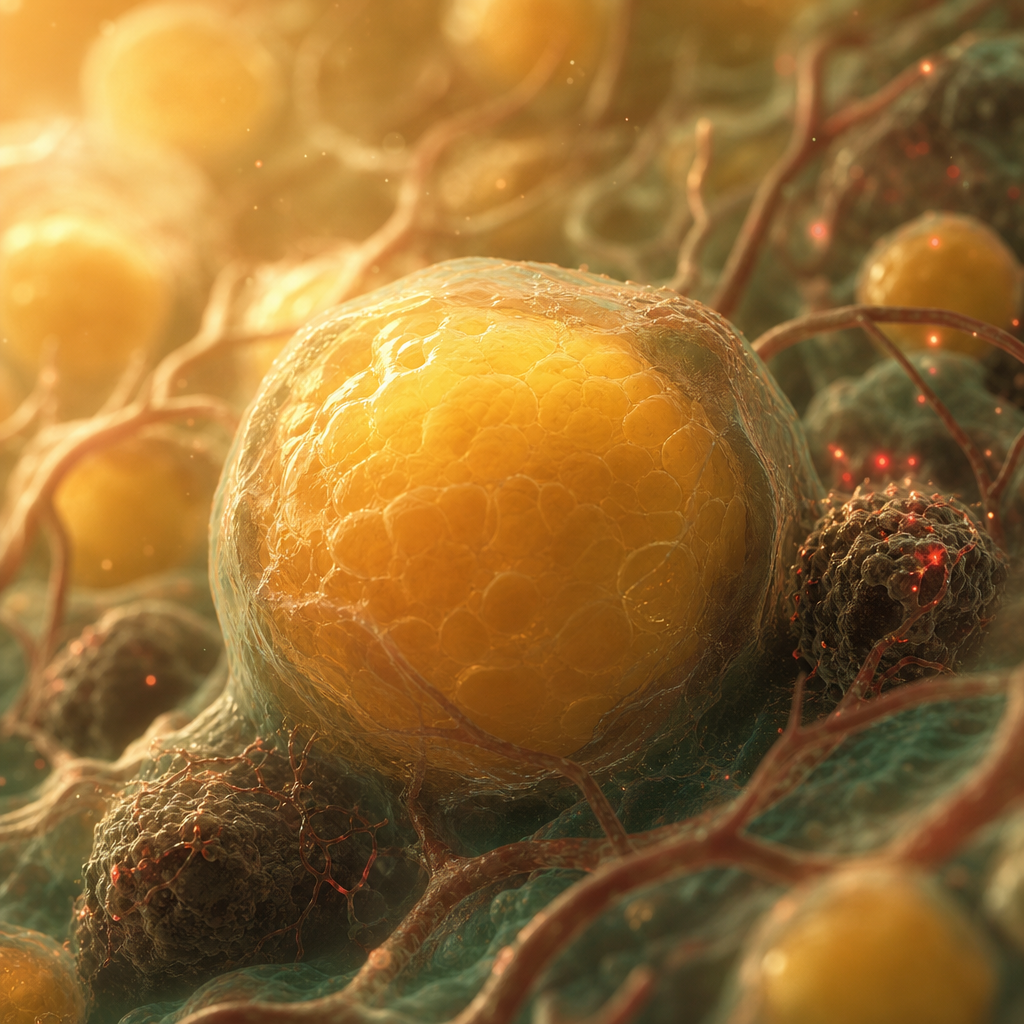
Here’s the thing your doctor probably never told you. Healthy fat tissue is not the problem. It is actually essential for your health. Your fat cells — called adipocytes — do way more than just store energy. They produce hormones that regulate your appetite, inflammation levels, and insulin sensitivity.
A 2025 review in the Canadian Journal of Cardiology explains that the transition from healthy metabolism to metabolic syndrome is triggered by a loss of functional integrity in fat tissue. In plain English? Your fat cells stop working the way they should. That’s when problems start.
A systematic review on ‘sick fat’ syndrome made this point even clearer. The authors concluded that treatment for obesity should be based on “healing rather than extermination of adipocytes.” In other words: support your fat cells, don’t destroy them.
What Healthy Fat Cells Do for You
• Store energy safely — keeping it out of your organs where it can cause damage
• Produce adiponectin — a hormone that helps control blood sugar and reduce inflammation
• Support your immune system — healthy fat tissue stays calm, not inflamed
• Regulate appetite — through the hormone leptin, which tells your brain you’re full
• Cushion your organs — providing physical protection
What Makes Fat Cells Healthy vs Unhealthy?
Not all fat cells are created equal. A healthy fat cell is small to medium in size, insulin-sensitive, and produces more adiponectin — that protective, anti-inflammatory hormone. It has a good blood supply and can expand just enough to store energy without stress.
An unhealthy fat cell looks very different. It is enlarged (hypertrophied), stressed, and inflamed. It pumps out inflammatory signals instead of protective ones. A 2025 review in Biomolecules found that enhanced adipocyte function and beneficial fat distribution — not total fat mass — are what drive metabolic health, even in people with higher body weight.
This explains the concept of metabolically healthy obesity (MHO). Some people carry excess weight but have healthy fat tissue — and their metabolic numbers look fine. But here’s the catch. About 10 to 30 percent of people with obesity may have MHO, and it is often a temporary state. Over time, if fat cells become overwhelmed, they can shift from healthy to sick.
What Happens When Fat Cells Get Damaged?
When fat cells become enlarged and stressed enough, they can die. This sounds dramatic because it is. And when a fat cell dies, your immune system responds.
Immune cells called macrophages rush in to clean up the debris. They cluster around the dead fat cell, forming what scientists call a crown-like structure. A 2026 study in Immunity, Inflammation and Disease showed that these crown-like structures are present in human fat tissue and drive inflammation through a pathway called NLRP3-Caspase-1.
Now here’s where things get interesting. The research published in the Canadian Journal of Cardiology found that the efficiency of these macrophages — how well they clean up debris — is the deciding factor between healthy fat tissue and chronically inflamed tissue. When clearance works well, your fat tissue can recover. When it doesn’t, inflammation spreads.
Why Losing the Wrong Fat Can Backfire
This brings us to the most surprising finding. Losing fat is not always good. When fat cells die off rapidly — through crash dieting, extreme caloric restriction, or very aggressive weight loss — the remaining tissue can struggle to function properly.
Here’s the paradox. Your body needs healthy fat cells to store energy safely. When those cells are destroyed faster than your body can replace them with new, healthy ones, energy has nowhere to go. It spills into your liver, your muscles, and your pancreas. This process, called lipotoxicity, is a major driver of insulin resistance and diabetes. A comprehensive review on lipid storage and lipotoxicity confirms that dysfunctional fat tissue that cannot expand to store lipids is what causes metabolic damage.
The same research we started with shows that diabetes can result not only from having too much fat, but from losing the healthy fat tissue your body needs. The damage comes from losing the healthy fat tissue that was doing an important job.
This is especially relevant if you are using GLP-1 medications like Ozempic or Mounjaro. These drugs produce significant weight loss — clinical trials show averages of 15 to 20 percent of body weight. Research suggests that GLP-1 receptor agonists may work differently depending on whether a person has metabolically healthy or unhealthy obesity (Tsuchiya & Tsutsumi 2025). However, how rapid weight loss from these medications affects the quality of remaining fat tissue is still an open question that researchers are actively studying.
How to Support Healthy Fat Tissue Through Lifestyle
The good news is you can actively support your healthy fat tissue through everyday choices. The goal is not to destroy fat cells. It is to help them function well.
Strategies That Support Fat Tissue Health
1. Prioritize gradual weight loss. Losing about 0.5 to 2 pounds per week — as recommended by standard medical guidelines — gives your fat cells time to adapt. Your body can remove dysfunctional cells and create new healthy ones to take their place.
2. Eat to reduce inflammation. Omega-3 rich foods (salmon, walnuts, flaxseeds), colorful vegetables, and fiber help your fat cells stay calm and functional.
3. Move your body consistently. Regular exercise improves mitochondrial function in fat cells and reduces inflammation — and research suggests that a steady, consistent approach like walking speed that burns more fat may support metabolic health more effectively than intense, sporadic workouts.
4. Get enough sleep. Poor sleep disrupts the hormones your fat tissue produces, including leptin and adiponectin. Aim for seven to nine hours.
5. Manage stress. Chronic stress raises cortisol, which encourages fat storage in the visceral area and promotes fat cell dysfunction.
A 2024 study in Nutrients found that intermittent fasting reduced crown-like structures and fat cell death in mice fed a high-fat diet. While human studies are needed, this suggests that giving your body time between meals may help support healthy fat tissue turnover and reduce inflammation.
Track These Markers Instead of Just the Scale
If you want to know whether your weight loss is helping or hurting your metabolism, the scale won’t tell you. Here are more useful markers:
- Waist-to-hip ratio. Measure your waist at the narrowest point and your hips at the widest. A ratio over 0.85 for women suggests more visceral fat, which is the unhealthy kind.
- Fasting blood glucose. A level below 100 mg/dL is ideal. Rising numbers may indicate that your fat tissue is not handling energy storage well.
- Energy levels. If you feel consistently fatigued despite losing weight, your metabolism may be struggling. Healthy fat tissue helps regulate energy balance.
- Hunger signals. Extreme hunger after weight loss can be a sign that your fat cells are not producing enough leptin, the hormone that tells your brain you’re full.
- C-reactive protein (CRP). This blood test measures inflammation. Lower is better. It gives you a window into whether your fat tissue is inflamed.
FAQ: Your Questions About Healthy Fat Tissue Answered
Can I convert unhealthy fat cells into healthy ones?
Not exactly. But you can improve the function of your existing fat cells through diet and exercise. Your body can also create new, healthy fat cells to replace dysfunctional ones. This process works best with gradual, sustainable lifestyle changes rather than rapid weight loss. Improving the quality of your healthy fat tissue is about supporting the system, not flipping a switch.
Does having more fat always mean worse health?
No. Fat distribution and fat cell quality matter more than total fat mass. The comprehensive Endocrine Reviews paper on metabolically healthy obesity confirms that the ability of subcutaneous fat to expand healthily protects metabolic health. But this is often a temporary state. The safest approach is supporting fat tissue health regardless of your weight.
Is intermittent fasting safe for fat tissue health?
The limited evidence we have is promising. A 2024 animal study found that intermittent fasting reduced fat cell death and crown-like structures in fat tissue. But human studies are needed. If you try intermittent fasting, pay attention to your energy levels and hunger signals. If either becomes extreme, your body may be showing signs of metabolic stress.
The Bottom Line
Here’s what you need to remember. Your fat tissue is not the enemy. It is an essential organ that deserves the same care as your heart, your liver, or your brain. Healthy fat tissue protects your metabolism, produces vital hormones, and keeps energy safely stored where it belongs.
The goal is not to destroy your fat cells. It is to help them work well. That means losing weight at a pace your body can manage, eating foods that reduce inflammation, moving regularly, sleeping enough, and managing stress. And it means looking beyond the scale for signs of metabolic health — your waist-to-hip ratio, your blood glucose, your energy levels, and how you feel overall.
Because the science is clear. Losing the wrong kind of fat can backfire. But supporting your healthy fat tissue? That’s how you build lasting metabolic health.
Sources
Scheidl Taylor B, Wager JL, Thompson JA. Adipose Tissue Stromal Cells: Rheostats for Adipose Tissue Function and Metabolic Disease Risk. Canadian Journal of Cardiology. 2025. PubMed
Kade AKh, Chabanets EA, Zanin SA, Polyakov PP. Sick fat (adiposopathy) as the main contributor to metabolic syndrome. Voprosy pitaniia. 2022. PubMed
Palomäki VA, Väyrynen JP, Koivukangas V, et al. NLRP3-Caspase-1 Axis in Human Adipose Tissue Crown-Like Structures. Immunity, Inflammation and Disease. 2026. PubMed
Engin A. Lipid Storage, Lipolysis, and Lipotoxicity in Obesity. Advances in Experimental Medicine and Biology. 2024. PubMed
Tsuchiya K, Tsutsumi T. Beyond the BMI Paradox: Unraveling the Cellular and Molecular Determinants of Metabolic Health in Obesity. Biomolecules. 2025. PubMed
Blücher M. Metabolically Healthy Obesity. Endocrine Reviews. 2020. PubMed
Lee J, An HS, Shin HJ, et al. Intermittent Fasting Reduces Neuroinflammation and Cognitive Impairment in High-Fat Diet-Fed Mice by Downregulating Lipocalin-2 and Galectin-3. Nutrients. 2024. PubMed