

Heal Gut After Antibiotics: A 7-Day Recovery Plan
You finished your antibiotics. Or maybe you just got over a nasty bout of food poisoning. Either way, your gut feels… off. Recognizing the signs of an unhealthy gut is the first step toward healing — and you’re not alone in dealing with this. Antibiotics are lifesavers, but they can’t tell the difference between the bad bacteria making you sick and the good bacteria keeping your digestion running smoothly. And food poisoning? It basically flushes your microbiome out like a drain cleaner. When you experience both in quick succession — which happens more often than you’d think — your gut takes a real double hit. The good news? Your gut is remarkably resilient. With the right plan, you can heal gut after antibiotics and get your digestion back on track. Here’s exactly how, step by step.
Key Takeaways
- Your gut can recover — but it takes time. Most people start feeling better in 1–2 weeks, but full microbiome recovery can take several months.
- Fiber is your best friend. A high-fiber diet is one of the most powerful tools for rebuilding your gut bacteria after antibiotics.
- Not all probiotics are created equal. Specific strains like Saccharomyces boulardii and Lactobacillus rhamnosus GG have the strongest evidence for preventing antibiotic-related diarrhea.
- Food first, supplements second. Whole foods (fermented foods, diverse plants, bone broth) should be your foundation. Supplements can help, but they’re not a replacement for a healthy diet.
- Lifestyle matters. Sleep, stress management, and hydration are just as important as what you eat for gut recovery.
What Actually Happens to Your Gut After Antibiotics (and Food Poisoning)
Let’s be honest — antibiotics are a medical miracle. They save lives. But they work like a bomb, not a scalpel. They kill the harmful bacteria causing your infection, but they also wipe out the beneficial bacteria that keep your digestive system running smoothly.
Here’s what the science says: even a short course of antibiotics can reduce the diversity of your gut microbiome for months. A 2019 Stanford study found that certain antibiotics like ciprofloxacin can cause a sustained loss of bacterial diversity. And a 2017 review cited by researchers suggests the disruption can last up to a year or more in some cases.
Now add food poisoning to the mix. When you get food poisoning, your body’s natural response is to flush everything out — including your gut bacteria. So if you’ve had food poisoning followed by antibiotics (or vice versa), your microbiome has taken a double hit. But here’s the thing: your gut is designed to bounce back. It just needs the right support.
The Probiotic Debate: What the Research Actually Says
You’ve probably heard that you should take probiotics after antibiotics. But here’s where it gets interesting — and a little confusing.
A landmark 2018 study published in Cell found something surprising. Researchers gave one group of people an 11-strain probiotic after antibiotics, and another group a placebo. The probiotic group actually took longer to recover their gut microbiome — about six months — compared to the placebo group, which recovered in about three weeks. That’s a big deal.
But wait — that’s not the whole story. A 2025 Cochrane review (the gold standard for medical evidence) found that probiotics may reduce the risk of antibiotic-associated diarrhea by about 33% and C. diff infections by about 50% — though the authors note this is low-certainty evidence. The review also noted that 28 of 47 studies had authors affiliated with probiotic companies, which is worth keeping in mind. So which is it?
Here’s the nuance most articles miss: these studies measure different things. The Cell study measured microbiome composition (the ecosystem of bacteria in your gut). The Cochrane review measured clinical outcomes (whether people got diarrhea). A probiotic might reduce diarrhea symptoms while also altering the trajectory of your microbiome recovery. Both things can be true at the same time.
The practical takeaway? If your main concern is preventing diarrhea while on antibiotics, specific probiotic strains can help. But for overall gut recovery, a food-first approach is likely better.
Which Probiotic Strains Actually Work?
If you do decide to use probiotics, strain matters — a lot. A 2024 review in Advances in Therapy identified two strains with the strongest evidence for preventing antibiotic-associated diarrhea:
- Saccharomyces boulardii CNCM I-745 — This is a yeast, not a bacterium. That’s actually its superpower. Because it’s a yeast, antibiotics can’t kill it. You can take it at the same time as your antibiotic without worrying about it being destroyed.
- Lactobacillus rhamnosus GG — This bacterial strain has decades of research behind it for reducing antibiotic-related digestive issues.
If you’re taking probiotics alongside antibiotics, timing matters. Most experts recommend taking your probiotic at a different time of day from your antibiotic dose — at least a few hours apart — to give the good bacteria a fighting chance.
Quick Answer: Should I Take Probiotics While on Antibiotics?
If your goal is to prevent diarrhea, yes — specific strains like Saccharomyces boulardii and L. rhamnosus GG have good evidence. Take them at a different time of day from your antibiotic. If your goal is overall microbiome recovery, focus on fiber-rich whole foods and fermented foods first. Many experts now recommend a combined approach: use targeted probiotics during antibiotics to prevent symptoms, then switch to a food-first recovery plan afterward.
Why Fiber Is Your Gut’s Best Friend After Antibiotics
If there’s one thing every expert agrees on, it’s this: fiber is essential for gut recovery. The Stanford study we mentioned earlier found that a fiber-deficient diet made antibiotic damage to the gut significantly worse and delayed recovery. On the flip side, a high-fiber diet helped the microbiome bounce back faster.
Here’s how it works: fiber from plants travels through your digestive system largely intact. When it reaches your large intestine, your gut bacteria ferment it — essentially, they eat it. This process produces short-chain fatty acids that feed your gut lining and support overall health.
Aim for at least 25 grams of fiber per day from a variety of sources. Think: vegetables, fruits, legumes, whole grains, nuts, and seeds. Diversity matters more than quantity — different fibers feed different bacteria.
One important note: if you’ve just finished antibiotics or recovered from food poisoning, your gut may be sensitive. Start with easily digestible fiber sources like cooked vegetables, oatmeal, and bananas. You can gradually add more fibrous foods like raw vegetables, beans, and whole grains as your gut adjusts.
The Fiber Fine Print: Not All Prebiotics Are Equal
Here’s something most articles don’t tell you: concentrated prebiotic supplements may not be the best choice immediately after antibiotics. A 2021 mouse study in the Journal of Applied Microbiology found that supplementing with inulin-type fructans (a common prebiotic) after antibiotics actually delayed recovery of antibiotic-induced colitis and caused blooms of opportunistic pathogens. Since this was an animal study, we need to be careful about applying it directly to humans — but it does raise an important question about whether concentrated prebiotics are the right choice right after antibiotics.
Does that mean you should avoid fiber? Absolutely not. The key difference is whole foods vs. concentrated supplements. When you get fiber from a diverse range of whole plant foods, you’re feeding a wide variety of bacteria. When you take a concentrated prebiotic supplement, you’re selectively feeding specific bacteria — which can cause imbalance in a gut that’s already disrupted.
The bottom line: get your fiber from food, not supplements, especially in the first few weeks after antibiotics.
Your 7-Day Gut Recovery Protocol
Here’s the practical plan you’ve been waiting for. This protocol is designed for the “double hit” scenario — whether you’ve had antibiotics, food poisoning, or both. Adjust based on how your gut feels.
Days 1–3: The Gentle Recovery Phase
Your gut is still sensitive. Focus on easily digestible, soothing foods that don’t require a lot of work from your digestive system.
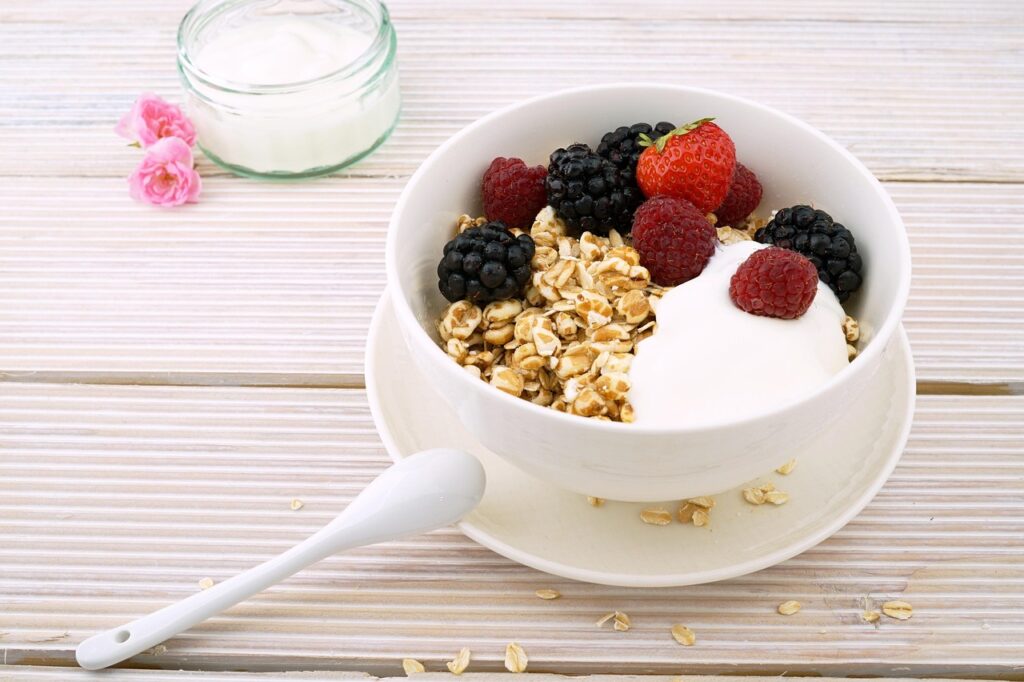
- Breakfast: Oatmeal with mashed banana and a spoonful of flaxseeds
- Lunch: Bone broth with soft cooked carrots and white rice
- Dinner: Steamed salmon with well-cooked sweet potato and zucchini
- Snacks: Plain yogurt (if tolerated), applesauce, bone broth
- Key additions: Bone broth for gut lining support, ginger for nausea if needed
Days 4–7: The Rebuilding Phase
As your gut starts feeling better, gradually introduce more fiber and fermented foods.
- Breakfast: Kefir smoothie with berries, spinach, and a tablespoon of chia seeds
- Lunch: Lentil soup with turmeric and ginger, side of steamed greens
- Dinner: Grilled chicken or tofu with roasted vegetables (broccoli, bell peppers, onions) and quinoa
- Snacks: A small serving of sauerkraut or kimchi (start with 1–2 tablespoons), almonds, pear
- Key additions: Fermented foods (start small), diverse vegetables, legumes
Lifestyle Habits That Support Gut Recovery
What you eat is only part of the picture. Your lifestyle habits play a huge role in how quickly your gut heals.
Sleep. Your gut microbiome follows a circadian rhythm, just like you do. When you don’t get enough sleep, it disrupts the balance of your gut bacteria. Aim for 7–9 hours of quality sleep per night.
Stress management. This one is huge. Cortisol — your stress hormone — directly impacts your gut lining integrity. As integrative medicine physician Frank Lipman, MD, explains, “Cortisol directly impacts gut integrity.” When stress is high, your gut becomes more permeable, which can slow recovery. Even 5 minutes of deep breathing or a short walk can make a difference.
Exercise. Moderate exercise has been shown to improve gut bacteria diversity. But don’t overdo it — intense exercise can actually stress your body when you’re recovering. Think gentle walks, yoga, or light cycling.
Hydration. Water is essential for digestion and nutrient absorption. Aim for 8–10 cups per day, and more if you’ve had diarrhea from antibiotics or food poisoning.
Foods to Avoid While Your Gut Heals
Just as important as what to eat is what to avoid. Some foods can interfere with antibiotic absorption or slow your recovery.
- Grapefruit and grapefruit juice — Can interfere with how your body breaks down certain antibiotics. Check with your doctor.
- Dairy products — Calcium can reduce antibiotic absorption. Wait at least 3 hours after taking your antibiotic before consuming dairy.
- Alcohol — Can worsen side effects and interfere with recovery. Avoid entirely while on antibiotics, and for 48–72 hours after finishing certain types (metronidazole, tinidazole).
- Ultra-processed foods and added sugar — These feed the “wrong” bacteria and can make it harder for beneficial microbes to flourish.
- High-calcium supplements or fortified foods — Can decrease absorption of some antibiotics.
Safety First: Who Should Be Careful with Probiotics
While probiotics are generally safe for healthy people, the NIH’s National Center for Complementary and Integrative Health notes that the risk of harmful effects is greater in people with severe illnesses or compromised immune systems. The FDA has even warned about severe infections in premature infants given probiotics.
If you have any of the following, talk to your doctor before taking probiotic supplements:
- A compromised immune system (due to chemotherapy, organ transplant, or other conditions)
- A central venous catheter
- Short bowel syndrome
- Recent surgery
- Pregnancy or breastfeeding (always check with your doctor first)
For most healthy people, getting probiotics from food sources (yogurt, kefir, kimchi, sauerkraut) is the safest approach.
When to See a Doctor
Most people recover from antibiotics and food poisoning without complications. But sometimes things don’t go as planned. See your doctor if:
- Diarrhea persists for more than a few days after finishing antibiotics
- You have severe abdominal pain or cramping
- You notice blood in your stool
- You have a fever over 101°F
- You’re unable to keep fluids down for more than 24 hours
- Your symptoms get worse instead of better
These could be signs of a C. diff infection or other complication that needs medical treatment.
Frequently Asked Questions
How long does it take to heal gut after antibiotics?
Most people start feeling better within 1–2 weeks. But full microbiome recovery — meaning your gut bacteria diversity returns to pre-antibiotic levels — can take weeks to months. Some studies suggest certain bacterial species may never fully return to baseline. The key is to focus on what you can control: diet, sleep, stress, and exercise.
Can I take probiotics and eat high-fiber foods at the same time?
Yes, absolutely. In fact, that’s the ideal approach. Probiotics introduce beneficial bacteria, while fiber (prebiotics) feeds the bacteria already in your gut. Think of it as planting seeds (probiotics) and then watering them (fiber). Just be aware that if you’re taking a bacterial probiotic, it should be taken at a different time of day from your antibiotic dose.
What if I’ve had both food poisoning AND antibiotics?
This is the “double hit” scenario, and it’s more common than you might think. Your gut has been stressed twice in quick succession. The recovery approach is the same, but you may need to be more patient. Start with the gentle recovery phase (Days 1–3) and stay there longer if your gut is still sensitive. Listen to your body — it will tell you when it’s ready for more fiber and fermented foods.
How do I know if my gut has recovered?
You’ll know because you’ll feel it. Signs of recovery include: regular, comfortable bowel movements; no bloating or gas after meals — foods that reduce bloating fast can help during the transition; being able to eat a wider variety of foods without discomfort; and overall improved energy and mood. If you’re still having digestive issues after a few months, it’s worth talking to your doctor.
The Bottom Line
Your gut has been through a lot. But here’s the good news: it’s designed to recover. With the right combination of fiber-rich whole foods, targeted probiotics (if needed), fermented foods, and healthy lifestyle habits, you can heal gut after antibiotics and come back stronger than before.
Remember, recovery isn’t linear. Some days you’ll feel great, and other days your gut might feel off again. That’s normal. Be patient with yourself, listen to your body, and give it the time and nutrients it needs to rebuild.
And if you’re ever unsure about what’s normal vs. what needs medical attention, trust your instincts and check with your healthcare provider. Your gut health is worth it.