
Garlic Powder Recall: What Home Cooks Need to Know
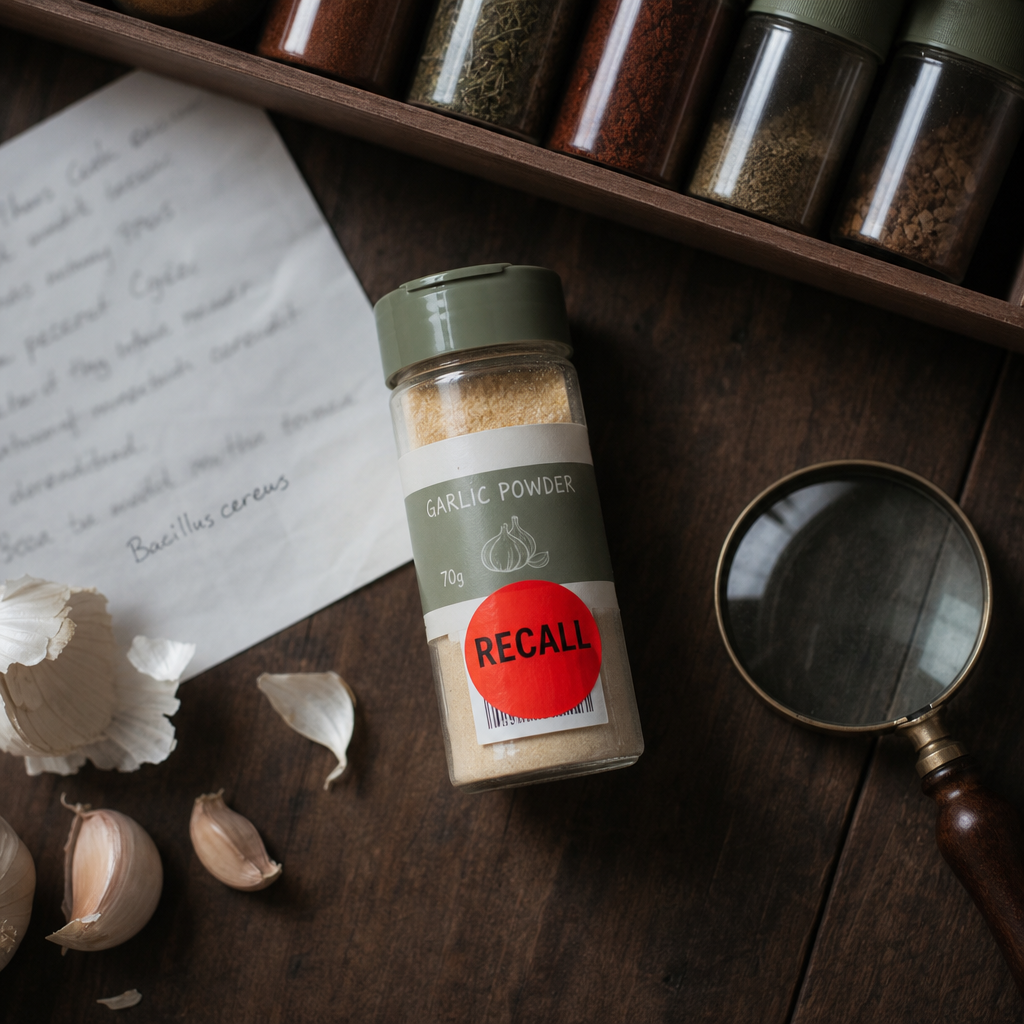
Did you check your spice rack this week? If you bought garlic powder recently, you might want to take a quick look. The Canadian Food Inspection Agency (CFIA) just announced a garlic powder recall due to bacterial contamination. Here’s what you need to know — even if you don’t live in Canada.
Key Takeaways
- What happened: Heavenly Spices Garlic Powder (70g) was recalled across Canada due to Bacillus cereus contamination.
- Affected product: UPC 6 67888 50634 7, best-by date January 30, 2029, code GP 30ZV PIT.
- What to do: Dispose of the product or return it for a refund. Contact CFIA with questions.
- Why it matters: Bacillus cereus can cause food poisoning. Here’s how to protect your kitchen — and your family.
The Garlic Powder Recall: What Happened
On July 15, 2026, the CFIA recall notice announced that Heavenly Spices Garlic Powder was being pulled from shelves nationwide. The product was sold at retailers across Canada and online. The reason? Bacillus cereus contamination — a type of bacteria that can cause foodborne illness.
This is a Class II recall, which means it may cause temporary health effects. It’s not the most severe level, but it’s serious enough that you should take action if you have this product in your pantry.
Affected Product Details
- Brand: Heavenly Spices
- Product: Garlic Powder
- Size: 70g
- UPC: 6 67888 50634 7
- Best-by date: January 30, 2029
- Additional code: GP 30ZV PIT
What Is Bacillus cereus?
Bacillus cereus is a type of bacteria found naturally in soil. It’s one of the most common spore-forming bacteria in dried spices, according to a 2021 systematic review. Here’s the thing: these bacteria can form spores — tiny, tough shells that protect them from heat, drying, and other conditions that would normally kill bacteria.
That’s why dried spices can be a problem. The drying and grinding process used to make garlic powder doesn’t kill B. cereus spores. They just sit there, waiting for the right conditions to grow.
When B. cereus does cause illness, it comes in two forms. The diarrheal type causes watery diarrhea and abdominal pain about 6 to 15 hours after eating. The emetic type causes nausea and vomiting within 1 to 5 hours. A 2026 review of B. cereus toxins explains that both types are caused by different toxins the bacteria produces. Most cases resolve within 24 hours, but they can be unpleasant.
How Does Bacillus cereus Get Into Spices?
You might be thinking: how does bacteria end up in a dried spice? It’s a fair question. The answer starts in the field. Spices are mostly grown in developing countries on small farms using traditional methods. The bacteria gets into the spice supply in two main ways.
First, through soil contact during harvesting or drying. Since B. cereus lives in soil, it’s easy for it to hitch a ride on spice plants. Second, through cross-contamination during processing, especially when water is used to cook or clean the spices. These contamination pathways remind us that fresh and dried foods alike can carry risks when handling and processing aren’t carefully managed.
A large UK study of 2,833 spice samples found that about 1% contained high levels of B. cereus. That’s a small percentage, but it means the risk is real — especially when you consider how many households use garlic powder regularly.
What Are the Symptoms of Bacillus cereus Poisoning?
If you’ve eaten the recalled garlic powder, here’s what to watch for. The most common symptoms include abdominal pain, watery diarrhea, nausea, and vomiting. Some people also develop a fever.
A 2025 outbreak study found that 100% of affected people had abdominal pain, and 92% had diarrhea. Symptoms usually start 6 to 36 hours after eating contaminated food. The good news? Most people recover within 24 hours without needing medical treatment.
However, if you’re pregnant, over 65, have a weakened immune system, or are caring for a young child, the risk is higher. In these cases, symptoms can be more severe. Contact a healthcare professional if you’re concerned.
When to See a Doctor
Seek medical help if you or a family member experiences: severe abdominal pain, bloody diarrhea, high fever (over 101.5°F), signs of dehydration (dry mouth, dizziness, decreased urination), or symptoms lasting more than 3 days. For infants, older adults, and anyone with a weakened immune system, call your doctor at the first sign of illness.
What to Do If You Have the Recalled Garlic Powder
If you find a bottle of Heavenly Spices Garlic Powder with the affected UPC and best-by date, here’s what to do. First, don’t use it. Dispose of it in a sealed container so no one else in your household accidentally uses it. Or return it to the store where you bought it for a refund.
For questions about this recall, contact the CFIA by calling 1-613-773-2342 or emailing [email protected].
If you live in the US, this recall doesn’t directly affect you. But it’s a good reminder to check your spice cabinet. You can also visit the FDA recall page to see if any similar recalls have been issued in the US.
Spice Safety Tips for Every Kitchen
This recall is a good reminder to think about spice safety in general. Here are three practical tips you can use today. These same principles apply to keeping your whole kitchen safe — as we’ve explored in our guide to kitchen food safety during foodborne illness outbreaks.
Cook spices into your food. Adding garlic powder to a dish while it’s cooking is safer than sprinkling it on afterward. Heat kills the active bacterial cells. However, spores can survive and grow if the cooked food is left at room temperature too long. So always refrigerate leftovers promptly.
Store spices properly. Keep spices in a cool, dark, dry place. Avoid storing them above the stove, where heat and humidity can create conditions for bacterial growth. A pantry or cabinet away from the oven is ideal.
Check your spices regularly. Look for changes in color, smell, or texture. If a spice looks clumpy, has an off smell, or shows any signs of moisture, it’s best to toss it. Also, pay attention to recall announcements — they’re not just for fresh foods.
Frequently Asked Questions About the Garlic Powder Recall
Should I throw away all my garlic powder?
No. Only the specific Heavenly Spices Garlic Powder with UPC 6 67888 50634 7 and best-by date January 30, 2029 is affected. Check your bottle’s label before taking any action.
Can I cook the garlic powder to kill the bacteria?
Cooking kills the active bacterial cells, but it may not destroy all the spores. The safest option is to dispose of the recalled product. Don’t take chances with your health.
Is this recall only in Canada?
Yes, this specific recall is issued by the CFIA for products sold in Canada. US readers are not directly affected, but it’s a good time to review your own spice safety practices.
How long does Bacillus cereus food poisoning last?
Most people recover within 24 hours. Symptoms typically start 6 to 36 hours after eating contaminated food and resolve on their own. Stay hydrated and rest. If symptoms are severe or last longer than 3 days, see a doctor.
The Bottom Line
The garlic powder recall in Canada is a timely reminder that food safety applies to every item in your kitchen — including dried spices. While most spices are perfectly safe, occasional contamination can happen. The key is knowing what to look for and how to respond.
If you have the recalled product, dispose of it or return it. If you don’t, use this as a chance to check your spice cabinet, review your storage habits, and remember that a little awareness goes a long way toward keeping your family healthy.
Stay safe, and happy cooking.