

Diabetes Friendly Side Dishes: Melting Zucchini Recipe
Key Takeaways
- Fill half your plate with non-starchy vegetables — zucchini included. It’s the simplest proven framework for blood sugar-friendly meals.
- Browning zucchini before roasting builds deep, caramelized flavor with zero added sugar.
- Vinegar has real evidence behind it. A 2017 meta-analysis found it can modestly lower post-meal blood sugar and insulin responses.
- Pair this side with lean protein — chicken, steak, tofu, or chickpeas — for a complete, satisfying plate.
- The best diabetes friendly side dishes watch more than carbs. Sodium and added sugar matter too.
Here’s the thing about diabetes friendly side dishes: most of us start with what we’re giving up. The potatoes. The white rice. The sweet, sticky glazes. But the real magic happens when we flip the script. We start with what we’re adding — bold flavor from vegetables, smart technique, and a few evidence-backed ingredients.
In this guide, you’ll master a melting zucchini method that delivers deep flavor with zero added sugar. You’ll learn why balsamic vinegar is a smart pairing for steadier blood sugar. And you’ll get simple protein pairings that turn one side dish into a complete, satisfying meal.
Quick Answer: What Makes a Side Dish Truly Diabetes-Friendly?
The best diabetes friendly side dishes start with non-starchy vegetables that fill half your plate. They add fiber, skip added sugar, keep sodium modest, and pair naturally with lean protein. And most importantly? They taste so good you’d never call it a compromise.
Diabetes Friendly Side Dishes Start With Vegetables First
Before we get to the recipe, let’s talk about the framework that makes any side dish work for blood sugar. The American Diabetes Association’s Diabetes Plate method is beautifully simple: use a nine-inch plate. Fill half with non-starchy vegetables. Fill a quarter with lean protein. Fill the last quarter with quality carbs — whole grains, starchy vegetables, beans, fruit, or low-fat dairy.
Non-starchy vegetables like zucchini, broccoli, cauliflower, and green beans are the superstars here. They’re low in carbs and rich in fiber, vitamins, and minerals. The ADA notes that a half-cup serving of cooked non-starchy vegetables has about 5 grams of carbs or less. Zucchini is on that list — which makes it a perfect base for a flavorful side dish.
That fiber matters for blood sugar. Higher-fiber foods slow the digestion of carb foods, which lowers the chance of a spike after your meal. The CDC’s diabetes meal planning guide puts it simply. Eating carbs with protein, fat, or fiber slows how quickly your blood sugar rises. And the NIH MedlinePlus guide to the diabetic diet reinforces the same idea. Vegetable-forward eating is recommended. Added sugars and refined grains are limit foods.
So when you lead with a vegetable side like this one, you’re doing more than adding color. You’re building a meal designed for steadier glucose from the very first bite. That’s what the best diabetes friendly side dishes do — and this one delivers.
The Melting Zucchini Technique: Big Flavor, Zero Added Sugar
Picture this: a busy weeknight. You need diabetes friendly side dishes that are fast, healthy, and actually delicious. You grab zucchini — the vegetable that’s probably already in your fridge. You slice it, then brown it in a hot pan. Add garlic, balsamic, and rosemary. Ten minutes later, it’s roasting in the oven while you finish the chicken.
That browning step is the secret. Here’s what’s actually happening. When zucchini hits a hot pan with olive oil, the natural sugars and amino acids on its surface react. This is called the Maillard reaction — the same chemistry behind toasted bread and seared steak. It creates hundreds of flavor compounds. The result? Rich, savory, slightly sweet notes. Zero added sugar.
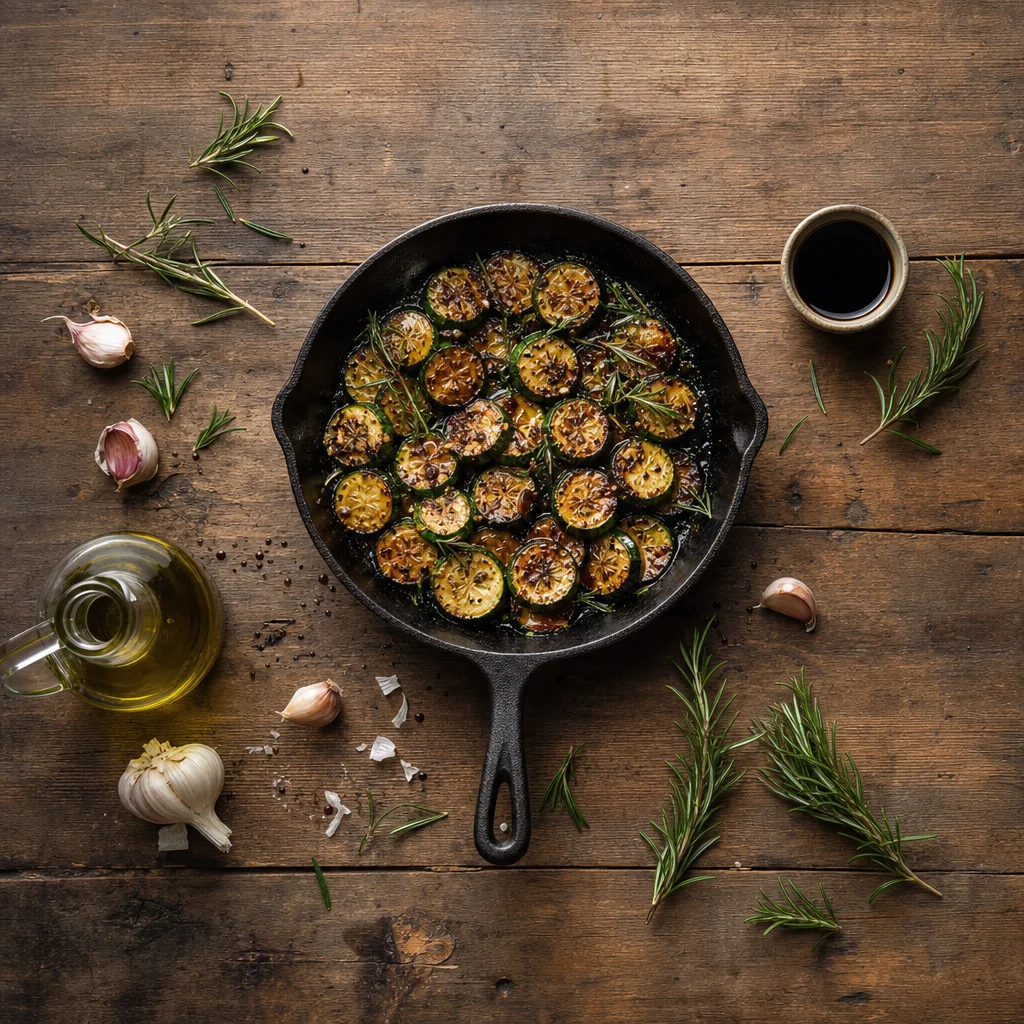
Roasting takes it further. The zucchini becomes lusciously soft, while the balsamic, garlic, and rosemary juices thicken into a shiny coating on every piece. Here’s the full recipe.
Balsamic-Rosemary Melting Zucchini
Serves 4
Ingredients:
- 4 medium zucchini (about 1½ pounds), cut into 1-inch rounds
- 2 tablespoons olive oil
- 3 cloves garlic, minced
- 2 tablespoons balsamic vinegar
- 1 tablespoon fresh rosemary, finely chopped
- ¼ teaspoon salt
- Fresh black pepper, to taste
Directions:
- Preheat your oven to 425°F.
- Heat the olive oil in a large oven-safe skillet over medium-high heat.
- Add the zucchini in a single layer. Cook 3 to 4 minutes per side, until deeply browned.
- Add the garlic and cook 30 seconds, until fragrant.
- Add the balsamic vinegar and rosemary. Stir to coat every piece.
- Transfer the skillet to the oven. Roast 10 to 12 minutes, until the zucchini is tender and the vinegar has reduced to a glossy glaze.
- Season with salt and pepper. Serve warm.
Approximate nutrition per serving: 100 calories, 7g carbs, 2g fiber, 2g protein, 7g fat.
Now, you might be thinking: what about the sugar in balsamic? Fair question. Balsamic vinegar contains naturally occurring grape sugar — about 2 to 3 grams per tablespoon. This recipe uses 2 tablespoons across four servings. That’s roughly 1.5 grams of sugar per serving. A tiny price for the flavor it delivers, and nowhere near the added sugar hiding in most bottled glazes and sauces.
Sodium stays smart, too. With just a quarter teaspoon of salt for the whole dish, each serving lands around 150 mg of sodium. That matters because diabetes raises heart disease risk — and excess sodium is hard on the heart.
Why Vinegar Is a Smart Pairing for Steadier Blood Sugar
That balsamic vinegar isn’t just there for flavor. The science is genuinely interesting. A 2017 meta-analysis — a study that combines results from multiple trials — found something encouraging. Vinegar with a meal reduced post-meal blood sugar and insulin responses. The effect was moderate, not massive. However, researchers concluded that vinegar could be a useful tool for blood sugar control.
How much vinegar are we talking? A review in Clinical Nutrition ESPEN found that roughly 2 to 6 teaspoons per day — about 10 to 30 mL — with carb-containing meals appears to improve blood sugar response. This recipe uses 2 tablespoons across the whole dish. That’s about 1.5 teaspoons per serving — close to the studied range, especially if you enjoy a second serving.
Here’s the nuance most articles skip. The effect is modest and context-dependent. One study in people with type 2 diabetes found that vinegar reduced post-meal glucose when added to a high-glycemic meal. It had little added effect on an already low-glycemic one. In plain terms? Vinegar helps most when your meal includes carbs. It’s not a miracle fix. It’s a smart, evidence-friendly flavor choice.
Food First, Not Supplements
You might see vinegar pills at the supplement aisle. One small 2020 trial in healthy adults found liquid vinegar blunted the post-meal glucose rise by about 31%. Vinegar tablets did not — even at a higher acetic acid dose. The research we have points to vinegar in food, not pills.
One more reason to make this a habit. An eight-week randomized controlled trial found that daily vinegar improved fasting glucose and insulin resistance in adults at risk for metabolic problems. And just to be clear: it didn’t cause weight loss. But better glucose control? Yes. So adding this zucchini side to your weekly rotation is a reasonable pattern — not a treatment.
3 Easy Variations for Diabetes Friendly Side Dishes
Once you master the brown-then-roast technique, you can riff on this dish all season. These diabetes friendly side dishes come together fast — each variation takes about five minutes of extra prep.
Lemon-Garlic. Skip the balsamic. After browning, add the garlic, 2 tablespoons lemon juice, and 1 teaspoon lemon zest. Roast as directed. Finish with fresh parsley.
Chili-Lime. Swap rosemary for 1 teaspoon chili powder. Add 2 tablespoons lime juice after browning. Finish with cilantro. This one is fantastic with grilled fish.
Parmesan-Thyme. Use fresh thyme instead of rosemary. After roasting, sprinkle with 2 tablespoons grated Parmesan. The cheese adds savory depth and a little protein. Keep it to a light sprinkle to stay sodium-smart.
See what’s happening here? These diabetes friendly side dishes are built on technique, not sugar. And each variation pairs beautifully with a different protein main.
How to Build a Complete Plate Around This Side
A side dish is only part of the story. Here’s how to finish your plate the easy way. Remember the plate method: half non-starchy vegetables, a quarter lean protein, a quarter quality carbs. Your melting zucchini fills the vegetable half. Now add a protein.
Research supports this pairing. The CDC’s diabetes meal planning guide notes that protein, fat, or fiber eaten with carbs slows the blood sugar rise. A small 2024 randomized controlled trial also found that protein-rich, lower-carb meals produced smaller blood sugar peaks than carb-heavy meals. The effect held in adults with and without type 2 diabetes. For the full framework in action, see our high-protein, high-fiber diabetes meal plan.
Roasted chicken. Try lemon-rosemary thighs or a simple herb-roasted breast. Add a fist-sized serving of quinoa or brown rice for your carb quarter.
Grilled steak. Flank steak or sirloin works beautifully. Serve with a small sweet potato or a portion of black beans.
Vegetarian mains. Crispy tofu, smoky chickpeas, or a lentil patty. Round it out with a whole-grain roll or a small scoop of wild rice.
The combination of fiber, protein, and a modest amount of quality carbs is exactly what helps keep blood sugar steady. And that’s the beauty of these diabetes friendly side dishes — they leave room for the carbs you actually enjoy.
Common Questions About Diabetes Friendly Side Dishes
Does roasting change the carbs in vegetables?
No. Cooking doesn’t add or remove carbohydrates. Roasting removes some water, so flavors concentrate — but the carb count stays the same.
How much vinegar is reasonable?
Research uses about 2 to 6 teaspoons per day with carb-containing meals. This recipe has about 1.5 teaspoons per serving. Food amounts are generally safe for most people. However, vinegar is not a substitute for medication. If you take blood sugar medication, talk to your care team.
Can I meal-prep this dish?
Yes. Roasted zucchini keeps in the fridge for up to 4 days in an airtight container. Reheat in a skillet to bring back some crispness. The flavors actually deepen overnight.
Are all ‘diabetes-friendly’ sides actually healthy?
Not always. Some products labeled ‘diabetic’ are high in sodium or added sugar. A genuinely good side checks more than carbs. It’s low in added sugar, moderate in sodium, and made with heart-healthy fats. This zucchini side checks all those boxes.
Your Week-One Game Plan
- Make the melting zucchini recipe once this week. Master the brown-then-roast technique.
- Pair it with a protein you already love — chicken, steak, tofu, or chickpeas.
- Keep your carb quarter modest, about a fist-sized portion.
- Try one variation next week. Which flavor did you love most?
Small steps. Real flavor. No deprivation. That’s how vegetables-first becomes a habit — one you can keep going tomorrow morning with our diabetes breakfast recipes ready in 15 minutes.
The Bottom Line: Vegetables First, Never a Compromise
Here’s what I want you to remember. Building a plate around vegetables doesn’t mean bland food or tiny portions. It means using technique to get more flavor, not more sugar. It means choosing sides that do double duty — delicious and evidence-backed.
And it means staying skeptical of labels. Some sides marketed as ‘diabetic’ are heavy on sodium or added sugar. This recipe sidesteps that trap: low in carbs, no added sugar, moderate sodium, heart-healthy olive oil, and real flavor from browning, vinegar, and herbs. Everyone’s blood sugar responds differently, so keep working with your care team to find the eating pattern that fits your life.
If you’re managing type 2 diabetes or prediabetes, this approach isn’t about restriction. It’s about building meals that work with your body, not against it. Start with this zucchini side. Master the technique. Then experiment with the variations and protein pairings.
And when it comes to diabetes friendly side dishes, the best ones share a secret. They lead with vegetables. They build flavor with technique — browning, vinegar, herbs — not sugar. Before you know it, vegetables-first will feel like second nature. And your plate will be more colorful, more satisfying, and smarter for your blood sugar than ever before. That’s a healthy habit worth building.