

Colon Cancer Blood Test: What It Can and Can’t Do
Key Takeaways
- The FDA approved SimpleScreen CRC on July 24, 2026 — a colon cancer blood test for adults 45+ at average risk.
- Blood tests catch about 8 in 10 colorectal cancers but miss most precancerous polyps.
- Colonoscopy remains the gold standard because it finds and removes polyps in one step.
- A positive blood test always requires a follow-up colonoscopy, ideally within 6 months.
- Blood tests are not for high-risk people — including those with IBD, hereditary syndromes, prior cancer, or symptoms like rectal bleeding.
If you’ve been postponing your colonoscopy, this news might finally get you to act. The FDA just approved a new colon cancer blood test. It could make screening as simple as a routine blood draw — no prep, no sedation, no day off work.
Tens of millions of Americans are overdue for colorectal (colon and rectal) cancer screening. In fact, the American Cancer Society reports that about 1 in 3 eligible adults — more than 20 million people — haven’t been screened as recommended. On July 24, 2026, the FDA approved SimpleScreen CRC, a new option for adults 45 and older at average risk. But here’s the thing: a colon cancer blood test is not a colonoscopy replacement. Here’s what you need to know before you ask your doctor to order it.
Quick Answer: Is the colon cancer blood test as good as a colonoscopy?
No — blood tests detect roughly 8 in 10 colorectal cancers. But they miss most precancerous polyps, the abnormal growths screening is designed to catch before they turn into cancer. That’s why colonoscopy remains the gold standard. The blood test is best for people who would otherwise skip screening entirely.
What the Colon Cancer Blood Test Can and Can’t Do
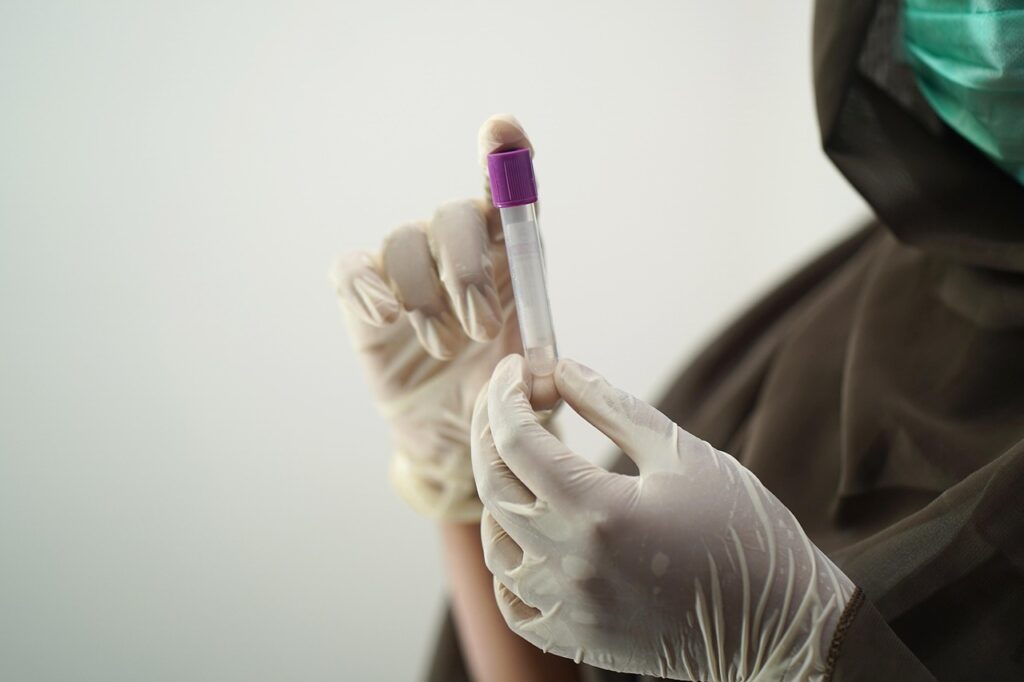
SimpleScreen CRC works by finding tiny pieces of tumor DNA in your bloodstream — what scientists call cell-free DNA. The test scans for chemical changes on that DNA, called methylation patterns, that can signal cancer. You’d get a simple blood draw at your doctor’s office. Results typically arrive within about two weeks, the company says.
The FDA approved it for routine screening only, for average-risk adults 45 and older. “Average risk” means no personal history of colorectal cancer or polyps — and no inflammatory bowel disease or hereditary cancer syndromes. The FDA’s approval record is explicit: a positive result must be followed by colonoscopy.
Here’s what the test can do: find about 8 in 10 colorectal cancers. But the colon cancer blood test has a significant blind spot. In the PREEMPT CRC study, published in JAMA, it detected only 12.5% of advanced precancerous lesions. That result failed the study’s own acceptance threshold.
How Accurate Is the Test? The Numbers to Know
Let’s talk numbers, because they tell the real story. In the JAMA study, SimpleScreen detected 79.2% of colorectal cancers. The company markets a slightly higher figure — 81.1% — after adjusting for age and sex to match the U.S. population. Either way, about 2 in 10 cancers slip through.
Specificity — how often the test correctly says “no cancer” — was 91.5%. That means about 9 in 10 people without cancer got a negative result. However, the trade-off is real: only about 1 in 6.5 positive results reflects actual disease. Most positives are false alarms, but each one still calls for a colonoscopy.
How does this compare to Shield? The New England Journal of Medicine study of Shield found 83.1% sensitivity for colorectal cancer. It found just 13.2% for advanced precancerous lesions. But don’t rank them side by side — different studies, different populations, no head-to-head comparison.
There’s another weakness worth knowing. Blood tests are least accurate at stage I, the earliest cancer stage. The 2026 ACS guideline update notes blood-based tests have lower detection of stage I cancers than stool tests or colonoscopy. A pooled analysis of 58 blood-test platforms found only about 70% of stage I cancers were detected. The two FDA-approved tests sit at the lower end of that range.
Is the Colon Cancer Blood Test Right for You?
Here’s where expert guidance matters. The American Cancer Society’s updated 2026 guideline is clear. Blood-based tests are only for people who decline or don’t complete preferred screening tests. Preferred options include colonoscopy and stool tests like FIT and Cologuard.
So when does the colon cancer blood test make sense? If you’re 45 or older and at average risk, a blood test beats doing nothing. That’s especially true if you won’t schedule a colonoscopy or complete a stool test. It’s a bridge to screening, not an upgrade.
This matters for women, too. Colorectal cancer isn’t a “men’s disease.” The ACS reports it’s now the top cancer killer of adults under 50. In the SimpleScreen study, 55.8% of participants were women.
Who Should NOT Use a Blood Test
Skip blood-based screening if you have:
- Inflammatory bowel disease, like Crohn’s or ulcerative colitis
- A personal history of colorectal cancer or precancerous polyps
- A hereditary syndrome, like Lynch syndrome or FAP
- A first-degree relative (parent or sibling) with colorectal cancer
- Symptoms like rectal bleeding, unexplained weight loss, or ongoing bowel changes
Every expert guideline agrees: these situations call for colonoscopy, not a blood test.
Cost, Coverage, and How Often You’d Repeat It
Here’s a detail most headlines skip: your insurance. The U.S. Preventive Services Task Force decides which screenings insurers must cover. Blood tests aren’t on its list yet. The CDC’s screening guidance doesn’t include them either, so coverage varies widely by plan.
If you’re leaning toward the colon cancer blood test, check your coverage first. A cost-effectiveness analysis found blood tests need two things to be worth their price. They’d need far better polyp detection — above 40% — and a cost under $125 per test. Most current tests hit neither mark.
If you do choose a colon cancer blood test, plan on repeating it every few years. The earlier-approved Shield test is done every 3 years under current guidance. Freenome hasn’t yet announced SimpleScreen’s repeat schedule, so ask your doctor what interval applies to you. And remember: a negative result isn’t a guarantee. It just means the test found no cancer signals that day.
What Happens If Your Blood Test Comes Back Positive?
Here’s the reassuring part: don’t panic. A positive result does not mean you have cancer. Given the test’s positive predictive value of 15.5%, most positives turn out to be false alarms. However, you can’t know which one you are without a colonoscopy.
That’s the non-negotiable commitment. The ACS guideline says anyone with a positive non-colonoscopy test should get a follow-up colonoscopy, preferably within 6 months. The National Cancer Institute warns this step is often skipped.
Skipping it has real consequences. One study found that people who skipped a follow-up colonoscopy were twice as likely to die from colorectal cancer. So before you choose a blood test, ask yourself: if it comes back positive, will I schedule the colonoscopy? If the answer is no, the blood test loses its safety net.
Frequently Asked Questions
Can I get the blood test at my annual physical?
Yes — that’s the appeal. You’d ask your doctor to order it, get your blood drawn in the office, and have results within about two weeks. The company expects the test to be available in the U.S. this fall.
Is a stool test better than a blood test?
For detection, yes. Stool DNA tests like Cologuard are preferred in current guidelines, while blood tests are not. However, if you won’t complete a stool test at home, a blood draw may be the option you’ll actually do.
What if I’m under 45 but have a family history?
You may need to start screening earlier — and with colonoscopy, not a blood test. Our cancer aggression gene explainer digs into how genes shape cancer risk. Talk to your doctor about your personal risk and the right schedule for you.
How often would I need the test?
The FDA-approved Shield test is repeated every 3 years under current guidance. SimpleScreen’s repeat interval hasn’t been formally established yet. Confirm the schedule with your doctor.
Your Next Step
1. Book the conversation. If you’re 45 or older and overdue for screening, talk to your doctor this month.
2. Ask about cost. Verify what your insurance covers before choosing any test.
3. Commit to follow-through. If you choose the colon cancer blood test, promise yourself now: positive means colonoscopy.
The Bottom Line: Choose the Test You’ll Actually Complete
Experts put it simply: the best screening test is the one you actually complete. For most people, that’s still a colonoscopy every 10 years. It’s the only test that finds and removes precancerous polyps in one visit. Add the everyday habits in our colon cancer prevention guide to lower your odds further.
But if you haven’t been screened, a colon cancer blood test beats doing nothing at all. Roughly 1 in 3 eligible adults are in that boat. Early-stage colorectal cancer has a 5-year survival rate above 90%, according to the ACS. The goal is finding it early — and any step counts.
So talk to your doctor. Ask which test fits your risk, your budget, and your willingness to follow through. If you choose a blood test, make the promise now: positive means colonoscopy. Your future self will thank you.
Related Articles You Might Enjoy
- Alzheimer’s Blood Test: What You Need to Know — blood-based diagnostics are reshaping how we catch disease early.
Sources and Further Reading
- FDA: Approval record for SimpleScreen CRC (P250029)
- JAMA: PREEMPT CRC validation study
- NEJM: ECLIPSE validation study for the Shield test
- American Cancer Society: 2026 screening guideline update
- CA: A Cancer Journal for Clinicians — full 2026 ACS guideline
- National Cancer Institute: Where blood-based screening fits
- CDC: Colorectal cancer screening basics
- USPSTF: Colorectal cancer screening recommendation
- JNCI: Cost-effectiveness of blood-based screening