
How to Clean a Wooden Cutting Board Naturally (Woodworker Method)
Key Takeaways
- Skip the harsh dish soap. It strips wood’s natural oils, causing drying and cracking. Use a gentle cleaner made from vinegar, castile soap, and essential oils instead.
- The lemon-salt scrub works wonders. Combined with coarse salt and a lemon half, this duo lifts stubborn odors like onion, garlic, and fish — without masking them.
- Dry your board on its edge. Standing it upright after cleaning allows both sides to air-dry completely, preventing moisture damage and mold.
- Oil your board monthly. A coat of food-grade mineral oil or a dedicated cutting board oil keeps the wood hydrated and resistant to stains.
Picture this: You’ve just finished chopping onions and garlic on your favorite wooden cutting board. You give it a good scrub with dish soap and a sponge, rinse it, and set it in the dish rack to dry. But days later, that garlic smell still lingers. And worse — the board looks a little dry, maybe even has a tiny crack starting along the edge. Sound familiar?
Here’s the thing: The way most of us clean wooden cutting board is actually shortening its life. Harsh dish soaps strip the natural oils that keep wood healthy. Soaking or running it through the dishwasher can cause warping and splitting. But with a few simple shifts — and a woodworker-approved natural method — you can clean wooden cutting board tools effectively and keep them beautiful for years. Much like learning how to keep berries fresh for up to 3 weeks, the right care routine makes all the difference.
Let’s explore the right way to do it — without harsh chemicals or pricey cleaners.
Quick Answer: How should you clean a wooden cutting board?
For daily cleaning, spray the board with a gentle natural cleaner (like one made from distilled vinegar, castile soap, and lemon essential oil), scrub with a soft brush, wipe or rinse, and towel dry promptly. For stubborn odors, wet the board, sprinkle with coarse salt, and scrub with half a lemon. Always dry the board on its edge and oil it once a month.
Why Your Method to Clean Wooden Cutting Board Matters
Wood is a porous material. Every time you cut into it, you create tiny grooves where moisture, bacteria, and food particles can hide. But wood also has a natural advantage: research shows it can inhibit or limit the growth of certain bacteria — but only if the board is kept clean, dry, and properly conditioned. Never skip regular cleaning.
However, using a harsh dish soap or a kitchen degreaser strips the board’s protective oil layer. Without that oil, the wood dries out, absorbs more moisture, and becomes a breeding ground for cracks, splinters, and mold. On the flip side, a well-maintained board can last a decade or more.
That’s why the right way to clean wooden cutting board is about more than just removing food residue. It’s about preserving the wood’s health — and yours. A cleaner, drier board means less chance of bacterial growth and fewer unpleasant smells.
The Woodworker’s Method to Clean Wooden Cutting Board (and Banish Odors)
Jacob Rhodes, a woodworker with 15 years of experience, shared his go-to approach with EatingWell. It relies on two main techniques — one for everyday cleaning and one for stubborn smells. And both skip the harsh chemicals.
Everyday Cleaning: The Spray Method
Instead of dousing your cutting board in soapy water, use a spray bottle with a gentle natural cleaner. Rhodes recommends one made from filtered water, distilled vinegar, castile soap, and lemon and orange essential oils. The spray bottle keeps water exposure minimal — less moisture means less chance of warping.
Here’s how: Lightly spray the board, then work the cleaner into the surface with a soft nylon or plant-fiber brush. Wipe or rinse it away promptly. Then towel dry and stand the board on its edge so air can reach both sides. That’s it — no deep scrubbing, no soaking, no harsh detergents.
Odor Removal: The Lemon-Salt Scrub
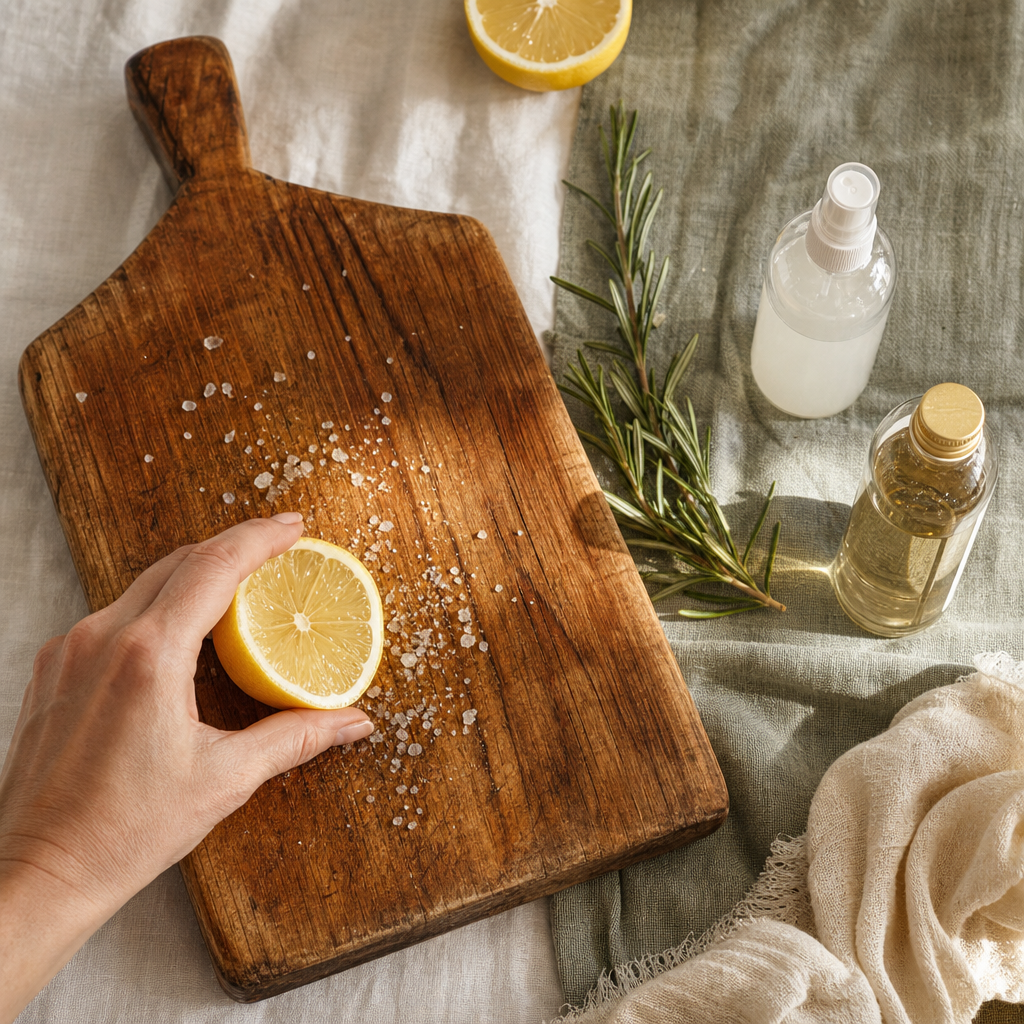
For stubborn smells like onion, garlic, or fish, Rhodes swears by a simple pantry trick. Dampen the board with water, then sprinkle coarse Kosher salt all over the surface. Cut a lemon in half and use it like a scrub brush to work the salt into the wood.
“The salt helps loosen residue from knife marks, and the lemon helps lift lingering odors, rather than cover them up with a strong fragrance,” Rhodes explains. After scrubbing, rinse the board with water, wipe dry, and let it air-dry on its edge. The result is a fresh-smelling board without any artificial fragrances.
Beyond Cleaning: Daily and Weekly Care
Cleaning is only part of the picture. How you dry and oil your board matters just as much. Here’s a quick breakdown:
- Drying: Never leave a wooden cutting board flat on the counter to dry. Water pools on the underside and can lead to warping or mold. Always stand it on its edge after patting it dry with a towel.
- Oiling: Wood needs regular conditioning to stay hydrated and resistant to moisture. Once a month (or more often if the board looks dry), apply a thin layer of food-grade mineral oil or a dedicated cutting board oil. Let it soak in for a few hours or overnight, then wipe off the excess. This seals the wood and makes future cleaning easier. The same principle applies to fresh ginger storage — proper care extends the life of kitchen essentials significantly.
- What to avoid: Never soak your board in water, never put it in the dishwasher, and never use bleach or other harsh sanitizers. These treatments destroy the wood’s structure and can leave harmful residues.
When to Retire a Wooden Cutting Board
Even with the best care, wooden cutting boards don’t last forever. Keep an eye out for these signs that it’s time for a replacement:
- Deep cracks or splits: These can trap bacteria and are nearly impossible to clean.
- Persistent mold: If dark spots appear inside the wood and won’t wash away, the board is compromised.
- Warping: A board that no longer sits flat is a safety hazard and will only get worse.
- Foul smell after cleaning: This suggests bacteria have taken hold deep in the wood.
If your board passes the test, a monthly oil treatment will keep it healthy and extend its life significantly.
FAQ About Cleaning Wooden Cutting Boards
Can I use hydrogen peroxide to disinfect my cutting board?
Occasionally, yes. A 3% hydrogen peroxide solution can help sanitize the board after cutting raw meat. But use it sparingly — over time it may lighten the wood and dry it out. Rinse thoroughly and oil afterward.
How often should I clean my wooden cutting board?
After every use, at minimum. For heavy use (like daily meal prep), a quick spray-clean after each session is all you need. Deep clean with the lemon-salt method once a week or whenever odors appear.
Can I use vinegar alone to clean my board?
Yes, vinegar is a mild disinfectant. But it’s acidic enough to slowly damage wood if used too often. That’s why the spray with distilled vinegar, castile soap, and essential oils is a better balanced choice — gentle but effective.
The Bottom Line
Cleaning a wooden cutting board doesn’t require a cabinet full of special products. A simple spray of vinegar-and-castile cleaner for daily use, a lemon-salt scrub for odors, proper drying on its edge, and a monthly oil treatment are all your board needs to stay in great shape.
The benefits? A healthier kitchen, fewer replacement boards, and no lingering garlic smell on your next fruit salad. Once you switch to this natural routine, you’ll wonder why you ever used dish soap at all.
What’s one thing you can do right now? Go check your cutting board. If it looks dry, grab some food-grade mineral oil and give it a drink. If you smell last night’s onions, grab a lemon and some salt. Your board — and your meals — will thank you.