
Cinnamon Water Recipe: 5 Ways to Make It (+ Benefits)
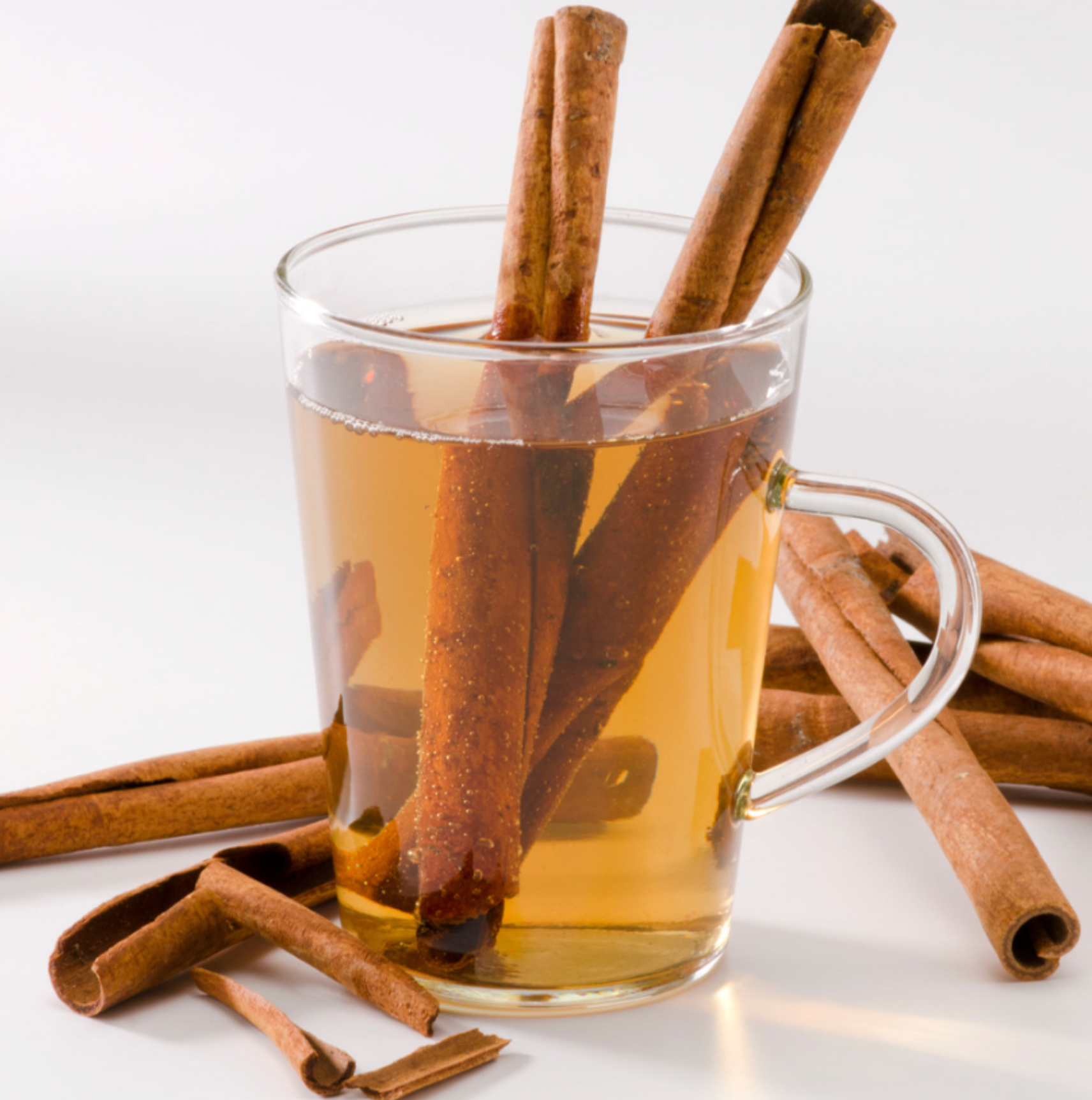
Discover 5 delicious cinnamon water recipes for better health. From basic to advanced, learn how to make cinnamon water perfectly every time with expert tips.
Introduction
Making cinnamon water sounds simple enough, right? Just add cinnamon to water and you’re done. Well, not quite. There’s actually an art to making cinnamon water that tastes good and delivers maximum health benefits.
I’ve experimented with countless variations over the years, and I’ve learned that the temperature of your water, the type of cinnamon you use, and even the time of day you drink it all make a real difference. Some recipes are perfect for bedtime relaxation, while others work better as energizing morning drinks.
Throughout this guide, you’ll discover five distinct cinnamon water recipes, each designed for specific health goals. Whether you’re looking to improve your sleep, boost your metabolism, or simply enjoy a warm, comforting drink, there’s a recipe here for you. Moreover, I’ll share the mistakes I’ve made so you can avoid them and get it right the first time.
Let’s start with the basics and work our way up to more creative variations.
Why Cinnamon Water Works
Before we dive into the recipes, it helps to understand what makes cinnamon water so beneficial. Cinnamon isn’t just a flavorful spice; it’s packed with powerful compounds that support your health in multiple ways.
The main active compound in cinnamon is cinnamaldehyde, which gives cinnamon its distinctive aroma and many of its health benefits. Additionally, cinnamon contains polyphenols, powerful antioxidants that fight inflammation and oxidative stress in your body.
When you infuse cinnamon in water, these beneficial compounds dissolve and become easier for your body to absorb. The warm water acts as a vehicle, helping transport these nutrients throughout your system. Furthermore, drinking cinnamon water keeps you hydrated while delivering these health benefits.
Research has shown that regular cinnamon consumption may help regulate blood sugar levels, reduce inflammation, and support digestive health. However, the key word here is “regular.” You won’t see dramatic changes overnight, but consistent use over weeks and months can make a noticeable difference.
Choosing Your Cinnamon: A Critical First Step
Not all cinnamon is created equal, and this choice significantly impacts both the safety and effectiveness of your cinnamon water. There are two main types you’ll encounter: Ceylon and Cassia.
Ceylon Cinnamon (The Better Choice)
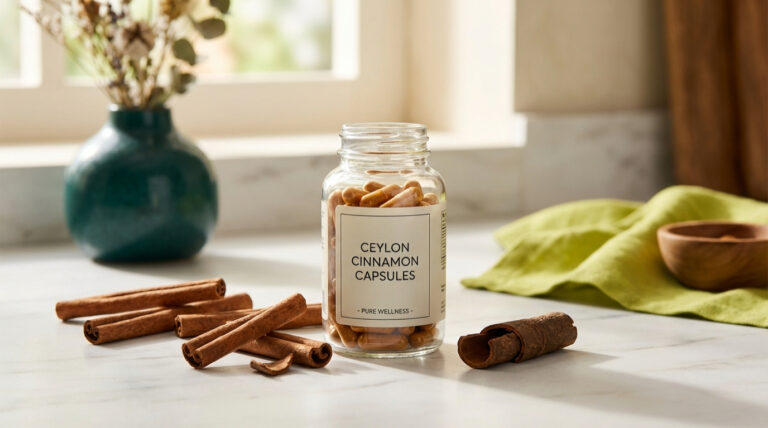
Ceylon cinnamon, often called “true cinnamon,” comes primarily from Sri Lanka. It’s lighter in color, has a more delicate flavor, and most importantly, contains very low levels of coumarin. Coumarin is a compound that can damage your liver when consumed in large amounts over time.
If you’re planning to drink cinnamon water daily, Ceylon is absolutely the way to go. Yes, it’s more expensive than regular grocery store cinnamon, but the safety profile makes it worth every penny. You can find it at health food stores, specialty spice shops, or online retailers.
Cassia Cinnamon (Use Sparingly)
Cassia cinnamon is what you typically find in grocery stores. It’s darker, has a stronger flavor, and contains much higher levels of coumarin—up to 250 times more than Ceylon. While it’s fine for occasional use in baking or cooking, it’s not ideal for daily cinnamon water consumption.
If Cassia is all you have access to, just use it sparingly. Stick to no more than half a teaspoon per day, and don’t consume it daily for extended periods.
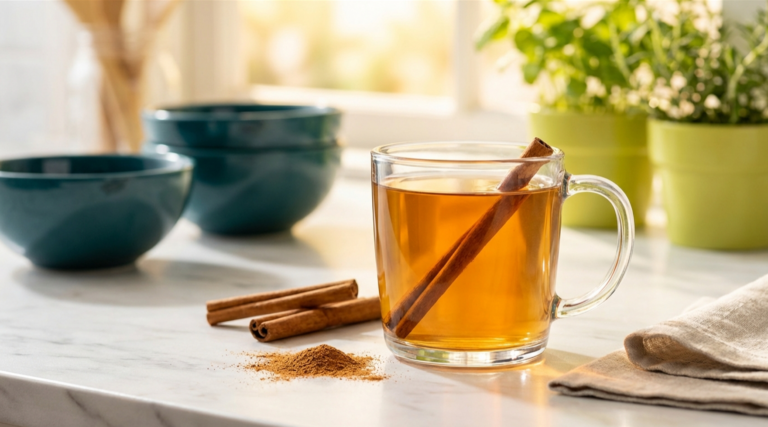
Recipe 1: Classic Bedtime Cinnamon Water
This is the most straightforward version and my personal favorite for evening consumption. It’s simple, soothing, and helps prepare your body for restful sleep.
Ingredients:
- 1 cup (240ml) warm water
- ½ to 1 teaspoon Ceylon cinnamon powder
- Optional: 1 teaspoon raw honey
- Optional: A squeeze of lemon juice
Instructions:
First, heat your water to around 160-180°F (70-80°C). You want it warm and comfortable to drink, not boiling hot. If you don’t have a thermometer, heat the water until small bubbles just start forming at the bottom of the pot, then remove it from heat.
Next, add your cinnamon powder to a mug. Pour the warm water over it and stir vigorously for at least 30 seconds. This is crucial because cinnamon doesn’t dissolve—it suspends in water. Without thorough stirring, all your cinnamon ends up at the bottom of the cup.
Let the mixture sit for 2-3 minutes. This allows the cinnamon to infuse properly and the water to cool slightly. Then, stir again before drinking.
If you’d like to add honey or lemon, now’s the time. The honey adds natural sweetness and additional antimicrobial properties, while lemon provides vitamin C and helps with flavor. However, make sure your water isn’t too hot when adding honey, as excessive heat destroys its beneficial enzymes.
When to Drink:
Consume this 30-45 minutes before your planned bedtime. This timing allows your body to absorb the nutrients while giving you enough time to use the bathroom before settling in for sleep.
Benefits:
This classic version helps regulate blood sugar throughout the night, preventing the spikes and crashes that can disrupt sleep. Additionally, the warm liquid promotes relaxation and signals your body that it’s time to wind down.
My Personal Tips:
I like to make this part of my bedtime routine. While the water is heating, I dim the lights and put away my phone. The ritual itself becomes calming. Also, I always keep a spoon in the mug and give it a quick stir every few sips. Remember, cinnamon settles, so stirring ensures you’re getting consistent benefits throughout your drink.
Recipe 2: Metabolism-Boosting Morning Blend
This energizing version wakes up your metabolism and gives you a gentle energy boost without the jitters of coffee. It’s become my go-to morning drink, especially on days when I’m doing fasted cardio.
Ingredients:
- 1 cup (240ml) warm water
- ½ teaspoon Ceylon cinnamon powder
- ¼ teaspoon fresh grated ginger
- ½ teaspoon raw honey
- Juice of ¼ lemon
- Optional: Pinch of cayenne pepper
Instructions:
Start by grating fresh ginger. Fresh is really important here—ground ginger just doesn’t provide the same zippy, metabolism-boosting effect. You’ll need about a quarter-sized piece of ginger root, which yields roughly a quarter teaspoon when grated.
Heat your water to the same temperature as the bedtime version (160-180°F). Add the cinnamon and grated ginger to your mug, then pour the warm water over them. Stir well for 30 seconds.
Let it steep for 3-4 minutes. The ginger needs a bit more time than cinnamon alone to release its beneficial compounds. After steeping, stir again and strain out the ginger pieces if you prefer a smoother drink. I personally don’t mind the texture, so I usually skip this step.
Add your honey and lemon juice, stirring to combine. If you’re feeling adventurous, add a tiny pinch of cayenne pepper. It adds an extra metabolic kick and helps with circulation.
When to Drink:
Drink this first thing in the morning, ideally 20-30 minutes before breakfast. Some people prefer drinking it on an empty stomach, while others find it works better with a small snack. Experiment to see what feels best for your body.
Benefits:
The combination of cinnamon and ginger is particularly powerful for metabolism. Both spices have thermogenic properties, meaning they slightly increase your body’s heat production and calorie burn. Additionally, the ginger aids digestion and helps reduce morning nausea if you’re prone to it.
The lemon and cayenne (if used) further support metabolic function and provide a gentle detoxifying effect. However, don’t expect this to replace exercise or proper nutrition. Think of it as a supportive addition to a healthy lifestyle, not a magic solution.
Pro Tips:
I prep my ginger the night before. I grate about a week’s worth, store it in a small glass container in the fridge, and simply scoop out what I need each morning. This makes the morning routine much faster.
Also, if you’re new to ginger, start with less. A quarter teaspoon might sound tiny, but fresh ginger is potent. You can always add more once you know how your stomach handles it.
Recipe 3: Golden Immunity Booster
This recipe combines cinnamon with turmeric, creating a powerful anti-inflammatory drink that’s especially beneficial during cold and flu season. The vibrant golden color makes it visually appealing too.
Ingredients:
- 1 cup (240ml) warm water or plant-based milk
- ½ teaspoon Ceylon cinnamon powder
- ¼ teaspoon turmeric powder
- Pinch of black pepper (essential!)
- 1 teaspoon coconut oil or ghee
- 1 teaspoon maple syrup or honey
- Optional: ¼ teaspoon vanilla extract
Instructions:
This recipe works beautifully with either water or plant-based milk. I prefer oat milk or coconut milk for their creamy texture, but almond milk works well too. Heat your liquid to drinking temperature (not boiling).
Add the cinnamon, turmeric, and black pepper to your mug. The black pepper is absolutely crucial—it increases the absorption of turmeric’s active compound, curcumin, by up to 2000%. Without it, you’re missing out on most of turmeric’s benefits.
Pour the warm liquid over the spices and whisk vigorously. A small whisk works better than a spoon here because turmeric can be clumpy. Add your coconut oil or ghee and continue whisking until it’s well incorporated. The fat helps with the absorption of both turmeric and cinnamon’s fat-soluble compounds.
Finally, add your sweetener and vanilla if using. Stir one more time, and you’ve got yourself a golden milk-style drink.
When to Drink:
This is versatile. You can drink it in the morning for immune support throughout the day, in the afternoon as a coffee alternative, or in the evening for its anti-inflammatory benefits. I often make it when I feel a cold coming on or after particularly intense workouts.
Benefits:
The combination of cinnamon and turmeric creates a powerful anti-inflammatory effect. This can help reduce chronic inflammation, support joint health, and boost immune function. Additionally, both spices support digestive health and may help with bloating.
The healthy fats from coconut oil or ghee provide sustained energy and help keep you full. Moreover, they’re essential for absorbing the fat-soluble nutrients in both spices.
My Experience:
I started making this regularly during last year’s cold season, and I swear it helped me avoid getting sick while everyone around me was sniffling. I can’t prove causation, but it certainly didn’t hurt. Plus, it’s incredibly comforting and makes you feel like you’re doing something good for your body.
One warning: turmeric stains everything. Use a dedicated mug for this drink, or accept that your favorite white mug might develop a yellow tinge. Also, clean your whisk immediately after use.
Recipe 4: Digestive Aid Cinnamon Tea
This recipe is specifically designed to support digestive health. It’s my go-to after heavy meals or when my stomach feels unsettled.
Ingredients:
- 1 cup (240ml) hot water
- 1 cinnamon stick (preferred over powder for this recipe)
- 2-3 slices fresh ginger
- 4-5 fresh mint leaves
- 1 teaspoon fennel seeds
- Optional: 1 teaspoon honey
Instructions:
For this recipe, I prefer using a cinnamon stick rather than powder. The stick infuses more slowly, creating a gentler, more tea-like flavor that’s perfect for sipping after meals.
Heat your water until it’s just below boiling (around 190-200°F). While it’s heating, crush your fennel seeds slightly with the back of a spoon. This helps release their oils.
Place the cinnamon stick, ginger slices, mint leaves, and crushed fennel seeds in your mug or teapot. Pour the hot water over everything and cover with a small plate or lid. This traps the aromatic oils that would otherwise evaporate.
Let it steep for 5-7 minutes. The longer steeping time is fine here because we’re making a true tea rather than a quick cinnamon water. After steeping, remove the cinnamon stick and ginger slices (or leave them in if you prefer stronger flavor). Strain out the fennel seeds and mint leaves.
Add honey if desired, though I usually drink this one plain. The natural sweetness from the fennel seeds is often enough.
When to Drink:
Drink this 15-30 minutes after meals, especially after eating something heavy or rich. It’s particularly helpful after dinner when you might be prone to indigestion or bloating.
Benefits:
Each ingredient in this blend serves a specific digestive purpose. Cinnamon helps regulate blood sugar and reduces gas. Ginger stimulates digestive enzymes and relieves nausea. Mint soothes the stomach lining and reduces bloating. Fennel seeds combat gas and cramping while adding a subtle licorice-like sweetness.
Together, they create a powerful digestive aid that’s far more effective than any single ingredient alone. I’ve found this especially helpful during holiday meals when I tend to overindulge.
Variations:
Sometimes I add a few cardamom pods for extra flavor and digestive support. You can also try adding a small piece of star anise if you enjoy that flavor. Both complement the other spices beautifully and add their own digestive benefits.
If you’re making this for guests after a dinner party, it’s impressive to serve. Just brew it in a teapot and let everyone serve themselves. It shows thoughtfulness and helps everyone feel more comfortable after the meal.
Recipe 5: Cozy Cinnamon Sleep Milk
This is the most indulgent version—a creamy, comforting drink that feels like a warm hug in a mug. It’s perfect for cold winter nights or whenever you need extra comfort.
Ingredients:
- 1 cup (240ml) milk of choice (dairy or plant-based)
- ½ teaspoon Ceylon cinnamon powder
- ¼ teaspoon vanilla extract
- Tiny pinch of nutmeg
- 1 teaspoon maple syrup or honey
- Optional: Pinch of cardamom
- Optional: Small piece of dark chocolate (70% cacao or higher)
Instructions:
Pour your milk into a small saucepan. I prefer full-fat coconut milk for maximum creaminess, but whole dairy milk, oat milk, or cashew milk all work beautifully. Heat it slowly over medium-low heat, stirring occasionally to prevent a skin from forming.
While the milk is heating, add your cinnamon, vanilla, and nutmeg to your serving mug. When the milk is warm but not boiling (you should see gentle steam but no bubbles), pour a small amount into your mug with the spices. Whisk vigorously to create a smooth paste. This technique prevents lumps.
Now pour in the rest of the warm milk while continuing to whisk. This creates a smooth, well-incorporated drink with no clumps of cinnamon floating on top. Add your sweetener and stir until dissolved.
If you’re adding dark chocolate, break it into small pieces and stir them in now. The residual heat will melt the chocolate, creating a subtle mocha-cinnamon flavor that’s absolutely divine.
When to Drink:
This is definitely an evening drink. Consume it 45-60 minutes before bed, giving yourself enough time to relax and digest before lying down. I like to drink this while reading or doing gentle stretching before bed.
Benefits:
The warm milk contains tryptophan, an amino acid that promotes sleep by helping your body produce serotonin and melatonin. The cinnamon helps stabilize blood sugar overnight, preventing the drops that can wake you up. The nutmeg contains compounds that have mild sedative effects, further supporting sleep.
Additionally, the ritual of making and slowly sipping a warm, comforting drink signals your brain that it’s time to wind down. This psychological component is just as important as the nutritional benefits.
My Favorite Variation:
Sometimes I add a tiny pinch of saffron threads if I have them. They’re expensive, but just a few threads add a subtle floral note and a beautiful golden color. Saffron also has mood-supporting properties and pairs wonderfully with cinnamon.
Another variation I love is adding a teaspoon of tahini. It sounds unusual, but it creates an incredibly creamy texture and adds healthy fats and minerals. Plus, tahini pairs beautifully with cinnamon—think of how good cinnamon and sesame work together in Middle Eastern desserts.
Best Times to Drink Cinnamon Water
Timing matters more than you might think. Your body responds differently to cinnamon water depending on when you consume it, and different recipes work better at different times.
Morning (6-9 AM)
Morning is ideal for the metabolism-boosting blend or the golden immunity booster. Drinking cinnamon water first thing in the morning can help stabilize blood sugar throughout the day, reducing cravings and energy crashes.
However, some people find cinnamon on an empty stomach causes mild nausea. If this happens to you, eat a small snack first—a few nuts or a piece of fruit works perfectly.
Afternoon (2-4 PM)
The afternoon slump is real, and cinnamon water makes an excellent coffee alternative. The digestive aid tea works particularly well here if you’ve had a heavy lunch. It provides gentle energy without the caffeine crash.
Evening (30-60 minutes before bed)
Evening is perfect for the classic bedtime version or the cozy sleep milk. These help you wind down, support overnight blood sugar regulation, and promote restful sleep. Just make sure to drink them early enough that you’re not waking up to use the bathroom.
After Meals
Any version of cinnamon water can be consumed after meals to aid digestion and help regulate blood sugar response. The digestive aid tea is specifically designed for this purpose, but even the basic version helps.
Storage and Preparation Tips
Can You Make It Ahead?
Yes, but with caveats. You can prepare cinnamon water in larger batches and refrigerate it for up to 2-3 days. However, the beneficial compounds do degrade over time, so fresh is always best.
If you’re making it ahead, store it in a glass container with a tight-fitting lid. Give it a good shake before drinking since the cinnamon will settle at the bottom. You can drink it cold, or gently rewarm it on the stove (never microwave, as this can create hot spots that destroy nutrients).
Batch Preparation Strategy
I like to prep my ingredients rather than the actual drink. On Sunday evenings, I:
- Measure out individual servings of Ceylon cinnamon into small containers
- Grate ginger for the week and store it in the fridge
- Portion out fennel seeds and other spices into small bags
This makes the daily preparation much faster while ensuring I’m always drinking fresh cinnamon water with maximum potency.
What About Cinnamon Sticks?
Cinnamon sticks are wonderful and can be reused 2-3 times. After using a stick, rinse it under cool water, pat it dry, and store it in an airtight container. The flavor will be milder with each use, but it’s still beneficial and economical.
One stick typically equals about half a teaspoon of ground cinnamon, though this varies. I keep both on hand—sticks for when I want a milder, tea-like drink, and powder for stronger therapeutic doses.
Troubleshooting Common Issues
My Cinnamon Water Tastes Too Strong
Cinnamon has a potent flavor that can be overwhelming. Start with just a quarter teaspoon and work your way up. Additionally, adding a bit of honey or a squeeze of citrus can help balance the intensity.
Some people are simply more sensitive to cinnamon’s taste. If this is you, try the sleep milk version where the creaminess mellows the flavor, or use cinnamon sticks which provide a gentler taste.
I’m Getting Clumps
This happens when you add powder to hot water too quickly. Always add cinnamon to your mug first, then pour the water gradually while stirring vigorously. Alternatively, make a paste with a small amount of water first, then add the rest of the liquid.
Using a small whisk instead of a spoon makes a huge difference. I keep a dedicated small whisk just for making cinnamon water.
It’s Irritating My Stomach
This could mean you’re using too much, you’re sensitive to cinnamon, or you’re drinking it on an empty stomach when your stomach can’t handle it. Try reducing the amount, having a small snack first, or switching to cinnamon sticks which are gentler.
Also, make sure you’re using Ceylon cinnamon. Cassia can be more irritating to the digestive system, especially in larger amounts.
The Benefits Aren’t Working
Remember, cinnamon water isn’t a magic bullet. It works best as part of an overall healthy lifestyle. Additionally, it takes consistent use over several weeks to notice significant changes.
Make sure you’re using quality Ceylon cinnamon in the right amounts, drinking it at optimal times, and being patient. Some people notice changes within days, while others need several weeks.
Safety Considerations and Who Should Be Careful
While cinnamon water is generally safe for most people, there are some important precautions to consider.
Pregnancy and Breastfeeding
Culinary amounts of cinnamon are fine, but the concentrated amounts in daily cinnamon water might not be safe during pregnancy. Cinnamon can stimulate the uterus in large amounts. Always consult your healthcare provider before starting any new supplement routine during pregnancy or while breastfeeding.
Diabetes Medications
If you’re taking medications to lower blood sugar, cinnamon water could potentially cause your levels to drop too low. This doesn’t mean you can’t consume it, but you should monitor your blood sugar carefully and inform your doctor. They may need to adjust your medication dosages.
Liver Conditions
If you have any liver disease or dysfunction, be extra cautious with Cassia cinnamon due to its high coumarin content. Ceylon cinnamon is much safer, but still discuss it with your doctor first.
Blood Thinning Medications
Cinnamon has natural blood-thinning properties. If you’re taking warfarin or other anticoagulants, check with your healthcare provider. The combination could increase bleeding risk.
Allergies
Though rare, some people are allergic to cinnamon. If you notice any symptoms like rash, swelling, difficulty breathing, or mouth sores, stop consuming it immediately and seek medical attention.
Maximizing Your Results
To get the most from your cinnamon water practice, consider these strategies:
Consistency Matters Most
Drinking cinnamon water occasionally won’t produce noticeable results. Make it part of your daily routine for at least 4-6 weeks. Set a reminder on your phone if needed, or link it to an existing habit like your morning coffee ritual.
Quality Over Quantity
Use high-quality Ceylon cinnamon rather than cheap Cassia. The small extra cost is worth it for safety and effectiveness. Similarly, use filtered water and organic add-ins when possible.
Pair It With Healthy Habits
Cinnamon water works best when combined with proper nutrition, regular exercise, adequate sleep, and stress management. It’s a supportive tool, not a replacement for these fundamentals.
Track Your Progress
Keep a simple journal noting how you feel each day. Track your energy levels, sleep quality, digestion, and any other markers you’re trying to improve. This helps you see patterns and know whether it’s working for you.
Listen to Your Body
Everyone responds differently. What works perfectly for your friend might not work for you, and that’s okay. Adjust recipes, timing, and frequency based on how your body responds.
Frequently Asked Questions
Can I drink cinnamon water every day?
Yes, if you’re using Ceylon cinnamon in moderate amounts (half to one teaspoon daily). This is generally safe for most people when consumed consistently over time.
Will cinnamon water help me lose weight?
Cinnamon water supports weight management by helping regulate blood sugar and reducing cravings, but it’s not a weight loss miracle. It works best as part of a comprehensive healthy lifestyle including proper nutrition and exercise.
Can I add cinnamon to my regular water bottle?
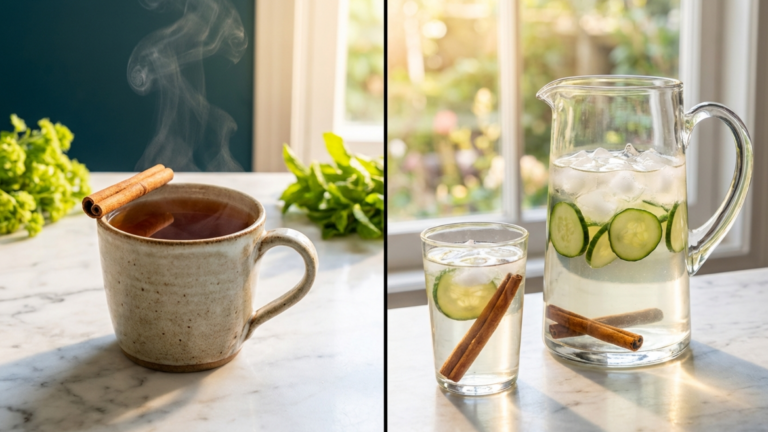
You can, but cinnamon works best in warm water where it infuses properly. If you’re adding it to cold water, it will mostly settle at the bottom. For cold consumption, make a concentrated batch with warm water first, then add it to cold water.
Is it better to use cinnamon sticks or powder?
Both work, but they’re slightly different. Powder is stronger and faster-acting, making it better for therapeutic purposes. Sticks provide a milder, more tea-like flavor and can be reused. I keep both on hand.
Can children drink cinnamon water?
Small amounts of cinnamon in warm water are generally safe for children over age 2. However, use less cinnamon (a quarter teaspoon or less) and always consult with a pediatrician first, especially for young children.
What if I miss a day?
Don’t stress about it. Consistency is important, but missing occasional days won’t derail your progress. Just resume your routine the next day without trying to “make up” for missed days by consuming extra.
Your Cinnamon Water Journey Starts Now
You now have five distinct cinnamon water recipes, each designed for different purposes and preferences. The key is finding which ones work best for your goals, schedule, and taste preferences.
Start with the classic bedtime version if you’re new to cinnamon water. It’s simple, effective, and gives you a baseline to understand how your body responds. Once you’re comfortable, experiment with the other recipes.
Remember, the magic isn’t in any single recipe—it’s in the consistency of making this part of your daily routine. Pick one recipe, commit to it for at least two weeks, and pay attention to how you feel.
Most importantly, enjoy the process. There’s something deeply satisfying about taking a few minutes each day to prepare a simple, nourishing drink for yourself. It’s an act of self-care that costs almost nothing but can make a real difference in how you feel.
Which recipe will you try first? Start tonight, and discover what thousands of people already know—that this simple practice can become one of the most valuable parts of your daily routine.
see even
Cinnamon and Warm Water Before Bed: Your Complete Guide to Better Sleep and Health
Here’s a ready-to-paste “Sources & References” section with trusted external links:
Sources & References
This article is based on scientific research and information from trusted health organizations. We’ve compiled the key sources below so you can explore the evidence yourself.
Cinnamon Types and Safety
Ceylon vs. Cassia Cinnamon: National Center for Biotechnology Information (NCBI) – “Cinnamon: A Multifaceted Medicinal Plant” https://www.ncbi.nlm.nih.gov/pmc/articles/PMC4003790/
Coumarin Content and Liver Safety: European Food Safety Authority (EFSA) – “Coumarin in flavourings and other food ingredients” https://www.efsa.europa.eu/en/efsajournal/pub/793
Blood Sugar and Metabolic Effects
Cinnamon and Blood Sugar Regulation: Diabetes Care Journal – “Cinnamon Improves Glucose and Lipids of People With Type 2 Diabetes” https://diabetesjournals.org/care/article/26/12/3215/25158/Cinnamon-Improves-Glucose-and-Lipids-of-People
Metabolic Effects of Cinnamon: Journal of the Academy of Nutrition and Dietetics – “The Effect of Cinnamon on Glucose of Type 2 Diabetes Patients” https://www.ncbi.nlm.nih.gov/pmc/articles/PMC6854262/
Anti-Inflammatory and Antioxidant Properties
Antioxidant Properties: Critical Reviews in Food Science and Nutrition – “Cinnamon: Potential Role in the Prevention of Insulin Resistance, Metabolic Syndrome, and Type 2 Diabetes” https://www.ncbi.nlm.nih.gov/pmc/articles/PMC4003790/
Anti-Inflammatory Effects: Food & Function Journal – “Anti-inflammatory effects of cinnamon extract and identification of active compounds” https://www.ncbi.nlm.nih.gov/pmc/articles/PMC5067830/
General Nutrition and Safety Guidelines
Harvard T.H. Chan School of Public Health – Nutrition Source: “Cinnamon” – Comprehensive overview of cinnamon’s nutritional profile and health effects https://www.hsph.harvard.edu/nutritionsource/food-features/cinnamon/
National Institutes of Health (NIH) – Office of Dietary Supplements: General dietary supplement safety and usage guidelines https://ods.od.nih.gov/
Mayo Clinic – Complementary and Alternative Medicine: “Cinnamon” – Evidence-based information on cinnamon use https://www.mayoclinic.org/drugs-supplements-cinnamon/art-20362856
Sleep and Relaxation
National Sleep Foundation: “Bedtime Drinks That Can Help You Sleep Better” https://www.thensf.org/
Sleep Medicine Reviews: Research on warm beverages and sleep quality https://www.ncbi.nlm.nih.gov/pmc/articles/PMC6557868/
Digestive Health
World Journal of Gastroenterology: “Beneficial effects of cinnamon on the digestive system” https://www.ncbi.nlm.nih.gov/pmc/articles/PMC4699259/
American Journal of Clinical Nutrition: Effects of spices on digestive function and gut health https://academic.oup.com/ajcn
Drug Interactions and Safety Warnings
MedlinePlus (U.S. National Library of Medicine): “Cinnamon” – Drug interactions and safety information https://medlineplus.gov/druginfo/natural/1003.html
National Center for Complementary and Integrative Health (NCCIH): Evidence-based information on cinnamon safety and effectiveness https://www.nccih.nih.gov/health/cinnamon
Important Disclaimer:
The information in this article is for educational purposes only and is not intended as medical advice. Always consult with a qualified healthcare provider before starting any new dietary supplement, especially if you’re pregnant, breastfeeding, taking medications, or have existing health conditions. Individual results may vary, and what works for one person may not work for another.
While cinnamon water is generally safe for most people when consumed in moderate amounts using Ceylon cinnamon, it’s not a replacement for medical treatment or prescribed medications. If you experience any adverse reactions, discontinue use and consult your healthcare provider.
The external links provided lead to reputable sources, but we are not responsible for the content on external websites. These sources were accurate at the time of publication but may be updated by their respective organizations.
Last Updated: January 2026
Medical Review: This article has been written based on current scientific evidence and nutritional guidelines. However, it has not been reviewed by a licensed medical professional. For personalized medical advice, please consult your healthcare provider.