

Chia Seeds for Weight Loss: What the Evidence Shows
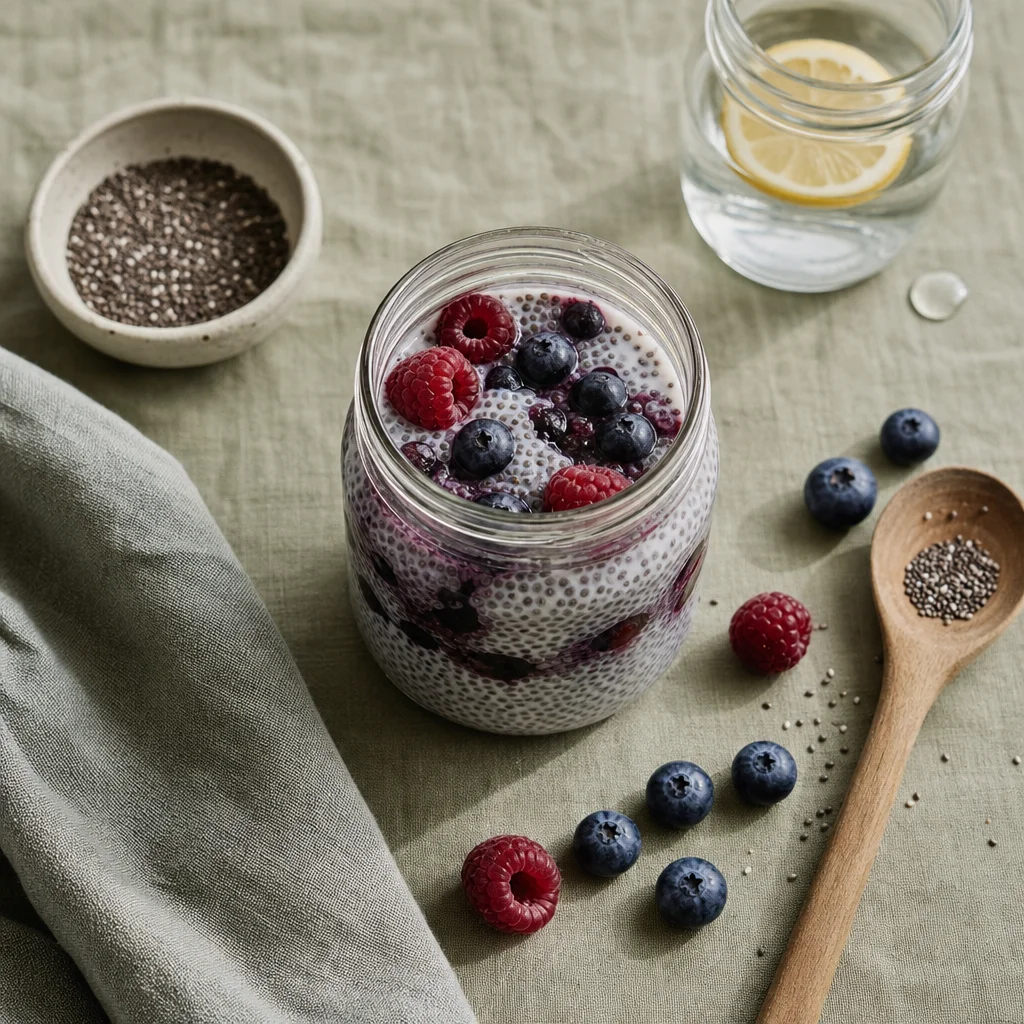
Fifty grams. That is about four tablespoons of chia a day, stirred into water and taken before breakfast and dinner for twelve weeks. In a randomized trial of 76 adults with overweight or obesity who finished the study, that dose changed nothing. Not weight, not body fat, not blood pressure. So are chia seeds for weight loss worth your grocery money? Yes, in one specific situation. The numbers below explain which one.
Last updated: November 26, 2026
Quick Answer: Do Chia Seeds Help You Lose Weight?
Only as a swap. Eight pooled trials found no significant effect on weight (+0.09 kg) or BMI, though waist size fell 1.46 cm. Use 1 to 2 tablespoons (12 to 25 g) a day, soaked, in place of a snack or a refined-carb portion. Never eat them dry, and always pair them with fluid.
Chia is genuinely nutritious. One ounce delivers almost 10 grams of fiber and 4.7 grams of protein. However, nutritious and slimming are two different claims. This guide separates them, with the trial numbers attached to each one.
Chia Seeds for Weight Loss: What Eight Pooled Trials Show
Researchers combined eight randomized trials covering 372 adults. They tracked weight, BMI, waist size and blood pressure. The weight result was +0.09 kg, with a 95% confidence interval of −0.76 to 0.93. BMI moved −0.31 kg/m². Neither change was significant.
Two numbers did reach significance. Waist circumference fell 1.46 cm. Blood pressure dropped roughly 5.6 mmHg systolic and 7.5 mmHg diastolic. Those are modest but useful effects, and they have nothing to do with the scale.
That is the whole picture. Chia is not a fat burner, and one spoonful will not change your weight. It may nudge your waist and your blood pressure in the right direction.
Chia Seeds Are Good for Weight Loss — Only When They Replace Something
Picture two women eating the same lunch. One adds a spoon of chia to her yogurt. The other swaps her afternoon cookie for chia pudding. They are not running the same experiment.
The first woman added about 58 calories to her day. Month after month, that small surplus works against her. The second woman gave up a snack and took in roughly the same 58 calories of soaked seed instead. Her swap only creates a deficit if the cookie carried more calories than the seed.
The trials follow the same logic. In one 12-week study, participants kept their normal diets and took 50 g of chia daily. There was no difference in body weight between the chia and placebo groups. In a six-month trial in adults with overweight or obesity and type 2 diabetes, both groups cut calories and one group used chia instead of oat bran. The chia group lost 1.9 kg. The oat bran group lost 0.3 kg.
That 1.6 kg gap is real, and it took six months. Treat it as the ceiling, not the average. The comparison food was oat bran, not a placebo, so part of that gap may come from the swap rather than from chia itself. When you ask whether chia seeds for weight loss is worth trying, the wording matters. Chia is the swap. Your calorie deficit does the work.
What Two Tablespoons of Chia Really Contain
Chia numbers get muddled because “two tablespoons” is not a fixed weight. USDA FoodData Central uses one ounce, or 28.35 g, as its reference portion. A level tablespoon holds about 12 g. Below is the spread.
| Portion | Calories | Fiber | Protein | Fat |
|---|---|---|---|---|
| 1 level tbsp (about 12 g) | 58 | 4.1 g | 2.0 g | 3.7 g |
| 2 tbsp, as most labels count it (24 g) | 117 | 8.3 g | 4.0 g | 7.4 g |
| USDA reference portion (28.35 g) | 138 | 9.8 g | 4.7 g | 8.7 g |
Most labels call two tablespoons 24 g. That explains why one bag lists 117 calories and another lists 138. Both can be correct, because the portions differ.
Chia also carries 5.06 g of alpha-linolenic acid per ounce. That is a plant omega-3, and it is not the same thing as fish oil.
How Much Chia per Day for Weight Loss
Most questions about chia seeds for weight loss come down to dose. No health agency sets a chia target or a safety ceiling. The trials that built the evidence used 25 to 50 g a day, which is roughly two to four tablespoons.
A practical range for everyday eating is 12 to 25 g, or one to two tablespoons. Start with one tablespoon. Add a teaspoon every few days and take about two weeks to build up.
Fluid matters as much as dose. Fiber pulls water into your gut, so pair each spoon with a full glass of water. Skip that step and you get the constipation that people then blame on the seed. Our guide to chia seeds for constipation walks through the fiber-and-fluid balance.
Timing gets a lot of attention online. The popular plan is one tablespoon, 30 minutes before a meal. It is plausible, because fiber slows stomach emptying. However, the highest-dose preload trial still produced no weight loss. Keep the habit if it helps you, but do not count on it.
Why the 12-Week Trials Look Contradictory
Headlines often say chia helped people lose a kilogram. One 12-week trial did report a 1.1 kg drop inside the chia group. But the difference versus the placebo group was not statistically significant.
That distinction trips up most coverage. “The chia group lost weight” is not the same sentence as “the chia group lost more weight than placebo.” Only the second one proves that chia did something.
Should You Grind Chia Seeds?
Your teeth help, but not reliably. In a 10-week double-blind trial, milled chia raised blood ALA by 58% and EPA by 39%. Whole chia raised neither.
So grind the seed if omega-3s are your reason for eating it. A small coffee grinder works, and the ground seed keeps better in the fridge. For fiber and minerals, whole seed is perfectly fine.
One limit is worth stating. Chia has no DHA, and the body converts ALA poorly. It cannot replace oily fish or a marine omega-3 supplement.
Side Effects, Safety Limits, and Who Should Skip Chia
Chia is a high-fiber food, and fiber has a cost. Gas, bloating and looser stools are common early on, especially at higher doses. That usually settles as your gut adapts.
One rule is not negotiable. Never swallow dry chia by the spoonful. The seeds absorb many times their weight in water and can swell in your esophagus. Blockage cases have been documented. Soak for at least 10 to 15 minutes, or stir the seed into yogurt, oats or soup.
Skip chia, or ask your clinician first, if you have:
- Difficulty swallowing, also called dysphagia
- A narrowed esophagus or a past bowel obstruction
- An active inflammatory bowel disease flare (chia is high in fiber and may worsen symptoms)
- Medical advice to limit fiber
Medication is the other flag. Pooled data show a real blood pressure effect, so women on antihypertensives should discuss large daily doses with their doctor. The same applies to warfarin and other blood thinners.
One 90-day trial in adult women also found a small drop in HDL cholesterol. That was a single small study, so treat it as a signal rather than a proven harm. Mention it at your next visit if your lipids already run low.
Five Simple Ways to Use Chia This Week
Each idea below is a swap or a small addition. None of them works if the rest of your day stays the same.
- Pre-meal drink: 1 tbsp soaked in a full glass of water for 15 minutes. About 58 calories and 4 g fiber.
- Overnight pudding: 1/4 cup chia to 1 cup milk or yogurt. Chill for 4 hours, then split it in half.
- Yogurt swap: plain yogurt with 1 tbsp chia and berries, instead of a sweetened fruit yogurt.
- Soup thickener: a spoonful of chia gel stirred into soup for body, with no cream needed.
- Ground seed in oats: 1 tbsp ground chia in oatmeal, if you want the omega-3 benefit.
The Bottom Line
Chia seeds for weight loss work as a swap, not an add-on. Expect no scale change from adding a spoon to an unchanged day. Expect a small, real change when chia replaces a snack or a refined-carb portion, alongside enough fluid.
Start with 1 tablespoon, soaked, once a day. Build to 2 tablespoons over about two weeks. Grind it if you want the omega-3s. That is small, and it arrived without any weight or BMI change. A 1.46 cm shift may reflect less bloating rather than lost fat, so treat belly-fat claims with caution.
Can you eat chia seeds dry?
No. Dry seed can swell in the esophagus and cause a blockage. Always soak for 10 to 15 minutes, or mix the seed into a wet food such as yogurt or soup.
How long does chia take to work for weight loss?
In the six-month swap trial, the difference was 1.6 kg at the end. As an add-on to an unchanged diet, the effect was zero at 12 weeks. Slow and small is the realistic frame.
Is chia water good for weight loss?
Chia water is usually one tablespoon of seed in a glass of water, taken 30 minutes before meals. It adds fiber and fluid. The preload idea has not produced weight loss in trials, even at far higher doses.
Chia seeds or flaxseed for weight loss?
No trial in this research compares the two head to head. Both are fiber-rich seeds. Pick the one you will actually eat, and use it as a swap rather than a topping.
Can chia seeds replace protein or fish oil?
No to both. One ounce has 4.7 g of protein, which is a modest amount. Chia also supplies ALA only, with no DHA, so it cannot stand in for oily fish or a marine supplement.
Related Articles You Might Enjoy
How we researched this
We reviewed 8 sources, including the USDA FoodData Central database, randomized controlled trials, meta-analyses, and systematic reviews.
- USDA FoodData Central — nutrient data
- Chia seed does not promote weight loss or alter disease risk factors in overweight adults — randomized controlled trials, 2009
- The Effects of Chia Seed (Salvia hispanica L.) Consumption on Blood Pressure and Body Composition in Adults: A Systemati — meta-analyses, 2025, 372 participants
- Chia seed supplementation and disease risk factors in overweight women: a metabolomics investigation — randomized controlled trials, 2012
- Salba-chia (Salvia hispanica L.) in the treatment of overweight and obese patients with type 2 diabetes: A double-blind — randomized controlled trials, 2017, 77 adults
This article is for general information and is not a substitute for advice from your doctor or dietitian.