
Cetirizine Recall: Check Your Meds & What to Use Instead
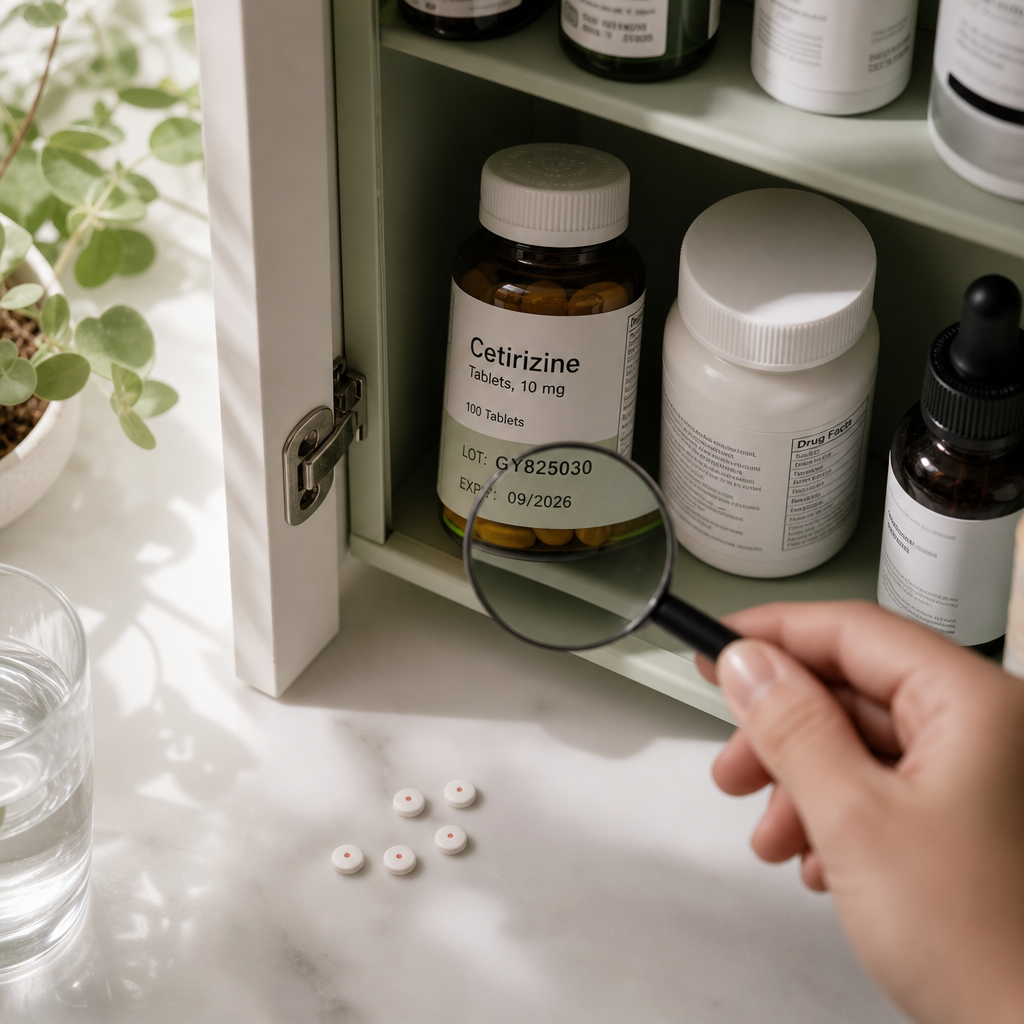
Have you checked your medicine cabinet lately? If you use over-the-counter allergy medication, now is the time. The FDA has announced a nationwide recall of certain 5-milligram cetirizine tablets (the generic version of Zyrtec) due to possible cross-contamination with ranitidine, a heartburn drug with a complicated safety history. Here is everything you need to know about the cetirizine recall — including the exact lot codes to check, why this matters, and what to use instead.
Quick Action Checklist
1. Find your bottle of cetirizine (generic Zyrtec).
2. Check the lot number and expiration date.
3. If it matches the recall, stop taking it immediately.
4. Dispose of it safely or return it for a refund.
5. Call your doctor if you have concerns or symptoms.
What Products Are Affected by the Cetirizine Recall?
The recall applies to Cetirizine Hydrochloride Tablets USP, 5 mg, sold in 100-count bottles. These are the generic, over-the-counter version of Zyrtec, used for seasonal allergies and hay fever. The manufacturer, Unique Pharmaceutical Laboratories, issued the voluntary recall on July 18, 2026, after a pharmacy technician noticed red dots and discoloration on some tablets while counting them for a prescription. Testing revealed the tablets may be cross-contaminated with ranitidine.
Here are the exact details to check on your bottle, according to the official FDA recall notice:
Recalled Product Details
Product: Cetirizine Hydrochloride Tablets USP, 5 mg (100-count bottle)
NDC: 16571-401-10
Lot Numbers: GY825029, GY825030, GY825031, GY825032
Expiration Date: 10/2028
Distributed by: Rising Pharma Holdings Inc.
Manufactured by: Unique Pharmaceutical Laboratories (a division of J. B. Chemicals & Pharmaceuticals Ltd.)
The lot number and expiration date are printed on the bottle label. Look for a small box or line of text near the NDC number. If your bottle matches any of these four lot numbers and has the October 2028 expiration date, it is part of the recall.
Why Ranitidine Contamination Matters
You might be wondering: why is ranitidine contamination such a big deal? Here is the backstory. Ranitidine — sold under the brand name Zantac — was a popular over-the-counter heartburn medication for decades. But in April 2020, the FDA requested the removal of all ranitidine products from the U.S. market. The reason? Testing showed that ranitidine can degrade over time into N-nitrosodimethylamine (NDMA), a probable human carcinogen. The levels of NDMA increased with time and higher storage temperatures. This isn’t the first time a consumer product has raised contamination concerns — we’ve reported on similar issues with PFAS in produce.
In November 2025, the FDA approved a reformulated version of ranitidine with strict new manufacturing and storage requirements. But the fact remains: any product contaminated with ranitidine — especially from before the reformulation — raises concerns about potential NDMA exposure.
The FDA’s recall notice specifically warns about a different risk: severe allergic reactions. For people with a hypersensitivity to ranitidine ingredients, taking the contaminated tablets could cause life-threatening reactions including anaphylaxis, low blood pressure, difficulty breathing, throat swelling, hives, and loss of consciousness. However, the FDA also states that no adverse events have been reported related to this recall so far.
What to Do If You Have Recalled Cetirizine
If your bottle matches the recalled lot numbers, here is what to do next:
Stop taking the medication immediately. Do not use any tablets from the affected bottles, even if you have not noticed any issues. The recall is a precautionary measure, but it is better to be safe.
Dispose of the medication safely. The FDA recommends taking unused medications to a drug take-back location. If that is not an option, you can mix the tablets with an unappealing substance like used coffee grounds or cat litter in a sealed bag and throw it in the household trash. Remove or scratch out any personal information on the bottle before recycling it.
Return it for a refund. You can also return the recalled product to your place of purchase for a possible refund or replacement. Contact the distributor, Rising Pharma Holdings Inc., for assistance.
Contact Rising Pharma with questions by calling 1-844-874-7464 (Monday through Friday, 8 a.m. to 5 p.m. ET) or emailing [email protected] or [email protected].
What to Use Instead of Recalled Cetirizine
If you have to toss your cetirizine, you still need allergy relief. The good news is that there are several effective alternatives available over the counter. A 2026 network meta-analysis in the Journal of Allergy and Clinical Immunology found that several second-generation antihistamines are similarly effective for allergic rhinitis.
Alternative OTC Antihistamines
Loratadine (Claritin) — 10 mg once daily. Non-drowsy for most people.
Fexofenadine (Allegra) — 180 mg once daily or 60 mg twice daily. Also non-drowsy.
Levocetirizine (Xyzal) — 5 mg once daily. Very similar to cetirizine but a different compound.
Bilastine (Blexten) — 20 mg once daily. Available by prescription in the U.S.
All of these are second-generation antihistamines with good safety profiles. None are known to have cross-contamination issues with ranitidine. As always, talk to your pharmacist or doctor before switching medications, especially if you have other health conditions or take other medications.
What If I Have Already Taken the Contaminated Pills?
First, do not panic. The FDA has stated that no adverse events have been reported related to this recall. The risk is primarily for people who have a specific hypersensitivity to ranitidine ingredients — which is relatively uncommon. If you have taken the recalled tablets and feel fine, you are likely okay.
However, if you experience any symptoms like difficulty breathing, swelling of the face or throat, hives, dizziness, or rapid heartbeat, seek medical attention immediately. You can also report any adverse reactions to the FDA’s MedWatch program online.
If you are concerned but not experiencing symptoms, call your healthcare provider for guidance. They can help you assess your individual risk based on your medical history.
Frequently Asked Questions
Q: Is this recall for brand-name Zyrtec too?
A: No. The recall only affects generic cetirizine hydrochloride tablets manufactured by Unique Pharmaceutical Laboratories. Brand-name Zyrtec is not affected.
Q: How was the contamination discovered?
A: A pharmacy technician noticed red dots and discoloration on some tablets while counting them for a prescription. This triggered a product complaint and subsequent testing.
Q: Can I still take cetirizine from a different lot number?
A: Yes. Only the four specific lot numbers (GY825029-GY825032) with the October 2028 expiration date are affected. Other lots of cetirizine are not part of this recall.
Q: Is ranitidine still available in the U.S.?
A: Yes, a reformulated version was approved by the FDA in November 2025 with new safety standards. The original formulation was removed in 2020 due to NDMA concerns.
The Bottom Line
The cetirizine recall is a precautionary measure — no one has reported getting sick from these tablets. But the potential risk is real enough that the FDA and manufacturer are taking it seriously — a reminder that staying informed about product safety, whether with medications or contamination concerns with everyday products, is part of a healthy lifestyle. The smartest thing you can do is check your medicine cabinet right now. If your bottle matches the recalled lot numbers, stop using it, dispose of it safely, and switch to an alternative antihistamine. Your allergies do not have to suffer — and neither does your peace of mind.