

Body Weight Exercises to Reduce Visceral Fat After 50
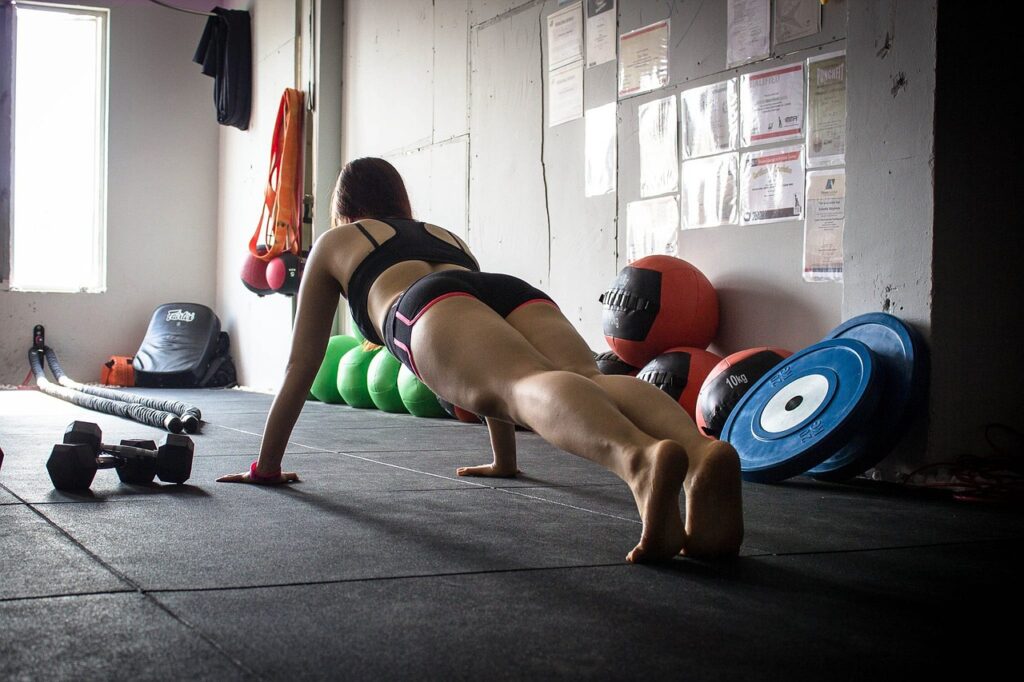
You’ve been doing all the right things — eating well, staying active — but that stubborn deep belly fat just won’t budge. Here’s the thing: the fat you can pinch (subcutaneous fat) is not the same as the fat wrapped around your organs (visceral fat). And after 50, your body starts storing more of the dangerous kind. The good news? Body weight exercises are one of the most effective tools to fight back — and you don’t need a gym or any equipment to start.
Key Takeaways
- Body weight exercises effectively reduce visceral fat by building muscle that changes how your body burns energy.
- Visceral fat responds faster to exercise than the fat you can see — results can appear in 2-3 months.
- You need just 3 sessions per week of body-weight strength training to see meaningful changes.
- Pairing these exercises with adequate protein and quality sleep significantly amplifies their effectiveness by supporting muscle repair and hormonal balance.
- A structured 4-week progression plan helps you build consistency without overwhelming your joints.
What Is Visceral Fat and Why Does It Matter After 50?
Let’s start with a quick anatomy lesson. Visceral fat is the fat stored deep inside your abdominal cavity, wrapped around your liver, pancreas, and intestines. Unlike the fat just under your skin, visceral fat is metabolically active — it releases inflammatory substances that can raise your risk for heart disease, type 2 diabetes, and certain cancers. The Cleveland Clinic explains that a healthy amount of visceral fat is about 10% of your total body fat. Above that, and your health risks start climbing.
After 50, two things happen. First, muscle mass naturally declines — a process called sarcopenia. Second, hormonal changes (especially the drop in estrogen during menopause) shift where your body stores fat, sending more of it to the visceral depot. This combination makes visceral fat accumulation a real concern for women in this life stage. But here’s the encouraging part: Cleveland Clinic notes that visceral fat is actually easier to lose than subcutaneous fat. With consistent effort — using targeted visceral fat exercises to reduce belly fat after 50 — you can see meaningful changes in just 2-3 months.
The Science: How Body Weight Exercises Target Visceral Fat
You might be thinking, “Can body-weight exercises really make a difference?” The answer is a clear yes — and the science explains why.
When you do body weight exercises like squats, lunges, and planks, you’re building muscle. And muscle is metabolically active tissue — it burns more calories at rest than fat does. But the real magic happens at a deeper level. Harvard Health explains that resistance training triggers a process called “browning” of white fat cells. Your body converts some of those stubborn white fat cells (the kind that store energy) into brown fat cells (the kind that burn energy as heat). This process directly causes visceral fat to shrink.
A 2025 meta-analysis of 53 studies — detailed further in our guide on how visceral fat exercises reduce belly fat after 50 — involving nearly 3,000 participants found that resistance training alone is just as effective as combined aerobic and resistance training for reducing visceral fat in middle-aged and older adults. That’s a game-changer. It means you don’t need to spend hours on a treadmill. A focused 20-30 minute body-weight strength session, done consistently, can deliver the results you’re after.
The 5 Best Body Weight Exercises for Visceral Fat Reduction
These five exercises target multiple large muscle groups, creating the metabolic demand that forces your body to tap into visceral fat stores. Each one includes a modification for beginners and a progression for when you’re ready for more.
1. Body-Weight Squat
The squat works your quads, hamstrings, glutes, and core — some of the largest muscles in your body. More muscle activation means more metabolic demand, which means more visceral fat burning.
How to do it: Stand with feet shoulder-width apart. Engage your core and keep your chest lifted. Bend your knees and push your hips back as if sitting into a chair. Lower until your thighs are parallel to the floor (or as low as comfortable). Push through your heels to return to standing. Aim for 10-12 reps, 2-3 sets.
Beginner modification: Use a chair. Sit down, then stand up using only your legs. This builds strength and confidence.
Progression: Hold a gallon of water or a heavy book at your chest for added resistance.
2. Walking Lunge
Lunges challenge your balance, coordination, and lower body strength all at once. They also elevate your heart rate, giving you a metabolic boost that lasts long after your workout ends.
How to do it: Stand with feet together. Step forward with your right leg and lower your body until both knees form 90-degree angles. Your front knee should be directly above your ankle. Push through your right heel to stand, bringing your left leg forward into the next step. Continue alternating for 8-10 steps per leg, 2-3 rounds.
Beginner modification: Perform stationary lunges instead — step forward and back to the same spot. Use a wall or chair for balance.
Progression: Hold a weight at your chest or add a knee lift at the top of each lunge for extra core engagement.
3. Plank
The plank is a full-body isometric exercise that builds deep core strength. A strong core supports better posture and protects your lower back — both critical as we age.
How to do it: Start face-down with your forearms on the floor, elbows directly under your shoulders. Step your feet back to form a straight line from your head to your heels. Engage your core and glutes, keeping a neutral neck. Hold for 20-30 seconds to start, working up to 60 seconds. Aim for 3 rounds.
Beginner modification: Drop your knees to the floor while keeping your upper body in a straight line.
Progression: Lift one foot slightly off the ground for 5 seconds, then switch sides. This challenges your core stability even more.
4. Modified Pushup
Pushups strengthen your chest, shoulders, arms, and core simultaneously. The more muscle groups you engage, the greater the metabolic demand on your visceral fat stores.
How to do it: Start on your knees with hands slightly wider than shoulder-width apart. Keep your body in a straight line from your head to your knees. Lower your chest toward the floor by bending your elbows, keeping them at a 45-degree angle from your body. Push back up. Aim for 8-12 reps, 2-3 sets.
Beginner modification: Use a wall or countertop. Stand facing the wall, place your hands on it at shoulder height, and perform the same movement.
Progression: Move to full pushups on your toes. If you can do 12-15 reps with good form, you’re ready.
5. Step-Up
Step-ups mimic real-life movement (climbing stairs) and build functional strength. They also challenge your balance, which is crucial for preventing falls as you age.
How to do it: Stand in front of a low, stable step or sturdy chair. Step up with your right foot, pressing through your heel. Bring your left foot up to meet it. Step down slowly with your left foot, controlling the descent. Repeat 8-12 times per leg, 2-3 sets.
Beginner modification: Use a lower step (like a single stair) and hold a railing for balance.
Progression: Increase the step height or add a knee lift at the top of each step-up.
Your 4-Week Body Weight Exercise Plan for Visceral Fat
Consistency matters more than intensity. Here’s a simple weekly structure to follow:
Weekly Schedule
Monday: Body-weight circuit (squats, lunges, planks, pushups, step-ups) — 3 rounds, 10 reps each
Wednesday: Same circuit — focus on form and controlled movement
Friday: Same circuit — try to add 1-2 reps per exercise or hold plank 5 seconds longer
Daily: Add a 10-15 minute walk. Small movement bursts throughout the day add up.
Week 1: Focus on learning proper form. Do 2 rounds of each exercise with 8 reps. Rest 60 seconds between rounds.
Week 2: Increase to 3 rounds of 10 reps. Reduce rest to 45 seconds.
Week 3: Add the progression version of each exercise where you can. Aim for 3 rounds of 12 reps.
Week 4: Challenge yourself. Try 3 rounds of 12-15 reps with minimal rest (30 seconds).
What to Pair With Body Weight Exercises for Best Results
Exercise alone is powerful, but combining it with these lifestyle habits amplifies your results.
Protein: Your Muscle-Building Partner
Harvard Health notes that older adults may need up to twice the standard protein recommendation to support muscle building. Aim for 25-30 grams of protein at each meal. Think eggs at breakfast, grilled chicken or fish at lunch, and beans or lentils at dinner. Protein helps repair the muscle fibers you break down during your body-weight workouts, making your efforts count.
Sleep: The Overlooked Fat-Loss Tool
Poor sleep is strongly linked to higher visceral fat. When you’re sleep-deprived, your body produces more cortisol (the stress hormone), which signals your body to store fat in the visceral depot. Aim for 7-9 hours of quality sleep each night. Your body-weight exercise routine will work even better when your hormones are balanced.
Daily Movement: Small Bursts Add Up
Increase daily movement outside of exercise — taking the stairs, walking after meals, and standing throughout the day. These small movement bursts add up to meaningful metabolic benefits over time. A 10-minute walk after each meal is a simple, effective strategy that supports visceral fat loss.
How to Track Your Visceral Fat Progress
You don’t need expensive scans to know if your efforts are working. The simplest at-home method is waist circumference. Here’s how to do it:
Stand with your feet together. Wrap a measuring tape around your bare abdomen at the level of your belly button. Make sure the tape is snug but not compressing your skin. Breathe out normally and take the measurement. The Cleveland Clinic identifies a waist circumference of 35 inches or more for women as a marker of increased visceral fat risk.
Measure yourself once a week, on the same day and at the same time (ideally in the morning before eating). A decreasing waist measurement is a clear sign your visceral fat is shrinking — even if the scale isn’t moving much.
Safety First: When to Modify or Skip
Body-weight exercises are generally safe, but listen to your body. If you have knee pain, avoid deep squats and lunges — stick to the beginner modifications. If you have wrist issues, perform planks and pushups on your fists or use pushup handles. If you have back problems, keep your core engaged throughout every movement and avoid arching your lower back.
Always warm up for 5 minutes before starting (marching in place, arm circles, leg swings) and cool down with gentle stretching afterward. If any exercise causes sharp pain, stop immediately. Consult your healthcare provider before starting any new exercise program, especially if you have existing health conditions.
Frequently Asked Questions
How often should I do body weight exercises to reduce visceral fat?
Three times per week is the sweet spot. This gives your muscles time to recover between sessions while providing enough stimulus to drive metabolic changes. A 2026 systematic review found that 3+ sessions per week for at least 15 weeks produced the best visceral fat reduction.
How long until I see results?
Most people notice changes in waist measurement within 2-3 months of consistent training. Visceral fat is more metabolically active than subcutaneous fat, so it responds faster to exercise.
Can I do these exercises if I have joint pain?
Yes — with modifications. Use the beginner versions provided for each exercise. Focus on controlled, pain-free movement. If an exercise causes pain, skip it and try a different one. Consult a physical therapist for personalized guidance.
The Bottom Line
Visceral fat after 50 is not something you have to accept. Body weight exercises offer a proven, accessible, and effective way to reduce this dangerous fat while building the muscle that keeps you strong and independent. The science is clear: resistance training triggers metabolic changes that directly shrink visceral fat stores. You don’t need a gym, expensive equipment, or hours of your day. You need consistency, proper form, and the willingness to start.
Start with the 4-week plan above. Measure your waist today. In three months, you’ll likely be measuring a smaller number — and feeling stronger than ever.