

5 Best Fruits for Brain Health, Backed by Science
Key Takeaways
- No one fruit stops memory loss. Eating fruit often matters most.
- Blueberries, strawberries, citrus, dark grapes, and pomegranates have the strongest evidence.
- Deep colors mean more plant pigments. These may protect brain cells.
- Aim for ½ to 1 cup of fruit a few times a week. Fresh and frozen both count.
- Fruit works best with a Mediterranean-style diet, good sleep, and regular movement.
Picture this: you’re in the produce aisle, holding blueberries in one hand and strawberries in the other. Which one helps your brain more? It’s a fair question. Here’s the thing — a few fruits for brain health stand out in the research.
Let’s be honest: no single fruit can stop memory loss. However, science shows that certain fruits for brain health may support memory, blood flow, and clear thinking over time. That’s a big deal for everyday healthy living.
In this guide, we’ll explore the five fruits for brain health with the strongest evidence. We’ll also cover how much to eat, why color matters, and easy ways to make them a daily habit.
Quick Answer: Fruits for Brain Health — Which Are Best?
The fruits for brain health with the strongest evidence are blueberries, strawberries, citrus fruits, dark grapes, and pomegranates. Aim for ½ to 1 cup of fresh or frozen fruit a few times a week. Make it part of a Mediterranean-style diet. Consistency counts more than perfection.
Fruits for Brain Health: Why These Five?
Now, you might be thinking: why these five? The answer hides in their deep colors. Blueberries, dark grapes, and pomegranates get their blue-purple tone from anthocyanins — natural plant pigments that act like antioxidants.
Strawberries get their red hue from pelargonidin, a close cousin in the same pigment family. Citrus fruits bring flavanones, like hesperidin and naringenin. Each compound works in its own way.
These pigments protect brain cells from everyday wear and tear. They also support blood flow. That way, your brain gets a steady supply of oxygen and nutrients. This may explain why colorful fruit keeps showing up in memory studies.
This is also why dietitians keep pointing to the Mediterranean diet. It’s full of these colorful plant foods. And it’s one of the most studied eating patterns for brain health.
Why Citrus Breaks the Color Rule
Oranges and grapefruits get their sunny color from carotenoids — the same pigments in carrots. The brain-supporting flavanones are colorless. Most of the flavanones sit in the white pith and membranes. So don’t peel away all the white part. That’s where much of the benefit hides.
Blueberries: The Most Studied Fruit for Your Brain
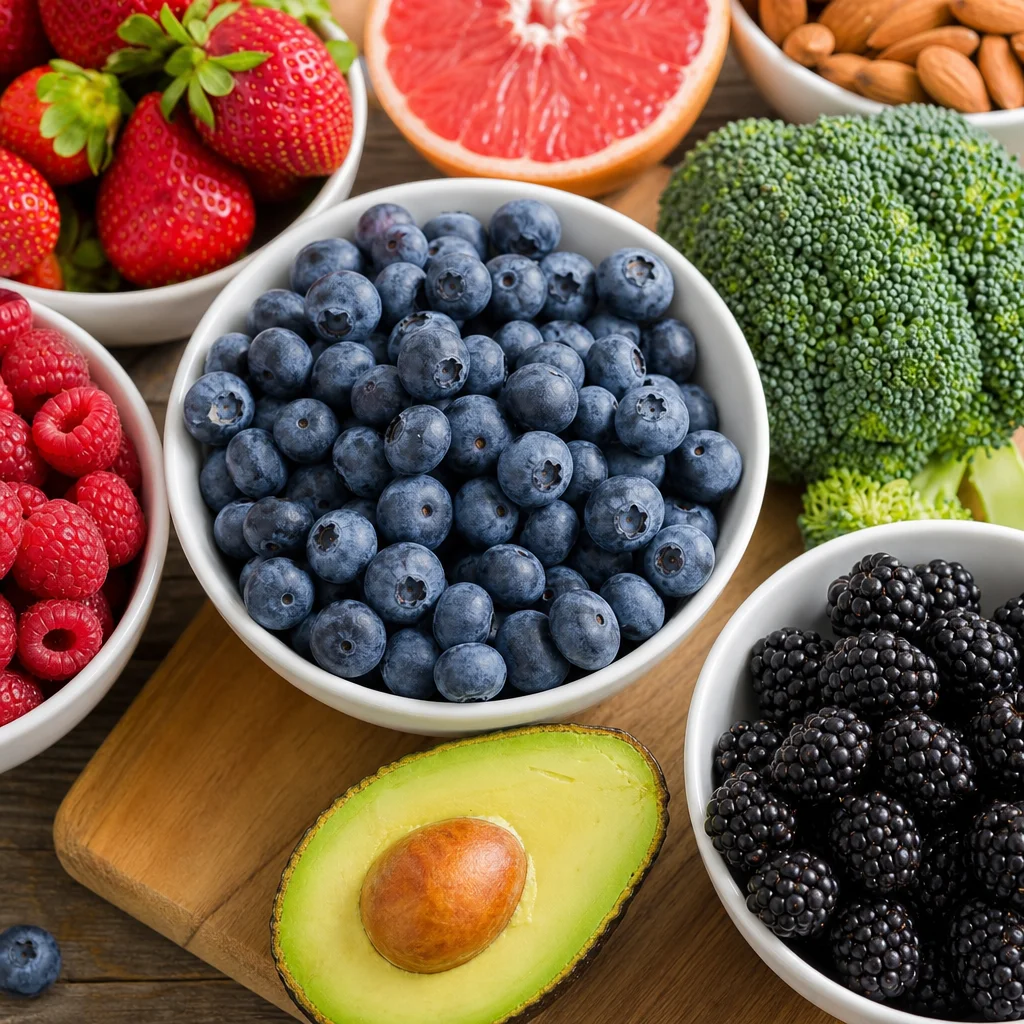
Blueberries top the list for good reason. They’re rich in anthocyanins. Studies link these plant pigments to better blood flow and stronger signaling between brain cells. Better blood flow means a steady supply of oxygen and nutrients.
That may explain why blueberry eaters often score better on memory tests. They also tend to plan, focus, and switch tasks more easily. Scientists call these skills executive function. Some research also links blueberries to healthier blood vessels — a key path to a healthier brain.
Wild blueberries usually carry more anthocyanins than farm-grown ones. Even so, dietitians say you don’t need wild berries to benefit. Aim for ½ to 1 cup, fresh or frozen, a few times a week.
Strawberries and Citrus: Colorful Helpers for Memory
Strawberries owe their red color to pelargonidin, a type of anthocyanin. This pigment may shield brain cells from stress and wear that build up with age. It may also calm the inflammation linked to memory decline.
Large group studies link higher pelargonidin intake with a lower risk of Alzheimer’s disease. That doesn’t make strawberries a cure. Still, eating them often may be a simple way to support healthy brain aging. Fresh and frozen both deliver this pigment. You can enjoy them all year.
Citrus fruits — oranges, grapefruits, lemons, and limes — are big sources of flavanones. These plant compounds support the lining of your blood vessels. When that lining works well, your brain gets steady oxygen and nutrients.
The long-term data for citrus is among the strongest for any fruit. Large studies link higher flavanone intake with a lower chance of memory decline. Not every study agrees, but the pattern is clear. Citrus is also easy on the wallet.
Dark Grapes and Pomegranates: Powerhouses of Plant Pigments
Dark grapes, like Concord grapes, are packed with anthocyanins and other plant pigments. Small randomized trials found better memory scores in older adults with mild memory decline. Brain scans also showed more blood flow to key regions. Whole dark grapes give you these helpful compounds plus fiber.
Pomegranates work through a different route. Gut bacteria turn pomegranate polyphenols into urolithins — molecules researchers are studying for their effects on memory. Small human studies suggest that regular pomegranate juice may help keep certain types of memory. Larger trials are still needed, though.
Pomegranate seeds, called arils, also add fiber. Sprinkle them over yogurt, oatmeal, or salads for a colorful crunch. Both the fruit and the juice can be part of a healthy routine.
How Much Fruit Do You Need for Brain Health?
Here’s the practical part. Dietitians suggest ½ to 1 cup of berries a few times a week. For other fruits, a general guide is simple. One medium orange, a small handful of grapes, or half a cup of pomegranate seeds works well.
The secret to fruits for brain health is simple: eat them often. You don’t need exotic superfoods or pricey powders. You need a routine you can stick with. A few colorful servings each day is a great goal.
Fresh vs. Frozen: Does It Matter?
Fresh vs. frozen: Both count. Frozen berries are picked at peak ripeness and flash-frozen, which locks in nutrients. Many studies actually use frozen wild blueberries. Wild vs. farm-grown: Wild blueberries pack more anthocyanins. Farm-grown ones still deliver real benefits. Pick what fits your budget and taste.
Simple Ways to Eat More Fruits for Brain Health Every Day
The easiest way to eat more brain-supporting fruit? Add it to foods you already love. For me, that means a bag of frozen wild blueberries in the freezer at all times. You don’t need fancy recipes. Here are five simple ideas:
- Stir berries or pomegranate seeds into morning oatmeal or yogurt.
- Toss dark grapes into your lunchbox — they’re nature’s candy.
- Add orange segments or grapefruit slices to salads.
- Blend frozen berries into smoothies with spinach and almond milk.
- Keep a bowl of fruit on the counter for a grab-and-go snack.
One serving of fruit is about one cup of berries or one medium piece of fruit. Aim for a few colorful servings each day. Every small addition nudges your brain the right way.
Beyond Fruit: Habits That Support Your Brain
Fruit is one piece of the puzzle, not the whole picture. Mediterranean-style eating gives you a wider range of nutrients. Think vegetables, beans, nuts, whole grains, fish, and healthy oils. A diet that keeps blood pressure, cholesterol, and blood sugar steady also supports your brain.
Other habits matter, too. Regular movement boosts blood flow to the brain. Sleep helps your brain store memories. Aim for seven to nine hours a night. Staying social and keeping your mind busy also helps. Cooking, reading, and learning something new all count.
Remember: no single food is a magic bullet. Your overall pattern, day after day, is what matters. Fruit can be a delicious part of that pattern.
FAQ: Common Questions About Fruit and Your Brain
Is fruit too sugary for your brain?
No. Whole fruit has fiber, water, and plant pigments that slow sugar absorption. The research on fruit and memory is positive. Sugar worries apply more to soda, candy, and pastries — not whole fruit.
Are frozen fruits as good as fresh?
Yes. Frozen berries are picked at peak ripeness and flash-frozen, which preserves nutrients. Many studies use frozen wild blueberries. Keep a bag in your freezer so brain-supporting fruit is always within reach.
Can I drink fruit juice instead?
Whole fruit is the better choice. It has fiber, which slows sugar absorption and keeps you full. If you do drink juice, pick 100% juice and keep the serving small. Some studies on pomegranate juice used about 8 ounces (one small glass) a day.
How quickly will I notice benefits?
Brain benefits build slowly, like saving for retirement. Small, steady choices add up over the years. Focus on building a habit, not on waiting for a quick change.
The Bottom Line: Eat the Rainbow, Consistently
Here’s what the research actually shows. The most deeply colored fruits — blueberries, strawberries, citrus, dark grapes, and pomegranates — carry plant pigments that may support memory. None of them is magic. Together, eaten often, they form one of the simplest healthy habits around.
These five fruits for brain health are a great place to start. Buy a bag of frozen blueberries this week. Add orange slices to your lunch salad. Sprinkle pomegranate seeds over your yogurt. Small, colorful choices add up to real brain support over time.