

Anti-Inflammatory Snacks: A 10-Minute Formula That Works
Key Takeaways
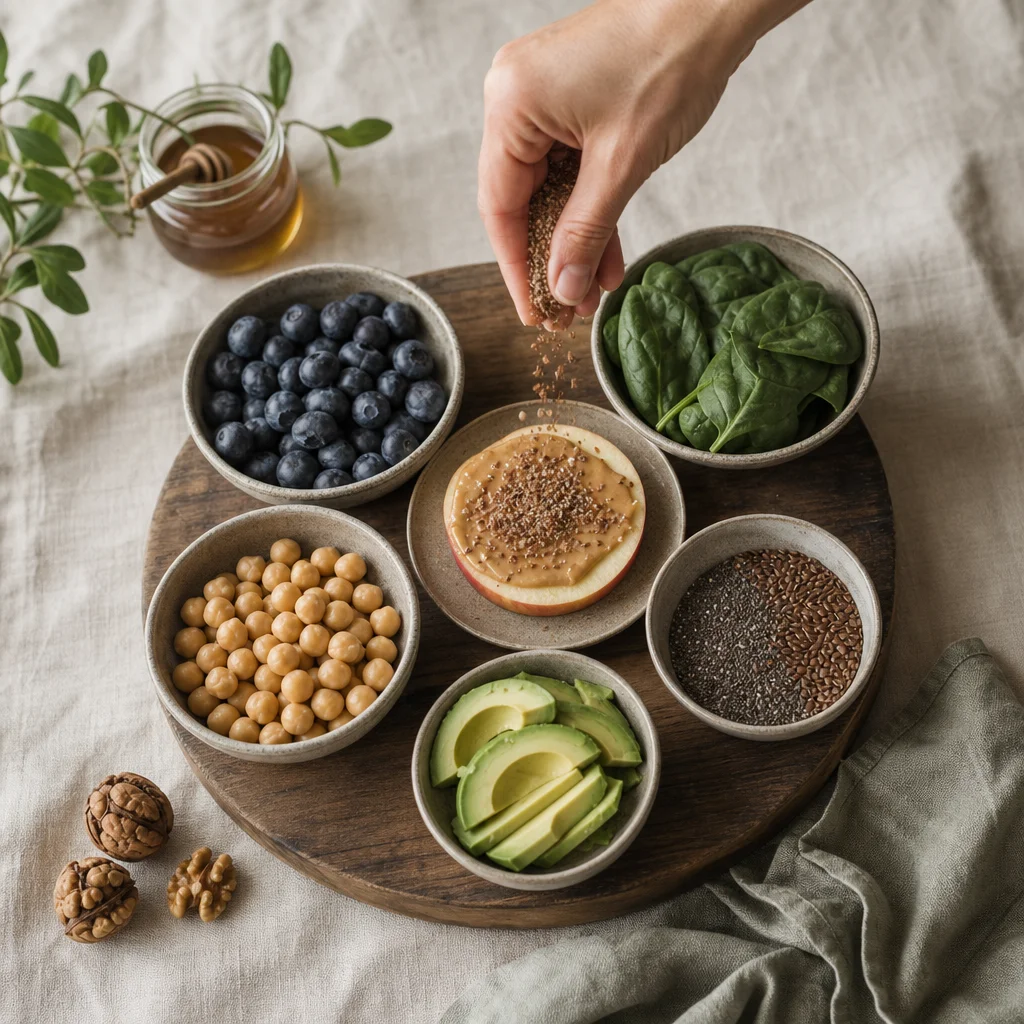
- The snack formula comes down to 5 food groups: berries, leafy greens, beans, avocado, and seeds.
- The 10-minute formula: one produce + one protein or healthy fat + one fiber booster.
- A pattern of snacks and meals matters more than any single ingredient.
- Expect changes over weeks to months — not from one snack.
- Swap a processed snack for a whole-food one. Don’t just add to your day.
Let’s be honest — “eating for inflammation” sounds like a project. It brings to mind specialty stores, complicated recipes, and hours in the kitchen. Here’s the thing: anti-inflammatory snacks can be as simple as what’s already in your fridge and pantry.
The ingredients that show up in study after study are ordinary, budget-friendly, and quick to assemble. This guide breaks down the science into 5 food groups. It also gives you a 10-minute snack formula and 6 fast combos for this week.
Quick Answer: What Makes a Snack Anti-Inflammatory?
Anti-inflammatory snacks pair plant foods rich in polyphenols, fiber, and healthy fats — berries, leafy greens, beans, avocado, and seeds. They work best when they replace a processed snack instead of adding to your day.
Why Anti-Inflammatory Snacks Matter
Your immune system creates inflammation to protect you. That response is normal and healthy. Problems start when inflammation lingers day after day. That’s chronic inflammation, and it plays a role in heart disease, diabetes, arthritis, and more.
The good news? Food is one of the most powerful tools you have. Harvard Health explains that your food choices can either fuel inflammation or help calm it.
The evidence points to a pattern, not a magic food. A 2026 review found that Mediterranean-style diets lower IL-6 and IL-1beta, proteins that signal inflammation. That review helps explain why every snack matters.
In other words, anti-inflammatory snacks aren’t about perfection — they’re about repetition. Every one of them is a small chance to reinforce the pattern. You don’t need a perfect diet. You need consistent, mostly-right choices.
The 5 Food Groups Behind the Science
You’ve likely noticed the same ingredients in every “anti-inflammatory” list. There’s a reason for that. These 5 groups carry the bulk of the evidence.
Berries. Berries are packed with anthocyanins, the plant pigments that give them their deep color. A small randomized trial in Nutrients studied adults with obesity and knee osteoarthritis. Those who ate strawberries daily for 12 weeks saw drops in IL-6 and IL-1beta. Interestingly, their CRP levels did not change. That’s a useful reminder: berries help, but not every marker moves.
Leafy greens. Spinach, kale, and collards are loaded with polyphenols, which are protective plant compounds. Harvard Health highlights them as a cornerstone of anti-inflammatory eating. They’re also easy to hide in a smoothie or top with a scoop of hummus.
Beans and legumes. This may be the best-evidenced snack base of all. A study in the European Journal of Nutrition tested legumes within a calorie-controlled diet. Four weekly servings of lentils, chickpeas, peas, or beans lowered CRP. The effect held even after accounting for weight loss. That means beans do something specific, not just calorie math.
Avocado. A 2026 systematic review in Nutrition Reviews pooled 14 trials with over 2,400 adults. It found that regular avocado consumption lowered IL-1beta, TNF-alpha, and oxidized LDL. The effect was strongest in people with overweight or obesity. So avocado is a creamy, satisfying way to add healthy fats to a snack.
Seeds. Chia and flax seeds add fiber, omega-3s, and plant protein. A 2024 meta-analysis found that chia seeds modestly lowered CRP — though not IL-6 or TNF-alpha. So seeds are a solid addition, not a miracle. Sprinkle them on yogurt or blend them into smoothies.
What about nuts? Nuts are heart-healthy and full of polyphenols. However, the research on nuts and CRP is mixed. Some meta-analyses show no significant change. So enjoy nuts as a crunchy, satisfying staple. Just don’t expect them to lower your numbers alone.
Notice the bigger picture. The best anti-inflammatory snacks combine two or more of these groups at once. That combination is what makes them work.
The Gut Connection
Why do these foods keep repeating? Many of them feed your gut bacteria. A 2025 meta-analysis found that about 452 mg of polyphenols daily for 5 weeks lowered lipopolysaccharides. Those are molecules that can trigger inflammation. In plain terms: berries, greens, beans, and seeds calm inflammation partly by feeding your gut bacteria. It’s the same gut-first principle behind our gut-healthy dinners in 30 minutes or less.
The 10-Minute Snack Formula
Here’s the framework no one teaches you. It’s simple enough to memorize:
1 produce + 1 protein or healthy fat + 1 fiber booster.
This formula turns basic pantry staples into anti-inflammatory snacks in minutes.
- Produce: berries, apple slices, bell pepper strips, baby spinach, cucumber, snap peas.
- Protein or healthy fat: Greek yogurt, cottage cheese, nut butter, hummus, avocado, canned tuna.
- Fiber booster: chia seeds, ground flaxseed, chickpeas, whole-grain crackers.
- Optional kick: cinnamon, turmeric with black pepper, ginger, lemon zest.
Try it: apple slices plus peanut butter plus a sprinkle of ground flaxseed. Done in two minutes. Or bell pepper strips plus hummus plus a handful of chickpeas. The formula works with whatever you have.
6 Fast Snack Combos to Try This Week
These anti-inflammatory snacks follow the formula above. Each one takes 10 minutes or less.
- The cottage cheese snack jar. Layer cottage cheese, chickpeas, and chopped veggies in a jar. It delivers roughly 20 grams of protein and 5 grams of fiber. Stir in the chickpeas at the last minute so they stay crisp.
- Berry-green chia smoothie. Blend frozen berries, baby spinach, Greek yogurt, almond milk, and a tablespoon of chia seeds. It’s ready in 5 minutes.
- Black bean dip with veggie dippers. Mash canned black beans with olive oil, lime, and smoked paprika. Serve with bell pepper strips or cucumber rounds.
- Guacamole with bell pepper strips. Trade the tortilla chips for bell pepper strips and pick up vitamin C while you dip. Mash avocado with lime, garlic, and a pinch of salt.
- Apple, peanut butter, and flax. Slice an apple, spread peanut butter, and sprinkle ground flaxseed on top. Simple, filling, and portable.
- Strawberries and cottage cheese. A classic pairing that delivers vitamin C, calcium, and protein. Add a few walnuts for crunch.
Notice the pattern. Every snack combines produce with protein or healthy fat, plus a fiber boost. That combination keeps you full and supports steady blood sugar — the same goal as our high-fiber snacks for better blood sugar.
Pantry Staples for Quick Anti-Inflammatory Snacking
With these staples, anti-inflammatory snacks are always within reach. Most of them last for weeks, so you can shop once and snack all week. For the full shopping list, grab our anti-inflammatory foods grocery list.
- Frozen berries — cheaper than fresh and a great year-round option
- Canned beans — black, chickpeas, white beans
- Hummus — check the label for simple ingredients
- Avocados — buy firm ones and let them ripen
- Baby spinach or kale — great for smoothies
- Chia seeds and ground flaxseed
- Nut butter — peanut or almond, no added sugar
- Nuts — walnuts, almonds, pistachios
- Greek yogurt or cottage cheese
- Dark chocolate (70% or higher) for a small treat
- Extra-virgin olive oil
- Cinnamon, turmeric, and ginger
A budget tip: frozen produce and canned beans keep costs low. You don’t need fancy superfoods. You need a few good staples and a simple formula.
Swap, Don’t Add: The Smart Rule
Here’s a reality check. Even “healthy” packaged snacks can work against you. Cleveland Clinic notes that granola bars, trail mix, and baked chips often contain added sugar and sodium. They’re processed — and often ultra-processed — even when the label looks wholesome.
That’s why the smart rule is swap, not add. The goal is to make anti-inflammatory snacks the default choice. Trade the afternoon chips for the cottage cheese jar. Swap the granola bar for apple slices with peanut butter. You’re not adding calories — you’re replacing them.
What about foods that promote inflammation? Harvard Health lists refined carbs, fried foods, sugary drinks, and processed meats as top offenders. You don’t need to eliminate them forever. Just notice how often they show up in your snack rotation. That’s where anti-inflammatory snacks earn their keep.
How Long Until You Notice a Difference?
One anti-inflammatory snack won’t move your CRP. That’s not how biology works. Dietary change builds over time.
Cleveland Clinic advises giving yourself three to six months to see results. Some people notice symptom changes within two to three weeks of cutting trigger foods — and one TEOHL reader noticed changes within 2 weeks on an anti-inflammatory diet. Clinical trials back this up: biomarker shifts usually appear over weeks to months. In the studies cited here, that ranged from 5 to 18 weeks.
So think of snacks as part of a pattern, not a one-time fix. A pattern of anti-inflammatory snacks and meals, repeated over weeks, is what shifts the needle. Consistency matters more than perfection. If you’re managing a chronic condition, keep your care team in the loop before making big diet changes.
Frequently Asked Questions
Are smoothies a snack or a meal?
It depends on what’s inside. A smoothie with Greek yogurt or nut butter can be a meal. One with only fruit and juice is closer to a snack — and a sugar spike. For a snack, keep portions small and add a protein or fat source.
What if I’m dairy-free or nut-free?
Easy swaps exist. Swap Greek yogurt or cottage cheese for hummus or bean dips. Swap nut butter for sunflower seed butter or tahini. Swap nuts for seeds like pumpkin or sunflower. The formula still works.
Does a sprinkle of turmeric count?
Culinary turmeric adds flavor and a small polyphenol boost. But clinical doses of curcumin — the active compound — are much higher. Think around 1,000 mg daily, with black pepper to help absorption. So enjoy turmeric in snacks. Just don’t expect a pinch to act like a supplement. That dose comes from clinical studies — it’s not a personal recommendation. Talk to your clinician before considering curcumin supplements.
Can snacks alone fix inflammation?
No single food — or snack — cures inflammation. The evidence supports an overall pattern. Sleep, stress, movement, and medical care all matter too. Use snacks as one supportive piece of a bigger picture.
The Bottom Line
Anti-inflammatory snacks don’t require a recipe. They don’t require a specialty grocery store. All you need is the 5-food-group framework and a 10-minute formula.
Here’s your simple 3-step plan. First, stock your pantry with the staples above. Second, pick one or two snack combos to rotate this week. Third, swap one processed snack for a whole-food version each day.
Small choices, repeated daily, add up. That’s the science — and it’s also how real life works. Start with one snack today. Your future self will thank you.