

Anti-Inflammatory Meal Plan for Visceral Fat Loss
Key Takeaways
- An anti-inflammatory meal plan is a whole-food, Mediterranean-style way of eating — not a strict diet.
- Visceral fat is the fat around your organs. It drives chronic inflammation and raises your risk of heart disease and type 2 diabetes.
- Food choice matters beyond calories. A polyphenol-rich pattern cut visceral fat by 14.1% versus 6.0% in the DIRECT-PLUS trial.
- The framework is simple: eat often (berries, greens, fatty fish, legumes, nuts, olive oil, green tea), eat sometimes, and limit ultra-processed foods, sugary drinks, and processed meats.
- Spot reduction isn’t real. The goal is overall body-fat loss, helped by sleep, stress control, and movement.
Picture this: you’ve cut calories, you’re walking more, and the scale barely moves. That stubborn belly fat just won’t budge. Here’s the thing — the problem may not be how much you eat. It’s how your food choices affect chronic inflammation. An anti-inflammatory meal plan focuses on whole foods that calm your body’s inflammatory response — the same principle behind our flexible anti-inflammatory diet plan. New research suggests it may target visceral fat more effectively than calorie-cutting alone.
Before we dive in, let’s be clear about what this guide will not do. We won’t hand you a rigid 30-day calendar. We won’t ask you to count every calorie. Instead, we’ll explain what visceral fat is and why it matters. We’ll show you how inflammation and belly fat feed each other. Then you’ll get a ranked food list, a flexible sample day, and meal-prep shortcuts. Plus the non-food habits that make results add up.
Quick Answer: Can an Anti-Inflammatory Meal Plan Help You Lose Visceral Fat?
Yes — but not through any single food or magic calorie trick. The strongest evidence points to a Mediterranean-style, polyphenol-rich pattern — one we’ve turned into a practical high-protein Mediterranean diet meal plan. In the DIRECT-PLUS trial, this pattern cut visceral fat by more than double compared with a standard Mediterranean diet. Calorie intake was similar. Food choice matters, not just calories.
Why an Anti-Inflammatory Meal Plan Targets Visceral Fat Differently
To understand why this works, you need to meet the inflammation-fat cycle. Visceral fat isn’t just stored energy. It’s active tissue that releases inflammatory molecules into your bloodstream. Those molecules make it harder for your body to manage blood sugar. That leads to more fat storage. And more fat means more inflammation. It’s a cycle that calorie-cutting alone often can’t break.
Now, here’s where the science gets interesting. The important DIRECT-PLUS trial put this idea to the test. Researchers split 294 adults with belly obesity into three diet groups. Group one followed healthy eating guidelines. Group two followed a standard Mediterranean diet. Group three followed a green-Mediterranean diet. That one is rich in plant polyphenols and low in red meat. Both Mediterranean groups ate similar calories. Yet their results differed a lot. That tells us the mix of foods matters.
After 18 months, MRI scans told a clear story. The green-MED group lost 14.1% of their visceral fat. The standard Mediterranean group lost 6.0%. The healthy-guidelines group lost 4.2%. Here’s the powerful part: the visceral fat loss happened even without more weight loss. Even after factoring in age, sex, and waist changes, the polyphenol-rich pattern still won.
A few honest notes before you get excited. This was one 18-month trial, and 88% of the people were men. The green-MED group also drank a duckweed shake. That’s not realistic for most of us. But you don’t need duckweed to get the benefits of an anti-inflammatory meal plan. The main idea carries over to everyday foods: more plant polyphenols, fewer red and processed meats.
What Visceral Fat Is — and Why It’s So Dangerous
First, let’s talk about what visceral fat actually is. Visceral fat is the fat stored deep inside your belly. It wraps around your liver, pancreas, and intestines. Unlike the fat just under your skin, visceral fat is very active. It releases inflammatory substances and hormones that affect your whole body.
This matters because too much visceral fat is linked to insulin resistance (when your body stops using blood sugar well), type 2 diabetes, and heart disease. It’s not about how you look. It’s about how your body works. A 2026 review of visceral fat and metabolic disease shows that where fat sits matters. It matters as much as how much fat you have.
How do you know if you carry too much visceral fat? You don’t need an expensive MRI. A simple waist measure is a good guide. Harvard Health suggests a waist of 35 inches or less for women. For men, it’s 40 inches or less. These are general screening targets, not a diagnosis. To measure right: stand tall, wrap the tape around your bare waist at belly-button level. Exhale, then read the number. Don’t pull it tight.
The good news? Visceral fat responds well to lifestyle change. The 2026 review also confirms that fat storage is shaped by diet, activity, sleep, and stress. Change those, and visceral fat can shrink along with overall weight loss.
Your Anti-Inflammatory Meal Plan: Eat Often, Eat Sometimes, Limit
Now for the practical part. The best anti-inflammatory meal plan is one you can actually follow. Here’s a ranked framework that takes the guesswork out of everyday eating. Cleveland Clinic puts it simply: this way of eating is an overall style, not a strict regimen.
Eat Often: Build Every Meal Around These
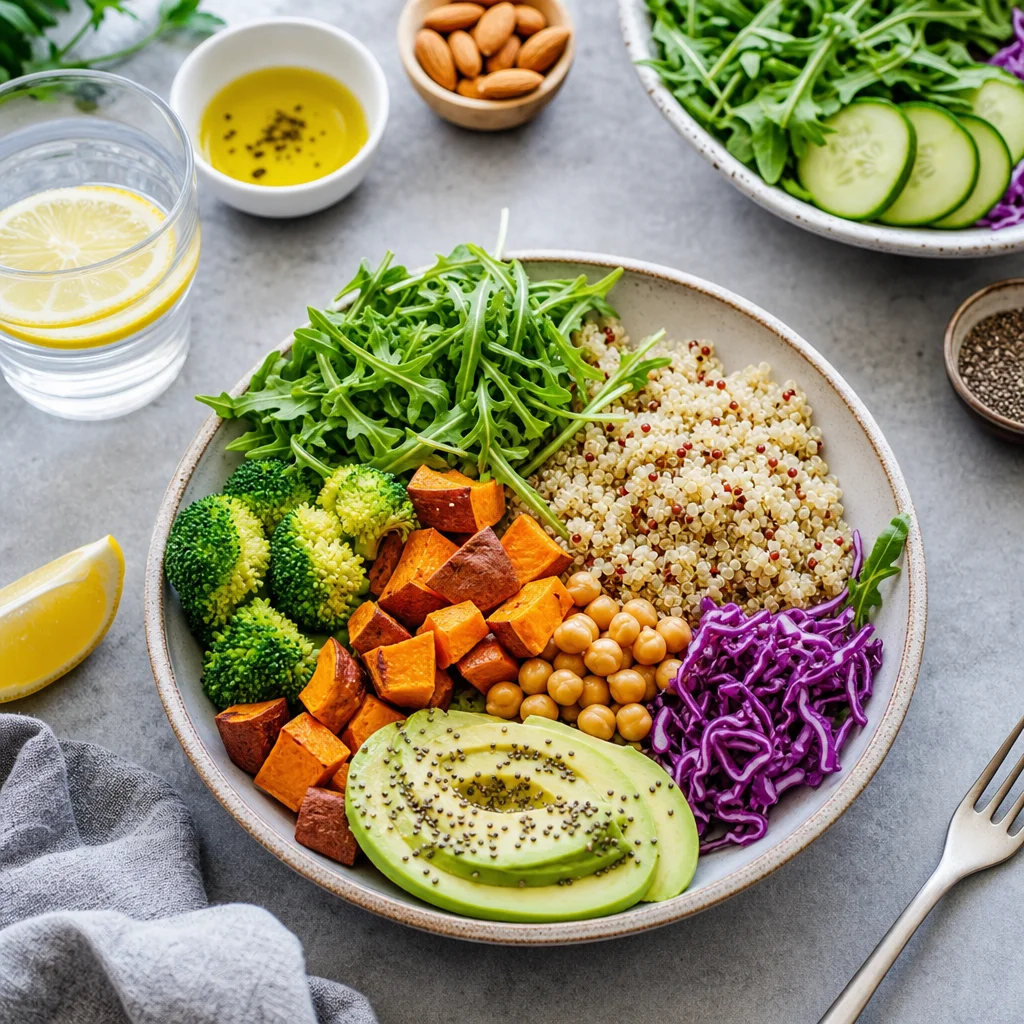
- Colorful produce: berries, leafy greens, broccoli, bell peppers
- Fatty fish: salmon, sardines, mackerel, tuna — aim for two or more servings a week
- Legumes: lentils, chickpeas, black beans
- Whole grains: oats, quinoa, brown rice, barley
- Nuts and seeds: walnuts, chia, flax, hemp
- Healthy fats: extra-virgin olive oil, avocado
- Fermented foods: yogurt, kefir
- Green tea and water
Aim to fill half your plate with produce at lunch and dinner. That one habit moves you most of the way toward this pattern.
Why so much color? Produce, tea, and spices give you polyphenols — plant compounds that help calm inflammation. A 2025 meta-analysis of polyphenols and inflammation tested this in adults with overweight or obesity. About 452 mg of polyphenols per day reduced pro-inflammatory gut bacteria. That’s an amount you can reach with everyday foods. Walnuts, green tea, and berries are among the richest sources.
Olive oil deserves a special note. A systematic review of olive oil and inflammation found that regular use lowered inflammatory markers in clinical trials. The strongest effect was on IL-6, a key sign of inflammation. Make extra-virgin olive oil your go-to for cooking and dressing.
Eat Sometimes: Good but Not Daily
Eggs, lean poultry, and coffee can all fit. Dark chocolate (70% cacao or more) is a tasty source of polyphenols too — though it’s not a health requirement. These foods have benefits. They just don’t need to be in every meal.
Limit: These Feed the Fire
- Sugary drinks
- Refined carbs: white bread, pastries, sugary cereals
- Ultra-processed snack foods
- Processed meats: bacon, hot dogs, deli turkey
- Fried foods
- Excess alcohol
Harvard Health notes these are the foods most often linked to higher inflammation. You don’t need to cut them out forever. Just tip the balance toward whole foods.
A Sample Day: One Flexible Template for Real Life
This sample day shows what an anti-inflammatory meal plan looks like in real life. It’s a template, not a prescription. Calorie needs vary by age, size, activity, and goals. The day below lands around 1,500 calories. It gives you roughly 75 to 85 grams of protein and 30-plus grams of fiber. These targets are realistic. They’re also easy to keep up. Need more energy? Add snacks. Need less? Adjust portions. No 1,200-calorie days here — that’s too low for most women to meet their food needs.
Breakfast: Berry-Walnut Smoothie
Blend 1 cup frozen berries, a handful of spinach, and ½ cup plain Greek yogurt. Add 1 tablespoon chia seeds, a small handful of walnuts, and water or milk. Roughly 380 calories, 22 grams protein, 11 grams fiber.
Lunch: Chickpea-Tuna Jar Salad
In a jar, layer chickpeas, canned tuna, cherry tomatoes, cucumber, and mixed greens. Dress with olive oil, lemon, and a pinch of turmeric. Roughly 450 calories, 30 grams protein, 10 grams fiber.
Snack: Apple and Peanut Butter
One apple with one tablespoon of peanut butter. Roughly 180 calories and 4 grams of fiber. Hummus with veggies works too.
Dinner: Sheet-Pan Salmon with Broccoli & Quinoa
Roast a salmon fillet and broccoli florets with olive oil, garlic, and lemon. Serve over ¾ cup cooked quinoa. Roughly 550 calories, 32 grams protein, 8 grams fiber.
Daily totals land around 1,560 calories, 85 grams protein, and 33 grams fiber. These macro values are rough estimates. Actual numbers vary by brand and portion size. Need more calories? Add a second snack. Need fewer? Reduce the quinoa or skip the snack.
Why does fiber matter here? Fiber is a cornerstone of any anti-inflammatory meal plan. Harvard Health lists it as a key anti-inflammatory food. An umbrella review of dietary fiber also found that higher fiber intake improved blood sugar, cholesterol, and blood pressure. Those are the metabolic levers behind visceral fat loss. Berries, legumes, whole grains, and vegetables are how you get there.
Weekly Meal-Prep Shortcuts That Make It Stick
The biggest reason meal plans fail is choice fatigue. You don’t need a new recipe every night. You need a system that makes an anti-inflammatory meal plan feel effortless — the same idea behind our high-protein meal prep guide. Here are five shortcuts:
- Cook grains once, use them three ways. A pot of quinoa or brown rice becomes lunch bowls, dinner sides, and breakfast porridge.
- Roast a full sheet pan of vegetables. Broccoli, bell peppers, and zucchini keep for days and reheat well.
- Make one pot of soup or chili. Lentil soup or black bean chili gives you protein, fiber, and polyphenols in one go.
- Prep three overnight oats jars on Sunday. Berries, chia, and walnuts turn into grab-and-go breakfasts.
- Keep the freezer and pantry stocked. Frozen berries, frozen fish, canned beans, and tinned tuna or sardines cost less and make healthy meals nearly effortless.
Budget tip: canned fish, frozen berries, and bagged beans cost less than fresh versions. They’re just as good for this way of eating.
The Non-Food Habits: Sleep, Stress, and Movement
Food is powerful — but it’s not the whole story. Visceral fat is shaped by your whole lifestyle. Here’s what the research says about the other habits.
Sleep Seven to Nine Hours
Poor sleep raises cortisol, a stress hormone that can trigger long-term inflammation. Harvard Health lists sleep as a core part of an anti-inflammatory lifestyle. Aim for seven to nine hours of regular sleep each night.
Manage Stress Daily
Ongoing stress keeps cortisol high, and high cortisol promotes belly fat storage. You don’t need an hour of meditation. A daily walk outdoors, five minutes of deep breathing, or journaling all count.
Move Your Body — Aerobic and Strength
Harvard suggests aerobic exercise for 30 to 60 minutes at least five days a week. Add two strength-training days to keep muscle, which helps your metabolism. Walking, cycling, swimming, or dancing all count.
Here’s the takeaway: food, sleep, stress, and movement all work together. Pair an anti-inflammatory meal plan with regular sleep and daily movement. You’re giving your body every chance to lower inflammation and lose visceral fat.
Common Questions, Honest Answers
Do I have to follow a strict day-by-day plan?
No. Flexible frameworks beat rigid calendars. An anti-inflammatory meal plan should fit your life, not the other way around. Repeat meals you enjoy. Eating the same breakfast or lunch most days is a feature, not a bug. It removes choice fatigue.
What if I don’t eat fish?
Plant omega-3s from walnuts, chia seeds, flaxseeds, and hemp seeds are great options. Just know that seafood gives you EPA and DHA directly. Plant sources give you ALA, which your body must convert. If you skip fish, be generous with plant sources.
How fast will I see results?
Cleveland Clinic notes that some people notice changes fast. Energy, digestion, or joint comfort may improve within two to three weeks of removing trigger foods. Sustained changes usually take three to six months. Be patient — your body is adjusting.
Is spot reduction real?
No. No food, exercise, or gadget targets belly fat alone. The goal is overall body-fat loss and better metabolic health — which is exactly what an anti-inflammatory meal plan supports.
Will I have to give up carbs?
No. Fiber-rich whole grains like oats, quinoa, and brown rice are core to this pattern. The carbs to limit are refined ones — white bread, pastries, and sugary cereals.
Can I still eat out?
Yes. Choose grilled fish or chicken. Ask for olive oil instead of butter. Add a side salad with dressing on the side. Most restaurants can work with those simple requests.
A note on your health
If you have a health condition or take medication, check with your doctor before major diet changes. And if you have a history of disordered eating, talk with a registered dietitian or your healthcare provider first. This framework is meant to free you, not restrict you.
The Bottom Line
An anti-inflammatory meal plan isn’t a strict diet or a quick fix. It’s a flexible, whole-food pattern that calms inflammation and supports overall fat loss. The evidence is clear: food choice matters beyond calories. A Mediterranean-style pattern rich in polyphenols, fiber, and omega-3s is one of the best tools we have for visceral fat.
Start with one change this week. Add berries to breakfast. Cook with olive oil. Swap one processed snack for fruit and nuts. Walk after dinner. Small steps add up into a pattern your body can feel.
Remember: you don’t need a perfect 30-day calendar. You need a framework that works for your life — and now you have one.